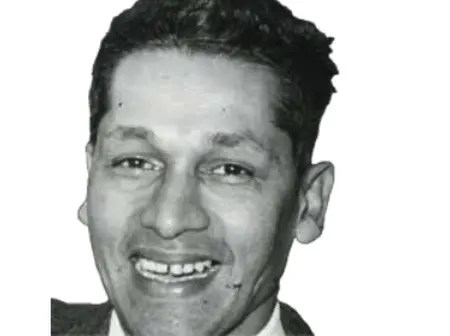
Pio Gama Pinto, one of Kenya's early post-independence politicians, was assassinated outside his Nairobi home in February 1965 following a period of growing political tension involving the country's founding president, Jomo Kenyatta.
Details of the events leading to his death were later documented in Forward to Independence, a memoir written by Fitz de Souza, who served as Kenyatta's lawyer and was also Parliament's Deputy Speaker.
According to de Souza, Pinto strongly disagreed with Kenyatta over the distribution of land belonging to British settlers who left Kenya after independence. He believed that the arrangements favoured influential individuals instead of benefiting ordinary Kenyans.
Their disagreement eventually resulted in a heated confrontation at Parliament Buildings in February 1965. De Souza recalled witnessing the two men exchanging angry words over the controversial land issue.
The memoir also contains an account of Pinto allegedly referring to Kenyatta as a "bastard" during their disagreement. De Souza later expressed concern about the possible consequences of such a confrontation, particularly given the political influence Kenyatta held at the time.
Pinto reportedly received warnings about threats to his safety and travelled to Mombasa for a short period. However, he eventually returned to Nairobi after receiving assurances from his friend Joseph Murumbi.
On February 25, 1965, Pinto was shot dead outside his home in Nairobi while seated in his car. His assassination shocked the country and became one of the most significant political killings in Kenya's early independence history.
Although the circumstances surrounding his death have attracted considerable historical attention, the account in de Souza's memoir does not establish that the alleged insult was the cause of his assassination.
Owners of Toyota Harrier vehicles in Nairobi have been urged to exercise caution following a worrying trend of criminals targeting the expensive front grilles of the popular SUV.
The thefts have raised concerns among motorists, with criminals reportedly taking advantage of traffic congestion and poorly secured parking areas to remove the valuable vehicle components within seconds.
The Toyota Harrier has increasingly become a target because of the high market value of its original front grille, particularly for newer models fitted with advanced technology and sensors.
In some cases, replacing an original grille can cost motorists tens of thousands of shillings, with prices for certain newer models reportedly reaching KSh120,000 at authorised dealerships.
The growing trend has also exposed the existence of an underground market dealing in stolen vehicle spare parts, where expensive components are allegedly sold at significantly reduced prices.
One of the incidents that attracted widespread attention involved a Toyota Harrier whose front grille was stolen along Parklands Road near the University of Nairobi School of Law.
Dashcam footage showed three suspects approaching the vehicle while it was stuck in traffic.
One of them quickly removed the grille while his accomplices appeared to shield the operation from other motorists.
The incident sparked public outrage and renewed calls for stronger action against organised vehicle parts theft syndicates.
Motorists have also been advised to take precautionary measures, including installing specialised anti-theft locks, using secure parking facilities and remaining vigilant while stuck in traffic.
Car owners have further been encouraged to mark their vehicle components with identification details to make it difficult for criminals to resell stolen parts.
Meanwhile, concerns have emerged over the role of unscrupulous spare parts dealers who allegedly create demand for stolen components by purchasing them through informal networks.
The situation has renewed calls for security agencies to intensify operations against criminal networks involved in vehicle parts theft and bring those responsible to justice.
Toyota Harrier owners are now being encouraged to remain particularly alert in busy Nairobi streets, where criminals can exploit traffic congestion to strike.
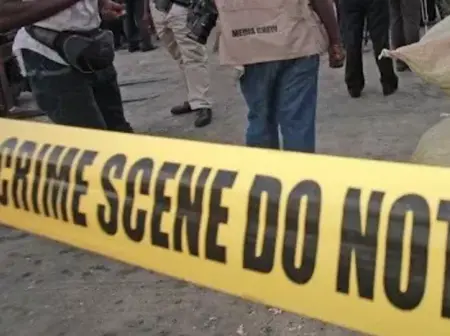
An armed robber was shot dead by police officers following a robbery incident in Mbuthia area of Huruma, Nairobi, in the early hours of Saturday, November 21.
The incident occurred at approximately 3:50 am when a resident was attacked by three men while walking home.
The suspects reportedly approached him, confronted him and began searching his pockets for valuables.
According to the incident report, the victim attempted to raise an alarm, prompting one of the attackers to produce an object resembling a firearm and allegedly threaten him.
The three men managed to steal Sh5,000 in cash and an Infinix mobile phone valued at approximately Sh15,000 before police officers responded to the incident.
Officers who arrived at the scene reportedly confronted the suspects, leading to a confrontation with the man who was allegedly armed.
His two accomplices reportedly abandoned him and escaped into the darkness as police moved in.
During the exchange, the suspect was shot in the right thigh. Officers reportedly recovered an imitation firearm from him after he was subdued.
He was immediately rushed to hospital for emergency medical attention. However, he succumbed to his injuries upon arrival.
Crime Scene Investigation (CSI) personnel, alongside detectives from the Directorate of Criminal Investigations (DCI) Starehe, later visited the scene to collect evidence, document the incident and establish the circumstances surrounding the shooting.
An object resembling a firearm was also recovered as detectives continued their investigations into the robbery and subsequent police confrontation.
Meanwhile, the two suspected accomplices remain at large, with their whereabouts unknown. Detectives are pursuing leads that could help identify and arrest them.
The incident comes amid growing concerns over robbery attacks in different parts of Nairobi, particularly those targeting residents walking home during early morning hours.
Residents have continued to face security concerns, with criminals taking advantage of darkness and quiet streets to attack unsuspecting pedestrians.
Nairobi police boss Issa Mohamud said police have intensified operations across the city to reduce crime.
Nairobi is undergoing an extraordinary physical transformation. From Eastleigh and Pangani to Parklands, Kilimani and Kileleshwa, the capital’s traditional low-rise residential neighbourhoods are rapidly giving way to towering apartment blocks, commercial complexes and mixed-use developments.
The emerging skyline reflects growing investor confidence, increasing demand for housing and the economic opportunities associated with urbanisation.
This transformation is welcome. Kenya urgently needs additional housing, more efficient land utilisation and a vibrant construction industry. However, beneath Nairobi’s impressive skyline lies a potentially serious environmental and urban management crisis that has received insufficient public attention: the increasing dependence on privately drilled boreholes and the growing pressure on already constrained water and sewerage infrastructure.
The fundamental question is simple: Can Nairobi continue building vertically while extracting groundwater indiscriminately and without adequately expanding its water and sewerage networks?
A city growing above ground but neglecting what lies beneath
Consider a neighbourhood where a single residential bungalow accommodating one family is demolished and replaced with a 15-storey apartment building housing 100 families. The land parcel remains the same, but water consumption, wastewater generation and infrastructure demand increase enormously.
Multiply this transformation across hundreds of plots in Eastleigh, Pangani, Parklands, Kilimani and Kileleshwa, and the implications become alarming.
Where city water supplies are inadequate or unreliable, developers increasingly turn to private boreholes as alternative sources. What was once an exceptional supplementary water source risks becoming a routine component of high-rise development.
The concern is not simply the existence of boreholes. It is their concentration, cumulative abstraction and the apparent absence of publicly accessible evidence demonstrating that groundwater extraction remains within sustainable limits. Groundwater is not an inexhaustible underground reservoir. It is a finite, replenishable resource whose sustainability depends on the relationship between natural recharge and extraction.
The silent depletion of Nairobi’s aquifer
Aquifers are underground geological formations that store and transmit groundwater. They are replenished through rainfall infiltration and other natural hydrological processes, sometimes over extended periods.
When numerous boreholes extract water faster than an aquifer can recharge, groundwater levels decline. This process can create several interconnected environmental problems.
First, excessive abstraction lowers groundwater levels, forcing existing boreholes to pump from greater depths, increasing energy costs and potentially causing shallower wells to fail.
Second, concentrated pumping can create overlapping cones of depression, whereby neighbouring boreholes compete for the same groundwater reserves. Consequently, one development's water security may come at the expense of surrounding properties and communities.
Third, excessive groundwater withdrawal can contribute to land subsidence where geological conditions permit aquifer-system compaction. Subsidence may damage foundations, roads and underground infrastructure. Although this phenomenon is documented internationally, Nairobi requires location-specific scientific investigations before claims of widespread subsidence can be established.
Fourth, groundwater depletion can reduce natural discharge to springs, streams and groundwater-dependent ecosystems where such hydraulic connections exist.
Finally, uncontrolled abstraction, combined with inadequate wastewater management, increases concerns about groundwater quality. Poorly constructed boreholes, leaking sewers and improperly managed sanitation facilities can create pathways for contamination.
These risks should concern every Nairobi resident, developer, investor and public institution.
The sewerage crisis nobody should ignore
Water abstraction is only half the problem. Every additional apartment generates wastewater that must be collected, transported, treated and safely discharged.
Many neighbourhoods experiencing rapid densification were originally planned around substantially lower populations and development densities.
A sewer line designed for low-rise housing cannot automatically accommodate dozens of high-rise buildings without hydraulic assessment and, where necessary, upgrading.
When sewerage infrastructure is overstretched, the consequences can include blockages, sewer overflows, sewage backflows, environmental pollution and increased public health risks. The danger becomes particularly serious where inadequate sanitation infrastructure and groundwater abstraction coexist.
Nairobi must therefore abandon the assumption that approval of a building's architectural and structural drawings automatically establishes the adequacy of supporting infrastructure.
Development permission must be linked to demonstrated water availability, sewerage capacity and environmental sustainability.
Who is authorising the boreholes?
Kenya already possesses an institutional and legislative framework for managing water resources.
Article 43 of the Constitution guarantees the right to clean and safe water in adequate quantities and to reasonable standards of sanitation. Article 42 guarantees the right to a clean and healthy environment.
The Water Act, 2016, together with the applicable Water Resources Regulations, provides the legal framework for regulating groundwater abstraction.
The Water Resources Authority (WRA) is the principal institution responsible for regulating water resources, including groundwater abstraction. Its mandate includes evaluating applications, authorising abstraction works, issuing water-use permits and monitoring compliance with permit conditions.
A borehole drilling authorisation should not be confused with an unrestricted right to extract groundwater. Water abstraction is subject to applicable permitting requirements, conditions and limits.
The Water Services Regulatory Board (WASREB) performs a different function. It regulates water and sanitation service providers, establishes service standards, licenses providers and protects consumers. It is not the ordinary authority issuing individual borehole abstraction permits.
The Nairobi City Water and Sewerage Company (NCWSC) is responsible for providing water and sewerage services within its licensed service area. Its technical assessments should inform whether proposed developments can be adequately served by existing networks.
The National Environment Management Authority (NEMA) administers environmental impact assessment requirements under the Environmental Management and Co-ordination Act, while Nairobi City County Government exercises development control and physical planning functions under the applicable planning legislation.
These institutions have distinct but complementary responsibilities. Their approvals must not operate as disconnected administrative processes.
The failure of fragmented urban governance
The central challenge is not necessarily the absence of legislation but the possibility of fragmented implementation.
A developer may secure planning approval, obtain environmental clearance, apply for borehole authorisation and arrange sewerage connections through separate institutional processes.
Yet who examines the combined environmental consequences of 100 high-rise developments within the same neighbourhood?
Who determines whether the cumulative abstraction from numerous neighbouring boreholes exceeds sustainable groundwater recharge?
Who verifies that existing sewerage networks can accommodate the population projected from approved developments over the next decade?
These are fundamental urban management questions requiring coordinated answers.
Individual projects may appear technically acceptable when assessed separately, while their combined effects overwhelm neighbourhood infrastructure and environmental systems.
Nairobi needs an urgent groundwater and infrastructure audit
The solution is not to prohibit high-rise construction or indiscriminately ban boreholes. It is to introduce scientifically informed, coordinated and enforceable development management.
First, WRA should undertake and publish a comprehensive groundwater assessment covering Nairobi's rapidly densifying neighbourhoods. This should establish borehole locations, permitted abstraction volumes, actual pumping levels, groundwater trends and sustainable extraction thresholds.
Second, Nairobi City County should require credible water-demand and wastewater-capacity assessments before approving major high-density developments.
Third, NCWSC should undertake network-capacity assessments and identify priority investments in water distribution, sewer rehabilitation and wastewater treatment.
Fourth, WRA and NEMA should strengthen cumulative environmental assessment, particularly in locations where borehole density and groundwater stress are demonstrably high.
Fifth, boreholes should be properly registered, metered and monitored, with effective enforcement against illegal drilling and abstraction beyond permitted limits.
Finally, Nairobi requires a coordinated infrastructure financing framework ensuring that developers contribute fairly to necessary network upgrades without transferring disproportionate costs to existing residents.
Protect the city beneath the skyline
Nairobi's development ambitions must be matched by equally ambitious investment in underground infrastructure and environmental protection.
A modern capital cannot measure urban progress solely by the number of storeys constructed, the value of real estate investments or the changing appearance of its skyline.
True urban progress must also be measured by reliable water supply, functional sewerage systems, healthy aquifers, environmental resilience and the quality of life enjoyed by residents.
The responsibility rests collectively with Nairobi City County, WRA, WASREB, NEMA, NCWSC, developers and urban planning professionals.
We must recognise that groundwater is a shared natural resource, not an unlimited private entitlement attached to every urban plot.
Nairobi must not become a city that rises majestically above ground while silently exhausting the water resources that sustain it beneath the surface.
The time to protect Nairobi's aquifers is now, before today's impressive skyline becomes tomorrow's environmental liability.
The writer is Urban and Land Management Practitioner and Chair Land Sector Forum-Frontier Counties.
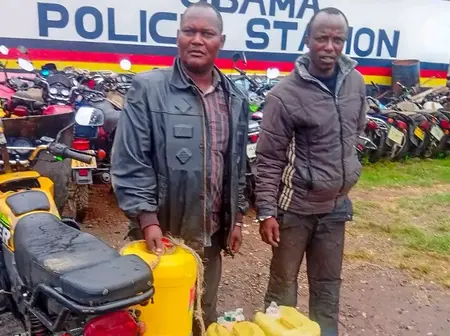
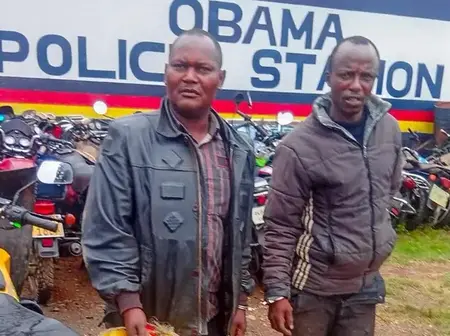
NAIROBI, November 22, 2026 — Police officers in Nairobi have arrested two suspects and impounded 105 litres of illicit alcohol following a patrol interception in Kayole.
According to a statement from the National Police Service (NPS), officers attached to Obama Police Station were conducting routine patrols in the Mwengenye area on Sunday when they flagged a suspicious motorcycle carrying multiple containers.
After a brief pursuit, the officers intercepted the motorcycle and apprehended the two individuals on board. A subsequent search of the cargo revealed five 20-litre jerrycans and one 5-litre jerrycan filled with an illicit brew locally known as Mrambee.
The two suspects were escorted to Obama Police Station, where they remain in police custody pending their arraignment in court. Both the motorcycle and the 105 litres of confiscated alcohol have been secured at the station as exhibits.
In its statement, the NPS reiterated its commitment to eradicating illegal alcohol and urged members of the public to support ongoing security efforts by reporting suspected production or distribution hubs to the nearest police station, or via its toll-free hotlines (999, 911, #FichuaKwaDCI on 0800 722 203) and WhatsApp (0709 570 000).
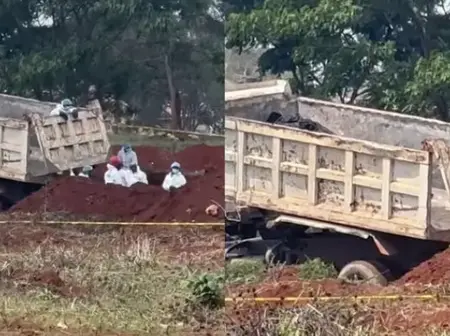
The mass burial was conducted on Thursday, November 19, 2026, following court approval after the county exhausted the required public notice period and attempts to trace the deceased's relatives.
County Chief Officer for Public Health Tom Nyakaba said the bodies were collected from three public health facilities, with the largest number coming from Nairobi Funeral Home, formerly City Mortuary.
Of the 465 bodies buried, 381 were from Nairobi Funeral Home, 58 from Mama Lucy Kibaki Hospital and 35 from Mbagathi Hospital.
The burial came as Nairobi's public mortuaries were holding more than 600 unclaimed bodies, putting pressure on facilities already struggling with limited storage capacity.
Nairobi Funeral Home, for instance, is designed to accommodate 189 bodies, meaning the number of remains being handled has significantly strained its capacity.
Some of the bodies had remained in mortuaries since 2024. Most were men, while others were unidentified after being recovered by police.
Why Nairobi opted for mass burial
The county's decision to bury hundreds of bodies together was driven by overcrowded mortuaries, limited cemetery space, financial constraints and the need to comply with legal requirements governing unclaimed remains.
Public mortuaries continue receiving bodies from road accidents, crime scenes and other incidents, even as relatives of some deceased people remain difficult to trace.
Keeping bodies for extended periods has placed additional pressure on facilities, creating logistical and sanitation concerns for staff responsible for handling and preserving the remains.
The county also faces a shortage of public burial land, with existing cemeteries struggling to accommodate the rising demand.
Burying hundreds of bodies individually would require additional land, coffins, labour and logistical arrangements. Mass burial therefore became one of the options available to authorities managing the growing number of unclaimed remains.
The exercise proceeded after public notices seeking relatives expired, post-mortem examinations were completed and court authorisation was obtained.
Cultural and religious concerns over mass burial
The burial of unrelated individuals in common graves has also raised concerns about cultural and religious traditions surrounding death and the dignity of the deceased.
In many Kenyan communities, burial is an important rite of passage involving family participation, ceremonies and the preservation of a known burial site where relatives can return to remember their loved ones.
Individual graves are particularly important to families seeking to conduct memorial ceremonies, honour the deceased and maintain a connection with their lineage.
Mass burial, however, can make it difficult for relatives to identify or locate the exact resting place of a loved one, especially where the deceased's identity was never established.
Authorities are often left facing difficult decisions when relatives cannot be traced, balancing cultural expectations and respect for the dead against public health concerns, limited resources and legal obligations.
Nairobi faces growing shortage of burial space
The mass burial also highlights Nairobi's wider cemetery space crisis, with county authorities exploring alternative arrangements to accommodate the growing demand for burial land.
Officials have considered converting six community cemeteries into public burial facilities to ease pressure on existing cemeteries.
The city's growing population, limited availability of land and rising demand for burial services continue to place strain on cemetery facilities.
With more than 600 unclaimed bodies previously held in public mortuaries, the county faces continued pressure to find solutions that uphold the dignity of the deceased while addressing the practical realities of managing public health facilities.
The arrests were made on Saturday, November 22, 2026, by officers from Obama Police Station who were conducting patrols in the area when they spotted a suspicious motorcycle carrying several jerrycans.
The motorcycle was transporting five 20-litre jerrycans and another 5-litre container. Officers reportedly pursued the riders before successfully intercepting them and arresting the two occupants.
Upon inspecting the containers, police established that they were carrying 105 litres of an illicit alcoholic drink locally known as Mrambee.
The two suspects were subsequently escorted to Obama Police Station, where they remain in custody pending their arraignment in court.
The motorcycle and the recovered alcohol have also been detained at the station as exhibits as investigations continue.
The National Police Service has reiterated its commitment to intensifying operations against the manufacture, distribution and sale of illicit alcohol and narcotic drugs across the country.
Residents can also report suspicious activities through the emergency numbers 999 and 911, the DCI's toll-free line 0800 722 203 under the #FichuaKwaDCI initiative, or WhatsApp number 0709 570 000.9 570 000.
A suspected robber was shot dead by police officers after a robbery incident in the Mbuthia area of Huruma, Nairobi, early Saturday.
The incident occurred at around 3:50 am on November 21, when a resident was reportedly accosted by three men as he made his way home, police said.
The three confronted the victim and began emptying his pockets, with one of the suspects allegedly pulling out an object resembling a firearm when the victim attempted to raise an alarm.
The victim was robbed of Sh5,000 in cash and an Infinix mobile phone valued at Sh15,000, Nairobi police boss Issa Mohamud said.
Police officers who responded to the incident reportedly engaged the suspect wielding the weapon, while his two accomplices fled into the darkness.
The suspect, who was dressed in a maroon jacket, was shot in the right thigh during the confrontation. He was found in possession of an imitation firearm.
He was rushed to hospital but succumbed to his injuries upon arrival, police said.
Crime Scene Investigation (CSI) personnel and detectives from the Directorate of Criminal Investigations (DCI) Starehe visited, processed and documented the scene.
An object resembling a firearm was recovered as investigations into the incident continued.
Mohamud said they have intensified operations in the city to tame incidents of crime in general.
He said more personnel had been deployed to different places to respond to the crime.
Meanwhile, police in Mathira East, Nyeri County, are investigating the death of a 90-year-old man whose body was found hanging in the verandah of his homestead in Kithima village.
The deceased, identified as Eliud Nyuguto Kiige, was discovered dead on November 20.
Police officers visited the homestead to investigate the incident.
Preliminary examination of the scene established that Kiige, who reportedly lived alone, was found hanging in the verandah in a kneeling position.
Investigators, however, noted signs of a struggle inside the house, with traces reportedly leading from the house to where the body was found.
Officers also observed signs of strangulation on the deceased’s neck, raising suspicions surrounding the circumstances of his death.
Scenes of Crime officers processed and documented the scene as detectives commenced investigations to establish what happened.
The body was subsequently moved to Karatina Level Four Hospital mortuary, where it is awaiting a postmortem examination as police pursue further investigations.
A suspected robber was shot dead by police officers after a robbery incident in the Mbuthia area of Huruma, Nairobi, early Saturday.The incident occurred at around 3:50 am on November 21, when a resident was reportedly accosted by three men as he made his way home.
Aroko announced the recognition in a statement following an event held yesterday evening at the Golden Tulip Hotel in Westlands, Nairobi. He described the award as a privilege and expressed gratitude for being recognised for his contribution to humanitarian work and community empowerment.
In his message, Aroko said such milestones should not only celebrate achievements already made but also remind leaders and citizens of their shared responsibility to support those around them. He emphasised that uplifting communities should remain a collective duty rather than an effort left to a few individuals.
He also restated his belief that every citizen deserves the opportunity to enjoy a better future, regardless of ethnic background or political affiliation. The message placed inclusivity at the centre of his outlook, highlighting the importance of serving people without discrimination.
Aroko accepted the accolade with humility and said he intends to champion more transformative initiatives in the coming years. Although his statement did not detail specific projects or provide a breakdown of the work recognised by the award, he presented the honour as motivation to continue contributing to society.
For Aroko, the award is therefore not simply a personal milestone but a reminder of the responsibility that comes with public recognition. His message points to a future in which service, unity and practical action remain central to community development.
What is your view on Philip N. Aroko receiving the Humanitarian and Community Empowerment Icon of the Year 2026 award, and what more should be done to strengthen community empowerment in Kenya? Share your remarks and comments in the comment section.