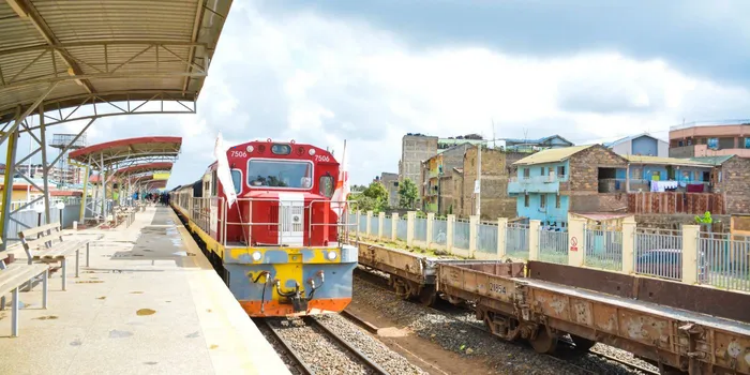
The government has begun the process of preparing a new physical and land use development plan covering areas around railway stations along the Nairobi-Thika commuter rail network.In separate notices published on Thursday, November 19, the Nairobi City County Government and the County Government of Kiambu announced plans to prepare the local development framework for their respective sections of the railway line.
Tag: Nairobi
-

South C Residents Question Safety of 15-Storey Block Months After Deadly Collapse
The residents want a public safety certification or a demolition order for the building. The association’s chairperson, Abdi Karim Hassan, raised the issue in a May 11 letter to Lands Cabinet Secretary Alice Wahome.
Reports indicate the letter made six demands, including the release of a multi-agency inquiry report into the collapse.
Residents also protested at Ardhi House on April 20, according to reports. They later gave the CS a seven-day ultimatum for a progress report on the probe.
The 16-storey building collapsed on January 2, 2026, along Muhoho Avenue. Two people died.
Reports indicate the collapsed building had been flagged at least three times by county enforcement teams for extending beyond approved floors. Its developer, Abyan Consulting, denied claims that the project lacked approvals.
Under the law, county officers can issue enforcement notices and stop orders. They can also deny occupation certificates where buildings exceed approved height limits, the Nation reported.
The South C Residents Association said the January collapse was foreseeable and preventable. It blamed sustained regulatory failure by the Nairobi City County Government.
Bridge Port Apartments Limited is named as the owner of the building in the residents’ statement.
It was not immediately clear whether the building has since been inspected. A response from its owner was not available in reports.
The claims have not been independently verified.
Source: https://web.facebook.com/share/p/1HLzfq6ukN/
-

Bayern, Ajax to field first-team squads for Raila Odinga Stadium opener
By Oliver OkingoFC Bayern Munich and AFC Ajax will bring their first-team squads for the January 5 Nairobi friendly to inaugurate the Raila Odinga International Stadium, the CEO of Kenya's AFCON 2027 Local Organising Committee (LOC) Anthony Lungaho said on Thursday.In a press conference in Nairobi, Lung’aho confirmed that both clubs have committed in writing to field their strongest available starting line-ups, putting to rest speculation that the clubs could send academy players or former legends for the highly anticipated exhibition match.
-
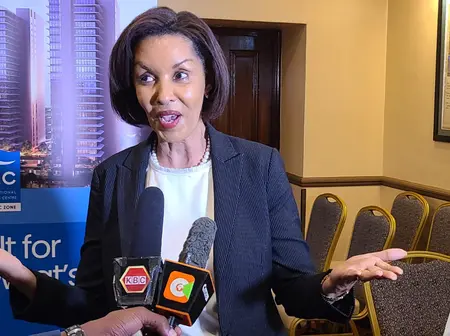
Kenya’s property investment market has room to grow, but capital remains a hurdle
Kenya’s property investment market has attracted subscriptions above fundraising targets for some new real estate investment trusts, but the country still has one of Africa’s smallest listed REIT markets. The gap between initial fundraising and the development of a deeper market is becoming an important consideration as the Capital Markets Authority (CMA) pursues changes to investment rules and financing structures.
The listed Kenyan REIT market had a capitalisation of $247.6 million, according to the African market comparison supplied by Fortren & Company. South Africa’s market was valued at $18.9 billion, followed by Morocco at $667.4 million and Zimbabwe at $270.9 million. Kenya therefore trails Zimbabwe despite introducing its REIT framework in the same year as South Africa, while Morocco and Zimbabwe established their markets in 2018 and 2019 respectively.
The figures point to a market development problem that cannot be explained by the availability of property investment opportunities alone. Kenya has attracted money into individual REIT offerings, yet institutional allocations, the number of listed vehicles and the ability to trade their units remain important constraints.
The TRIFIC Green USD I-REIT illustrates the difference between fundraising interest and the scale of the overall market. Its June 2026 offer attracted approximately $30.82 million against a target of $29.83 million, equivalent to subscriptions of about 103.3 percent. The REIT is backed by the North Tower at Two Rivers International Finance and Innovation Centre, with Nabo Capital as fund manager, NCBA Bank as trustee and Broll as property manager.
TechTrendsKE reported that the offering targeted an annual yield of 8 percent and included a market-making arrangement intended to support trading after its listing. ALP Investment REIT also attracted subscriptions equivalent to 115 percent of its target, according to the publication’s September reporting.
These offers demonstrate that particular property-backed products can attract investor commitments. They do not, however, establish that the market has sufficient secondary-market liquidity or that investors will maintain their holdings over longer periods. The distinction is relevant to Kenya’s experience with listed REITs, where fundraising has not consistently translated into sustained trading activity.
Institutional participation is one of the clearest differences between Kenya and the larger South African market. Fortren & Company reported that Kenyan pension funds had allocated approximately $100 million to REITs as of 2025, compared with more than $11.3 billion allocated by South African pension funds.
South African pension fund investments account for more than 60 percent of that country’s REIT market capitalisation, according to the research firm. South Africa also has 36 listed REITs, including three from foreign markets, compared with six listed REITs in Kenya in the original market comparison.
The difference is particularly notable given the two countries’ shared 2013 starting point for introducing REIT frameworks. Kenya’s first REIT instrument, ILAM Fahari I-REIT, was launched in October 2015, according to TechTrendsKE’s earlier reporting.
Fortren & Company identifies the returns available from government securities as one reason investors have been reluctant to commit more capital to REITs. Its figures put Kenya’s average REIT return at 6.7 percent in 2025, against approximately 13 percent from Treasury bonds.
That return comparison offers an explanation for the competition REIT managers face when approaching institutional investors. Pension funds must assess income, capital preservation, liquidity and investment risk across different asset classes. Property investments therefore need to offer a sufficiently attractive proposition to compete with government debt.
Kenya’s wider pooled investment industry also provides an indication of the capital available across the financial market. CMA figures reported by TechTrendsKE put collective investment scheme assets under management at KSh948.7 billion as of June 30, 2026. Money market funds accounted for 49 percent, special funds 27 percent and fixed-income funds 24 percent.
The expansion of these investment structures shows that Kenyans have access to a wider range of pooled products. REITs, however, must compete for capital within an industry where investors can choose instruments with different liquidity arrangements, risk profiles and expected returns.
The regulatory debate has extended beyond lowering the amount individuals need to invest. CMA has proposed changes intended to make REIT structures more practical for large investors, developers and property managers.
One proposal would reduce the minimum public ownership requirement from 25 percent to 15 percent. The regulator has argued that pension funds and insurers can prefer larger ownership positions because they allow greater control and investment efficiency. Under the existing requirement, large investors may have to sell portions of their holdings to satisfy public ownership rules, even when they have no intention of reducing their investment.
CMA said the requirement could result in ownership dilution and weaker decision-making where large investors are compelled to adjust their holdings solely to comply with the rule.
The proposed change would give major investors more room to retain larger stakes while maintaining a public ownership requirement. Its effect will depend on how the revised framework is implemented and whether institutional investors respond with additional commitments.
CMA has also proposed reducing the minimum REIT subscription amount from KSh5 million to KSh100,000 for the structures covered by the proposed changes. The reduction would substantially lower the entry barrier for eligible investors, although unrestricted I-REITs already operate without a regulatory minimum investment amount.
Other proposed changes include reducing REIT conversion fees from KSh7.5 million to KSh150,000 and allowing REIT managers to provide loan guarantees for associated projects or special-purpose vehicles.
The conversion proposal is relevant to developers using Development REITs to raise capital for construction before moving completed, income-generating properties into Income REIT structures. Lower conversion costs could reduce the expense of moving between the two stages of property investment.
Permission to provide loan guarantees would also give REIT managers another financing mechanism for associated projects. The proposal addresses access to project financing rather than investor subscriptions alone.
The reforms follow earlier industry calls for a more flexible regulatory framework. In September 2026, Peter Waiyaki of Mboya Wangong’u & Waiyaki Advocates called for changes to the treatment of eligible REIT assets, qualifying-income requirements and public ownership rules.
Waiyaki also proposed allowing infrastructure assets such as telecommunications towers, fibre facilities and data centres to qualify for REIT investment structures. Such a change could widen the range of assets available to property investors, particularly as digital infrastructure requires substantial capital expenditure and long-term commercial arrangements.
These remain proposals and industry recommendations, rather than established changes to the regulatory framework.
The experience of ILAM Fahari I-REIT illustrates some of the difficulties involved in sustaining conventional exchange-listed REIT structures. The vehicle delisted from the NSE in 2024 and relaunched as a restricted REIT on the Unquoted Securities Platform.
Acorn REIT has also operated with a restricted investment structure, with a KSh5 million minimum entry requirement aimed at high-net-worth individuals and professional investors.
These arrangements provide alternative ways of accessing property-backed investments, but they also illustrate the different investor bases and liquidity conditions across the market. A restricted REIT serving professional investors does not offer the same access or trading environment as a publicly listed vehicle.
The distinction is important when assessing market capitalisation. Fundraising through restricted structures can attract capital into property investment without necessarily expanding the value or trading activity of REITs listed on the NSE.
Kenya’s securities market is developing distribution channels that could support wider participation in regulated investment products. Safaricom’s Ziidi Trader offers an example of how mobile platforms can connect retail investors with exchange-traded securities.
TechTrendsKE reported that Ziidi Trader accounted for approximately 60 percent of applications in Quickmart’s KSh15 billion initial public offering. The platform also processed 268,936 of the NSE’s 433,498 share-purchase orders between February 5 and March 10, 2026, with an average purchase value of KSh2,621.
Those figures concern equity trading rather than REIT subscriptions, but they demonstrate the reach that digital investment distribution can achieve. A lower REIT entry threshold could make property-backed securities accessible to a wider group of investors if suitable distribution and trading arrangements are available.
The challenge for Kenya’s REIT market is therefore not confined to getting more people to subscribe to individual offers. The industry needs investment structures that appeal to pension funds, insurers and retail investors, alongside a trading environment capable of supporting continued participation after fundraising closes.
CMA’s proposed changes address several of these requirements, from ownership limits and conversion costs to project financing and minimum investment amounts. Their eventual effect will be measured by whether more capital enters REITs and remains invested in vehicles capable of financing and managing income-generating property assets.
-

Photos of Former Nairobi Hotel Owner Now Living in Streets Leave Kenyans in Tears
A 52 year old Nairobi man who once ran a hotel and butchery along Ngong Road is now facing a difficult life after losing his business and the stability he previously enjoyed.
The man, identified as George Macharia, is a father of four whose circumstances have changed considerably over the years. His story has drawn attention following efforts by a rescue team to help him reconnect with his family.
Macharia previously operated GM Hotel and Butchery near Prestige Plaza along Ngong Road. The business provided him with a source of income and allowed him to support his family.
However, his personal life reportedly took a difficult turn following an incident involving his in laws. He had attended a family celebration after receiving an invitation, but events that followed were followed by disagreements at home.
According to his account, he returned home after the gathering but experienced difficulties the following morning. A disagreement with his wife followed, and she subsequently left their home.
The breakdown of his family life was followed by further challenges that affected his business and personal circumstances. He eventually lost the financial security he had once enjoyed.
His situation deteriorated to the point where he became homeless. At one point, Macharia reportedly travelled on foot from Ngong Road in Nairobi to Murang'a as he struggled to find a way forward.
His account has since reached people who are now attempting to help him. A rescue team that encountered him took an interest in his situation and began looking into his family background.
Their efforts reportedly led them to relatives based in Nyeri, raising the possibility of a reunion after the difficult period he has experienced.
For a man who once managed his own business and provided for a family of four, his present circumstances represent a significant change.
The ongoing efforts to trace his relatives could provide an opportunity for him to reconnect with his family and begin working towards a more stable life.
His experience has also drawn attention to the challenges that can arise when personal difficulties and financial setbacks affect someone's ability to maintain a stable livelihood.
https://www.tuko.co.ke/people/family/647278-nairobi-52-year-man-owned-gm-hotel-ngong-road-living-streets/?utm_source=facebook&utm_medium=social&utm_campaign=tuko&utm_content=pp&fbclid=IwZXh0bgNhZW0CMTEAcGRvZgNzcnRjBmFwcF9pZA8yNzUyNTQ2OTI1OTgyNzkAAR_OFEkc42u4uqMvexKnQurIdxjU7zcNRc2H8JKQFfJcV47WRRvgqYzrFdZfTg_aem_OzH0OqkMZtEUC6WHjiFKlA
-

Sidian Bank Deal Puts Sakaja on the Spot Over Nairobi’s Sh1.5 Billion Monthly Borrowing
The arrangement has attracted the attention of Controller of Budget Margaret Nyakang’o, who has questioned why the county continues seeking financial assistance from the bank despite receiving its allocations from the national government on schedule.
A report presented before the Senate Committee on Information and Communication Technology revealed that Nairobi borrowed Sh1.56 billion in September 2026 and another Sh1.49 billion in October.
In a letter dated November 16, 2026, Nairobi County Finance Executive Ibrahim Nyangoya Auma confirmed that the county had entered into an agreement with Sidian Bank to facilitate salary payments.
He explained that the arrangement was designed to address immediate payroll challenges as the county worked towards improving revenue collection and strengthening its financial management systems.
However, concerns have also emerged over employees' statutory deductions, with millions of shillings reportedly remaining unpaid to pension schemes, savings and credit cooperative organisations (SACCOs) and other financial institutions.
According to the report, Sh249.3 million deducted from employees in August remained unpaid in September. A further Sh254.5 million collected in September had also not been remitted by October.
Nyakang’o questioned the need for the borrowing, observing that Nairobi had already received its national government transfers, including its November allocation.
She further demanded an explanation of the interest charges associated with the banking arrangement, raising questions about the financial implications for taxpayers.
Another issue concerns the decision to process salaries outside the Human Resource Information System (HRIS), which ordinarily coordinates payroll payments and statutory deductions.
The Controller warned that bypassing the system could allow employees to receive their salaries while pension contributions, SACCO savings and loan repayments remain outstanding.
She cautioned that the situation could develop into a serious financial problem for county workers if the deductions are not forwarded to the respective institutions.
Link;
Serikali ya Sakaja yamulikwa kwa kukopa Sh1.5 bilioni kutoka Sidian Bank kila mwezi
-

Edwin Sifuna Meets Linda Mwananchi Team Ahead of Key IEBC Engagement
In a statement shared on his social media platforms, Sifuna revealed that he had joined the Linda Mwananchi team in a meeting attended by several notable figures, including Secretary General Caroli Omondi, Deputy President of the Law Society of Kenya Faith Odhiambo and Legal Affairs Secretary Wakili Kadide.
Sifuna's update was accompanied by photographs showing several participants seated around a conference table, while others took turns addressing the gathering. The images captured discussions in what appeared to be a formal meeting setting, suggesting the importance attached to the planned engagement.
The involvement of Faith Odhiambo and other legal representatives is particularly notable given the central role that legal considerations play in electoral processes and the administration of democratic institutions.
However, Sifuna did not disclose the specific issues discussed during the meeting or provide detailed information about the agenda for the subsequent engagement with the IEBC.
The planned engagement provides an opportunity for opposition representatives to interact with the commission on matters concerning their political and electoral interests. The outcome and any subsequent communication from the participants could therefore attract public attention.
For now, Kenyans will be keen to understand what emerged from the meeting and whether the engagement with the IEBC will produce further developments.
As the political discussions continue, the participation of different stakeholders remains an important part of democratic engagement.
What is your opinion about Edwin Sifuna's meeting with the Linda Mwananchi team ahead of their engagement with the IEBC? Share your views, remarks and comments in the comment section below.
-

Caleb Amisi Faces Backlash After Asking Kenyans to Check on People Wailing in Police Lorry
In a post shared on his social media account, the legislator appealed to members of the public to check on the individuals, expressing fears that they could be victims of abduction.
"Can someone check on these Kenyans? Have just passed them along Uhuru Highway wailing inside a police lorry. Hope they are not being abducted," Amisi wrote.
His appeal, however, sparked a wave of criticism, with some Kenyans questioning why he did not stop to establish what was happening instead of asking members of the public to intervene.
Several commenters argued that as an elected representative, Amisi had a responsibility to take action when he witnessed a situation that raised concerns about the safety of citizens.
One commenter brought Senator Edwin Sifuna into the discussion, suggesting that he would have stopped and intervened if he had witnessed the same incident.
Another directly challenged the MP, questioning why he had left the scene without making inquiries.
"You want us to check up on them yet you as a leader you just passed them and left them there. You can't block the vehicle and inquire or are you waiting for someone to do it?" one commenter asked.
Others reminded Amisi that he represents Kenyans in Parliament and should use his position to seek answers rather than leave the responsibility to ordinary citizens.
The reactions reflected growing expectations among some Kenyans that leaders should demonstrate concern through direct action, particularly when issues involving public safety arise.
Meanwhile, the identities of the people inside the police lorry, the reason they were wailing and the circumstances surrounding their presence in the vehicle remained unclear from Amisi's post. There was also no confirmation that they had been abducted.
Watch the video here
https://x.com/Honcalebamisi/status/2123335476610314527/video/1?a=rjKpHv3LmN9byuUV6Dw&s=19
-
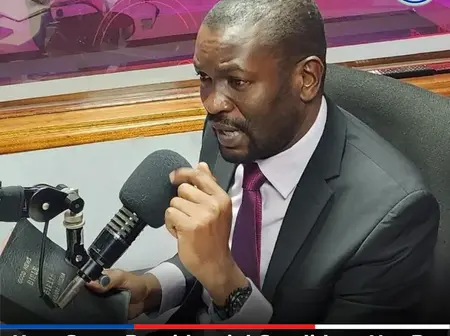
How Can a Presidential Candidate Not Be Party Leader, Sifuna Asks Babu
Nairobi Senator Edwin Sifuna has rejected allegations of political betrayal by Embakasi East Member of Parliament Babu Owino, questioning how a presidential flagbearer could be expected to run without leading the party.Speaking during a live interview on Radio Citizen on Thursday morning while holding a Bible, the Linda Mwananchi Movement leader dismissed claims by Owino that an initial power sharing agreement was altered to lock him out of the party leadership.
-
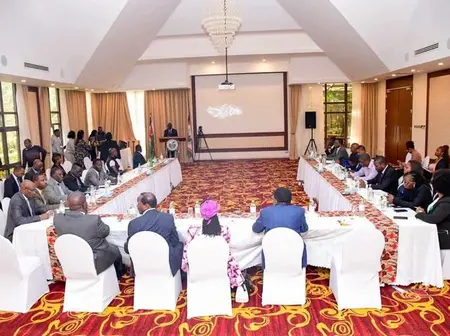
Opposition Leaders Unite for Strategic Meeting Ahead of Crucial IEBC Talks
On Thursday, opposition leaders from various parties met at a formal conference hall in Nairobi, setting the stage for critical discussions surrounding the electoral process in the lead-up to the 2027 elections. The session was characterized by active participation from members of the Linda Mwananchi Movement, with Senator Edwin Sifuna sharing updates and images from the meeting on social media.
Attendees included key leadership figures such as Secretary-General Caroli Omondi, Deputy Party Leader Faith Odhiambo, and Legal Affairs Secretary Wakili Kadide, all of whom are focusing on the reconstitution of the IEBC to ensure it is fully prepared for upcoming boundary reviews and by-elections.
The overarching goal of the meeting was to address the need for a quick and effective reform of the IEBC, emphasizing the importance of a reliable electoral body as the nation inches closer to the critical 2027 General Election. Over recent weeks, opposition factions have united in their calls for this reform, recognizing the necessity for a collaborative approach to strengthen their electoral chances.
However, the journey toward unity has not been without its challenges. Internal tensions reportedly linger within the opposition groups regarding party vehicles and leadership roles. Despite these differences, key leaders are engaging in broader discussions, working towards a cohesive front that could enhance their political influence during the election.
In particular, former Deputy President Gachagua and Jubilee leader Fred Matiang'i have been instrumental in promoting dialogue among the factions. Their efforts, alongside contributions from leaders like Martha Karua of the People’s Liberation Party and various regional representatives, highlight a commitment to collaboration that could prove vital in the upcoming electoral battles.
As the opposition navigates through these internal dynamics, the focus remains firmly on ensuring the success of the upcoming engagement with the IEBC. Leaders are positioning themselves strategically as they work towards presenting a united front, essential for handling the complexities of the impending elections.
With discussions continuing toward establishing a solid foundation for their electoral strategies, the meeting in Nairobi marks a crucial step forward for the opposition as they prepare to contest power in the upcoming election cycle. The commitment to unity and reform will be key as they rally their supporters for the challenges ahead.
https://www.facebook.com/share/p/1DpDszMtgy/?mibextid=wwXIfr