According to Business Insider Africa in a report published on November 24, 2026, the court declined to fast-track a petition challenging the acquisition of a 24.76 per cent stake in the strategically important petroleum transportation company.
The petition was filed by human rights activist Francis Awino, who wants the court to examine how public institutions and pension funds acquired, held and eventually sold their shares in KPC.
However, Justice Patricia Nyaundi Mande declined to grant emergency orders without first allowing the affected parties an opportunity to respond. The court's decision did not determine the legality of the disputed share transactions.
That distinction matters.
Dangote acquired approximately 4.5 billion KPC shares through his investment vehicle, Greenview Oil Trading Corp, in a transaction valued at about KSh42.5 billion. The purchase made him the company's second-largest shareholder, behind the Kenyan government, which retained a 35 per cent stake.
Business Daily reported that the shares were acquired from eight institutional investors, including the National Social Security Fund (NSSF), Public Service Superannuation Fund, County Pension Fund, Lapfund and Laptrust.
Awino is seeking disclosure of the institutions involved, the quantities of shares sold, the money received and the approvals obtained before the transactions were completed.
He also wants access to investment appraisals, board resolutions, transaction agreements and payment records. The court directed the respondents to file their responses by November 27, with the matter scheduled for further directions on November 30.
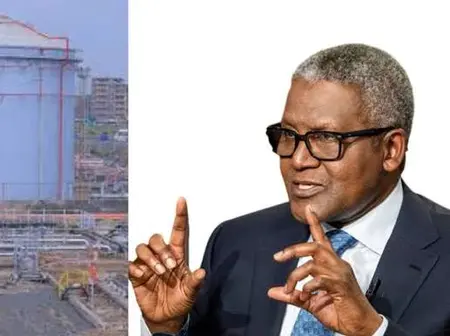
Meanwhile, Dangote's investment forms part of a wider ambition to expand his presence in Africa's energy industry.
Business Insider Africa reports that the billionaire plans to invest approximately $1.5 billion in upgrading and expanding KPC's pipeline network, which transports petroleum products from Mombasa to Nairobi and other parts of the country.
The proposed expansion is linked to his wider plans for a 700,000-barrel-per-day refinery in Lamu, which is expected to include supporting energy and industrial infrastructure.
KPC's existing network also supplies neighbouring countries, including Uganda, Rwanda, South Sudan and the Democratic Republic of Congo.
With the December 2 shareholder meeting approaching, attention now turns to the court proceedings and the company's ownership structure.
Should major strategic infrastructure companies in Kenya have more public scrutiny over transactions involving pension fund investments?
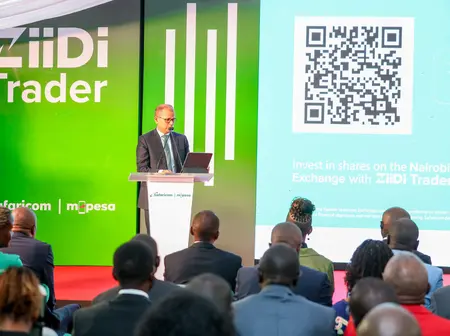
Ziidi Trader accounted for 54.21% of equity transactions recorded by the Nairobi Securities Exchange (NSE) between its launch in March and October 31, giving Safaricom’s mobile share-trading platform a substantial role in the market’s day-to-day activity.
The platform processed 1,318,851 transactions out of 2,432,819 equity deals recorded by the exchange during the period. Yet only 176,477 of its 1.1 million registered users had bought at least one share, leaving roughly 84% of those who signed up without a recorded purchase.
The figures show how mobile distribution has become an important route into the stock market, even as a relatively small proportion of Ziidi’s registered audience has progressed to buying securities. Its contribution to transaction volumes is significant, but the number of people who have actually invested remains a separate measure of the platform’s reach.
The figures also come as the NSE handles a growing volume of large institutional transactions. Recent share transfers involving Safaricom, NCBA Group and Kenya Pipeline Company (KPC) have generated substantial commissions for investment banks and stockbrokers, adding another dimension to the business being conducted through the exchange.
Ziidi’s 1.32 million transactions included 866,405 purchases and 452,416 sales, according to the latest figures. Its average ticket size stood at KSh3,349.65 on October 30, down from KSh4,818 in August.
The platform’s activity is spread across ordinary exchange trading and public share offers. During the KPC initial public offering in March 2026, Ziidi facilitated approximately 36,000 of the 73,000 retail orders. It also received 12,426 applications in the Quickmart IPO, covering 22.73 million shares valued at KSh170.54 million.
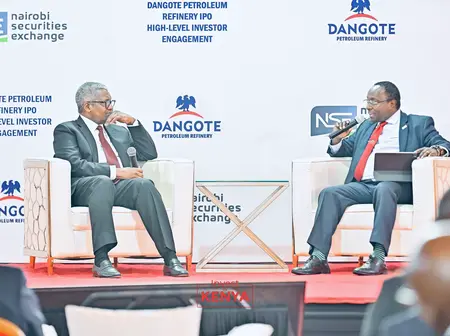
Renaissance Capital has also used the platform to market global depositary receipts representing shares in Dangote Refinery.
These transactions have demonstrated Ziidi’s ability to distribute investment opportunities to M-Pesa customers. The platform is jointly offered by Safaricom, the NSE and Kestrel Capital, allowing users to buy and sell listed shares through their phones without opening a conventional brokerage account. Existing M-Pesa customer identification details are used for onboarding, while Kestrel manages the omnibus account through which the shares are held.
The number of people signing up for Ziidi has increased substantially since its launch, but the proportion making a first share purchase has remained broadly unchanged.
Earlier figures reported by TechTrendsKE put registrations at approximately 511,000, with 84,000 active buyers. The latest disclosure puts registrations at 1.1 million and active buyers at 176,477. Both populations have more than doubled, while the conversion rate has stayed close to 16%.
The gap points to a challenge beyond attracting customers to a digital trading service. A registered user still needs to select a listed company, assess the investment and decide how much money to commit.
Market participants have identified limited investor awareness and uncertainty over which shares to buy as barriers to wider participation. Eric Ruenji, founder and chairman of Theo Capital Holdings, has said that many prospective investors are interested in joining the platform but do not know what to purchase.
He has also cautioned against allowing Ziidi to become associated only with IPO participation, given the need to sustain activity in the secondary market.
The NSE is preparing to list the Wall Street Africa Banking Index exchange-traded fund, which is expected to provide exposure to 12 banking stocks through a single investment product. The fund could offer an alternative to investors who are unsure which individual bank shares to select, although its listing alone does not establish whether more registered Ziidi users will begin trading.
The exchange is targeting nine million active retail investors by the end of 2029. Ziidi’s ability to bring more M-Pesa customers into the market will be relevant to that ambition, but the current figures show that registrations and active participation are still moving at different rates.
The retail activity recorded through Ziidi is taking place alongside large transactions involving institutional investors, companies and the government. Three major share deals involving Safaricom, NCBA and KPC were valued at a combined KSh356.5 billion, forming the bulk of the KSh367 billion in block trades cited in recent market reporting.
The largest was the government’s transfer of a 15% stake in Safaricom to South Africa’s Vodacom for KSh204 billion on June 30. SBG Securities represented Vodacom, while KCB Investment Bank acted for the Treasury. At a reported commission rate of about 1%, each intermediary stood to earn an estimated KSh2 billion.
Nedbank’s acquisition of a 66% stake in NCBA for KSh110 billion was concluded on November 3. Dyer & Blair Investment Bank handled the transaction for Nedbank, while NCBA Investment Bank represented most of the sellers. Reported commission rates of between 1% and 1.1% could translate into at least KSh1 billion for each side.
On October 21, Nigerian businessman Aliko Dangote acquired a 24.76% stake in KPC for KSh42.5 billion from a group of state-linked shareholders. Rock Investment Bank represented Dangote, while KCB Investment Bank acted for the sellers. At a reported rate of approximately 1%, each side stood to earn about KSh425 million.
The fees are estimates based on reported commission rates rather than confirmed final payments. Together, the transactions illustrate the scale of institutional business being handled by the exchange’s intermediaries. They are separate from Ziidi’s reported transaction count and should not be treated as activity generated by the mobile platform.
The NSE introduced its block trading board in 2023 for transactions exceeding KSh3 billion and representing at least 5% of an issuer’s total issued shares. The facility provides an exchange channel for significant ownership changes, making these transactions visible to the investing public.
The increase in large transactions has coincided with a sharp improvement in the financial performance of Kenya’s stockbrokers and investment banks.
The industry reported combined revenue of KSh9.88 billion in the first half of 2026, up from KSh3.7 billion in the corresponding period a year earlier. Net profit rose to KSh3.59 billion from KSh1.15 billion.
Brokerage commissions more than doubled to KSh2.8 billion from KSh1.6 billion, while advisory fees increased to KSh2.54 billion from KSh292,031. These earnings reflect activity across the wider industry, including trading, corporate transactions and advisory mandates. They cannot be attributed to Ziidi or the three block trades alone.
Faida Investment Bank recorded revenue of KSh2.69 billion, while Standard Investment Bank reported KSh2.07 billion. The two firms accounted for nearly half of the industry’s reported revenue. Fund management has also become an important source of income for several intermediaries.
The figures mark a recovery from the first half of 2023, when the industry recorded revenue of KSh2 billion and net profit of KSh365 million following a prolonged period of weak market activity.
Safaricom’s HY27 results provide further context on the growth of its investment and financial-services operations, but the figures do not offer a separate performance breakdown for Ziidi Trader.
For the six months ended September 30, 2026, the company reported 3.4 million active wealth-management customers and total wealth-management assets under management of KSh25.56 billion. It separately reported Ziidi assets under management of KSh23.36 billion, up 82.9%.
Safaricom also recorded KSh7.12 billion in financial-services revenue, an increase of 55.3%. These results cover a broader business that includes savings, lending and insurance. The 3.4 million wealth-management customers should not be confused with Ziidi Trader registrations, while the KSh23.36 billion in Ziidi assets should not be presented as assets held specifically through the share-trading product.
The results show the scale of Safaricom’s investment business, while the separate Ziidi Trader figures reveal how many registered customers have entered the equity market. For the NSE, the next measure of progress will be whether the expanding mobile audience translates into a larger number of people buying and selling listed securities.
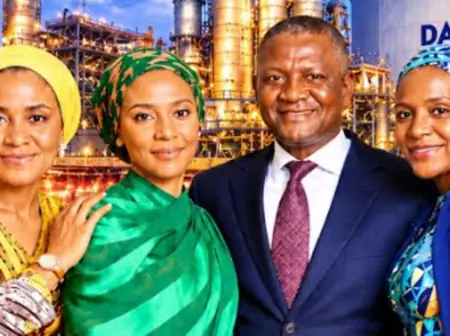
What you need to know:Aliko Dangote’s father, Mohammed Dangote, was a Hausa business associate of his maternal great-grandfather, Alhassan Abdullahi Dantata, West Africa’s wealthiest resident and the richest African during the colonial era. Aliko’s mother, Mariya Dantata, was the eldest daughter of Alhassan’s son, Sanusi Dantata, a wealthy groundnut merchant from Kano.
Kenya Pipeline Company is preparing to commit billions of shillings to new infrastructure while seeking a permanent chief executive and adjusting its board composition following a major change in ownership. The arrival of Aliko Dangote as a 24.99% shareholder adds another influential investor to decisions over the company’s expansion, financing and regional commercial strategy.
Dangote’s Greenview Oil Trading Corp acquired the stake for approximately KSh42.5 billion, paying KSh9.36 per share through a transaction involving local institutional investors. The acquisition made the Nigerian businessman KPC’s second-largest shareholder, behind the Kenyan government, which retains 35%, and ahead of Uganda’s 20.15% holding through the Uganda National Oil Corporation (UNOC).
Greenview Oil is now expected to nominate a director to KPC’s board, replacing Ronald Nyamosi, the National Social Security Fund’s (NSSF) general manager for finance and investments, who has served as an alternate director to the fund’s chief executive.
The nomination comes as KPC considers an expansion programme worth approximately KSh110 billion through 2030, according to the company’s management. Dangote has separately proposed investing $1.5 billion (approximately KSh195 billion) in the pipeline operator, creating the possibility of a much larger infrastructure investment involving the company’s existing network and his planned East African refining operations.
The scale of KPC’s existing operations provides some indication of the infrastructure business behind the share acquisition. The company’s FY2025/26 results, reported by TechTrendsKE on October 14, showed revenue of KSh42.98 billion and profit after tax of KSh11.58 billion. Petroleum transportation volumes reached 10.61 billion litres, while its operating network covered approximately 1,342 kilometres.
KPC also reported EBITDA of KSh25 billion and operating cash flow of KSh17.39 billion during the financial year. Its cash and cash equivalents stood at KSh20.54 billion, while outstanding borrowings had fallen to KSh400 million after an 83.4% reduction.
The company has identified additional pipelines, pumping facilities and storage capacity as priorities for its investment programme. Its management has estimated that a new pipeline comparable to the Mombasa-Nairobi line could cost between KSh60 billion and KSh70 billion, with other pipeline and capacity improvements requiring another KSh40 billion to KSh50 billion.
Financing these projects will require decisions on the balance between internal resources, borrowing and external investment. KPC has discussed commercial debt, project financing, infrastructure bonds and partnerships as possible funding sources. Management has also outlined a financing structure in which equity could account for approximately 30% of project costs, with debt providing the remaining 70%.
Dangote’s proposed investment would therefore enter a company that already has its own capital expenditure priorities. His board representative would participate in governance discussions involving the allocation of capital, infrastructure development and the company’s commercial direction, although the investment proposal does not establish that KPC has approved the full amount.
The company’s potential expansion also extends beyond conventional fuel transportation. KPC is considering a petroleum trading hub at the Kenya Petroleum Refineries Limited (KPRL) site, where it has approximately 377 acres. The proposed facility could accommodate additional storage, bunkering, transshipment and storage-for-hire services.
KPC management has said transportation and storage account for approximately 97% of its revenue. Expanding these services could provide additional commercial opportunities as petroleum trading and distribution requirements grow across the region.
Greenview Oil’s acquisition has altered the composition of KPC’s institutional shareholders, several of which sold portions or all of their investments following the company’s listing on the Nairobi Securities Exchange in March 2026.
The NSSF, Public Service Superannuation Fund (PSSF) and County Pension Fund (CPF) participated in the disposal of shares. Smaller schemes, including Lapfund, Laptrust, Kenya Power Pension Scheme and the Kenya Ports Authority Pension Scheme, exited their investments completely.
TechTrendsKE reported on October 26 that NSSF reduced its KPC holding from 22% to approximately 6% following the transaction. The fund therefore remains a shareholder but no longer holds the stake that previously supported its position among the company’s major institutional investors.
The sale process also involved negotiations over the price received by the pension schemes. According to the October 26 report, the sellers initially sought KSh10 per share before lowering their asking price during negotiations. The reported cash consideration was KSh9.04 per share, with a KSh0.32 dividend arrangement bringing the effective economic value to KSh9.36.
The transaction transferred a substantial block of shares to Greenview Oil while reducing the collective ownership of local pension schemes to below 15%, according to the reporting.
KPC’s articles of association provide a mechanism for significant shareholders to secure board representation. They state that oil marketing companies collectively, or another shareholder individually, holding at least 20% of the company’s issued capital 30 days before an AGM are entitled to nominate one director.
Greenview Oil’s reported 24.99% holding exceeds that threshold, providing the basis for its expected nomination. Its nominee will replace Nyamosi, whose position represents the NSSF’s previous institutional board participation.
Greenview Oil is registered outside Kenya, and its ownership records were not available through the Business Registration Service in the enquiries described in the November reporting. The company is identified as an affiliate of Dangote.
The December 2 AGM will also bring changes beyond the replacement of the NSSF’s representative. Five Kenyan directors appointed to fill casual vacancies are expected to leave the board after the meeting. They are Joyce Emanikor, Mutungwa Wambua, Christopher Karani, Martha Miano and Irene Wachira.
The Kenyan and Ugandan governments have exercised their rights to nominate five directors who already serve on the board. Kenya’s representatives are chairperson Faith Boinett, Samson Burgei and Meshack Kidenda, while Uganda is represented by Ramathan Ggoobi and Irene Pauline Bateeba.
Boinett is expected to retain her position despite a petition by the Kenya Petroleum Oil Workers Union challenging her appointment. The union alleged that her links to Fastnett Energy Limited, a company doing business with KPC, presented a conflict of interest. The High Court struck out the petition on jurisdictional grounds.
The board changes coincide with an unresolved management appointment. KPC has operated under acting chief executive Pius Mwendwa since Joe Sang resigned in April 2026 following a fuel scandal that emerged a month after the company’s IPO.
Mwendwa previously served as KPC’s general manager in charge of finance. The board failed to appoint a substantive chief executive earlier in the year as disagreements emerged over whether recruitment should proceed without a fully constituted board.
Dangote’s incoming representative will join the board during this leadership transition. However, the investor’s shareholding does not give him unilateral authority over the appointment. TechTrendsKE’s October reporting on KPC’s governance arrangements identified reserved government shareholder rights covering matters including the appointment of the managing director, tariff-setting and material changes to the company’s business plan.
Kenya’s 35% holding and Uganda’s 20.15% stake give the two governments substantial influence over these decisions. The incoming shareholder will therefore participate in a governance structure where important strategic and operational matters remain subject to existing shareholder arrangements.
Dangote’s interest in the pipeline operator is also connected to his plans to establish a refining business in eastern Africa. He is developing a proposed refinery in Lamu with a planned capacity of 700,000 barrels per day and an estimated investment of KSh2.1 trillion, according to the November reporting.
The project would require substantial infrastructure to transport crude oil, store refined products and distribute fuel to domestic and regional markets. Dangote has proposed connecting the refinery to KPC’s existing network, with additional distribution infrastructure potentially extending into neighbouring countries.
One proposed development involves a heated crude oil pipeline connecting Kenya’s oil fields in Turkana to the Lamu refinery. This would serve a different purpose from the existing refined-product network, which transports petrol, diesel and jet fuel from the coast to inland markets.
KPC has separately discussed opportunities to participate in crude oil logistics, including modifying storage facilities at the KPRL site to accommodate crude from Kenya’s emerging oil operations. Its management has also considered a potential equity and operating role in a future Lokichar-Lamu crude pipeline.
The regional distribution network provides another commercial consideration. KPC transports petroleum products from Mombasa to domestic markets and neighbouring countries, including Uganda, Rwanda, South Sudan and the Democratic Republic of Congo.
According to figures attributed to KPC management in TechTrendsKE’s October 22 reporting, the company accounts for approximately 96% of refined-fuel supplies to Uganda, 71% to South Sudan and 77% to eastern Democratic Republic of Congo.
KPC has also considered expanding storage and distribution services through LPG facilities in Nairobi and the proposed petroleum trading hub. These initiatives could broaden its role in regional energy logistics beyond transporting conventional refined products.
The proposed Lamu refinery would therefore have a potential commercial relationship with an established transportation and storage business serving several eastern African markets. Dangote has said he intends to invest in KPC’s expansion, although the proposed infrastructure connections remain distinct projects requiring their own development and financing arrangements.
For KPC, the immediate challenge is to manage its existing operations while financing a substantial investment programme and addressing its leadership vacancy. Dangote’s expected board representation places his interests within those decisions, as the company prepares to determine how its pipeline network, storage facilities and regional distribution operations will develop over the coming years.
Listen to articleFrancis Awino is challenging the circumstances under which institutional investors and pension funds reportedly disposed of their shares in KPC to Dangote East Africa Petroleum Refinery and Petrochemicals SEZ.The High Court has given the government and other institutions involved in the reported sale of a 24.76 per cent stake in the Kenya Pipeline Company (KPC) to an entity linked to Nigerian billionaire Aliko Dangote 14 days to explain the transactions.
Justice Patricia Nyaundi Mande has scheduled a petition challenging the reported sale of a 24.76 per cent stake in the Kenya Pipeline Company (KPC) to an entity linked to Nigerian billionaire Aliko Dangote for mention on November 30, 2026.In directions issued on November 10, Justice Nyaundi ordered human rights activist Francis Awino, who filed the case, to serve the petition and accompanying application on all respondents by November 13.
Africa’s richest man, Aliko Dangote, has opened the doors of his oil empire to ordinary investors across the continent, including in Kenya. On September 14, 2026, the Dangote Petroleum Refinery and Petrochemicals IPO went live, offering roughly 4.1 billion shares in what could become one of the largest share sales in African history.