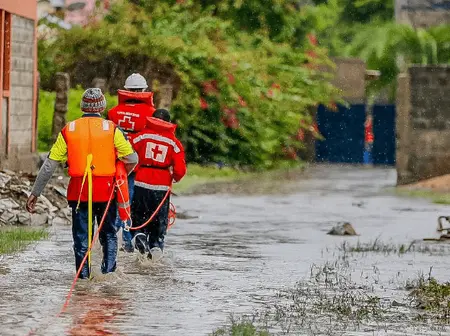
Kenyans have been urged to brace for a wet and disruptive period as continued rainfall, linked to the ongoing El Niño conditions, threatens to trigger flooding across several parts of the country.
According to the Kenya Meteorological Department notice on Monday, November 16, 2026, rainfall is expected to peak from November 17, 2026, to November 23, 2026.
Areas expected to receive heavy downpours include Bomet, Busia, Embu, Garissa, Homa Bay, Kajiado, Kakamega, Kericho, Kiambu, Kilifi, Kirinyaga, Kisii, Kisumu, Kitui, Kwale, Laikipia, Lamu, Machakos, Makueni, Meru, Migori, Mombasa, and Murang’a.
Nairobi, Nakuru, Nandi, Narok, Nyamira, Nyandarua, Nyeri, Siaya, Taita Taveta, Tana River, Tharaka-Nithi, Vihiga and Wajir Counties are also expected to receive heavy rainfall for the next five days.
El Niño, which is characterised by warmer-than-average sea surface temperatures in the Pacific Ocean, often leads to enhanced rainfall in East Africa.
In Kenya, it has historically been associated with destructive floods, displacement of families, destruction of crops, and outbreaks of waterborne diseases.
In its latest weather advisory, the Kenya Meteorological Department warned that the persistent rains may result in localised flooding, flash floods in susceptible areas, waterlogging, soil erosion and temporary disruption of transport, particularly in low-lying areas, urban settlements and poorly drained locations.
“Continued rainfall may result in localised flooding, flash floods in susceptible areas, waterlogging, soil erosion and temporary disruption of transport, particularly in low-lying areas, urban settlements and poorly drained locations,” the weatherman stated.
“Rising water levels in rivers and other water bodies may also pose risks to communities living downstream,” the notice added.
The Department said residents in flood-prone areas should remain on high alert, avoid crossing flooded rivers and roads, and move to higher ground where necessary.
Motorists have also been advised to avoid driving through flooded sections and to plan for possible delays on major roads and highways.
“Residents in flood-prone areas and along riverbanks are advised to remain vigilant and monitor changing weather and river conditions. Avoid crossing flooded roads, bridges and swollen rivers, whether on foot or by vehicle,” Kenya Met advisory read in part.
“Keep children away from rivers, drainage channels and flooded areas. Clear drainage systems around homes and institutions to minimise localised flooding. Residents in landslide-prone areas should remain alert to possible slope instability.”
County governments and disaster response teams have been put on standby, with the government urging communities living near rivers, dams and drainage channels to monitor water levels closely. Urban settlements such as Nairobi, Mombasa, Kisumu and Nakuru are particularly vulnerable due to poor drainage systems and rapid urbanisation.
Farmers have been advised to take advantage of the rains while also protecting their crops and livestock from soil erosion and waterlogging. The Met Department also cautioned that the rains could lead to landslides in hilly areas.
Members of the public are encouraged to follow updates from the Meteorological Department and the National Disaster Operations Centre, and to report any emergencies to the relevant authorities.
Leave a Reply