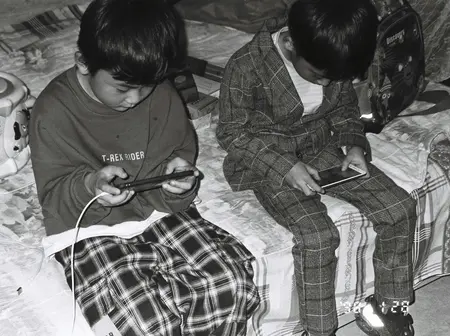
From entertainment and education to communication and social interaction, smartphones have become a central part of modern childhood. While these devices have opened doors to unprecedented opportunities, they have also raised important questions about development, social skills, and mental well-being.
As smartphones become increasingly common among younger age groups, experts, parents, and educators are debating what it means to grow up in the digital age.
Never before have children had access to so much information. A smartphone can provide instant answers to questions, educational videos, language-learning tools, and access to global knowledge. Students can collaborate on assignments, attend virtual classes, and develop digital skills that will likely serve them throughout their lives.
n many ways, today’s children are more connected and technologically capable than any previous generation. Yet connectivity comes with trade-offs. Many parents have noticed that family dinners, social gatherings, and even playgrounds are increasingly competing with screens for children’s attention. What was designed as a tool for communication can sometimes become a barrier to direct human interaction.
Perhaps no aspect of smartphone use has generated more concern than social media. For teenagers, platforms offer opportunities for self-expression, creativity, and social connection. Friendships can be maintained instantly regardless of distance, and young people can find communities that share their interests and passions.
However, social media also introduces pressures that previous generations rarely faced. Young people are constantly exposed to carefully curated images of success, beauty, wealth, and achievement. The result can be an unhealthy cycle of comparison, where self-worth becomes influenced by likes, views, and online approval.
Mental health professionals have increasingly highlighted the connection between excessive social media use and feelings of anxiety, stress, and low self-esteem among some adolescents.
Many childhood experiences traditionally involved physical activity and real-world exploration. Whether playing football in an open field, riding bicycles with friends, or participating in community activities, such experiences helped children develop social skills, confidence, and independence.
Today, concerns are growing that screen time may be replacing these opportunities. Studies and observations from educators suggest that some children spend significantly less time outdoors than previous generations. As a result, opportunities for spontaneous social interaction and physical activity may be declining. Critics argue that smartphones have become so dominant that they risk reshaping childhood itself.
Despite concerns, smartphones are not inherently harmful. In fact, their educational value is undeniable. Students can access online libraries, educational applications, research databases, and tutorials covering virtually every subject imaginable. During disruptions such as school closures, smartphones and other digital devices became essential learning tools. Educators increasingly emphasize that the objective should not be eliminating technology but teaching responsible and productive use. Digital literacy is quickly becoming as important as traditional literacy in preparing young people for the future.
The challenge facing modern society is not whether children should use smartphones. The reality is that digital technology is now deeply embedded in education, communication, and everyday life. The more important question is how balance can be achieved.
Parents are exploring screen-time limits. Schools are developing policies that encourage focused learning while still embracing technological benefits. Technology companies face increasing pressure to consider the impact of their platforms on young users.
Ultimately, smartphones are neither heroes nor villains. They are powerful tools whose impact depends largely on how they are used.
Every generation experiences change, but few have witnessed a transformation as rapid as the digital revolution. Today’s children are growing up in a world where information is immediate, communication is constant, and technology is ever-present. This reality presents incredible opportunities as well as significant challenges.
The task for parents, educators, and society is not to resist technological progress but to guide it responsibly. As smartphones continue to shape how young people learn, play, and connect, the future of childhood may depend on finding a balance between life online and life beyond the screen.
Leave a Reply