
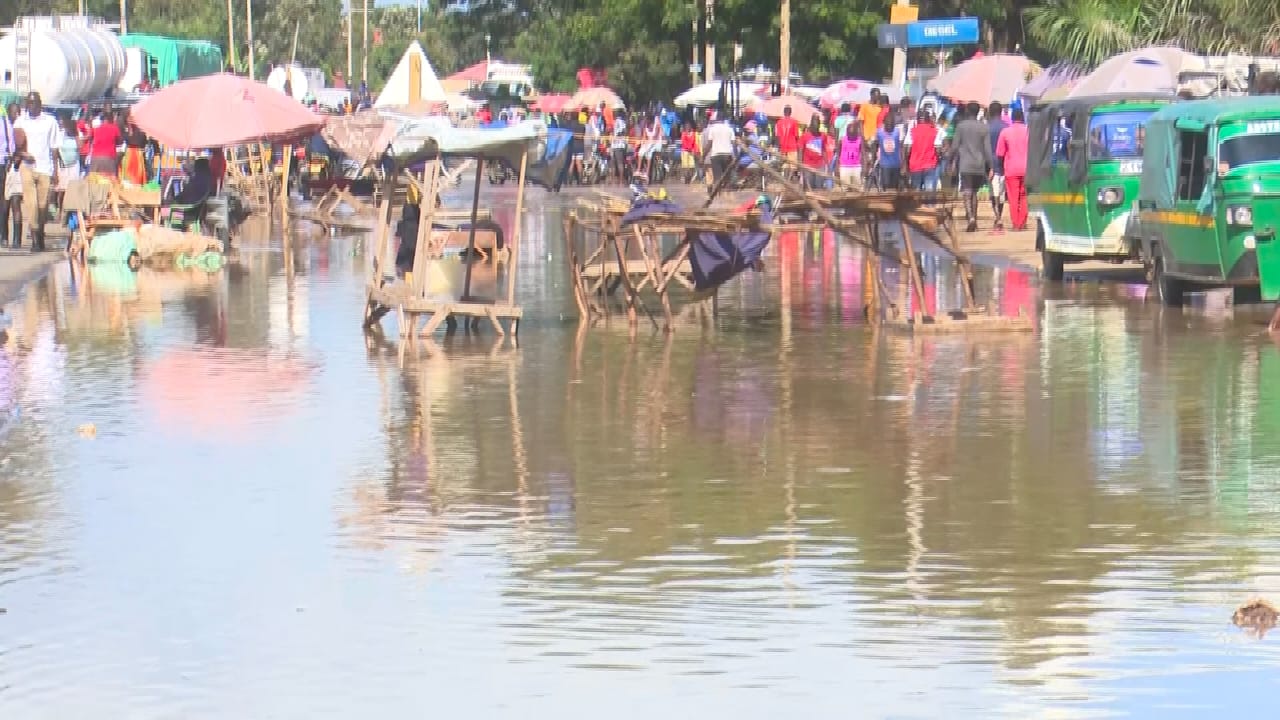
Rainfall is declining across the country with some areas receiving showers while others remain relatively dry compared to previous weeks, the weatherman has said.
This is despite forecast showing that the El Niño, which is typically associated with unusually heavy rains, is strengthening to historic levels.
In its review of weather conditions between November 16 and 22, the Kenya Meteorological Services said rainfall amounts had decreased across the country.
"Comparing 9th to 15th November 2026 and the 16th to 22nd November 2026 review periods, it is noted that rainfall amounts decreased across the country," Kennedy Thiong’o, a deputy director at the Kenya Meteorological Services, said in a statement.
In its latest forecast covering November 24 to 30, Met says rains are expected to continue in several parts of the country, but it does not indicate widespread or exceptionally heavy downpour.
However, the World Meteorological Organisation (WMO) says El Nino is developing into an extremely strong event, with the potential to significantly change rainfall and temperature patterns across the world.
The WMO's October outlook projected that ocean temperatures in the central and eastern tropical Pacific would reach about 3.8 degrees Celsius above normal between November and January, with the warming expected to peak around December.
The organisation warned that such an event can increase the risk of extreme weather, including floods, drought and unusually high temperatures in different parts of the world.
The Kenya Met had earlier predicted rains in Kenya would peak in December.
Met said the strength of El Niño alone does not determine how much rain Kenya receives.
A second climate pattern in the Indian Ocean, known as the Indian Ocean Dipole (IOD), is also influencing the rains expected in East Africa.
The IOD measures differences in sea temperatures between the western and eastern parts of the Indian Ocean. When it is positive, waters in the western Indian Ocean, near East Africa, are warmer than those in the eastern part, closer to Indonesia. This can increase the supply of moisture to the atmosphere and favour heavier rainfall in East Africa.
The IOD is currently in its positive phase. The latest November forecast by Columbia University's International Research Institute for Climate and Society gives a 97 per cent probability that it will remain positive this month, falling to 75 per cent in December and 58 per cent in January.
The combination of El Niño and a strong positive IOD has previously been associated with unusually wet short-rains seasons in East Africa, including the devastating 1997 and 2019 floods. But it does not guarantee that every part of Kenya will receive heavy rain.
Kenya's own weather records illustrate the uneven distribution. Last week, some counties experienced heavy downpours even as rainfall declined nationally.
For the coming week, Met expects afternoon showers and thunderstorms in parts of western Kenya.
It said rainfall is likely to continue in parts of Kakamega, Bungoma, Nandi, Homa Bay, Migori, Kisii, Kericho, Nyamira, Nyandarua, Laikipia, Nyeri, Murang’a, Kiambu, Nairobi, Kirinyaga, Embu, Tharaka Nithi and Meru counties.
The same will be experienced in Isiolo, Kitui, Makueni, Machakos, Kajiado, Taita Taveta, Tana River, Garissa, Lamu, Kilifi, Kwale and Mombasa counties according to the statement by Thiong’o.
He said afternoon showers are also likely in parts of the said counties.
Morning rains may occur in parts of Embu, Kajiado, Kiambu, Kirinyaga, Kitui, Machakos, Makueni, Murang'a, Nairobi and Taita Taveta, while night showers are possible in some parts of Eastern region.
The forecast warns farmers in parts of northern Kenya to prepare for high temperatures which are expected to exceed 35 degrees Celsius in parts of Samburu, Turkana, Marsabit, Wajir, Garissa and Lamu during the day.
Despite the recent decline, the national seasonal outlook has not changed significantly. In its November forecast, Met still expects above-average rainfall in most parts of the country during the October to December short-rains season, with the wetter conditions likely to extend into January.
Counties expected to receive above-average rainfall include Embu, Meru, Tharaka Nithi, Kitui, Makueni, Machakos, Nairobi, Kiambu, Murang'a, Nyeri, Kirinyaga, Kisii, Kakamega, Bungoma, Kisumu, Mombasa and Kilifi.
The weatherman advised that weekly forecast be used alongside its daily and five-day forecasts, which provide more immediate guidance on changing weather conditions. It also provides county-specific forecasts through its county directors of meteorological services.
Leave a Reply