Businesses last month raised prices of goods and services at second-highest pace in three years to protect their profit margins as rising fuel, transport and purchase costs eat into earnings, threatening to undermine a private-sector recovery driven by improving customer demand
The latest Stanbic Bank Kenya Purchasing Managers’ Index (PMI) shows that while companies are receiving more orders, mounting cash-flow difficulties and inflationary pressures are limiting their ability to expand production, clear backlogs and hire more workers.
A new category of wearable technology is quietly finding its way onto the fingers of Kenya’s fitness enthusiasts, offering an alternative to the familiar smartwatch and fitness tracker wristband.
The smart ring, a compact device that resembles ordinary jewellery, tracks sleep patterns, heart rate, activity levels and other health indicators without the bulk of a watch or the need to keep checking a screen.
Gusii singer and digital content creator Vickytam Embande has shared a glimpse of the custom-built grave where late entertainer MC Ogwatoni will be laid to rest, revealing a striking green concrete finish on its interior as preparations for the burial continued.Vickytam shared photographs in a Facebook post on Wednesday, November 4, 2026, showing how the grave was dug deep into the ground before its interior was lined with concrete.
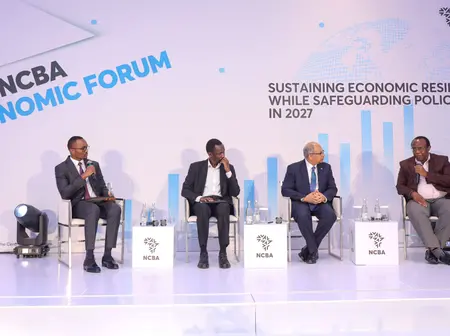
Kenya’s cost of doing business is back in focus after David Ndii proposed a dedicated function to oversee regulatory requirements and the charges imposed on businesses. Speaking at the NCBA Economic Forum 2026, Ndii argued for a more coordinated approach to monitoring regulations, with attention to the fees, licences and administrative obligations that affect companies.
The proposal addresses a concern raised during the forum about the accumulation of charges across government agencies. Businesses must navigate different regulatory requirements while managing the financial and administrative costs associated with operating in Kenya.
Ndii’s proposal centres on giving regulatory oversight a clearly defined institutional responsibility. A dedicated function would monitor the rules affecting businesses and examine how new requirements add to existing compliance obligations.
The issue is particularly relevant to smaller enterprises, which often have fewer resources to manage multiple licences, inspections and administrative processes. Companies operating across different sectors can also face requirements from several agencies, adding to the complexity of compliance.
Dr Bimal Kantaria raised concerns about the number of fees and levies affecting exporters. He referred to 47 charges and five additional levies, arguing that regulatory costs contribute to the difficulties facing Kenyan businesses competing in international markets.
His comments also connected regulatory costs with logistical challenges affecting horticultural exports. Charges imposed at different stages of production, transportation and export can add to the cost of getting Kenyan goods to overseas buyers.
For businesses operating on tight margins, these expenses affect pricing and competitiveness. Smaller exporters and producers must also account for the administrative time involved in meeting different requirements.
The debate highlighted the relationship between regulation and the ability of businesses to invest and expand. Predictable rules allow companies to plan their operations, while multiple and fragmented requirements can complicate investment decisions.
Gossip’s closing remarks at the forum also emphasised lower business costs, accountability and economic diversification as priorities for Kenya’s private sector.
A dedicated regulatory oversight function would place greater attention on the cumulative cost of government requirements. The broader policy question concerns how Kenya can maintain effective regulation while ensuring that businesses are not burdened by unnecessary administrative expenses.
For SMEs, exporters and larger companies, the cost of compliance forms part of the wider operating environment. Ndii’s proposal puts responsibility for examining that burden at the centre of the business policy discussion.
Manchester City manager Enzo Maresca has challenged his other attacking players to contribute more goals instead of depending heavily on Erling Haaland to deliver in front of goal.The Norwegian striker has enjoyed an outstanding spell since arriving at the Etihad Stadium in the summer of 2022, registering 175 goals in 209 appearances for the Premier League champions.
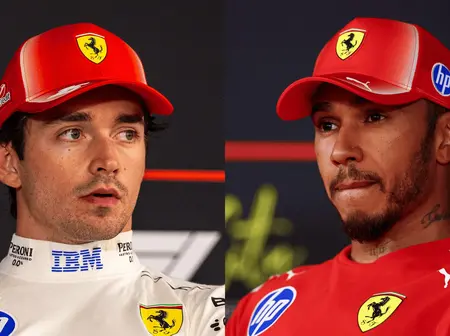
A journalist who was present in Ferrari's hospitality at the Mexico City Grand Prix has revealed what he saw following the incident between Lewis Hamilton and Charles Leclerc on lap one.
Hamilton was ahead of Leclerc going into turn four when the Monegasque driver left the track and gained an advantage after carrying too much speed into the corner.
Leclerc did not give back the position to Hamilton and took over the race lead, with Hamilton – who also left the track but rejoined in the correct manner – dropping behind Max Verstappen.
The seven-time world champion criticised the FIA's decision to only give Leclerc a five-second penalty rather than the standard 10-second punishment, with race stewards citing mitigating factors – Hamilton leaving the track – as the reason behind their decision. During the red flag period, Hamilton told his race engineer Carlo Santi that Ferrari had 'big problems' over the incident, and now more details have emerged about what went on behind-the-scenes.
Journalist Edd Straw, speaking on The Race's YouTube channel, stated that he attended Ferrari team principal Frederic Vasseur's media briefing in the team's hospitality building after the Mexico City Grand Prix – at which point Leclerc walked in.
"He's [Vasseur] not going to talk to them like naughty school children. He's not going to take that approach," Straw said. "But I am convinced he will be forceful. He knows how to do it.
"Funnily enough, as we were coming out of the room in the back of the Ferrari hospitality, the little group of us, Charles Leclerc arrived. Face like thunder, I think it's fair to say. He didn't look very happy. Marched into the drivers' room at the back, and Fred went in after him. So that's where the conversations began.
"And around about the same time, the press conference was starting where Lewis Hamilton was continuing to presumably take what he thought was his very strong position."
In his post-race interview, Leclerc accepted that he deserved a five-second penalty 'in a way', but stopped short of admitting complete fault for the incident with Hamilton.
"The thing is that it was a bit confusing because we both didn't make Turn 4," he said. "Then I stayed ahead, and then Max got past Lewis. So yeah, then I asked what should I do? And I kept the position and took a deserved penalty."
Hamilton, meanwhile, said he would take his frustrations with Ferrari and Leclerc 'offline', but admitted he was unhappy with the team losing out on what could have been a one-two finish had it not been for Leclerc's move at turn four.
"I'm happy because this guy [Antonelli] just won the championship," he said in the post-race podium press conference. "So I'm really torn because, on one side, I'm happy and, on the other side, I'm really p—ed.
"We lost valuable points. We, as a team, worked so hard. We could have easily had a one-two today. We had the pace to do so.
"So we're going into turn four, first and second. If we just held position, I think anything can happen in the race, but when your team-mate works against you, and then you lose positions like that, it's definitely tough.
"I think the core thing to remember, which maybe comes with age, is that every decision you make in the car impacts all the people who work in the background – the whole team. Working as a team is part of our job and part of our contract. We have to work as a team, which we could have easily done today.
"So it's a shame to see us lose as we did, and that will just continue unless action is taken and a real, deep, serious conversation is had so it shouldn't happen moving forward."
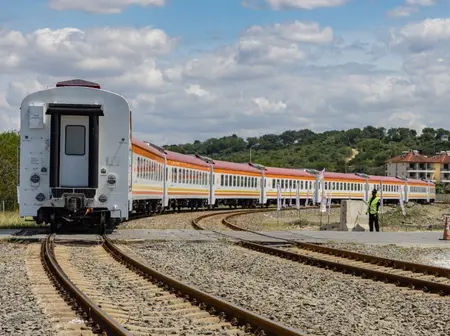
As thousands of Kenyans prepare to travel to different destinations during the festive season, passengers using the Standard Gauge Railway (SGR) have been encouraged to remain vigilant and take personal security precautions throughout their journeys.With increased movement of people during the holidays, travellers may become vulnerable to theft, particularly when carrying luggage, valuables and personal belongings in busy public spaces.
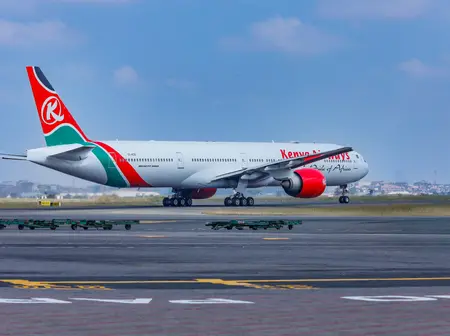
Kenya Airways cargo operations could play a greater role in supporting agricultural exporters under a proposal by Dr Bimal Kantaria to lease two dedicated freighter aircraft. Speaking at the NCBA Economic Forum 2026, Kantaria proposed one aircraft serving the United Kingdom and another covering the wider European market.
The proposal addresses the cost and capacity challenges facing Kenya’s horticultural exporters, particularly businesses that depend on reliable airfreight to transport fresh produce to overseas buyers.
Kantaria’s proposal involves leasing two cargo aircraft through Kenya Airways, with separate coverage for the UK and European markets. The arrangement would give exporters a dedicated cargo option serving two important destinations for Kenyan produce.
Fresh produce exports depend on transportation arrangements that can preserve quality and meet delivery schedules. Airfreight capacity is therefore an important part of the economics of exporting horticultural products.
Kantaria argued that Kenya needs to address the logistical constraints affecting exporters, including the availability and cost of transporting goods to international markets.
Kenya’s horticultural sector competes in markets where delivery times, transport costs and product quality influence commercial performance. Exporters must manage these requirements while competing with suppliers from other producing countries.
A dedicated cargo arrangement through Kenya Airways could provide another route for moving Kenyan produce to buyers in Britain and Europe. The proposal also places the national carrier within a wider discussion about how aviation infrastructure can support trade and agricultural exports.
Kantaria’s comments extended beyond airfreight. He raised concerns about delays at the Port of Mombasa, including vessel waiting periods of 45 to 50 days, and the financial costs associated with delays affecting fertiliser shipments.
He also discussed the burden of multiple charges and levies facing exporters. These costs form part of the operating environment for companies that must move goods through several stages before reaching international customers.
The combination of transport costs, administrative charges and supply-chain delays affects the competitiveness of Kenyan exports.
The two-aircraft proposal places cargo capacity within the broader question of how Kenya can support its export industries. Horticultural exporters need transport options that connect production areas with overseas markets while managing the cost of moving perishable goods.
For Kenya Airways, the proposal points to a potential role in supporting agricultural trade through dedicated freight services. For exporters, the wider issue is whether the country’s transport infrastructure can support the volume, timing and cost requirements of international markets.
Listen to articleThe affected club, Armée Patriotique Rwandaise (APR), is one of Rwanda's leading basketball teams and is funded by the country's military.The National Basketball Association (NBA) has linked the exclusion of Rwanda's army-backed basketball club from the 2026 Basketball Africa League (BAL) to US sanctions against the country's military in March.
There is always that one friend who reaches for the bill before anyone else has had a chance to open their wallet. At dinner, on a weekend getaway or when booking a group activity, they are quick to pay, trusting that everyone will send their share later.
It may seem like a harmless gesture of generosity, but being the friend who always picks up the tab can come at a cost.