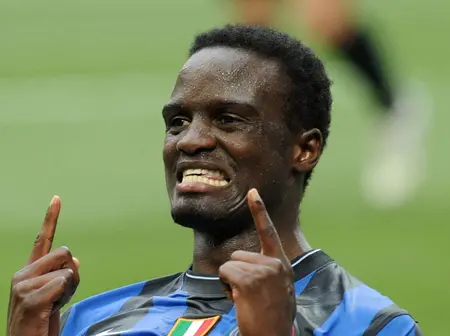
McDonald Mariga is one of Kenya’s most celebrated football legends.The former Harambee Stars midfielder rose from humble beginnings to become the first Kenyan to feature in the UEFA Champions League and remains the only Kenyan footballer to have won the prestigious competition.Born on April 4, 1987, in Nairobi to Noah and Mildred Mariga, McDonald grew up in a family with strong sporting roots.
Blog
-

“Hand Over the Kids or Die!”: Preacher Issues Chilling Death Warning to Betty Bayo’s Widower Tash
In Summary“Hand Over the Kids or Die! “: Preacher Issues Chilling Death Warning to Betty Bayo’s Widower Tash.Pastor Kanyari was awarded the primary custody of his two children, Sky and Danny, whom he shares with departed ex-wife and singer Betty Bayo.
-

“Hand Over the Kids or Die!“: Preacher Issues Chilling Death Warning to Betty Bayo’s Widower Tash.
Pastor Kanyari was awarded the primary custody of his two children, Sky and Danny, whom he shares with departed ex-wife and singer Betty Bayo.Recently, Kanyari’s teenage daughter, Sky noted that she’s against living with his father due to his questionable character.
-
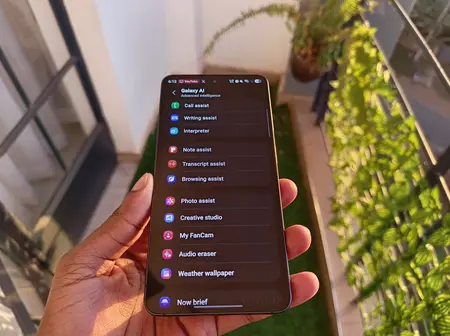
Samsung’s planned Galaxy AI subscription would give power users more features and usage
Samsung is preparing a Galaxy AI subscription that would give users access to advanced artificial intelligence features, larger usage allowances and additional services, while keeping core Galaxy AI tools available free of charge.
The proposed plans point to a paid model built around optional upgrades rather than a subscription requirement for every Galaxy owner. Samsung has said its core Galaxy AI features will remain free, while certain advanced capabilities and new services could be offered as paid options in the future.
The planned offering includes AI-powered video generation, automated actions across apps and a credit system that gives subscribers higher allowances for selected tasks. It would add a paid layer to the Galaxy AI experience, which Samsung has expanded across its smartphone range since introducing the platform with the Galaxy S24 series.
The development comes as Samsung moves beyond individual editing and translation tools towards AI features that can interpret context, generate content and assist with tasks across a device.
Samsung’s proposed subscription structure includes three tiers called Starter, Plus and Pro. The plans would provide different credit allocations, with Starter offering 10,000 credits, Plus providing 20,000 and Pro giving subscribers 50,000 credits.
Users would be able to use these credits for AI functions after exhausting their free allowances. The system would also allow customers to purchase additional credits for individual features or buy one-time credit packs separately from a subscription. Those packs would remain valid for three years from the date of purchase.
The proposed plans introduce several capabilities beyond the existing Galaxy AI tools. Gen Video would turn static photographs into short video clips, giving users another way to create content directly from their Galaxy devices. The feature follows a similar concept to AI video generation available through Google’s Gemini services.
Bixby Action would allow users to create commands, triggers and routines that automate everyday tasks. It is designed to carry out actions across apps and system functions, extending Bixby’s role beyond responding to voice commands.
Galaxy Claw is another reported addition, designed to automate routine daily tasks using Galaxy AI. Bixby Action is positioned among the higher-tier offerings, while Galaxy Claw forms part of the broader premium experience.
Daily Briefing would also feature in the Plus tier. It is separate from Now Brief, Samsung’s existing feature for presenting personalised information and updates to users. The subscription offering would also provide expanded usage limits for selected AI functions.
The reported credit allocations form part of a wider system that would determine how frequently users can access certain AI services. Starter, Plus and Pro would offer progressively larger credit balances, giving subscribers different levels of access depending on their chosen plan.
The proposed structure also includes separate daily allowances for selected tasks. Under the free allocation, users would receive up to 10 translations, five text summaries and two image generations per day. An Essential allowance would raise those limits to 100 translations, 50 summaries and 20 image generations, while the Premium allowance would provide unlimited daily usage for these three functions.
These daily limits sit alongside the credit allocations associated with the three subscription tiers. Users would be able to view their remaining credits and expiry dates, while additional credit packs would provide another way to access AI services after the allocated allowance runs out.
The structure gives Samsung room to charge for heavier use of its AI tools while retaining a free route to the existing experience. It also introduces a distinction between access to an AI feature and the number of times a user can use it within a given period.
An earlier version of the proposed subscription structure used the names Standard and Max. The Max option was associated with a fourfold increase in usage allowances, alongside features such as Gen Video, Bixby Action and Daily Briefing.
Pricing strings associated with that structure showed $4.99 per month or $47.99 annually. These figures were presented as placeholder values, rather than confirmed retail prices.
Samsung’s existing Galaxy AI capabilities are expected to remain available without a subscription. These include Browsing Assist, Creative Studio, Memory, Now Brief and Photo Studio, alongside other existing tools.
The distinction matters because Galaxy AI has become part of the experience Samsung promotes across its smartphone portfolio. Features such as Photo Assist, writing assistance, translation and summarisation have given Galaxy users practical ways to apply AI to everyday tasks without relying entirely on separate applications.
Samsung has also addressed the question of charging for its AI services. In a statement to Tech Advisor, the company said: “Samsung’s core Galaxy AI features will remain free of charge.” It added that certain advanced capabilities or new services could be offered as paid options or separate services in the future.
That position leaves room for a subscription offering built around new capabilities and higher usage limits. Existing tools could continue to serve users who rely on Galaxy AI for occasional tasks, while customers who generate more content or use advanced functions more frequently could pay for additional access.
The distinction also matters when considering how Galaxy AI works across different devices. Samsung’s AI experience combines on-device processing with cloud-based services, depending on the feature. Its partnership with Google Cloud helped bring Gemini Pro and Imagen 2 through Vertex AI to the Galaxy S24 series, while Gemini Nano supported on-device processing.
Samsung’s position on free Galaxy AI access has been part of the conversation since the Galaxy S24 launch in January 2024. At the time, Samsung’s product information indicated that some cloud-based Galaxy AI features could become paid services after the initial free-access period.
Galaxy Unpacked January 2024 launch raised the possibility that cloud-based AI capabilities could eventually sit behind a subscription. The discussion came as Samsung introduced Galaxy AI as a major part of the Galaxy S24 experience, combining its own software with Google’s generative AI models.
The Galaxy S24 FE launch in Kenya in October 2024 provided another indication of the initial free-access arrangement. Samsung’s stated position at the time was that some Galaxy AI features would remain free until the end of 2025.
Since then, Samsung has expanded the AI experience across its product range. The Galaxy S25 series brought deeper integration through One UI 7, while the Galaxy S26 series added more contextual assistance and agent-like functions. Features such as Now Nudge and Gemini-powered actions have extended the role of AI beyond individual commands and editing tools.
Samsung has also brought selected AI capabilities to devices outside its flagship S series, although feature availability varies across models. That broader distribution has helped make Galaxy AI a central part of the company’s smartphone software strategy.
A subscription model would add another layer to that strategy, allowing Samsung to retain core AI functions as part of the Galaxy experience while charging for additional services and higher usage allowances. For users, the practical distinction would be whether the free allocation covers their regular needs or whether advanced tools and more frequent use justify paying for an upgrade.
-

Kenya Shujaa Secure Dubai 7s Invitation Ahead of SVNS 2 Campaign
In SummaryKenya Shujaa have officially accepted an invitation to compete at the prestigious Dubai 7s tournament, running from November 27–29, 2026, at The Sevens Stadium.Kevin Wambua’s side will face fellow invitees Shogun Rugby, SCA Sevens, UAE Shaheen, Butchers, and Froggies Club in a competitive round-robin format alongside the global elite.
-

Ichung’wah Reveals What Ruto Told Him About Karauri’s UDA Move

National Assembly Majority Leader Kimani Ichung’wah and UDA Secretary-General Hassan Omar welcomed Karauri at the party’s headquarters. In a statement released on Monday, November 9, 2026, Karauri explained that UDA offers the ideal political vehicle to deliver effective governance for Nairobi residents.
“Today, I take a new political step by joining the United Democratic Alliance (UDA) as I pursue my ambition to serve Nairobi as Governor in 2027,” Karauri wrote. “I looked at all the options and chose where I believe I can deliver for Nairobi.”
Karauri highlighted the broad-based government’s “Usawa ni sawa” policy framework, pointing out that it guarantees every ward receives attention, every voice counts, and every citizen matters. Expressing confidence in his ability to unite Nairobi’s diverse population under a single vision, the lawmaker also directly criticized incumbent Governor Johnson Sakaja’s performance.
“I have served the people of Kasarani as an Independent MP, and I remain grateful for their trust,” Karauri stated. “Nairobi has not worked. We want a better Nairobi!”
Addressing the gathering, Ichung’wah revealed that President William Ruto specifically requested him to welcome the Kasarani legislator to the ruling party, forecasting a UDA victory in the capital come 2027.

“The President called me in the morning and told me that I should come and welcome Karauri to the UDA party,” Ichung’wah said. “In 2022, Nairobi was UDA, and that will be the case in 2027.”
Karauri’s political shift follows days after Governor Sakaja exited UDA to join the Orange Democratic Movement (ODM), a key partner in the broad-based coalition. Sakaja cited ODM’s historical strength across Nairobi alongside the legacy of the late Raila Odinga as factors in his decision.
The battle for the UDA ticket and the wider 2027 Nairobi gubernatorial race continues to intensify, with several prominent politicians declaring their candidacies, including Embakasi East MP Babu Owino, Embakasi North MP James Gakuya, and Public Service Cabinet Secretary Geoffrey Ruku.
-

Facebook, TikTok and Other Platforms Face Ksh500 Million Fines Under New Bill
Under the newly introduced Online Safety Bill 2026, sponsored by Embakasi West MP Mark Mwenje, tech companies must institute strict safeguards to protect users under the age of 18 from illegal online material. The legislation also equips the Communications Authority of Kenya (CA) with robust enforcement powers to track compliance and penalize non-compliant platforms.
A cornerstone of the proposed law is its focus on parental oversight and age verification. The legislation mandates that children under 18 secure explicit parental approval before creating accounts or accessing social media services. Furthermore, parents retain the legal right to revoke this approval at any point, forcing platforms to cut off the child’s access within a designated timeframe.
“A parent or a person who exercises parental responsibility shall be responsible for giving or withholding consent to the access to, or use of, a regulated service by a child, having regard to the age, maturity and best interests of the child,” the Bill states.
To enforce these boundaries, tech platforms must deploy robust age-verification or age-estimation systems. Providers must also verify that the person granting permission actually holds legal parental authority over the minor.
If the Communications Authority of Kenya suspects a platform of ignoring these statutory duties, it can issue a formal compliance notice outlining specific violations and remediation timelines.
“A compliance notice shall specify the provision of this Act alleged to have been breached, the facts constituting the breach, the measures required to remedy the breach, and the period within which the measures shall be implemented,” the Bill reads in part.
Failure to uphold this basic duty of care carries heavy financial and legal consequences. Platforms that violate the rules face fines reaching up to Ksh. 500 million, or 10 percent of their global annual turnover, whichever sum is higher.
The legislation goes even further by holding corporate leadership directly accountable for systemic failures.
“Where an offence under this section is committed with the consent or connivance of, or is attributable to any gross negligence on the part of, a senior executive officer of the provider, that officer commits an offence and is liable on conviction to a fine not exceeding ten million shillings or to imprisonment for a term not exceeding five years, or to both,” the Bill states.
The scope of the Bill explicitly targets illegal content and online threats covered under Kenya’s Computer Misuse and Cybercrimes Act, the Prevention of Terrorism Act, and severe offenses involving child sexual abuse material (CSAM).
As Parliament reviews the proposal, tech providers targeting Kenyan users will need to re-evaluate their onboarding workflows, content moderation systems, and user data protections to meet these proposed standards.
-
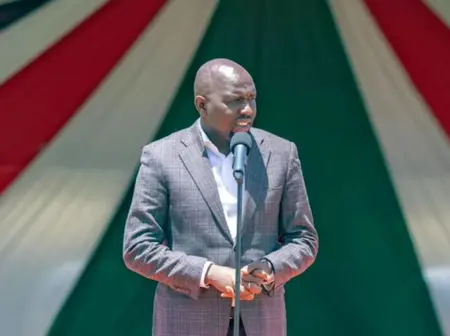
Murkomen to Sifuna: Back Ruto in 2027, We’ll Help You Become President in 2032
Speaking at a thanksgiving service and fundraiser at Bushiangala Church of God in Ikolomani constituency, Kakamega County, Murkomen said the Luhya community would have a stronger chance of producing a president in 2032.
“The President is our neighbour just next door; there’s no need to divide votes, and you can’t win. Support the President for the next five years; you and I will make arrangements in the coming years,” he said.
Murkomen acknowledged Sifuna’s growing popularity but said he remained a long way from the presidency. He warned that Sifuna’s push to unseat Ruto in 2027 could cost the wider Mulembe community an opportunity to lead the country.
“You people of Kakamega, every time you build your leader, when they’re about to capture the presidency, you are deceived and told, ‘Let’s go this way to destroy’,” he said.
Murkomen said the Luhya community had supported Ruto for years and was nearing a point when it could be next in line to produce the country’s leader. He warned that turning away from the president now could weaken those prospects.
“You have built him (Ruto); he has worked, and he’s about to finish, but you’re being told to cut ties with him and start afresh with someone else who’s far back on the queue.”
He also dismissed opposition politics as offering little advantage to leaders seeking power, arguing that young politicians who position themselves against the incumbent could undermine their chances of succeeding him after his second term.
“Huyu Rais mwenye ako hapa tumalizane na yeye, asonge aondoe jam, sisi sasa tupangane hapa tukitafuta uongozi kusonga mbele.”
-
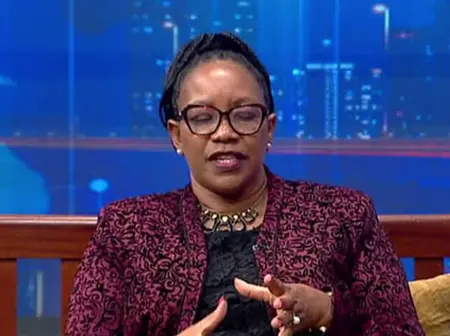
Sicily Kariuki Reveals What Uhuru Promised Her to Quit Nyandarua Governor Race
Kariuki said she found the decision painful, particularly because she had already resigned from Cabinet to focus on the gubernatorial race. She resigned as Water CS on February 9, 2022, to pursue the Nyandarua governorship.
In an interview with a vernacular radio station on Monday, she described the tense talks that led her to withdraw from the Jubilee Party nominations. Kimemia, she said, was the government’s preferred candidate.
The two camps could not agree on who should carry the Jubilee ticket, and the nominations stalled. State House emissaries then stepped in to encourage negotiations.
“When Jubilee nominations became difficult, we had to resort to negotiations,” Kariuki said.
As the campaign entered its final stretch, Uhuru sent emissaries to persuade her to negotiate with Kimemia, she said.
“Politics are not conducted that way. The party [Jubilee] came and appeared to interfere. I told the president that given that the sitting governor [Kimemia] was State’s candidate, we may not be able to reach an agreement because I had my own interests. I also knew why I had resigned from the Cabinet,” she said.
Kariuki said Uhuru later called her directly and asked her to return to Nairobi to help former Prime Minister Raila Odinga and his running mate, Martha Karua, build support in Nyandarua ahead of the 2022 General Election. She said he promised to find her a position in an Odinga administration if the Azimio presidential candidate won.
“Lastly, the President, in his own wisdom, called me. He told me that he would like me to retreat to Nairobi to go and support the late Raila and Karua on how they will penetrate to Nyandarua. He told me that they would find a place for me in Raila’s government,” she recalled.
Kariuki said she did not make her decision immediately. Uhuru sent several emissaries to persuade her to leave the race, and she consulted her family.
“After a lot of agony, several emissaries were sent to me. [Uhuru] was not directly telling me to step aside for the sake of someone. I consulted with my family,” she said.
“They asked me, ‘Can you compete with the President? Someone who gave you a job, yet you had not bribed him….’”
She said she asked Uhuru for three days to consider the request before announcing her withdrawal from the Nyandarua race. Kariuki maintained that she stepped aside out of respect for her former boss, not because she had agreed to give up her ambitions for Kimemia.
“To Nyandarua residents, I did not step down for someone. I stepped down because of the respect I had for Uhuru, who was my boss,” she said.
Kariuki said the experience left her disappointed and conflicted. She questioned why Uhuru had allowed her to resign from Cabinet if he intended to ask her to abandon the gubernatorial contest.
“I was in a state of mixed feelings. Temporarily I got very disappointed, because he [Uhuru] couldn’t have allowed me to resign from the Cabinet,” she said.
Kariuki has since joined the Democracy for the Citizens Party (DCP) and is among the politicians seeking its ticket to challenge incumbent Governor Kiarie Badilisha in the 2027 General Election. Badilisha is also seeking re-election through DCP, setting up a potentially competitive contest for the party’s nomination.
-

Thika Superhighway Service Lanes to Close for 5 Weeks at Kihunguro
KeNHA Director General Luka Kimeli said on Monday, November 9, that the closure would allow contractors to build a bridge, including assembling and hoisting its superstructure. The closure will run from Sunday, November 15, to Sunday, December 20, 2026.
“KeNHA informs the public of a temporary traffic disruption due to the closure of the Thika-bound service lanes at Kihunguro along the Thika Superhighway from Sunday, November 15, 2026, to Sunday, December 20, 2026,” the Authority announced.
During the works, motorists travelling from Nairobi towards Thika will need to use alternative routes. KeNHA said drivers could divert via Shell Petrol Station and rejoin the superhighway or use the road behind the station to reconnect with the highway.
“The Nairobi-Thika traffic will be directed to use the diversion via Shell Petrol Station back to the highway or behind Shell Petrol Station to rejoin Thika Superhighway as an alternative route during this period,” the authority stated.
KeNHA urged motorists to slow down near the construction site, follow the temporary traffic plan, and cooperate with police officers and traffic marshals, who will direct vehicles through the affected area.
The Kihunguro project is part of wider maintenance and improvement works along the Nairobi-Thika route aimed at improving road safety and traffic flow. Planned upgrades include bus bays at Roysambu and Githurai, where public service vehicles can pick up and drop off passengers.