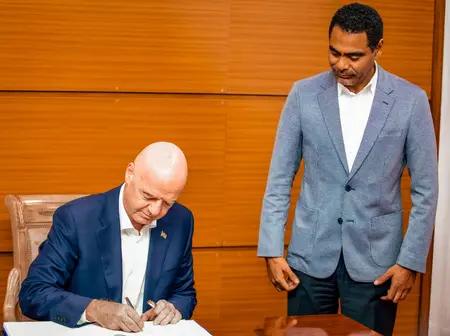
FIFA has raised concerns over the increasing number of football-related disputes involving the Football Kenya Federation (FKF) being referred to ordinary courts in Kenya, warning that the practice could attract disciplinary measures.In a letter dated October 5, 2026, addressed to FKF Acting General Secretary Dennis Gicheru, FIFA reminded the federation of its obligations under its statutes, which require member associations to manage their affairs independently and without undue interference from third parties.
Blog
-
CBK presses banks to meet KSh5 billion capital target despite Treasury’s extended deadline
The Central Bank of Kenya (CBK) is continuing to engage commercial banks over a KSh5 billion capital target for December 2026, with Governor Kamau Thugge saying one or two lenders could struggle to meet the requirement despite changes to the statutory timetable under the Finance Act 2026.
Appearing before the National Assembly’s Finance and Planning Committee this week, Thugge said the regulator had asked a small number of banks to explain how they intended to reach the KSh5 billion threshold. He also disclosed that CBK had written to the National Treasury explaining why it believes commercial banks need stronger capital bases.
The comments highlight differences in emphasis between the banking regulator and the Treasury over the pace of capital increases. The Finance Act 2026 changed the timetable for banks to reach KSh10 billion in minimum core capital, while CBK continues to press institutions over the earlier KSh5 billion target.
Thugge told lawmakers that CBK was engaging a few banks over their plans to meet the KSh5 billion capital target for the end of 2026.
He said the regulator wanted the institutions to explain how they intended to reach the threshold, adding that one or two could have difficulty meeting it.
“Only a few, maybe one or two, might struggle,” the Governor said, describing the engagement as part of CBK’s efforts to understand how the affected institutions planned to strengthen their capital positions.
The Governor did not frame the discussions as a general difficulty across the banking sector. Instead, he pointed to a small number of lenders whose capital plans required closer engagement with the regulator.
The KSh5 billion figure formed part of the phased increase in minimum core capital introduced through the Business Laws (Amendment) Act 2024, which raised the requirement from KSh1 billion towards KSh10 billion by December 2029.
The original framework introduced annual capital milestones intended to move commercial banks towards the KSh10 billion minimum. The milestones included a KSh3 billion threshold for December 2025 and KSh5 billion for December 2026, followed by further increases towards the final KSh10 billion requirement.
The Finance Act 2026 changed that implementation framework by removing the annual milestones and extending the deadline for banks to reach KSh10 billion in minimum core capital to December 31, 2032.
The revised timetable followed concerns about the pace of capital accumulation and its possible effect on credit access, particularly for smaller businesses and specialised lenders.
In a parliamentary presentation in June 2026, National Treasury Cabinet Secretary John Mbadi said the government supported the strategic objective of stronger bank capitalisation but wanted a transition that would minimise disruption to lending and financial services delivery.
The Treasury’s position emphasised the need to protect access to credit for micro, small and medium-sized enterprises and institutions serving niche markets while banks worked towards the higher capital requirement.
Thugge’s latest comments show that CBK continues to regard the earlier KSh5 billion threshold as an important target in its engagement with banks.
The Governor told lawmakers that stronger bank capital was necessary to help financial institutions withstand risks affecting the banking sector, including climate-related shocks and cybersecurity threats.
He said banks needed sufficient financial resources to invest in technology that could protect their operations against cyberattacks and other emerging threats.
Thugge argued that the financial system needed strong institutions capable of absorbing shocks without allowing difficulties at individual banks to spread across the wider sector.
He also linked stronger capitalisation to banks’ ability to finance larger projects, explaining that institutions with stronger capital bases would have greater capacity to support businesses and investments requiring substantial funding.
The argument places capital requirements within CBK’s broader financial stability responsibilities. Capital provides banks with a financial buffer against losses and supports their ability to expand lending while managing the risks associated with their assets.
Thugge disclosed that CBK had written to the National Treasury explaining why the regulator believes banks need to increase their capital bases.
The Governor said the Central Bank had engaged Treasury on the issue because it considers stronger capitalisation necessary in an environment where banks face cybersecurity risks, climate-related disruptions and demands for larger financing commitments.
The correspondence highlights the continuing engagement between the two institutions over how quickly banks should build their capital positions.
CBK’s wider capital framework also includes additional prudential measures. The regulator has proposed capital conservation requirements that would influence how much banks can distribute to shareholders, alongside a framework for identifying domestic systemically important banks and applying additional supervisory requirements to institutions whose failure could threaten financial stability.
These measures form part of the Central Bank’s broader approach to strengthening the resilience of Kenya’s banking sector as institutions adjust to the revised minimum capital timetable.
Go to TECHTRENDSKE.co.ke for more tech and business news from the African continent and across the world.
Follow us on WhatsApp, Telegram, Twitter, and Facebook, or subscribe to our weekly newsletter to ensure you don’t miss out on any future updates. Send tips to info@techtrendsmedia.co.ke
-

Man Charged With Murder After Abdillahi Farid Ali Stabbed to Death in Birmingham
Abdillahi Farid Ali, 43, was fatally stabbed in Small Heath on WednesdayBirmingham, England (HOL) — A 46-year-old man has been charged with murder following the fatal stabbing of Abdillahi Farid Ali in Birmingham's Small Heath neighbourhood, as police increase their presence in the area and appeal for witnesses to assist the investigation.
-
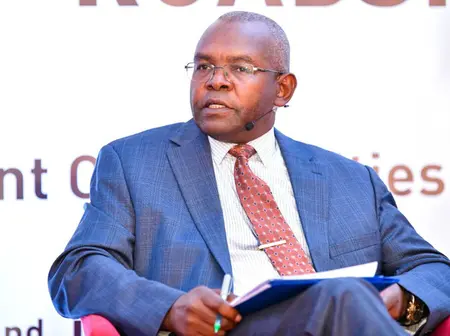
CBK says foreign investment and financial inflows are helping support the Kenyan shilling
Central Bank of Kenya (CBK) Governor Kamau Thugge has attributed the stability of the Kenyan shilling to improving balance-of-payments conditions, pointing to financial inflows and reserve accumulation as important sources of support for the country’s external position.
Presenting before the National Assembly’s Finance and Planning Committee this week, Thugge told lawmakers that Kenya’s current account deficit was being offset by a surplus in the financial and capital accounts. He said the resulting overall balance-of-payments position had allowed the country to accumulate foreign exchange reserves, supporting the stability of the shilling.
The Governor reported a current account deficit of US$4.68 billion and a financial and capital account surplus of US$7.458 billion. He also discussed reserve accumulation of approximately US$2.4 billion in 2026 and projected a further US$1 billion build-up in 2027.
Thugge explained that Kenya’s external position should be assessed by looking beyond the current account, which records trade in goods and services as well as primary and secondary income flows.
He told the committee that the current account deficit was being covered by the surplus recorded in the financial and capital accounts, which include cross-border investment and other financial transactions.
The Governor said the financial and capital account surplus had reached US$7.458 billion against a current account deficit of US$4.68 billion.
This distinction is important because a country can continue importing more goods and services than it exports while maintaining an overall balance-of-payments surplus if sufficient financial inflows enter the economy.
Thugge said the combination of these flows had supported reserve accumulation and contributed to the stability of the Kenyan shilling.
The Governor pointed to foreign investment and major transactions involving Kenyan companies and financial institutions when explaining the financial inflows supporting the country’s external position.
He cited Safaricom, Kenya Pipeline Company and takeovers involving banks as examples of transactions contributing to the financial and capital account.
Such transactions can involve substantial financial flows between domestic and foreign investors, depending on the structure of the deals and the parties involved.
Thugge also outlined the country’s reserve accumulation, saying Kenya had built up approximately US$2.4 billion in 2026. He projected a further US$1 billion accumulation in 2027.
The Governor linked the build-up of reserves to the country’s ability to meet external obligations and maintain confidence in the foreign exchange market.
Foreign exchange reserves provide the Central Bank with resources to support external payments and manage periods of pressure on the domestic currency. Their accumulation also reflects the broader balance-of-payments position and the availability of foreign currency within the economy.
Thugge used historical figures to demonstrate the improvement in Kenya’s external position over recent years.
He told lawmakers that the country recorded a balance-of-payments deficit of approximately US$2 billion in 2022, followed by a deficit of US$1 billion in 2023.
He then pointed to reserve accumulation of approximately US$1.4 billion in 2024 and US$2.4 billion in 2025, before discussing a similar build-up projected for 2026.
The figures formed part of the Governor’s explanation of why he considers the shilling’s stability to be supported by economic fundamentals.
He said the currency’s performance was connected to the country’s improving external position and the accumulation of foreign exchange reserves.
The Central Bank’s projections also point to continued reserve accumulation in 2027, although at a lower level than the amount Thugge cited for 2026.
Thugge also raised the possibility that external financing expected by the National Treasury might not materialise as planned.
The concern is relevant to Kenya’s balance-of-payments outlook because external financing contributes to the supply of foreign currency and helps meet the government’s financing requirements.
If anticipated external resources are delayed or fall short, the government may need to rely on alternative sources of financing, with implications for the country’s external accounts and foreign exchange requirements.
The Governor’s presentation therefore linked shilling stability to the interaction between current account performance, financial inflows, reserve accumulation and the government’s external financing position.
He maintained that the stability of the Kenyan shilling was supported by the country’s underlying economic fundamentals, pointing to the improvement in the balance of payments and the accumulation of foreign exchange reserves.
Go to TECHTRENDSKE.co.ke for more tech and business news from the African continent and across the world.
Follow us on WhatsApp, Telegram, Twitter, and Facebook, or subscribe to our weekly newsletter to ensure you don’t miss out on any future updates. Send tips to info@techtrendsmedia.co.ke
-

All about the new ninth-generation Toyota Hilux by CFAO Mobility
Kenyan businesses will pay at least Sh7.87 million for the latest Toyota Hilux as CFAO Mobility Kenya rolls out the ninth-generation pickup, betting on rising demand for commercial vehicles amid an expanding vehicle market.The new Hilux, locally assembled and adapted to Kenyan conditions, comes as pickups emerge as the fastest-growing category in the country's new vehicle market, highlighting increased demand for vehicles used in trade, construction, agriculture and logistics.
-

Kenya Airways launches new duty-free shopping experience with up to 15% lower prices
Up to 15% cheaper than airport shops, with 5% off the webstore until 30 November and pre-orders accepted up to 72 hours before departure.NAIROBI, Kenya, 30 October 2026 –Kenya Airways has unveiled a completely refreshed Duty-Free experience, introducing Safari Duty Free as its new onboard retail partner.
-

From UDA allies to rivals: Moha vows to bury President Ruto’s party as Hassan Omar mobilises
The battle for political supremacy in Mombasa is beginning to expose cracks within the political ranks, with UDA Secretary General Hassan Omar Hassan and Nyali MP Mohamed Ali emerging at the centre of an increasingly sharp exchange of political sentiments as the race for the county’s top seat gathers momentum.
-

Cinema, cocktails and conversation as Kwiso Movie Nights returns
Cinema lovers had another reason to step away from their usual Friday routines on October 30, as Kwiso Movie Nights returned with an evening that brought together film, cocktails and conversation at Reach a Hand Africa’s offices in Lungujja, Kampala.Dubbed Cinema & Cocktails and powered by V&A Sherry, the event gave guests a chance to enjoy a movie screening while socialising over signature cocktails and other brand offerings.
-

Swiss commentary on Israeli Olympic bobsleigh team termed ‘discriminatory’
Switzerland’s broadcasting complaints authority has announced that a local journalist’s TV commentary questioning the participation of a “Zionist” Israeli bobsledder at the Milano Cortina Winter Olympics breached discrimination rules during the Games’ broadcast in February.
A nine-member independent panel voted 5-4 to uphold four public complaints about the broadcast on February 16 by French-language network Radio Television Suisse (RTS), the Independent Complaints Authority for Radio and Television (ICA or AIEP) said in its ruling on Friday.
Sports commentator Stefan Reina had called the Israeli team’s pilot Adam Jeremy Edelman “a Zionist to the core” as the team appeared on the screen during their run in the bobsleigh event.
“Adam Edelman is an Israeli athlete and a Zionist to the core, as he describes himself,” Reina said in a video verified by Al Jazeera.
“He has posted several messages on social media supporting the genocide in Gaza,” the commentator added as the Israeli team’s bobsleigh continued its run.
“It should be noted that the term ‘genocide’ is the one used by the UN Commission of Inquiry. Edelman stated that the military intervention was ‘the most just and moral war in history’, according to him.”
Reina was critical of the athlete’s presence in Cortina during these Games, saying it “raises questions” as it pertains to the International Olympic Committee’s decision that “any athlete who has participated in activities supporting war, either militarily or through their social media accounts, is ineligible to participate.”
The ICA said that Reina “spent the entire run discussing statements made on social media” by Edelman on Israel’s genocidal war on Gaza.
“A majority of the members concluded that the commentary — which appeared to have been prepared in advance — suggested that the Israeli athlete should be excluded from the Olympic Games due to his political views,” the ICA said in a statement.
“They found that this conveyed a stigmatising, and therefore discriminatory, message directed at him, in contrast to the 25 other athletes competing that day.
“The members determined that the sports commentator had subjected the Israeli athlete to unequal treatment, thereby violating the prohibition against discrimination.”
The ICA said that it would publish the written reasoning for its decision, detailing the measures it has requested, at a later date.
Generally, when the ICA finds a breach of the rules, it directs the broadcaster to take “measures to prevent any further violations” and to subsequently report on the steps taken.
At the time, Edelman called the commentary a “diatribe” and said he gave it no credence whatsoever.
Israel’s embassy in Switzerland said it was “deeply appalled by the blatant abuse” and demanded decisive action and a clear apology.
RTS removed the sequence from its website shortly after it was widely circulated on social media.
The nine-member ICA rules on complaints against radio and television programmes, determining whether any violations of the relevant laws have been committed.
“This includes compliance with the requirements of appropriateness and diversity, observance of fundamental rights, protection of minorities and the prohibition of glorification or extenuation of violence,” it said.
Appeals against ICA decisions can be lodged directly with Switzerland’s Federal Supreme Court.
Reina’s commentary was commended by a wide range of sports fans and Palestinian supporters, who lauded his courage in using his platform to condemn the Israeli athletes.
Israel’s continuing genocidal war in Gaza, despite an ongoing “ceasefire”, continues to draw international condemnation. On Friday, the Office of the United Nations High Commissioner for Human Rights (OHCHR) warned that Israeli forces in Gaza are displacing more Palestinians and their actions continue to raise concerns of ethnic cleansing.
The Israeli bobsleigh team finished last out of the 26 teams.
-

Lecturers’ Call off University Strike
The nationwide lecturers strike has been called off after the Universities Academic Staff Union (UASU) reaching a Sh20 billion agreement with the government to implement the 2025–2029 Collective Bargaining Agreements (CBAs).The strike, which began on October 2, paralysed teaching, learning and research in public universities for nearly a month, with lecturers expected to resume their duties on Monday, November 2.