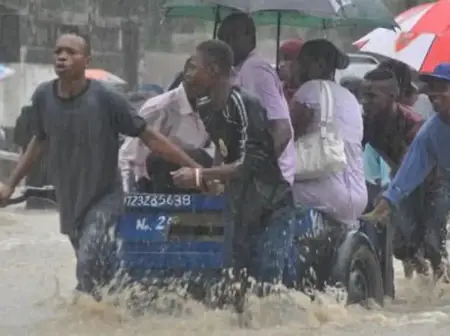
The Kenya Meteorological Department has forecast above-average rainfall in more than 40 counties in November, warning residents to prepare for possible flooding, landslides and transport disruptions.In its monthly weather outlook released on Sunday, November 1, 2026, the department listed Nairobi, Mombasa, Kisumu, Nakuru, Kiambu, Meru, Machakos and Makueni among the counties expected to receive more rainfall than the long-term average.
Blog
-
President Ruto to Visit Kisii, Nyamira Counties in 3-Day Development Tour
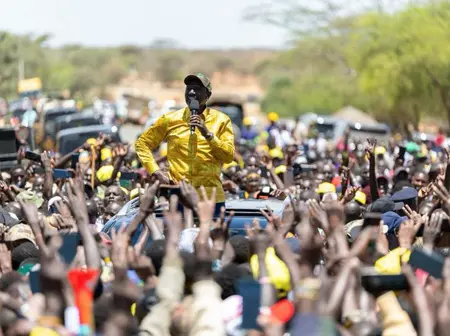
TourPresident William Ruto is scheduled to visit Kisii and Nyamira counties from Monday, November 9, 2026, to Wednesday, November 11, 2026.President William Ruto is scheduled to visit Kisii and Nyamira counties from Monday, November 9, 2026 to Wednesday, November 11, 2026.
-
Cassypool Admits Supporting Ruto Cost Him Fans, Destroyed His Brand
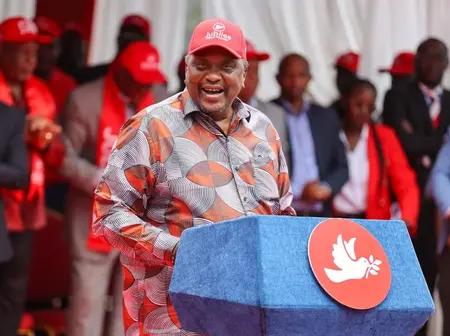
Cassypool Capon has admitted that his public support for President William Ruto damaged his entertainment brand, cost him a significant number of followers and took a toll on his mental health.
Speaking during an interview on Sunday, November 1, 2026, the outspoken entertainer said the political position he took alienated some of his fans and attracted intense online criticism.
“I do regret supporting President William Ruto. I do regret it because it cost me my brand. I killed my brand,” he said.
Despite acknowledging the damage, Cassypool maintained that he would still have supported Ruto if given another opportunity to make the decision.
He also apologised to fans who felt betrayed or hurt by his political stance, asking them to forgive him for allowing his political allegiance to affect their relationship.
“To all those people I hurt because of the political stance I took, I just want to apologise to them. I’m asking for your forgiveness. I did wrong and took a political stand that hurt my fans,” he added.
The influencer said the consequences went beyond losing followers and business opportunities, revealing that the constant insults and negative comments affected his mental well-being.
He disclosed that the experience pushed him into depression and that he reached a point where he contemplated taking his own life.
Cassypool explained that the criticism was particularly difficult to deal with because he had previously enjoyed widespread public attention and support.
He also expressed concern that his children, who are old enough to access social media, could come across the negative comments directed at him.
According to the entertainer, the backlash also affected his wife, who became overwhelmed by the criticism and at one point urged him to consider quitting.
The experience, he said, reminded him that public figures are equally vulnerable to online hostility despite their visibility and influence.
Cassypool’s political association with Ruto dates back to the 2022 General Election, when he initially declared interest in the presidency before withdrawing from the race to support the then Deputy President.
During a 2024 interview, he said he had abandoned his presidential ambitions to back Ruto, whom he referred to as his boss.
His support became more prominent during the controversy surrounding the Finance Bill 2024, when he was among public figures who defended the government’s position.
At the time, he argued that Kenyans would have to endure difficult economic conditions before the country could improve.
He subsequently became one of Ruto’s outspoken defenders, frequently clashing with critics of the President.
In August 2025, Cassypool also explained that his disagreement with musician Bien-Aimé Baraza began after the singer chanted ‘Ruto Must Go’ during a performance, an act he considered disrespectful to the Head of State.
Although he now acknowledges that his political loyalty came at a heavy professional and personal cost, Cassypool maintains that he would make the same political choice again.
-
RFK Jr is wrong about the Arab world
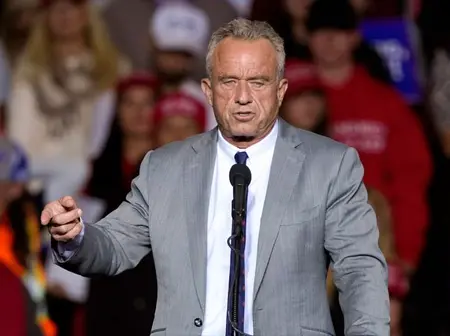
At a recent campaign rally in Michigan, United States Secretary of Health Robert F Kennedy Jr made remarks that have caused much controversy. He alleged that Muslim Arabs do not produce science and literature and do not win major awards because of the influence of the Muslim Brotherhood.
This was not merely a hasty and inaccurate assessment of the knowledge production of a specific demographic. It was a statement that reflects racist attitudes and misconceptions about an entire region and an entire religion. It is also easily refutable.
There are plenty of Muslim Arab scientists, thinkers and writers who have made major contributions over the past century. Some of them are Nobel laureates, such as novelist Naguib Mahfouz, diplomat Mohamed ElBaradei, journalist Tawakkol Karman, and scientists Ahmed Zewail, Moungi Bawendi and Omar Yaghi. Many others have not received a Western award but have nevertheless contributed significantly to their own countries and the world.
The Arab world does face challenges in knowledge production, but this does not prove an inherent deficit in its people or the overwhelming influence of a certain political group. Rather, it reflects historical and institutional conditions that impact this process.
Human civilisations have not been equal in knowledge production across history. Some have witnessed scientific and intellectual flourishing while others have faced decline and turmoil.
Downturns have not occurred because populations had suddenly lost their mental capacities but because the political, economic, cultural and institutional conditions that allow knowledge to thrive change over time.
In the case of the Islamic civilisation, its centres – from Baghdad and Damascus to Cairo and Cordoba – experienced a vast scientific and intellectual movement involving scholars, translators, philosophers, physicians and mathematicians from diverse religious and linguistic backgrounds for centuries. This prosperity was not isolated from the world; it was built on the translation, critique, development and interaction with Greek, Syriac, Indian and other bodies of knowledge.
Meanwhile, parts of Europe experienced significant backwardness in scientific education and development. However, Europe was not a monolith, nor were those centuries a homogeneous dark period. It also witnessed varying intellectual, institutional and scientific developments across different regions and timeframes.
European conditions then gradually changed: Educational institutions and universities evolved, networks for book and knowledge circulation expanded, and European scientific traditions interacted with scientific knowledge transferred from the Islamic world and elsewhere.
No one can claim, based on these historical disparities, that Europeans are inherently incapable of producing science or that their religion or ethnic origins preclude them from innovation. Serious historical interpretation focuses on institutions, economics, education, political patronage and knowledge networks rather than claims that certain populations lack innate abilities.
The exact same principle must apply to Arabs and Muslims today. Since Europe was able to change the conditions of knowledge production, it is illogical to assume that the contemporary reality of Arab and Islamic societies reflects fixed limits in their scientific or literary capacities.
Science is universal and not the racial or religious property of anyone. Decline is not a genetic destiny for any people, and prosperity is not an eternal privilege.
Rejecting RFK Jr’s generalisations does not mean denying the challenges facing scientific research in many Arab countries. There are serious questions concerning research and development funding, university independence, education quality, freedom of research and expression, institutional stability, the ability to attract and retain scientists, and links between knowledge and the economy and production. However, these questions are the beginning of scientific analysis, not the end.
A society that does not provide a researcher with a suitable laboratory, does not grant universities sufficient independence, does not allocate the necessary resources for research and does not ensure the continuity of scientific institutions cannot expect results comparable to those of a society that invests sustainably in these areas.
Furthermore, wars, conflicts, displacement, brain drain and weak scientific cooperation can disrupt the accumulation of knowledge, even when a society possesses qualified human capital. The capacity for thought and innovation is one thing, and the ability to translate them into sustainable scientific production is another. Between the two lies an entire system of socioeconomic conditions, institutions and policies.
Blaming the challenges contemporary Arab societies face on a single political group – in RFK Jr’s case, the Muslim Brotherhood – and presenting this as a comprehensive explanation for the state of science and literature among hundreds of millions of people falls short of serious historical or social analysis.
Scientific production is influenced by a set of intersecting variables: state structure, economic policies, education quality, research expenditures, academic freedom, stability, international relations and the capacity for knowledge circulation.
Certain political movements or intellectual trends might impact educational policies or the cultural climate in specific contexts. However, proving this impact requires evidence and comparative analysis, which RFK Jr would likely fail to produce, should he be asked to do so.
Moving from critiquing an institution or political movement to issuing a judgement on Arabs or Muslims in general is a form of racism, hatred and Islamophobia because it transitions from analysis to generalisation, and from seeking causes to reproducing stereotypes.
The problem with RFK Jr’s statement is not merely its factual inaccuracy regarding awards and their superficiality, but the logic upon which it is based: transforming historical disparities in knowledge production into broad judgements about peoples.
His words hold symbolic, intellectual and political significance, reflecting a hostile Orientalist stance towards Arab-Islamic and even Eastern heritage.
A serious response to these statements requires more than merely recalling past glories or listing Arab and Muslim scientists and thinkers; it requires turning the discussion into a project for the future.
In the Arab world, we need more independent universities capable of research, equipped laboratories, sustainable funding, an environment that permits critique and experimentation, policies that retain scientific talent and institutions that link education with the economy and innovation.
We also need a documented, critical rereading of the history of sciences in Islamic civilisation – one that studies both achievements and failures and examines how scientific concepts emerged, evolved and were transferred between civilisations.
A civilisation does not regain its stature by repeating that its ancestors were great but by building the institutions that allow new generations to produce new knowledge.
The views expressed in this article are the author’s own and do not necessarily reflect Al Jazeera’s editorial stance.
-
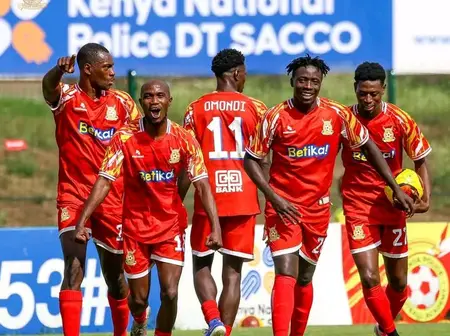
Shabana FC to host Police FC at Afraha stadium in sportpesa premier league clash
The 2026/2027 SportPesa Premier League season continues today, Monday, November 2, 2026, with Shabana FC set to welcome Police FC in what promises to be an exciting and highly competitive encounter at Afraha Stadium in Nakuru.The match is scheduled to kick off at 4:15 PM, with both sides eager to secure maximum points and strengthen their respective campaigns in the ongoing league season.
-
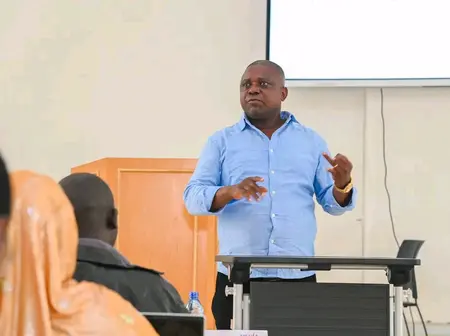
Journalists Demand Justice Before 2027 Elections
In SummaryKenya Editors Guild President Zubeidah Kananu demands accountability over 45 documented cases of attacks and threats against journalists ahead of the 2027 General Election.Media stakeholders warn that physical violence, online harassment, economic insecurity and intimidation threaten journalists’ safety and press freedom.The Media Council, UNESCO and the ODPP call for stronger protection, investigations and prosecution of perpetrators.
-
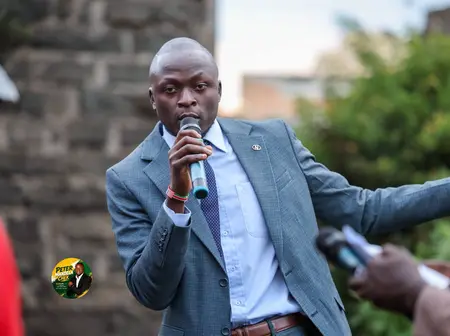
Lanet Umoja Ward aspirant Peter Mandela Chek roots for unity
Lanet Umoja Ward MCA aspirant Peter Mandela Chek has vowed to ensure a united Ward when elected into office come 2027.The youthful leader says no one should be left behind in leadership and development agenda.He was speaking when he joined members of community in a fundraising initiative to support Mama Teresia Gathoni in giving her beloved son, Edward Mbugwa, a decent burial and settling the huge hospital bill that accumulated during his illness.
-

YEA targets students with digital banking and savings solutions
The Co-operative Bank of Kenya (Co-op Bank), is offering young people and students an opportunity to build financial independence through digital banking, savings and payment services tailored to their needs.Through its Young Ennovators Account (YEA), the bank is offering access to a range of banking services through the YEA App, a mobile banking platform that enables users to manage their finances, transfer funds, make payments and access other banking services conveniently from their mobile phones.
-
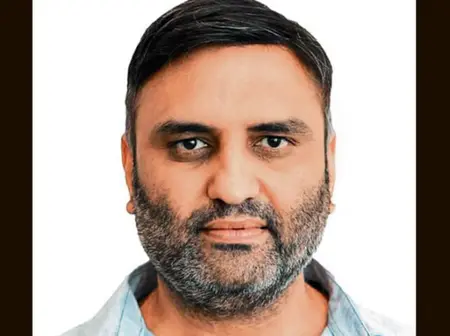
Kenyan Prince Dares Trump, Interpol to Arrest Him in Dubai
Kenyan forex trader and social media personality Raymond Omosa, popularly known as Kenyan Prince, has challenged United States President Donald Trump and international law enforcement agency Interpol to arrest him, insisting that he is untouchable while living in Dubai.
In a video circulating online, the trader dismissed Interpol as cowardly and dared the agency to come for him, claiming he had nothing to fear.
“Interpol are cowards. I dare Interpol: if they have muscles and they are not cowards, they should come for me here. I am chilling in Dubai,” he said.
He also took aim at the US government, questioning why American authorities had not taken action against him.
“Interpol, you guys are cowards. Interpol and the US government, they are cowards. They cannot come for me. You know why? Because I am legit,” he added.
His latest comments have drawn attention on social media, particularly amid discussions surrounding investigations into alleged financial fraud involving some Kenyans in the United States.
However, his remarks do not, on their own, establish that he is the subject of any official investigation or arrest warrant. No details of an investigation involving him were provided in the information accompanying his statements.
The comments come months after Kenyan Prince announced that he was relocating from Kenya to Dubai after obtaining a United Arab Emirates residency permit in August 2026.
He described the move as one of his major achievements, saying he intended to explore new business opportunities and improve his financial position.
Kenyan Prince has built a sizeable social media following through videos showcasing his expensive cars, designer outfits, luxury shopping and international travels.
He has also claimed that his net worth stands at approximately KSh560 million, comprising his businesses, properties and vehicles.
The forex trader further claims to make monthly business profits of between KSh28 million and KSh29 million.
-
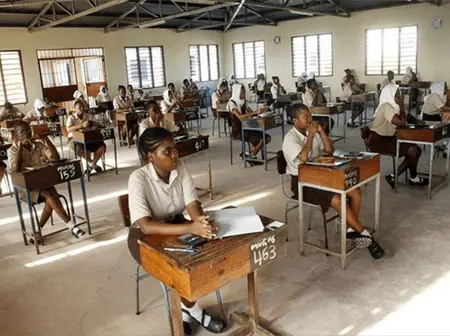
KCSE 2026 Officially Begins: 996,078 Candidates Sit Main Papers
KCSE 2026 Begins in Earnest With English and Chemistry as 996,078 Candidates Sit ExamsNAIROBI. The 2026 Kenya Certificate of Secondary Education (KCSE) examination officially got under way today, Monday 2nd November, as 996,078 candidates across the country settled at their desks for the first of the major written papers.