A family is mourning the death of their Form Four daughter who died shortly after sitting her first Kenya Certificate of Secondary Education (KCSE) examination papers.
The family of David Ogweno is grieving the loss of Congestina Achieng, a student at Alaro Central Secondary School in Kanyaliech village, Koyugi sub-location, Kibiri Ward, Karachuonyo Constituency in Homa Bay.
The candidate died on Monday evening after complaining of severe chest pains, hours after completing her first two examination papers.
Earlier that day, teachers had noticed that she was visibly unwell during the examinations and contacted her parents, who rushed to check on her.
Her father, Ogweno, said he received a call from the school principal asking him to attend to his daughter after she had sat for the first two papers.
"Her condition worsened rapidly. We rushed her to Termary Hospital but unfortunately she passed away. It is very painful," he said.
Speaking to journalists on Tuesday, Ogweno said the family had struggled to educate Achieng alongside her siblings, adding that one of his other children was studying at Tom Mboya University.
He said Achieng had aspired to become a lawyer and viewed the national examinations as a stepping stone towards improving her family's circumstances.
"She was a brilliant child and we hoped she was going to pass exams. I am perturbed Achieng is no more," he said.
Her mother, Pamela Atieno, said the teenager had been unwell since the previous week and had complained of chest pains.
"She complained of chest pains, and I bought her some over-the-counter medicine to relieve the pain so she could sit for the national exams. I was later called and told she could no longer continue," Atieno said.
Her teachers, Isaiah Opere and Austine Achina, described Achieng as an exemplary and disciplined student who was well behaved.
"She was gentle, composed, and well-behaved. She was never once in trouble or punished for misconduct," Opere said.
Her body was taken to the Homa Bay County Teaching and Referral Hospital mortuary.
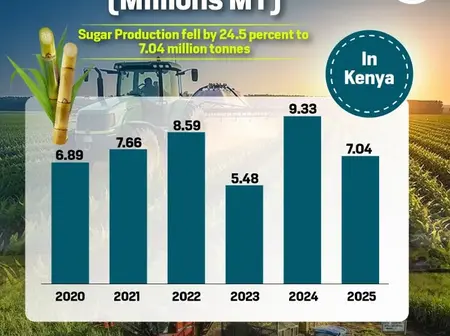
Kenya’s domestic sugar production declined by 24.5 per cent in 2025, according to figures from the Kenya National Bureau of Statistics (KNBS).
The production figure fell to 7.04 from 9.33 in 2024, reversing the previous year’s strong performance. The chart shows production stood at 5.48 in 2023, after rising from 6.89 in 2020 to 8.59 in 2022.
The figures highlight a significant decline following the 2024 peak, raising questions about the factors behind the latest drop in domestic sugar output.
Kenya's digital landscape continues to expand. Platforms such as Facebook, TikTok, YouTube, Instagram, LinkedIn, X and WhatsApp have become the spaces where citizens consume information, debate public issues and engage with institutions.
As a result, government communication has changed. Gone are the days when public communication meant issuing a press release, holding a press conference or placing an advertisement in a newspaper and waiting for citizens to respond. For County Governments, this shift towards social media platforms and other forms of digital communication presents both an enormous opportunity and a significant responsibility.
Social media therefore cannot be treated simply as another noticeboard for posting photographs of meetings and speeches. It is increasingly part of the public service itself, acting as a vital tool for widespread democratic participation and catalyst for social change.
A well-managed county social media channel can explain a new health programme, tell farmers where to access extension services, alert residents about an emergency, explain a budget decision, showcase a local enterprise or direct a citizen to the office that can resolve a problem.
However, simply being online does not guarantee meaningful engagement. The greatest value of government social media is not the number of followers. It is the trust created when citizens consistently receive information that is timely, accurate, relevant and understandable. This requires County communication executives to rethink what success looks like.
First, communication must be citizen centred. The starting question should not be, "What did the Governor do today?" but rather, "What does the citizen need to know?" A commissioning of a health facility matters, but citizens are more interested in where it is, what services it offers, who can access them and how their lives will be changed.
Second, authenticity matters. Government does not have to sound like advertising. Citizens can tell genuine communication from content created simply to make an institution look good. Showing real people, real projects and real experiences can be more powerful than polished publicity.
Third, trust must be earned through accuracy. While Social media rewards speed, government communication must prioritise verification. A false post can reach far more people than the correction that follows it.
Communication teams therefore need strong systems for verifying information with technical departments before publication, particularly during emergencies and periods of heightened public interest.
Fourth, counties must listen, not merely broadcast. A social media account that only publishes announcements is only utilizing half of its potential. Citizens are asking questions, reporting problems and sharing experiences every day. Communication teams should monitor these conversations and establish clear pathways for referring legitimate service issues to the responsible departments.
Fifth, one Kenya does not mean one audience. The communication needs of a young person in Nairobi may differ greatly from those of a farmer in Turkana, a trader in Mombasa or a parent in Taita Taveta. Even within a single County, urban and rural communities may consume information differently.
This is why social media should complement, rather than replace, traditional communication channels. County governments must continue to use community radio, public meetings, local networks, websites, SMS and other appropriate channels. Kenya's County public participation framework already recognises the need to use multiple communication platforms depending on their reach, effectiveness and the diversity of the people they serve.
There are also genuine risks. Social media can amplify misinformation, deepen political tensions, expose institutions to reputational damage and create pressure for communication teams to respond before facts are established.
The answer, however, is not for government to retreat from social media. It is to become better at using it. County communication executives need clear editorial policies, rapid verification systems, crisis communication protocols, trained digital teams and regular analysis of audience behaviour.
They must also invest in compelling storytelling, data, visual communication and the capacity to produce content in formats suited to different platforms and users.
Most importantly, they must understand that digital communication is not simply about technology. It is about relationships.
The future of government communication will belong to institutions that can explain, listen, respond and build trust consistently. Social media gives County Governments an unprecedented opportunity to make Devolution more visible, understandable and accessible to the people it was created to serve.
The question is no longer whether government should be on social media, it is whether government is using that space well enough to make citizens better informed, better heard and better served.
For county governments, that is the real measure of digital communication.
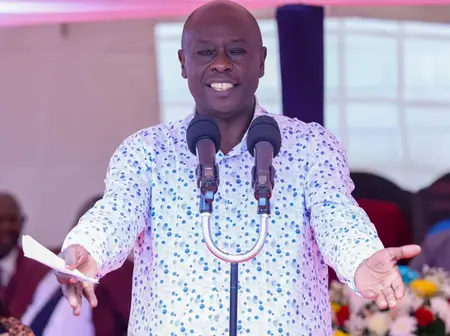
Former Deputy President Rigathi Gachagua has hit back at Jubilee Party leader Fred Matiang’i and Democratic Party (DP) leader Justin Muturi over accusations of political bullying and arrogance, insisting that his approach to Opposition unity is driven by electoral realities.
Gachagua defended his proposal to unite three political blocs – Mt Kenya, Ukambani and Western Kenya – arguing that their combined numerical strength could give the Opposition an advantage in the 2027 General Election.
Speaking at his Wamunyoro residence in Nyeri on Tuesday, where he hosted a delegation from the county, Gachagua claimed that some of his political colleagues were uncomfortable with his straightforward approach and insistence on discussing electoral numbers.
“Some my friends think that I am arrogant for being truthful. I am not arrogant. I am just truthful.”
“When I tell some we wake up and work, they say I am bullying them. No!” asserted Gachagua, who is also the Democracy for the Citizens Party (DCP) leader.
His remarks came a day after Muturi accused him of using political bullying and ultimatums in his engagements with fellow Opposition leaders.
“Let it be clear: No individual owns the United Opposition, and no community has a monopoly on Kenya’s presidency. Political partnerships must be built on mutual respect, not ultimatums, political bullying or supremacy contests,” he stated.
Matiang’i had also criticised Gachagua’s numerical proposal, warning that it could undermine efforts to build a united Opposition.
"That majoritarian arrogance and that particular pride is precisely what is going to split the opposition and make it very difficult for the opposition to come together,” said Matiang’i, duringa television interview.
However, Gachagua maintained that presidential ambitions must be backed by the ability to attract votes, regardless of an individual's political standing or policy proposals.
“I have told those leaders that, when you want to be the president of Kenya, you must be voted for, regadless of the policies you have.”
“And for you to get votes, you must look for them. No vote can be found in hotels or in the television. Votes are looked for.”
He argued that electoral politics was fundamentally about numbers, maintaining that Opposition leaders needed to establish their potential voter base and develop strategies to secure a majority.
“Politics is a game of numbers. The science of politics is numbers. We are anticipating there shall be 26 million [registered voters]. To be on the safe side we must get 13 million plus 1. ..we must look for those numbers.”
Gachagua also invoked his experience in the 2022 General Election, claiming that his mobilisation efforts had played a significant role in securing President William Ruto's victory.
“I am a believer of numbers. I am also experienced. I delivered the presidency in the last election [2022] through mobilisation of numbers. Some are uncomfortable discussing numbers; but they must be discussed,” he said.
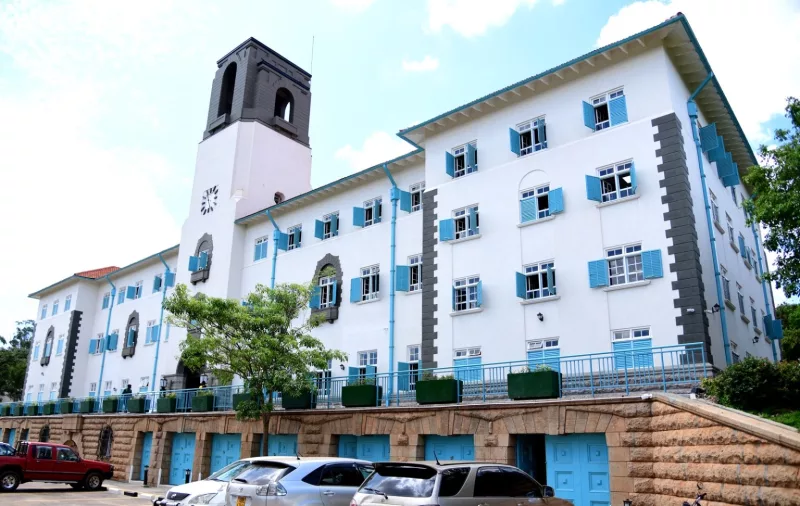
Uganda's Makerere University has launched an immediate review of security and event management protocols following an incident in which a former student stripped naked during the institution's Freshers' Ball.
The university said on Tuesday that it was reviewing security arrangements for all university-sanctioned social events to prevent a recurrence of the incident, which attracted widespread attention after videos circulated on social media.
In a statement, Dean of Students Dr Winifred Kabumbuli said the university had noted with concern the conduct of the former student during the event held on October 31 at the university grounds.
"The university wishes to clarify that it does not condone any conduct that undermines the values, principles and standards of behaviour expected of members of the university community," she said.
The university also clarified that the woman involved was not a newly admitted student, as had been suggested in some public discussions, but a former student.
It explained that the Freshers' Ball is traditionally organised as a public event, attracting different stakeholders, including alumni and members of the general public.
The incident occurred when the woman climbed onto a table in the stage area and removed her clothes completely as a cheering crowd watched and recorded the spectacle.
She continued dancing before she was eventually pulled down from the platform.
The footage triggered widespread criticism on social media, with users questioning how such an incident could occur at an event hosted on university grounds.
Following the incident, university management announced the indefinite suspension of campus social events, including the Freshers' Ball, Porridge Nights and Bazaars.
The security review announced on Tuesday signals an additional response aimed at tightening controls over university-sanctioned gatherings.
The university also acknowledged an appeal by the woman's family asking members of the public to stop circulating videos and photographs of the incident.
Makerere said it remained committed to providing a safe, inclusive and dignified environment for its students and other stakeholders.
The Freshers' Ball is among the social activities traditionally associated with the beginning of the academic year at the premier institution, bringing together new students, continuing students, alumni and members of the public.
KenGen risks losing its investment of more than Sh363 million in the form of fixed deposits in Stima Investment Co-operative Society after the latter failed to repay the amount to the power producer.
The Nairobi Securities Exchange-listed firm invested Sh100 million in Stima between 2015 and 2016—when it was led by former chief executive Albert Mugo—through its charitable arm KenGen Foundation.
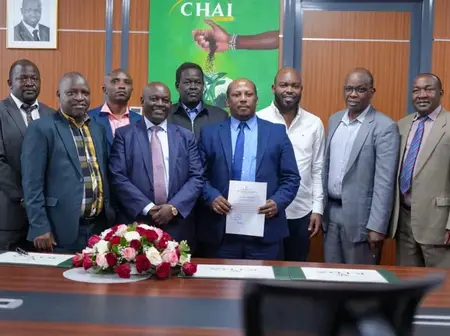
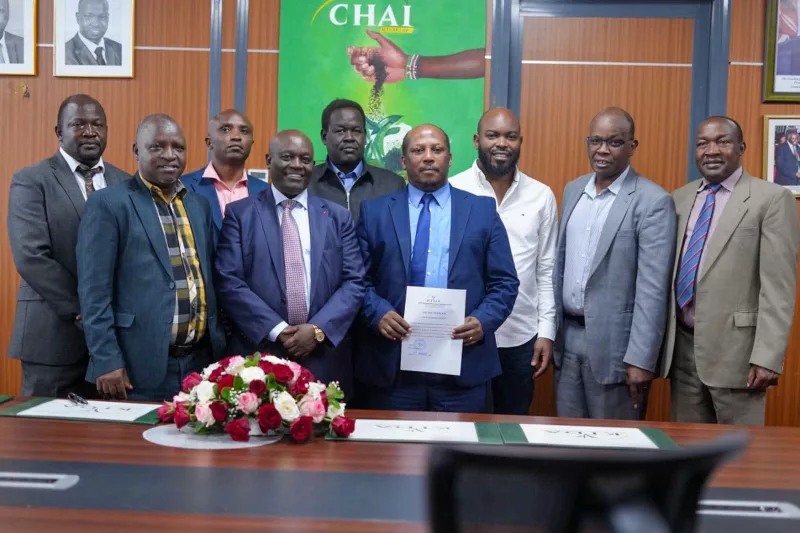
The Kenya Tea Development Agency (KTDA) Holdings board has elected James Githinji Mwangi as its new chairman, replacing Enos Njeru following a fresh board election.
In a leadership change announced on Tuesday, November 3, KTDA said Samson Mosonik Menjo would retain his position as vice chairman.
The agency did not disclose the circumstances surrounding Njeru’s exit or provide details of the board election that produced Mwangi.
In a statement, KTDA said the leadership change would not disrupt its operations, assuring tea farmers and other stakeholders of continuity as the agency continues to oversee the interests of smallholder tea growers.
“KTDA reassures all stakeholders that business operations will proceed seamlessly, with an unwavering focus on driving efficiency and promoting the best interests of tea farmers,” the agency said.
Mwangi takes over at a critical institution in the country’s tea industry, which plays a central role in supporting the over 700, 000 smallholder farmers through tea processing, factory management and the marketing of their produce.
The agency works with tea factories across the country, making its leadership influential in decisions affecting farmers’ earnings, operational efficiency and the competitiveness of Kenyan tea in international markets.
The latest change comes less than eight months after Njeru returned to the chairmanship in March 2026.
Njeru was elected chairman on March 4, 2026, replacing Chege Kirundi, who had taken over the position in January 2025.
Kirundi had replaced Njeru following an earlier board election that triggered a dispute over the leadership.
Njeru had initially been appointed chairman in July 2023 following the resignation of David Ichoho.
He was subsequently re-elected in August 2024 for another three-year term before Kirundi’s election altered the leadership in January 2025.
The changes have highlighted the contestation surrounding leadership of the agency, which represents the interests of smallholder tea farmers and oversees a significant part of the country’s tea production and marketing system.
In March, when Njeru returned to the position, KTDA said the board remained committed to strengthening corporate governance, protecting farmers’ value and positioning Kenyan tea competitively in regional and international markets.
The agency has also been pursuing reforms aimed at improving governance, compliance and accountability across its operations.
For farmers, changes at the top of KTDA are closely watched because board leadership influences the direction of the agency and its engagement with tea factories and growers on matters affecting the sector.
Mwangi’s immediate task will be to steer the board while maintaining confidence among farmers and other stakeholders during the transition.
KTDA did not announce any changes to its wider board structure or outline new policy priorities under Mwangi’s chairmanship.
The agency reiterated that its focus remained on efficiency and safeguarding farmers’ interests, signalling continuity in its stated priorities despite the change at the top.
The new chairman takes office as the tea sector continues to face pressure to improve returns to growers, strengthen governance and maintain Kenya’s position in the global tea market.
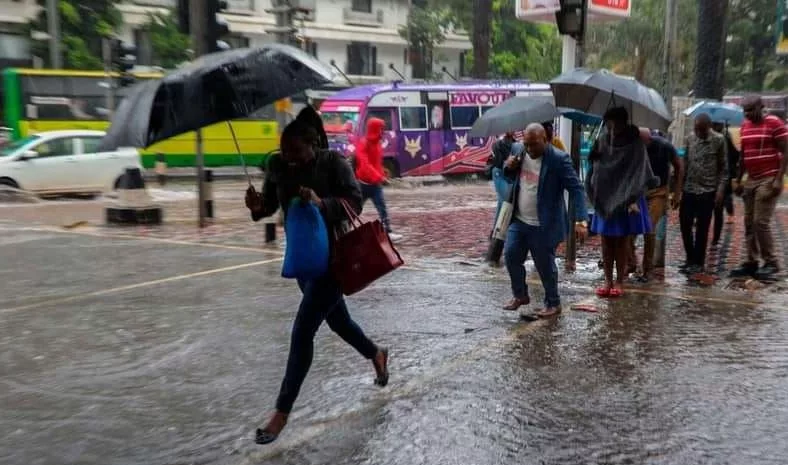
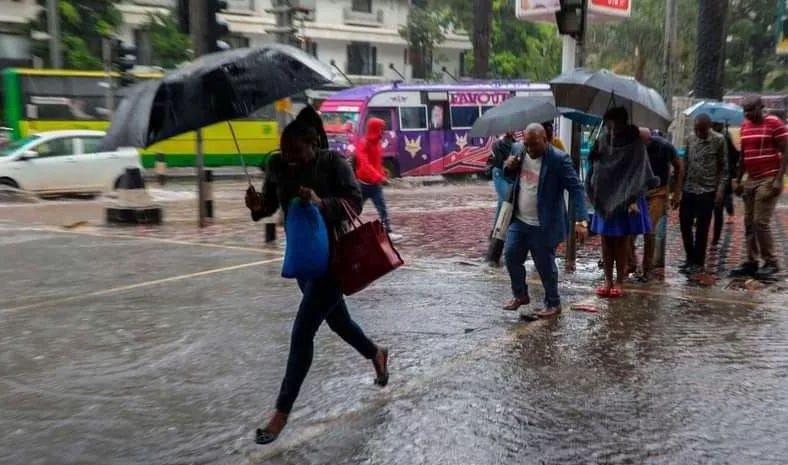
The Kenya Meteorological Service has forecast rainfall over parts of several counties between November 3 and 10, as the country enters a month expected to receive above-average rainfall.
The weekly outlook indicates that rain is expected in parts of Baringo, Bomet, Bungoma, Busia, Elgeyo Marakwet, Embu, Garissa, Homa Bay, Isiolo, Kajiado, Kakamega, Kericho, Kiambu, Kilifi, Kirinyaga, Kisii, Kisumu, Kitui, Kwale, Laikipia, Lamu, Machakos, Makueni, Mandera, Marsabit, Meru, Migori, Mombasa, Murang'a, Nairobi, Nakuru, Nandi, Narok, Nyamira, Nyandarua, Nyeri, Samburu, Siaya, Taita Taveta, Tana River, Tharaka-Nithi, Trans Nzoia, Uasin Gishu, Vihiga, Wajir and West Pokot.
The weekly outlook follows a monthly forecast issued on November 2, in which acting director of the Kenya Meteorological Service Authority Edward Muriuki said most parts of the country were expected to receive above-average rainfall in November and December.
Muriuki warned that the increased rainfall could cause flooding, damage roads and raise the risk of diseases such as malaria, cholera and typhoid.
He said the rains were expected to affect agricultural regions as well as parts of northern Kenya, although rainfall distribution would vary across the country.
The forecast comes after much of Kenya received below-average to near-average rainfall in October, despite some areas recording significant amounts.
An automatic weather station at Ng'iya Primary School in Siaya recorded the highest monthly rainfall total in October, at 264.4mm, according to the meteorological authority.
Some stations in Marsabit, Garissa, Mandera, Kisii, Kisumu and Lamu also recorded rainfall above their usual October amounts.
Muriuki said November was an important month in the October-November-December short rains season because rainfall supports agricultural activities, replenishes water resources and sustains livelihoods.
The expected rains could improve soil moisture and pasture availability following the dry conditions experienced in recent months.
However, he cautioned that excessive rainfall could disrupt farming activities and the transportation of produce from farms to markets.
Rural access roads are particularly vulnerable to deterioration and may become impassable after prolonged rainfall, affecting the movement of people, goods and essential services.
Urban areas could also experience traffic congestion and transport disruptions where drainage systems are overwhelmed.
The authority further warned that accumulated water could create breeding grounds for mosquitoes, potentially increasing malaria transmission in susceptible areas. Flooding and poor drainage could also contaminate water sources and increase the risk of cholera, typhoid and diarrhoeal infections.
The rains are also expected to replenish rivers, dams, water pans and groundwater sources, potentially improving water availability for households, farmers and livestock.
However, increased river flows could result in localised flooding, particularly in areas near rivers and other low-lying locations.
The meteorological authority has advised Kenyans to use the weekly forecast alongside shorter-term updates, which provide more specific information on expected weather conditions.
Kenya is targeting a 16.8 per cent increase in tourist arrivals from the United Kingdom by the end of the year, as the government steps up efforts to attract more visitors from the European market.
The country is banking on increased international marketing, airline partnerships and expanded travel trade engagements to convert growing interest in its tourism products into actual bookings.
Kenya Tourism Board (KTB) CEO June Chepkemei said the country was using the ongoing World Travel Market (WTM) London 2026 to strengthen partnerships, promote lesser-known destinations and showcase its diverse tourism offerings.
Chepkemei said Kenya was positioning itself beyond the traditional wildlife safari experience by promoting a combination of coastal tourism, culture, adventure, wellness and community-based experiences.
“Our pitch is that Kenya offers much more than the iconic safari experience. Visitors can combine wildlife, coast, culture and adventure in one destination. We are also bringing lesser-known destinations into the spotlight to encourage travellers to explore more of Kenya,” she said.
Kenya is targeting 199,645 visitors from the UK this year, up from 170,936 recorded in 2025.
The United Kingdom remains one of Kenya's key tourism source markets, with Europe accounting for 28.67 per cent of international arrivals, making it the country's second-largest source market after Africa.
A total of 691,194 European visitors travelled to Kenya in 2025.
More than 40 Kenyan tourism trade partners are participating in the London exhibition, where they are marketing the country's attractions and seeking new business partnerships with international tour operators, travel agents and other industry players.
Chepkemei said the campaign would also address issues influencing travel decisions, including affordability, safety perceptions and sustainability.
Beyond the exhibition, KTB is pursuing targeted digital marketing campaigns, airline partnerships and competitive tourism packages to improve Kenya's visibility and encourage both first-time and repeat visits.
The board is also seeking to position Kenya as a year-round destination, allowing visitors to experience different tourism products beyond the traditional safari seasons.
Tour operators attending the event said WTM London provided an important platform for Kenya to reposition its tourism products and strengthen its appeal to European travellers.
They said the annual exhibition had played a significant role in promoting Kenya's travel industry by creating opportunities for trade partnerships and connecting local tourism businesses with international markets.
True Adventure Sales and Planning Director Kathryn Hardman said Kenya had established a strong reputation in adventure and wildlife tourism, giving it an advantage in attracting European visitors.
She said the country had further potential to grow its market share through diversification of tourism experiences, improved accessibility and continued investment in new products.
The engagements at WTM London come as Kenya seeks to grow international visitor numbers by expanding its traditional tourism markets while opening up opportunities in emerging destinations.
Two police officers were seriously injured and two AK-47 rifles stolen after they were attacked by a gang of motorcycle-riding men in Ruai, Nairobi.
The officers, identified as Corporal John Maritim and Corporal Felistus Tuitoek, were on beat duties when the gang attacked them at about 1 am on Tuesday, according to a police report.
Members of the public who reported the incident rushed the injured officers to Reale Hospital in Utawala for treatment.
Police officers led by the Ruai Sub-County Police Commander visited the hospital and found the two officers in serious condition.
Maritim sustained a deep cut to the back of his head and injuries to his hands. He was reported to be unresponsive at the time of the hospital visit.
Tuitoek also sustained a deep cut to the back of her head and injuries to both hands but was responsive, according to the report.
Police believe the officers were attacked with a sharp object.
The gang reportedly escaped with two AK-47 rifles, each loaded with 30 rounds of ammunition.
The stolen firearms were identified as AK-47 serial number 5524217, issued to Maritim and AK-47 serial number 5525776.
Police officers were deployed to the ground in an effort to recover the stolen weapons and pursue the attackers.
The Directorate of Criminal Investigations (DCI) in Ruai is handling the case, which police classified as robbery with violence and injury to police officers.
Investigations are ongoing, with police expected to provide further details as efforts to trace the attackers and recover the firearms continue.