
Tenants evacuated from a condemned residential building in Riruta Satellite, Nairobi, have been allowed to collect their belongings in phases under close supervision as authorities investigate cracks in the property.Nairobi County Disaster Management Chief Officer Bramwell Simiyu said the controlled access was being coordinated by a multi-agency team comprising county and national government officials to ensure tenants’ safety.
Blog
-

Arsenal go top after narrow win at Liverpool
Arsenal went three points clear of Manchester City at the top of the English Premier League after a statement 1-0 win at Liverpool.
The Gunners had not won at Anfield since September 2012, when current coach Mikel Arteta captained the away side to a 2-0 victory, and had gone winless in their past 13 visits.
However, Kai Havertz turned home a low cross from Declan Rice after the home side were caught trying to play out from the back to silence the Kop on 16 minutes. The visitors withstood wave after wave of pressure from Andoni Iraola’s side thereafter.
Liverpool responded strongly with Florian Wirtz curling a free kick against the bar and Alexis Mac Allister heading a good chance over.
Arsenal weathered the storm, though, and defended superbly to keep Liverpool largely at arm’s length after the break, denying the home side a shot on target for the second meeting in succession.
Arteta’s side replaces Manchester City at the top with 24 points from nine games, with City on 21 after losing at home to Brighton and Hove Albion on Saturday.
Liverpool’s second league defeat of the season left them nine points behind Arsenal in fifth place.
-

Bungoma Queens seek coach to rescue faltering season
Bungoma Queens chairman Erick Marango has attributed the team's disappointing start to the Women's Premier League season to defensive weaknesses and the absence of a head coach.The Bungoma-based side suffered a humiliating 5-1 defeat to Mathare United Women at the weekend, extending their wait for a first victory after six matches.
-

Comedian Kapere Lufotose dies
Comedian Yokaana Mbuuse, popularly known as Kapere Lufotose, has died at a medical facility in Buddo.Details surrounding his death, including the cause, had not been established by the time of publication.Kapere rose to fame as a member of the Amarula Family, a comedy group led by comedian Amooti Omubalanguzi.
-
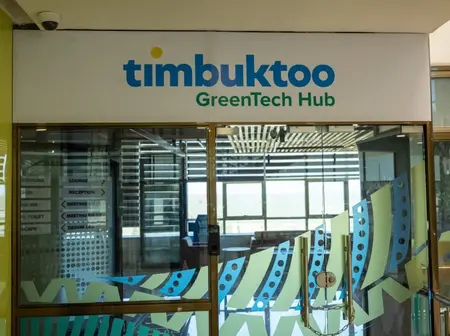
Next Gen Explorers: Konza uses technology to bring classroom learning to life
Children and students visiting Konza Technopolis are being introduced to science and technology beyond the classroom through a programme that allows them to spend a day learning about the systems and innovations being developed at the site.The initiative, known as Next Gen Explorers, is designed for learners from Grade 4 through to Technical and Vocational Education and Training (TVET) level.
-
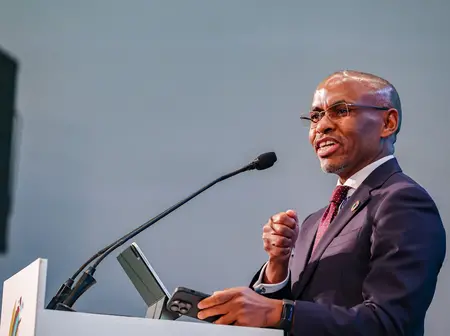
Safaricom’s expanding ambitions put financial services, merchants and AI at the centre of its growth strategy
Safaricom is expanding M-Pesa into investments and wealth management, developing more services for merchants and bringing its digital products together through OneApp as it pursues growth beyond traditional telecommunications. CEO Peter Ndegwa says the company’s next stage will involve using technology to address a wider range of financial and business needs, building on decisions made during his six years leading the company.
In a CNN interview with Victoria Rubadiri, Ndegwa identified Safaricom’s entry into Ethiopia, the expansion of M-Pesa beyond payments and the extension of 4G coverage as three of the most consequential decisions of his tenure. He joined Safaricom on April 1, 2020, shortly after the COVID-19 pandemic was declared.
His comments provide a view of how the company intends to develop these investments into additional sources of growth. They also follow Safaricom’s public articulation of its technology ambitions at Decode 4.0 and the subsequent announcement of Decode 5.0, which placed African AI infrastructure at the centre of its next innovation agenda.
Safaricom had already outlined its ambition to become a broader technology company at Decode 4.0 in March and April 2026. The event brought together discussions around artificial intelligence, fintech, developer infrastructure and ecosystem building, with Group CTO James Maitai describing a transition towards a purpose-driven technology company by 2030.
The developer-focused sessions also highlighted Safaricom’s ambition to provide infrastructure that other businesses can build on, including connectivity, payments, identity services, APIs, cloud and AI tools. Its Fintech 2.0 plans placed M-Pesa within this wider platform strategy.
Safaricom subsequently announced Decode 5.0 under the theme “The Rise of Africa’s AI Supergrid”. The proposed initiative extended the company’s technology ambitions across eight African markets, with shared AI infrastructure and applications in areas including climate, food security and health.
Ndegwa’s CNN interview adds the executive and commercial perspective to that direction. Rather than focusing primarily on the technology infrastructure and developer ecosystem, he discussed how Safaricom intends to use its existing platforms to serve consumers, merchants and businesses.
He said the company had moved from its original focus on connecting people towards using technology and innovation to solve a wider range of problems. That includes expanding its services beyond individual consumers to small businesses and established merchants.
Ndegwa said M-Pesa had more than doubled in the previous five to six years as Safaricom expanded the platform beyond payments. He wants customers to use it to pay, save, invest and obtain insurance, describing the ambition as a financial health ecosystem that other businesses can connect to.
Safaricom’s investment products provide a practical example of this expansion. The company launched Ziidi MMF in January 2025, working with Standard Investment Bank and ALA Capital to offer money market fund investments through M-Pesa. It later introduced Ziidi Trader in February 2026, enabling customers to buy and sell shares listed on the Nairobi Securities Exchange through their phones.
The development of Ziidi Trader has brought a new category of financial activity into the mobile money ecosystem. TechTrendsKE reported in May 2026 that 511,000 users had registered on the platform during its early launch period, while 84,000 accounts had actively purchased shares between February and March. Approximately 36,000 of the 73,000 retail applications for the Kenya Pipeline Company initial public offering also came through the platform, according to the publication’s reporting.
Safaricom expanded its investment offering again in October 2026 with Ziidi Shari’ah, a Sharia-compliant money market fund launched with Gulfcap Investment Bank. The product allows customers to start investing with KSh100 and make subsequent contributions from KSh10.
The scale of the business is also reflected in Safaricom’s wealth management figures. TechTrendsKE reported that the company had 2.2 million active customers using its M-Pesa wealth management service and KSh21.1 billion in assets under management in the financial year ended March 2026.
For Ndegwa, the objective is to make financial services accessible through a familiar digital channel while giving customers more reasons to use M-Pesa beyond sending money and paying bills. Working with specialist financial institutions also allows Safaricom to distribute investment products through its established customer network.
Safaricom’s ambitions also extend to the way businesses receive and manage money. Ndegwa said the company was developing tools that allow merchants to accept payments, pay suppliers and settle employee payments through its platforms.
The existing merchant network gives Safaricom a substantial base from which to develop these services. TechTrendsKE reported that M-Pesa had 3.13 million merchants in the financial year ended March 2026. The platform processed 46.4 billion transactions worth KSh41.68 trillion during the period.
In October 2026, Safaricom partnered with Pesapal to introduce tap-to-pay and dynamic QR payments at participating merchant tills. The collaboration provides businesses with additional ways to accept M-Pesa payments at physical retail locations.
The company has also extended credit services to merchants. In October, Safaricom introduced Fuliza Ya Pochi, an overdraft facility for eligible Pochi La Biashara users. The service is designed to help qualifying businesses manage short-term cash flow requirements, including purchasing stock and paying suppliers.
Another potential extension of M-Pesa’s business infrastructure involves tax administration. Safaricom and the Kenya Revenue Authority have been discussing a proposed reverse electronic invoicing arrangement that could allow invoices to be generated on behalf of suppliers and merchants.
These developments extend Safaricom’s relationship with businesses beyond processing customer payments. Merchants can receive money, access eligible credit and potentially use additional services connected to their transactions and daily operations.
Ndegwa also identified OneApp as an important part of Safaricom’s future digital offering. He said the super app had launched in Kenya and was intended to give customers access to multiple services in one place, with artificial intelligence helping personalise the experience.
Safaricom introduced My OneApp in April 2026, combining M-Pesa and MySafaricom within a single application while creating room for third-party mini apps. The move brought together services that customers had previously accessed through separate applications.
The rollout encountered access and reliability problems, prompting Safaricom to issue updates and expand support for connections through Wi-Fi, rival mobile networks and roaming. Subsequent updates addressed authentication, navigation and service availability.
The company’s longer-term ambition is to make the application a common entry point for its digital ecosystem. For consumers, that means easier access to payments and financial products. For businesses, the platform could provide a route to services supporting transactions and other operational requirements.
Ndegwa said artificial intelligence would help tailor the application to individual needs, rather than relying on broad customer categories. He described the ambition as creating an experience for a “segment of one”, whether the user is an individual managing everyday activities or a business running its operations.
That ambition connects with the AI direction Safaricom presented at Decode 4.0 and the continental infrastructure plans announced for Decode 5.0. The interview, however, focuses on how AI could shape the customer experience within OneApp, rather than providing an update on the proposed AI Supergrid.
The expansion of financial and digital services depends on continued investment in the infrastructure that supports them. Ndegwa said Safaricom spends approximately US$400 million to US$500 million on infrastructure in Kenya, with around half going towards its network.
He said data volumes were growing by approximately 30% annually, increasing pressure on network capacity and creating the possibility of congestion in areas experiencing high demand. Safaricom therefore needs to keep investing in capacity as customers consume more mobile internet and use a wider range of digital services.
Ndegwa also highlighted fibre connectivity, particularly for homes, as part of the company’s approach to managing demand. Fibre connections can help offload traffic from mobile networks while supporting customers who require reliable internet access at home.
Satellite connectivity will complement these investments, according to Ndegwa. He described satellite as an additional component of Safaricom’s infrastructure strategy, alongside mobile networks and fibre, rather than a replacement for existing connectivity technologies.
The investment requirements extend beyond maintaining mobile coverage. As M-Pesa develops into a financial services platform and businesses adopt more digital tools, network capacity becomes important to the company’s ability to deliver those services reliably.
Ndegwa identified Safaricom’s entry into Ethiopia as one of the biggest decisions of his tenure. The expansion gave the company another national market in which to build a telecommunications operation and pursue opportunities in digital services.
Safaricom Ethiopia had passed 15 million 90-day active subscribers in 2026, according to TechTrendsKE. The publication reported that the operation generated KSh14.08 billion in service revenue in the financial year ended March 2026, while its loss narrowed to KSh21.2 billion. Safaricom was targeting EBITDA breakeven in the financial year ending March 2027.
The Ethiopian operation gives Safaricom a second market in which to develop its connectivity and digital services ambitions. Its inclusion in the Decode 5.0 AI Supergrid plans also places the country within the company’s broader vision for technology collaboration across African markets.
Ndegwa connected the future of the Kenyan and Ethiopian businesses to the development of OneApp, saying customers in Nairobi and Addis Ababa would be able to access services through a single platform tailored to their needs.
The strategy brings together several areas of investment: M-Pesa’s expansion into wealth management, the development of merchant services, AI-enabled digital platforms and the infrastructure needed to support rising data demand. These are the business priorities through which Safaricom is seeking to extend its reach beyond traditional telecommunications.
The technology-company ambition was already clear in Safaricom’s Decode 4.0 discussions, while Decode 5.0 extended that vision towards shared AI infrastructure across Africa. Ndegwa’s comments explain how the company intends to build a larger commercial business around those ambitions, with M-Pesa, merchant services and digital platforms at its centre.
Go to TECHTRENDSKE.co.ke for more tech and business news from the African continent and across the world.
Follow us on WhatsApp, Telegram, Twitter, and Facebook, or subscribe to our weekly newsletter to ensure you don’t miss out on any future updates. Send tips to info@techtrendsmedia.co.ke
-

Former Nakuru Councillor Joram Kariuki rallies Kenyans to back Dr Isaac Kinity’s Presidential bid
Former Nakuru Councillor Joram Kariuki has urged Kenyans to back former Kenya Civil Servants Union Secretary General Dr Isaac Newton Kinity’s ambition of becoming President come 2027.In an interview, the former Civic leader who also served as Chair Nakuru County Council termed Dr. Kinity a man of integrity.
-

Al Jazeera marks 30 years of transforming news in Middle East and beyond
As Al Jazeera marks its 30th anniversary with a special commemorative event, the media network’s history is a timeline of milestones and challenges – from risks, obstacles and attacks, to international awards and recognition from the communities whose stories it strives to tell.
Launched on November 1, 1996, the network broke new ground in Arab broadcasting, bringing previously marginalised political perspectives into the mainstream and creating space for debate on issues seldom openly discussed on regional television.
On Sunday, the network hosted an event to commemorate its enduring legacy at its headquarters in the Qatari capital, Doha, attended by the Emir of Qatar Sheikh Tamim bin Hamad Al Thani and other delegates.
“For three decades, Al Jazeera has helped transform the way news is covered in the Arab world, making room on screen for voices, issues and perspectives that had not been given the space they deserved,” said Director of News Raed Fakih in a statement.
“Today, as we mark Al Jazeera’s 30th anniversary, we are building on that editorial legacy to broaden the scope of our coverage and give greater prominence to a wider range of events and viewpoints.”
The anniversary coincides with a significant restructuring of Al Jazeera Media Network’s Arabic-language news services, separating rolling breaking news coverage, live event broadcasting, and more in-depth reporting across three channels.
Since Qatar’s late Father Emir Sheikh Hamad bin Khalifa Al Thani launched the independent channel – a first in the Arab world – the network has promised to provide “the opinion and the other opinion”.
It launched its first TV broadcast as an Arabic-language satellite news channel in 1996 from Doha and has since then grown into the Al Jazeera Media Network, with several outlets in multiple languages. A private corporation for public benefit, the network now includes television channels, websites and other digital platforms.
As governments have banned it, and as its offices have been bombed in many parts of the world, the network has exacted a huge cost for staying on air.
Yet it has been instrumental in covering key events in the last three decades in the region and beyond.
In 2001, when the United States attacked Afghanistan, Al Jazeera was the only foreign broadcaster in Kabul, its updates and pictures travelling the world.
Then in 2011, millions followed the Arab Spring uprising live on Al Jazeera. Its coverage won a prestigious Peabody Award.
However, the network’s reporting has led to numerous threats over the years. Exclusive pictures have made Al Jazeera hard to ignore, but have also made the network a target.
In 2003, a US strike hit its Baghdad office, killing correspondent Tareq Ayyoub. Two dozen Al Jazeera journalists have been killed since.
In 2022, an Israeli soldier shot Palestinian correspondent Shireen Abu Akleh in Jenin, the 12th Al Jazeera journalist killed in 19 years. Another 12 were then killed in just 30 months, every one of them by Israel during its genocidal war in Gaza.
One of them was Anas al-Sharif, who for many viewers was the face of the war. In August 2025, an Israeli strike killed him and four colleagues as it hit a press tent outside al-Shifa Hospital.
Meanwhile, across the region, governments have closed the network’s bureaus and pulled the channel’s licences.
In 2024, Israel banned the network and raided its Ramallah office. Months later, the Palestinian Authority suspended it.
Overall, at least nine governments have tried to silence Al Jazeera.
Despite the challenges, Al Jazeera’s broadcast continues, with more than 3,000 staff working out of more than 70 bureaus across the globe.
Alongside its digital divisions, as well as its English channel that launched in 2006, Al Jazeera reaches more than 430 million homes.
The network on Sunday also launched The Core, an artificial intelligence (AI) initiative first announced in December 2025 in collaboration with Google Cloud. The initiative aims to integrate AI into newsroom operations, helping journalists manage information, coordinate coverage and make better use of the network’s reporting archives.
Meanwhile, Al Jazeera Balkans was also relaunched in a new digital-first format, opening a new chapter in its journalism in the region.
While the network’s shelves are packed with hundreds of awards, it continues its mission of serving as a voice of the voiceless.
-

Some exam tips for form fours preparing for KCSE
Dear reader, the 8-4-4 System of Education embraces a shedload of standard exams, evaluations, or assessments. This is a common practice in all examination systems, punctuated by both formative and summative assessments. In 8-4-4, KCSE is the summative assessment. The scores in KCSE determine qualifications for entry into tertiary institutions.
-

Ireland’s European athletics champion Ciara Mageean dies aged 34
Irish middle-distance runner Ciara Mageean, who won European gold and competed at two Olympic Games, has died aged 34, her family has announced.
“At 6:30am this morning, Ciara lost her battle with cancer surrounded by her loved ones,” said a statement posted on the athlete’s Instagram account on Sunday.
Mageean’s death comes just weeks after she married her long-term boyfriend in Belfast.
She had been receiving treatment for bowel cancer, revealing her diagnosis in July 2025 and subsequently disclosing that the disease was at an advanced stage.
Originally from Portaferry in County Down, Northern Ireland, Mageean established herself as one of the island of Ireland’s leading middle-distance runners, setting several records in both Northern Ireland and the Republic of Ireland.
She represented the republic at the 2016 Rio Olympics, at the Tokyo Games held in 2021, and in her greatest sporting achievement – in 2024 when, she claimed the 1,500 metres title at the European Athletics Championships in Rome.
But an Achilles tendon injury prevented her from competing at the Paris Olympics that year.
Mageean remained remarkably positive throughout her period of illness, saying she was “continuing to find the joy in everyday” as she thanked people for their support following her diagnosis.
Speaking to the BBC in June, she said she was “grateful” for having a career “that many others didn’t get to have”.
Tributes poured in for Mageean, who also won European bronze and silver in the 1,500m (in 2016 and 2022, respectively) and finished second in the event at the 2022 Commonwealth Games.
“The country has lost a hero,” the Olympic Federation of Ireland said in a statement.
“Beyond the medals, records and sporting accolades, Ciara will be remembered for her warmth, courage and tremendous strength of character,” said Northern Ireland’s First Minister Michelle O’Neill.
The Republic of Ireland’s prime minister, Taoiseach Micheal Martin, said he was “deeply saddened” by Mageean’s “untimely passing”.