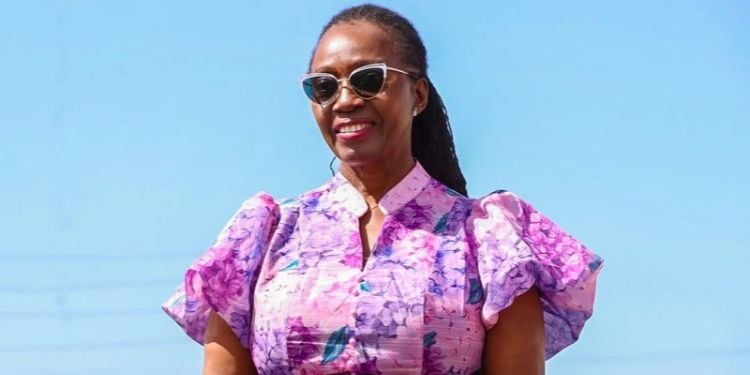
Martha Karua is a Kenyan advocate, Senior Counsel and politician whose career spans the judiciary, private legal practice, parliamentary politics, Cabinet service and opposition leadership.Martha rose to national prominence through her involvement in Kenya’s multiparty democracy movement, her advocacy for constitutional reform and her years in elective and executive office.
Blog
-
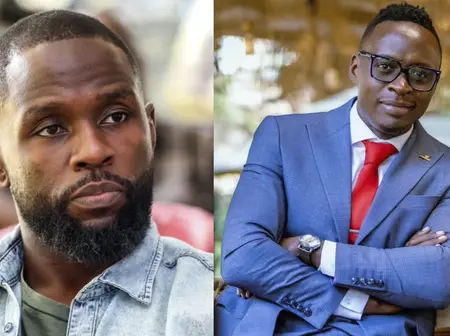
Oga Obinna Responds to John Allan Namu’s Criticism of Politically Funded Podcasters
Media personality Oga Obinna has responded to investigative journalist John Allan Namu’s criticism of podcasters and content creators who receive money from politicians, insisting that he does not identify himself as a journalist.
Obinna said his company, Obinna TV Studios, is primarily a media production outfit specialising in digital content, entertainment and creative productions rather than traditional journalism.
Speaking about his work, he explained that the company’s biggest asset is its digital content and argued that interviewing guests does not automatically make someone a journalist.
“I’m not a journalist. I do have my company. It’s a media company that focuses on just productions. We do content production, meaning our biggest asset is digital assets,” he said.
He explained that his work involves scripting, comedy, music and interviewing guests to create content for digital audiences.
Obinna added that he has journalists working within his organisation to handle assignments that require journalism-related skills, distinguishing his role as a content creator and media entrepreneur from that of professional journalists.
Obinna’s response follows remarks by Namu, who questioned the independence of some podcasters and digital content creators who receive money from politicians to organise events or produce content while presenting themselves as independent journalists.
The investigative journalist raised concerns about the growing financial relationships between politicians and digital media personalities, warning that such arrangements could undermine the credibility and independence of media platforms.
Namu particularly questioned the practice of accepting money from political figures under the guise of organising events while simultaneously presenting oneself as a journalist responsible for holding leaders accountable.
He also warned that undisclosed financial arrangements could create the impression that media practitioners are available to advance the interests of whoever pays them.
His concerns centred on the distinction between paid political promotion and independent journalism, particularly where content creators fail to disclose their financial relationships with politicians.
In responding to the criticism, Obinna maintained that his platform is built around entertainment and content production rather than investigative reporting.
He argued that journalism involves responsibilities such as research, investigations, fact-checking and holding public officials accountable, which are not the primary focus of his company’s operations.
Instead, he said his objective is to inspire, motivate and entertain audiences through productions created by his team.
Obinna also pointed to the journalists employed by his company, saying they handle journalism-related assignments while he concentrates on content creation and the business side of media production.
-
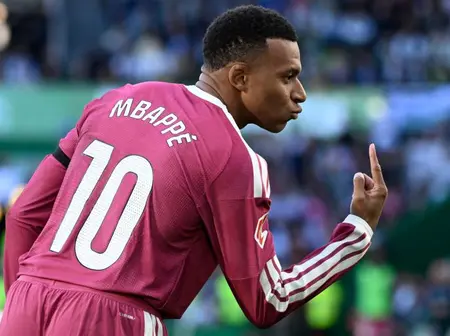
Chinese state TV continues Real Madrid blackout after Mbappe-Mao meme row
Real Madrid’s Spanish football league match against Racing Santander has not been broadcast on Chinese state TV as La Liga continues to pay the price of the fallout from Kylian Mbappe’s remarks about the country’s former leader Mao Zedong.
Neither of the two sports channels on the Chinese state broadcaster CCTV aired Real Madrid’s match on Sunday after star forward Mbappe caused a furore in the Asian country, where millions follow the Spanish league.
The match kicked off at 15:15 GMT but was not broadcast on either of CCTV’s two sports channels, according to the AFP news agency.
None of the other matches from matchweek 11 of La Liga has been broadcast live on public television so far.
Mbappe referred to Mao as a “dictator” in a video from April that went viral recently. It resulted in the body overseeing CCTV saying it would halt broadcasts of the top Spanish league.
Mbappe, Real and La Liga later all apologised for his remarks, and China’s Ministry of Foreign Affairs said it took the player’s apology “seriously”.
Al Jazeera has reached out to La Liga for a comment but had not received a response from the Spanish league by the time of publication.
La Liga matches were broadcast on Migu, a digital streaming service owned by the state-owned China Mobile telecommunications network, according to reports.
The broadcast included Barcelona’s 6-1 win over Alaves on Saturday, but the Racing Santander-Real Madrid match did not appear to be shown.
The China Media Group (CMG), which oversees CCTV, had said it suspended La Liga broadcasts on October 26, adding that apologies from La Liga, Mbappe and Real Madrid were “an absolute prerequisite” for moving past the furore.
The viral video showed Mbappe saying the funniest internet meme he had seen about himself was of his face photoshopped onto that of “some guy. I think he’s a Chinese dictator.”
This was an apparent reference to a meme of Mbappe superimposed on an image of Mao.
Mbappe later apologised for his “ill-judged” comments. La Liga said it “deeply” regretted them, and Real followed suit.
CCTV’s sports website later reported that CMG had acknowledged the apologies, but it remained unclear whether talks to defuse the situation have begun.
China is a huge market for European football. CCTV also carries matches from the English Premier League and the German, French and Italian top flights.
Real Madrid coach Jose Mourinho said on Saturday that the club had “done our part” to put the controversy behind them.
It is taboo in China to crack jokes about Mao, who died in 1976 and whose policies are blamed by historians for mass starvation and millions of deaths.
Major Chinese brands cancelled sponsorship deals with Mbappe after his comments.
Various overseas sports leagues and players have found themselves in hot water for comments on topics that are politically sensitive to China.
China essentially cut ties with the NBA for several years from 2019 after then-Houston Rockets General Manager Daryl Morey tweeted his support for Hong Kong protesters.
-
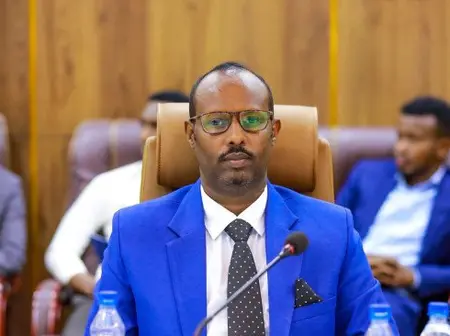
Hirshabelle warns airlines against involvement in Hiiraan political disputes
Beledweyne (HOL) – Hirshabelle State’s Minister of Transport and Civil Aviation, Farah Mohamed Osman, has warned transport operators in the Hiiraan region and airlines operating at Ugaas Khalif Airport in Beledweyne against following directives issued by authorities outside the state ministry.In a statement issued Monday, the ministry said transport operators and airlines must disregard any instructions that do not come from the Hirshabelle Ministry of Transport and Civil Aviation.
-
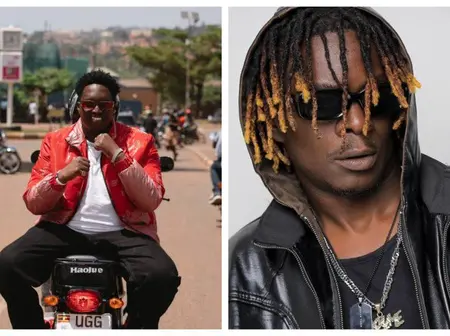
“Why should I beef with you when you want to be King of Uganda, while I want to be King of the World?” – Joshua Baraka hits back at King Saha
Singer Joshua Baraka has hit back at fellow musician King Saha over his criticism of his international ambitions, saying he is aiming for global recognition rather than settling for dominance in Uganda.Baraka made the remarks during a TikTok Live session after Saha questioned whether pursuing an international music career was worth the financial investment and uncertainty involved.
-
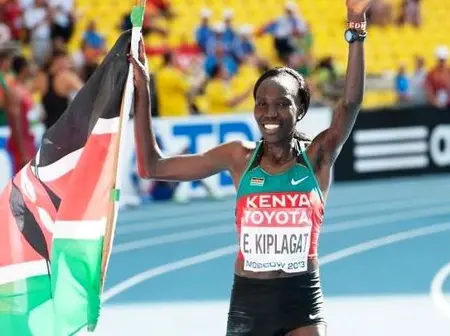
Edna Kiplagat, 46, finishes fourth at 2026 New York City Marathon
Kenyan marathon veteran Edna Kiplagat delivered another impressive performance on the global stage, finishing fourth at the 2026 New York City Marathon despite being 46 years old.Kiplagat clocked 2:25:42, narrowly missing out on a podium finish in a competitive women’s race won by compatriot Sheila Chepkirui.
-
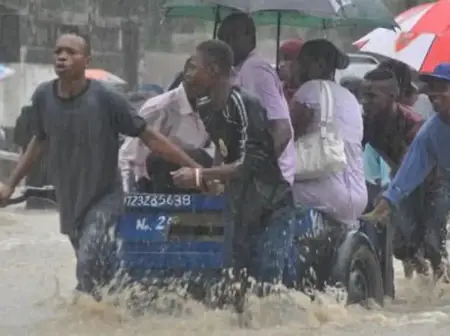
Weatherman Lists 40 Counties Expected to Receive More Rain in November
The Kenya Meteorological Department has forecast above-average rainfall in more than 40 counties in November, warning residents to prepare for possible flooding, landslides and transport disruptions.In its monthly weather outlook released on Sunday, November 1, 2026, the department listed Nairobi, Mombasa, Kisumu, Nakuru, Kiambu, Meru, Machakos and Makueni among the counties expected to receive more rainfall than the long-term average.
-
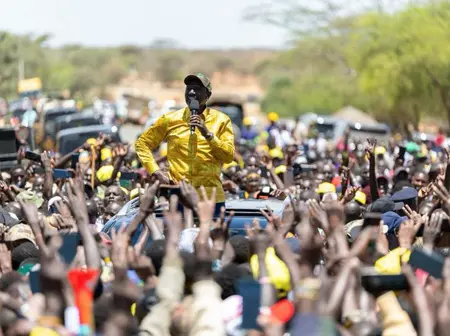
President Ruto to Visit Kisii, Nyamira Counties in 3-Day Development Tour
TourPresident William Ruto is scheduled to visit Kisii and Nyamira counties from Monday, November 9, 2026, to Wednesday, November 11, 2026.President William Ruto is scheduled to visit Kisii and Nyamira counties from Monday, November 9, 2026 to Wednesday, November 11, 2026.
-
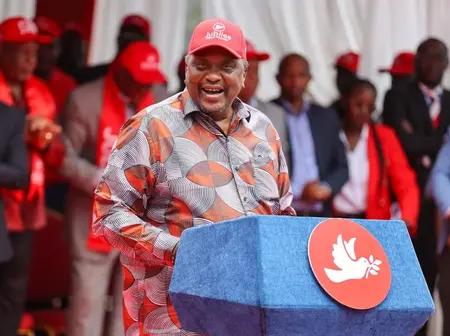
Cassypool Admits Supporting Ruto Cost Him Fans, Destroyed His Brand
Cassypool Capon has admitted that his public support for President William Ruto damaged his entertainment brand, cost him a significant number of followers and took a toll on his mental health.
Speaking during an interview on Sunday, November 1, 2026, the outspoken entertainer said the political position he took alienated some of his fans and attracted intense online criticism.
“I do regret supporting President William Ruto. I do regret it because it cost me my brand. I killed my brand,” he said.
Despite acknowledging the damage, Cassypool maintained that he would still have supported Ruto if given another opportunity to make the decision.
He also apologised to fans who felt betrayed or hurt by his political stance, asking them to forgive him for allowing his political allegiance to affect their relationship.
“To all those people I hurt because of the political stance I took, I just want to apologise to them. I’m asking for your forgiveness. I did wrong and took a political stand that hurt my fans,” he added.
The influencer said the consequences went beyond losing followers and business opportunities, revealing that the constant insults and negative comments affected his mental well-being.
He disclosed that the experience pushed him into depression and that he reached a point where he contemplated taking his own life.
Cassypool explained that the criticism was particularly difficult to deal with because he had previously enjoyed widespread public attention and support.
He also expressed concern that his children, who are old enough to access social media, could come across the negative comments directed at him.
According to the entertainer, the backlash also affected his wife, who became overwhelmed by the criticism and at one point urged him to consider quitting.
The experience, he said, reminded him that public figures are equally vulnerable to online hostility despite their visibility and influence.
Cassypool’s political association with Ruto dates back to the 2022 General Election, when he initially declared interest in the presidency before withdrawing from the race to support the then Deputy President.
During a 2024 interview, he said he had abandoned his presidential ambitions to back Ruto, whom he referred to as his boss.
His support became more prominent during the controversy surrounding the Finance Bill 2024, when he was among public figures who defended the government’s position.
At the time, he argued that Kenyans would have to endure difficult economic conditions before the country could improve.
He subsequently became one of Ruto’s outspoken defenders, frequently clashing with critics of the President.
In August 2025, Cassypool also explained that his disagreement with musician Bien-Aimé Baraza began after the singer chanted ‘Ruto Must Go’ during a performance, an act he considered disrespectful to the Head of State.
Although he now acknowledges that his political loyalty came at a heavy professional and personal cost, Cassypool maintains that he would make the same political choice again.
-
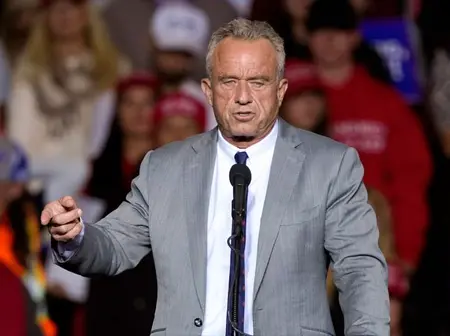
RFK Jr is wrong about the Arab world
At a recent campaign rally in Michigan, United States Secretary of Health Robert F Kennedy Jr made remarks that have caused much controversy. He alleged that Muslim Arabs do not produce science and literature and do not win major awards because of the influence of the Muslim Brotherhood.
This was not merely a hasty and inaccurate assessment of the knowledge production of a specific demographic. It was a statement that reflects racist attitudes and misconceptions about an entire region and an entire religion. It is also easily refutable.
There are plenty of Muslim Arab scientists, thinkers and writers who have made major contributions over the past century. Some of them are Nobel laureates, such as novelist Naguib Mahfouz, diplomat Mohamed ElBaradei, journalist Tawakkol Karman, and scientists Ahmed Zewail, Moungi Bawendi and Omar Yaghi. Many others have not received a Western award but have nevertheless contributed significantly to their own countries and the world.
The Arab world does face challenges in knowledge production, but this does not prove an inherent deficit in its people or the overwhelming influence of a certain political group. Rather, it reflects historical and institutional conditions that impact this process.
Human civilisations have not been equal in knowledge production across history. Some have witnessed scientific and intellectual flourishing while others have faced decline and turmoil.
Downturns have not occurred because populations had suddenly lost their mental capacities but because the political, economic, cultural and institutional conditions that allow knowledge to thrive change over time.
In the case of the Islamic civilisation, its centres – from Baghdad and Damascus to Cairo and Cordoba – experienced a vast scientific and intellectual movement involving scholars, translators, philosophers, physicians and mathematicians from diverse religious and linguistic backgrounds for centuries. This prosperity was not isolated from the world; it was built on the translation, critique, development and interaction with Greek, Syriac, Indian and other bodies of knowledge.
Meanwhile, parts of Europe experienced significant backwardness in scientific education and development. However, Europe was not a monolith, nor were those centuries a homogeneous dark period. It also witnessed varying intellectual, institutional and scientific developments across different regions and timeframes.
European conditions then gradually changed: Educational institutions and universities evolved, networks for book and knowledge circulation expanded, and European scientific traditions interacted with scientific knowledge transferred from the Islamic world and elsewhere.
No one can claim, based on these historical disparities, that Europeans are inherently incapable of producing science or that their religion or ethnic origins preclude them from innovation. Serious historical interpretation focuses on institutions, economics, education, political patronage and knowledge networks rather than claims that certain populations lack innate abilities.
The exact same principle must apply to Arabs and Muslims today. Since Europe was able to change the conditions of knowledge production, it is illogical to assume that the contemporary reality of Arab and Islamic societies reflects fixed limits in their scientific or literary capacities.
Science is universal and not the racial or religious property of anyone. Decline is not a genetic destiny for any people, and prosperity is not an eternal privilege.
Rejecting RFK Jr’s generalisations does not mean denying the challenges facing scientific research in many Arab countries. There are serious questions concerning research and development funding, university independence, education quality, freedom of research and expression, institutional stability, the ability to attract and retain scientists, and links between knowledge and the economy and production. However, these questions are the beginning of scientific analysis, not the end.
A society that does not provide a researcher with a suitable laboratory, does not grant universities sufficient independence, does not allocate the necessary resources for research and does not ensure the continuity of scientific institutions cannot expect results comparable to those of a society that invests sustainably in these areas.
Furthermore, wars, conflicts, displacement, brain drain and weak scientific cooperation can disrupt the accumulation of knowledge, even when a society possesses qualified human capital. The capacity for thought and innovation is one thing, and the ability to translate them into sustainable scientific production is another. Between the two lies an entire system of socioeconomic conditions, institutions and policies.
Blaming the challenges contemporary Arab societies face on a single political group – in RFK Jr’s case, the Muslim Brotherhood – and presenting this as a comprehensive explanation for the state of science and literature among hundreds of millions of people falls short of serious historical or social analysis.
Scientific production is influenced by a set of intersecting variables: state structure, economic policies, education quality, research expenditures, academic freedom, stability, international relations and the capacity for knowledge circulation.
Certain political movements or intellectual trends might impact educational policies or the cultural climate in specific contexts. However, proving this impact requires evidence and comparative analysis, which RFK Jr would likely fail to produce, should he be asked to do so.
Moving from critiquing an institution or political movement to issuing a judgement on Arabs or Muslims in general is a form of racism, hatred and Islamophobia because it transitions from analysis to generalisation, and from seeking causes to reproducing stereotypes.
The problem with RFK Jr’s statement is not merely its factual inaccuracy regarding awards and their superficiality, but the logic upon which it is based: transforming historical disparities in knowledge production into broad judgements about peoples.
His words hold symbolic, intellectual and political significance, reflecting a hostile Orientalist stance towards Arab-Islamic and even Eastern heritage.
A serious response to these statements requires more than merely recalling past glories or listing Arab and Muslim scientists and thinkers; it requires turning the discussion into a project for the future.
In the Arab world, we need more independent universities capable of research, equipped laboratories, sustainable funding, an environment that permits critique and experimentation, policies that retain scientific talent and institutions that link education with the economy and innovation.
We also need a documented, critical rereading of the history of sciences in Islamic civilisation – one that studies both achievements and failures and examines how scientific concepts emerged, evolved and were transferred between civilisations.
A civilisation does not regain its stature by repeating that its ancestors were great but by building the institutions that allow new generations to produce new knowledge.
The views expressed in this article are the author’s own and do not necessarily reflect Al Jazeera’s editorial stance.