
Business Ireland Kenya (BIK) has rebranded as the Irish Chamber of Commerce Kenya, introducing a new name, a fresh logo, and a clear, long-term purpose of connecting the Irish and Kenyan business markets.The new logo features a shamrock, which is one of Ireland’s most recognisable symbols, designed with distinct roots and three leaves.
Blog
-

Jake Paul confirms opponent in boxing return
Jake Paul has finally announced who he will fight in Dubai, United Arab Emirates, on December 24, as the American vows to return to winning ways after almost a year out of the ring.
Paul is set to take on French mixed martial artist and former kickboxer Cédric Doumbé at the Coca-Cola Arena.
The fight will take place at cruiserweight (200lbs), over eight rounds, with 10oz gloves permitted.
The 29-year-old American has not fought since suffering a brutal sixth-round knockout defeat to Anthony Joshua in December 2025. Paul sustained a double break in his jaw, which required two surgeries.
Thirty-four-year-old Doumbé is signed to MMA promotion the Professional Fighters League (PFL), where he has won six of his seven fights.
The Cameroon-born fighter, who is based in Paris, also boasts a record of 75 wins, one draw and seven losses from 83 kickboxing contests and is a former two-time GLORY welterweight world champion. He won his sole professional boxing bout against Mohamed Fodil in April 2015.
Speaking to Most Valuable Promotions, Jake Paul said: “Cédric Douchebag was calling me out two years ago after knocking some dude out in 9 seconds. Well Douchebag, now you get your chance. I’m rusty, my jaw is janky and I don’t have kickboxing world titles like you do. But guess what, this isn’t kickboxing mon ami.
This is BOXING. Just like Usyk feasted on Rico Verhoeven, I am going to eat you for dinner in Dubai on Christmas Eve and have a Coca-Cola at the arena to celebrate. You like to talk a lot, so let’s see what you have to say in person at the press conferences next week in Paris and Dubai.
To the proud people of France, excuse-moi for what I am about to do, but your son has been naughty and he’s going to get punished. To all the fans in Dubai and all of MENA…we are doing this and we are doing it big, like Dubai always does. I’m baaaaaccccccccck.”
Doumbé said: “Jake Paul calls himself the Problem Child, but he’s never faced a problem like me. He has no idea what a Frenchman is capable of, and on Thursday, December 24 in Dubai, I’m going to eat ‘El Poulet’ for dinner. Jake loves to talk, and so do I, but after what Joshua did to his jaw, I’m not sure how much talking he has left. I’m going to finish the job Joshua started. Dubai is a special city to me, and on Christmas Eve, I’ll be waving le Tricolore over his unconscious body. France, this one’s for you.”
More to follow…
-

New York City Marathon winner produces the biggest ever flex after incredible debut victory
The winner of the New York City marathon produced the ultimate flex after crossing the line before anyone else in his first ever time running the distance.
The 26.2 mile NYC race took place on Sunday and was ran by a total of 60,000 participants.
There were some famous faces involved in the 50th running of the five-borough course, with Premier League record-breaker James Milner taking part.
Former Liverpool, Manchester City and Brighton star Milner is considered to be one of the fittest footballers of all time and accrued an impressive time of 3 hours, 9 minutes and 4 seconds.
But it was Swede Andreas Almgren who won the men's title in the event during his first ever experience in a 26.2 mile course.
Almgren's triumphant marathon debut saw him finish with a staggering time of 2:06:01, 13 seconds ahead of Italy's Yemaneberhan Crippa who finished second.
The 31-year-old is anything but a rookie as he is already an elite runner who claimed gold in the 10,000m at the 2026 European Athletics Championships in Birmingham.
But this was the first time competing against pros in a marathon and afterwards Almgren produced a hilarious post on Strava.
Accompanied by his run upload, he wrote: "'I just finished my first marathon'. 'Cool, did you win'? 'Yes'.
In what is deemed to be one of the most difficult races to run, Almgren did a 15 minute 5k, a 10k in 30 minutes and 53 seconds and a half marathon in 1 hours, 4 minutes and four seconds.
His average pace was 4 minutes and 19 seconds per mile and incredibly, he seemed to get quicker near the finish line as he pulled away from Crippa in Central Park.
Reflecting afterwards, Almgren said: “I’ve probably never felt so emotional after a race ever.
"With 5k left I felt like I had the legs today … I saw I had a pretty big gap [near the end of the race] and thought: ‘OK, just enjoy these last few hundred meters’, because this is not something a lot of people get to experience.
"This is my first marathon. I didn’t know how I was supposed to feel."
Almgren, who does double threshold training and typically runs 125 miles a week when training, is the first European man to win the marathon in 30 years.
He used to be an 800m runner and has suffered his fair share of injury heartbreak, including at the 2024 Olympics when he was forced to pull out of the 5,000m just a day before the heats began.
Even with being a Nike athlete, his achievement is still an extraordinary and saw him claim prize money of £76,000 for winning.
The same amount went to women's winner Sheila Chepkirui of Kenya after her incredible time of two hours, 24 minutes and 36 seconds.
-

Samsung abandoned under-display cameras after four generations. Could Apple’s foldable give the technology a second chance?
Samsung could be preparing to bring back a smartphone camera technology it abandoned after four generations of Galaxy Z Fold devices, just as Apple introduces the same approach on its first foldable iPhone. The reported Samsung under-display camera comeback on the Galaxy Z Fold9 raises an interesting question about how smartphone manufacturers and their innovations are judged, particularly when a technology that attracted criticism from one company receives renewed attention after another adopts it.
Samsung is developing a device with an under-display selfie camera, major internal changes and relatively minor adjustments to its overall thickness and design. The report cites a tipster on X who also claims Samsung is positioning the Galaxy Z Fold9 as a direct competitor to Apple’s iPhone Duo. If the reported camera makes it into the commercial device, Samsung would be returning to an approach it spent four generations refining before moving away from it.
Samsung introduced its first under-display camera on the Galaxy Z Fold3 in 2021, making the inner display appear more continuous by placing the selfie camera beneath the screen rather than cutting a visible hole through it. The 4MP camera was intended primarily to preserve the large internal display’s uninterrupted appearance, giving the foldable a more immersive viewing experience. It was an ambitious implementation of a technology that presented considerable engineering challenges, particularly around allowing enough light through the display to produce usable photographs.
The reception was difficult. Reviews of the Galaxy Z Fold3 repeatedly criticised the camera’s image quality, with publications pointing to blurry photographs, limited detail and weak results compared with conventional selfie cameras. DXOMARK’s assessment also identified problems with image noise, exposure and colour reproduction. The camera delivered on the visual objective of concealing the sensor, but its photographic performance made the compromise difficult to overlook.
Samsung retained the technology on the Galaxy Z Fold4, Galaxy Z Fold5 and Galaxy Z Fold6, making adjustments to the display structure and image processing. The Fold4, for example, introduced a different subpixel arrangement above the camera area, making it less conspicuous when the internal display was in use. Some reviewers found improvements in image output compared with the Fold3, while others still described the resulting photographs as soft and noticeably inferior to those from conventional selfie cameras.
The Fold5 brought further image-processing improvements, including better sharpness, but reviews continued to identify the camera as a weak point.
By the Galaxy Z Fold6, the criticism had become particularly familiar. Reviewers questioned the usefulness of the implementation for photography, while others continued to recommend the camera mainly for video calls rather than taking pictures. Samsung had managed to make the camera less intrusive, although the improvements in image quality never fully resolved the original problem.
The Galaxy Z Fold7 subsequently abandoned the under-display approach in favour of a conventional punch-hole selfie camera. The Galaxy Z Fold8 and Fold8 Ultra continued with that design, ending a four-generation experiment that had made Samsung one of the earliest major smartphone manufacturers to commercialise the technology across its book-style foldables.
The history matters because Samsung’s decision to abandon the camera came after several attempts to improve it, rather than a single unsuccessful product generation. The company had experimented with display construction and software processing, but the camera continued to face the same fundamental optical challenge. Light had to pass through the display layers before reaching the sensor, affecting the amount and quality of information available for image processing.
The 4MP resolution also placed a ceiling on the amount of detail the camera could capture. Even as Samsung improved its processing, the internal camera struggled to match the conventional selfie cameras available on the same devices. Owners could use the cover-screen camera or the rear camera system for better photographs, but those alternatives reduced the practical appeal of having a dedicated camera embedded beneath the larger internal display.
This history illustrates the difficulty of being an early commercial adopter of emerging smartphone technology. Samsung introduced the feature when its implementation still involved substantial compromises, and reviewers assessed those shortcomings against the price and expectations of a premium foldable. The company continued refining the technology, but its eventual return to a conventional camera suggests that the uninterrupted display was not enough to justify the photographic trade-off.
Samsung’s experience with foldables offers another example of the risks associated with early hardware experimentation. The original Galaxy Fold encountered screen failures in its initial review units in 2019, forcing Samsung to revise the device before its commercial release. Subsequent generations helped refine the category, demonstrating how early engineering attempts can provide a foundation for later products even when the first implementations attract criticism.
The under-display camera followed a different commercial path, but the underlying challenge was similar: Samsung was attempting to make a new hardware arrangement work before the technology had reached the level of refinement expected from a flagship smartphone.
Apple’s iPhone Duo has now introduced an under-display selfie camera of its own, reportedly using a 4MP sensor on the internal folding screen. The decision gives the device a cleaner internal display, although reviews have raised familiar concerns about photographic performance. Some reviewers criticised the camera’s low-resolution output, washed-out colours and weak indoor results, while others identified noise, excessive sharpening and reduced detail compared with conventional selfie cameras.
Other assessments have been more measured. Some reviewers found the camera reasonably sharp in some conditions but noted graininess and the advantages of conventional cameras. Others also highlighted its limitations for photography, particularly in challenging lighting. The overall discussion resembles the reception Samsung’s earlier implementations received, with reviewers weighing the appeal of an uninterrupted display against the compromises of placing a camera beneath it.
There is a notable historical connection here. Samsung spent four generations putting under-display cameras into its foldables before deciding that the technology did not provide a satisfactory balance between display aesthetics and image quality. Apple has now entered the same territory, adopting a similar resolution class for a feature that prioritises the appearance of the internal screen.
Apple’s implementation gives the technology another prominent platform, but it does not erase the engineering difficulties Samsung encountered. Both companies are pursuing a similar design objective, and both face the challenge of making the camera useful without compromising the display experience.
This is where the comparison becomes particularly interesting. Samsung’s early under-display cameras attracted years of criticism over their photographic limitations, with reviewers questioning whether the visual benefit justified the poor results. Apple’s adoption has also attracted criticism, although some of the discussion gives greater attention to the design decision, the novelty of its implementation and the possibilities for future improvements.
That difference raises a broader question about the standards applied to smartphone innovation. When Samsung introduced the technology, its implementation was often assessed through the shortcomings experienced by consumers. When Apple adopted it, the discussion also centred on the design benefits and the engineering decision to remove the visible camera opening from the internal display.
There is a distinction between evaluating two different implementations and applying different expectations because of the company behind them. Apple is entering the foldable market after Samsung has spent years developing the category, and its first product can benefit from an industry that already understands the advantages and limitations of folding displays. That context deserves consideration, but it should not exempt Apple’s hardware from the same scrutiny applied to Samsung.
The same issue appears in the wider smartphone industry. Samsung introduced the Galaxy Note in 2011, bringing a large-screen smartphone and stylus combination to a market where such a device was not yet a mainstream proposition. Its original Galaxy Fold also faced criticism during its first commercial attempt, but Samsung continued developing the category. Apple’s anticipated foldable entry has now brought renewed attention to a product segment that other manufacturers have spent years refining.
TechTrendsKE has previously examined this dynamic in its article, Android doesn’t have an iPhone problem. It has an identity problem, which explored how Apple’s position can influence the way Android devices are discussed and evaluated. The under-display camera offers a specific example through which to examine that argument. A technology can attract criticism when one manufacturer introduces it, yet receive renewed attention when another company adopts it, even when the fundamental engineering trade-offs remain familiar.
This does not mean every positive assessment of Apple’s camera is unfair, or that Samsung’s earlier implementations deserved less criticism. The companies introduced their products in different periods, and the quality of their respective implementations must be assessed on the evidence. However, Samsung’s contribution to the technology’s commercial development deserves recognition, particularly when discussions of Apple’s implementation revisit an approach that Samsung had already spent years exploring.
Apple’s influence over smartphone conversations also plays a role. Its adoption of a particular design can bring attention to a feature that competing manufacturers have previously introduced, changing how consumers and technology commentators discuss its relevance. That influence can make an existing technology appear newly important, even when its engineering history stretches back several product generations.
The reported Galaxy Z Fold9 development brings the discussion back to Samsung’s next generation of foldables. The company is considering a return to under-display cameras alongside major internal changes. The tipster has also claimed that Samsung is positioning the device against Apple’s iPhone Duo, placing the two products in direct competition over the design and capabilities of their internal displays.
Samsung could have an opportunity to revisit the technology with improvements informed by its earlier experience. Its previous implementations exposed the limitations of the approach, particularly around light transmission, sensor performance and image processing. A new generation could give the company another opportunity to address those challenges while delivering the uninterrupted internal display that originally motivated the design.
There is also a competitive dimension to the reported development. Apple’s adoption of under-display cameras could give Samsung another reason to pursue a technology it previously abandoned, particularly if consumers begin to associate uninterrupted internal displays with premium foldables. Samsung already has experience developing the technology, and a return would allow it to build on work that began with the Galaxy Z Fold3.
The broader issue is how the industry recognises innovation and the manufacturers that take early risks. Samsung’s under-display camera experiment did not produce the photographic experience reviewers wanted, but it helped establish a commercial reference point for a technology Apple is now using. If Samsung brings it back on the Galaxy Z Fold9, the company will have an opportunity to demonstrate how much it has learned from four generations of experimentation, while the industry gets another chance to assess the technology on the same standards applied to its earlier implementations.
Go to TECHTRENDSKE.co.ke for more tech and business news from the African continent and across the world.
Follow us on WhatsApp, Telegram, Twitter, and Facebook, or subscribe to our weekly newsletter to ensure you don’t miss out on any future updates. Send tips to info@techtrendsmedia.co.ke
-

Full line-up for I’m A Celebrity 2026 revealed
The star-studded lineup for this year's series of I'm A Celebrity…Get Me Out Of Here! has now been revealed.
Following weeks of speculation about who might be heading into the jungle, reports have emerged unmasking a dozen of the famous faces who will soon be Australia-bound.
Ant and Dec will return to host the ITV show in just a matter of weeks – so, who will be joining them Down Under?
There's quite the interesting mix of personalities being thrust in the melting pot that is the I'm A Celeb jungle for the 2026 series.
Gavin and Stacey star Joanna Page, who is best known for playing the iconic Stacey Shipman is among those who have made the cut this year, according to The Sun.
Basketball legend and Paralympian Ade Adepitan will be joining her, alongside YouTube star Sharmarke Mohamud, who is better known online as Sharky.
Love Island star Chloe Burrows, Kaiser Chiefs frontman Ricky Wilson, Big Brother host AJ Odudu, TV star Mariella Frostrup, Leomie Anderson and Claire Sweeney are also reportedly on board.
Football icon Wayne Rooney and comedy star Leigh Francis are also reportedly heading into the jungle this year.
More to follow.
-

Another Country Joins Saudi Arabia, Imposes Entry Ban on Kenyans
Another country has introduced new entry restrictions affecting Kenyan travelers following the Ebola outbreak, adding to the growing list of international travel measures involving Kenya.Madagascar announced the restrictions through a public health notice, with the measures taking effect on November 1, 2026.According to a Kenya Airways travel alert, the restrictions affect foreign nationals who have stayed in or transited through Kenya, Nigeria and the Democratic Republic of Congo within the previous 21 days.
-
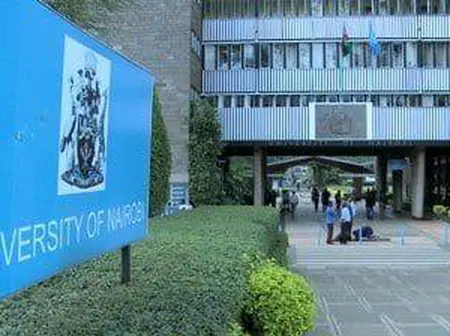
UoN Issues Notice to Students Over Fee Payment After Resumption of Classes
UpdateUoN said that teaching, learning, examinations, research and other functions resume immediately.The University of Nairobi has urged its students to clear any outstanding fees following the resumption of classes after the end of the prolonged lecturers' strike.In a notice issued on Monday, November 2, the Ag.
-

Freezers in Sweden, Belgium overheat following possible cyberattacks
Possible cyberattacks have triggered rising temperatures in grocery store refrigeration systems across Sweden, Belgium and Luxembourg.
The head of Sweden’s national cybersecurity centre, John Billow, confirmed on Monday to the Reuters news agency that the centre is responding to multiple incidents affecting store cooling systems.
The temperature of freezers at several Swedish stores rose suddenly overnight, store operators ICA and Coop said.
Meanwhile, the Belga news agency reported overnight temperature increases at dozens of Ahold Delhaize stores in Belgium and Luxembourg, which were blamed on a cyberattack, quoting refrigeration company Sabcobel’s chief executive Stephan Moelans.
A spokesperson for the supermarket chain earlier said an “IT incident” had affected its fridges and freezers. The company is investigating the incident.
Ahold Delhaize reported a cybersecurity incident to Dutch police last month.
The cyberattack on refrigeration systems at hundreds of supermarkets in France raised the temperature of fridges and freezers to as high as 50 degrees Celsius (122F), spoiling food and causing fires at several stores.
One Swedish store said in a social media post on Monday that the temperature of its refrigerators and freezers had been set to the same temperature as during the cyberattack in France.
“We are aware that a limited number of stores were affected by an incident overnight, which impacted their refrigeration and freezer systems,” a spokesperson for privately held ICA told Reuters in an email.
Privately held retailer Coop told Swedish daily Aftonbladet that six of its stores had been affected by similar incidents.
-

Sakaja Ditches UDA for ODM, Eyes Second Term as Nairobi Governor
Nairobi Governor Johnson Sakaja has officially ditched the United Democratic Alliance (UDA) and joined the Orange Democratic Movement (ODM), ending months of speculation over the political party he will use to seek re-election in the 2027 General Election.Sakaja was received by senior ODM officials, including Deputy Party Leader Simba Arati, at the party’s headquarters, Chungwa House, in Nairobi on Monday, November 2, 2026.
-
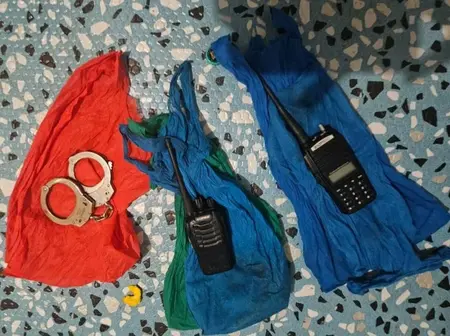
DCI Arrests Man Who Allegedly Spent KSh43,320 Mistakenly Sent to His Phone
The Directorate of Criminal Investigations (DCI) has narrated how a businessman lost KSh43,320 after mistakenly sending the money to the wrong mobile phone number, only for the unintended recipient to allegedly switch off his phone and spend the cash.
According to the DCI, the businessman, identified as Zack, intended to pay a supplier for an urgent delivery last Thursday. However, a mistyped digit sent the money to a mobile money account belonging to an estate resident known as “Biggie wa Deals.”
After receiving the transaction notification, Biggie reportedly checked his account balance twice before switching off his phone and removing his SIM card.
He allegedly disappeared from his usual evening hangouts to avoid being traced.
The DCI further revealed that before leaving, Biggie sent a message to his landlord, who was reportedly owed two months’ rent.
“Ukinifungia tena, weka padlock tatu kama wewe ni mwanaume,” he reportedly wrote.
After realising that he had sent the money to the wrong recipient, Zack reportedly made several attempts to contact Biggie through phone calls, but received no response.
He then sent three text messages asking the recipient to return the money.
His first message read: “Bro, nimekutumia pesa kimakosa. Tafadhali nirudishie.”
When he received no response, he followed up with: “Ni pesa ya supplier, tafadhali.”
His final message was: “Mungu anaona.”
According to the DCI’s account, Biggie read the final message before switching off his phone completely.
Rather than return the money, he allegedly went on a spending spree, buying new sneakers before heading to a local entertainment spot.
The investigators said he arrived at the establishment shouting: “Kila mtu apewe! Iko nini?!”
He reportedly paid for VIP treatment for himself and his companions throughout the weekend.
The DCI used the viral phrase “Clean money itatumaliza!” to highlight the incident and warn against treating mistakenly received money as a windfall.
Detectives eventually traced Biggie to the entertainment establishment and arrested him.
When questioned, he reportedly claimed that he intended to refund the money after selling a pregnant cow at his rural home.
His proposed repayment plan allegedly included proceeds from the unborn calf.
The officers subsequently escorted him to police cells, which the DCI humorously described as their “natural aircon Gated Deluxe.”
He was reportedly served a standard meal of ugali, bean stew and vegetables as he awaited his court appearance.
The incident also serves as a reminder that money received through an erroneous mobile money transaction does not automatically become the recipient’s property.
Kenya’s Computer Misuse and Cybercrimes Act, 2018, and the Penal Code contain provisions addressing the unlawful handling or conversion of funds and electronic transactions. However, the precise offence and applicable penalty depend on the circumstances and evidence presented.
Safaricom customers can request a reversal of an erroneous M-Pesa transaction by forwarding the transaction message to 456 or using the available reversal channels.
The DCI concluded its account with a warning to Kenyans against spending money mistakenly sent to their accounts.
“What looks like a blessing today could become evidence in court tomorrow,” the agency warned.