Capital A became the first intermediary to cross KSh 1 trillion in annual bond turnover as EFG Hermes retained the equities lead in 2025, according to the latest data by the Capital Markets Authority (CMA).•Bond turnover rose 75.5% to KSh 5.42 Tn from KSh 3.09 Tn in 2024, while double-sided equities turnover increased 37.5% to KSh 290.94 Bn from KSh 211.94 Bn.
Blog
-

Embedded insurance Gains Traction as Insurers Target Kenya’s Gig Economy
Kenya's insurance industry is increasingly embracing embedded insurance as firms seek to expand health cover beyond traditional employer schemes by integrating protection into digital platforms that millions of consumers already use.•The shift is gathering pace as insurers target informal workers, gig economy players and low-income households, groups that are underserved despite facing some of the highest financial risks from illness and accidents.
-
Kenya Remittances Post Steepest H1 Decline Since 2009
Kenya’s diaspora remittances fell 3.03% to KSh 315.74Billion (US$ 2.442Bn) in the first half of 2026, the steepest H1 contraction since the global financial crisis, as an 11.61% drop in North American inflows erased gains from Europe and other markets.•The country received KSh 9.87Bn (US$ 76.36Mn) less than the KSh 325.62Bn (US$ 2.518Bn) recorded in the corresponding period of 2025.
-

Kenya’s Forex Traders Lost KSh 7.12Billion in 2025, 85% of All Outcomes
Kenyan online forex traders suffered US$ 54.80Million (KSh 7.12Billion) in gross trading losses in 2025 despite a sharp decline in market participation, as the number of active accounts fell 46.2% to 152,110, according to the latest data by the Capital Markets Authority (CMA).
-

In Search of Unstoppable Africans, GABI Invites Nominations from Across the Continent
New York – The search is on for “Unstoppable Africans”. The Global Africa Business Initiative (GABI) has opened nominations for a new community-led campaign to recognize and celebrate entrepreneurs, business leaders and changemakers whose ideas, leadership and actions are driving Africa's economic transformation.
-

Citibank Battles State Probe in High Court Over Controversial Sh261M Kiru Tea Loan
Citibank Kenya has mounted a major legal battle at the High Court in Nairobi in a determined bid to shield its staff from aggressive criminal investigations surrounding a $2.02 million (approximately KSh 261 million) credit facility extended to Murang’a-based Kiru Tea Factory Company Limited.The international financial institution has filed a constitutional petition seeking urgent conservatory orders to restrain state security and investigative agencies from summoning, arresting, interrogating, or initiating criminal proceedings against its officers over the approval, processing, and subsequent disbursement of the multimillion-shilling loan.
-

Pauline Njoroge Pre-empts Jubilee Ouster With Resignation
Pauline Njoroge’s decision to resign from the Jubilee Party appears to have come just before the party’s National Executive Council (NEC) could take disciplinary action against her over concerns regarding her political allegiance.According to sources familiar with the NEC meeting held on Monday, July 20, 2026, members questioned why a sitting NEC member had openly aligned herself with the Linda Mwananchi movement despite Jubilee having already declared former Interior Cabinet Secretary Dr. Fred Matiang’i as its preferred presidential candidate.
-
How petrol, diesel and kerosene will retail in major Kenyan towns up to December 14

The Energy and Petroleum Regulatory Authority (EPRA) has announced new fuel prices for the November 15 to December 14, 2026, pricing cycle, with motorists in Nairobi set to pay Ksh226.96 for a litre of Super Petrol.
In its latest review released on Saturday, November 14, 2026, EPRA retained the price of diesel in Nairobi at Ksh227.76 per litre, while kerosene will continue retailing at Ksh219.87.

In Mombasa, which serves as Kenya’s main petroleum import gateway, a litre of Super Petrol will retail at Ksh223.81, diesel at Ksh224.61 and kerosene at Ksh216.71.
The new rates will take effect at midnight on Saturday, November 15, and remain in force until December 14.
The EPRA schedule shows variations in pump prices across different towns, largely reflecting transportation and distribution costs.
Nairobi motorists will pay Ksh224.96 for petrol, Ksh227.76 for diesel and Ksh219.87 for kerosene.
In Mombasa, petrol will retail at Ksh223.81, diesel at Ksh224.61 and kerosene at Ksh216.71.
Kilifi residents will pay Ksh224.62 for petrol, Ksh225.42 for diesel and Ksh217.52 for kerosene.
In Nakuru, motorists will pay different rates from those in coastal towns, reflecting the additional costs associated with transporting petroleum products inland.
The price differences mean motorists travelling between counties may encounter varying pump prices even when purchasing the same petroleum products.
For motorists in Nairobi, the Ksh2 reduction in petrol offers modest relief, although the cost of filling a vehicle’s tank will remain relatively high.
A motorist purchasing 50 litres of Super Petrol in Nairobi will spend Ksh11,248, compared with Ksh11,348 under the previous pricing cycle, representing a saving of Ksh100.

However, diesel-powered vehicles will not enjoy similar relief because the price of the commodity has remained unchanged.
The continued high diesel price is particularly significant for public transport operators, truck owners and businesses that depend on road transportation to move goods.
The latest review is also likely to attract attention from public transport operators and businesses because fuel remains a major component of their operating expenses.
Matatus, buses, taxis and delivery vehicles depend heavily on petrol and diesel, meaning changes in pump prices can influence the cost of providing transport services.
However, the modest reduction in petrol prices does not necessarily mean passengers will immediately enjoy lower fares.
Diesel remains more expensive than petrol in Nairobi, placing continued pressure on operators of diesel-powered commercial vehicles.
Households that rely on kerosene for cooking and lighting will also continue paying Ksh219.87 per litre in Nairobi, with no reduction announced in the latest review.
EPRA calculates maximum retail prices by considering the landed cost of petroleum products, distribution expenses, applicable taxes and other components of the petroleum pricing formula.
Mombasa generally records lower pump prices because of its proximity to the country’s main petroleum import and distribution infrastructure.
Inland towns, including Nairobi and other regional commercial centres, incur additional transportation and distribution costs.
The regulator publishes maximum pump prices that oil marketing companies must observe, meaning retailers cannot legally sell fuel above the prescribed rates.
The new pricing schedule will remain in force for 30 days, with the next review expected in December.
Rono is a digital journalist with a proven track record in newsroom leadership and content creation. Currently a Digital Writer for People Daily Digital, Emmanuel’s career is rooted in a lifelong passion for storytelling. Let's talk here: emmanuel.rono@mediamax.ke or ronoemmanuel685@gmail.com
-
The Last Two People Executed by Hanging in Kenya (1987)
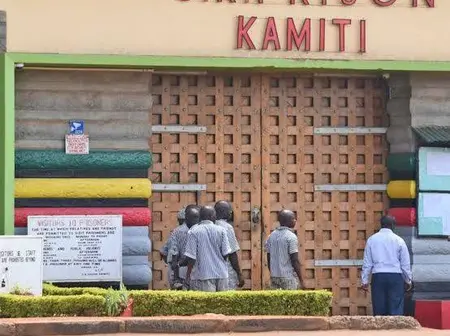
On July 9, 1987, within the heavily guarded walls of Kamiti Maximum Security Prison, Kenya silently closed one of the darkest chapters of its post-independence history.Senior Private Hezekiah Rabala Ochuka and Sergeant Pancras Oteyo Okumu were led to the gallows to face the ultimate penalty.
-

Why Gachagua and Kang’ata are At Odds Over Mt Kenya’s Political Direction
Political tensions in the Mt. Kenya region have intensified following reports that former Deputy President Rigathi Gachagua has opposed Murang’a Governor Irungu Kang’ata’s participation in a political event alongside Nairobi Senator Edwin Sifuna and leaders associated with the emerging Linda Mwananchi movement in Ol Kalou.