Kenya Pipeline Company (KPC) has posted a 13 per cent increase in profit after tax to Ksh11.58 billion for the 2025/26 financial year, supported by a 9 per cent growth in group revenue to Ksh43 billion.
Acting Chief Financial Officer Anthony Ndegwa presented the company’s financial performance to investors during a roadshow in Kigali, Rwanda, on November 1, 2026, where the company also outlined plans to expand its regional pipeline network.
The results come as KPC pursues opportunities in East Africa, with Rwanda emerging as a key market in its expansion strategy. The company is exploring a proposed pipeline extension to Kigali to improve the transportation and storage of petroleum products across the region.
Acting Managing Director and Chief Executive Officer Pius Mwendwa said Rwanda was an important market in the company’s regional growth plans.
“Rwanda is an important market in our regional growth ambitions. We see significant opportunities to strengthen our partnership, enhance regional connectivity and support the country’s growing energy needs through reliable transportation and storage infrastructure,” he said.
He added that the company was looking beyond its existing markets, with the proposed Kigali extension expected to create an opportunity to “enhance supply reliability, improve efficiency and strengthen regional integration.”
KPC said it was pursuing growth through investments in pipeline expansion, storage capacity and infrastructure modernisation, alongside partnerships aimed at meeting rising energy demand across East Africa.
The Rwanda investor roadshow is part of the company’s engagement with investors and regional stakeholders to present its growth strategy and explore opportunities for regional connectivity and energy security.
The financial results come months after the government sold 65 per cent of KPC through an initial public offering priced at Ksh9 per share. Trading of the shares on the Nairobi Securities Exchange began on March 9, 2026.
The state retained a 35 per cent stake in the company, while Uganda National Oil Company holds approximately 20.15 per cent.
The purchase made Dangote the company’s second-largest shareholder. It also drew attention to KPC’s ownership structure following the government’s partial privatisation of the company.
Ruto has argued that the acquisition involved a private investor using his own funds and maintained that the government would not allow intermediaries to buy shares at lower prices for resale at a profit.
He has also pointed to the rise in KPC’s share price following the transaction, projecting further growth in the company’s value over the coming years.
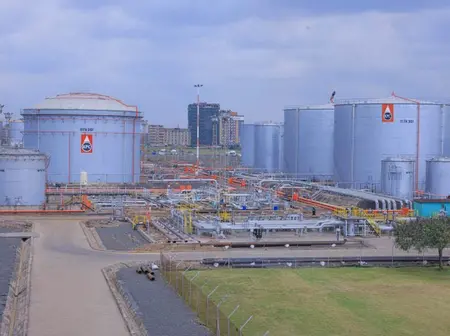
KPC operates a pipeline network used to transport petroleum products from coastal facilities to inland and regional markets. Its latest financial performance and proposed expansion plans place the company at the centre of efforts to strengthen energy supply infrastructure across East Africa.