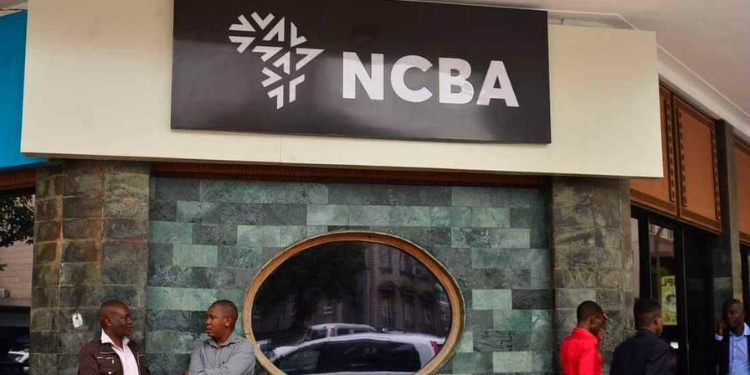
NCBA Group PLC has announced changes to its leadership structure with the appointment of Michael Howard Davis and Anél Bosman as directors of the company and Esther Wanjiku Kung’u as Group Company Secretary.The appointments took effect on November 3, 2026, according to a public notice issued by the lender’s board of directors.
Blog
-

Lorry driver electrocuted while offloading murram in Nairobi
A 48-year-old lorry driver died after being electrocuted when his truck’s trailer came into contact with an overhead live electricity cable along Kibra Drive Road in Nairobi.The deceased, identified as Johana Njiri, was working as a subcontracted driver for China Roads and Bridge Corporation, which is undertaking operations along the road near BM Security.
-

Fans sing along to Afrigo classics at Johnnie Walker-backed tribute
Fans sang along to Afrigo’s songs on Saturday night, as the band and Eddy Yawe paid tribute to departed founder- Moses Matovu, at Garden Courts Hotel. Afrigo fans from all corners of Masaka city and neighboring areas came in numbers to watch a band that is credited to have sound tracked Uganda’s history over the years.
-
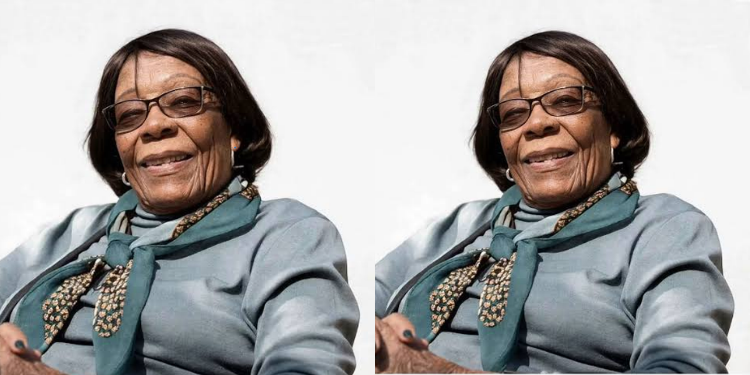
Autopsy Reveals How Actress Regina Re Mother’s Died
A postmortem examination has revealed that 86-year-old Dorita Macharia, mother of actress Regina Re, died from severe blood loss caused by multiple stab wounds to the neck.Government pathologist Bernard Midia said the wounds damaged blood vessels in her neck, resulting in excessive external bleeding.Midia also documented several other injuries, including cuts to the face, neck and arms, indicating the extent of the violence inflicted on her.
-
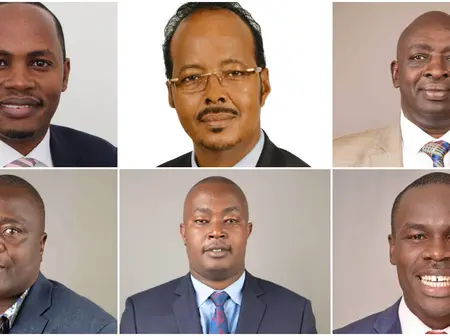
Kenya Track Survey ranks top 20 MPs in NG-CDF performance
Yatta Member of Parliament Robert Basil has emerged as the country’s leading legislator in constituency development, scoring 88 per cent in the 2026 Kenya Track Survey assessment of parliamentary performance through the National Government Constituencies Development Fund (NG-CDF).Basil tops a national ranking featuring 20 Members of Parliament drawn from different parts of the country, followed by Adan Keynan of Eldas Constituency, who secured 86 per cent, and James Gakuya of Embakasi North, who ranked third with 83 per cent.
-

Sueh Owino Shows Off Stylish Mud House, Outdoor Kitchen at Rural Homestead
Kenyan food influencer and YouTuber Sueh Owino has given fans a glimpse of her rural lifestyle, showcasing a beautifully designed mud house, a traditional outdoor kitchen and a thriving vegetable garden.
The content creator shared a video documenting an afternoon at her village homestead, where she has been gradually developing a property using natural and locally sourced materials.
The home features a traditional mud-walled structure topped with a thick makuti roof, wooden doors and small windows, blending indigenous construction techniques with practical features for modern-day living.
Inside, the house has treated earthen floors designed to be waterproof and easy to clean. The walls were constructed using a mixture of red soil, sand, water and rice straw.
One of the standout features of the homestead is a separate outdoor kitchen designed for traditional cooking.
The structure combines masonry, stonework and natural supports, including tree trunks, while a thatched roof provides shelter without completely enclosing the cooking area.
The kitchen is fitted with running water taps, washing and food preparation areas, as well as a wood-fired cooking stove.
The compound also features a vegetable garden with raised beds where different leafy greens and other produce are grown.
Stone pathways connect the various sections of the property, while additional facilities, including a gazebo and poultry areas, are still being developed.
Sueh was also captured working around the compound, giving followers a glimpse of the everyday activities involved in maintaining the homestead.
Sueh and her husband have been gradually transforming the property after he gifted her the land.
The couple have embraced traditional building techniques and natural materials as they work towards creating a comfortable rural home away from the demands of urban life.
In May 2025, Sueh shared videos documenting the early stages of the mud house project, including the construction and roofing process. She also showed her involvement in preparing the surrounding land for vegetable farming.
Her latest video offers a closer look at the progress made since then, particularly the addition of the outdoor kitchen, garden and other facilities.
Sueh is widely known for her food content, through which she showcases traditional cooking methods and elaborate meals prepared for her husband.
-

Prince Indah Breaks Silence on Claims He Has Married a Second Wife
Ohangla musician Prince Indah has dismissed online claims that he has taken a second wife, insisting that his demanding music schedule leaves him with little time to entertain social media gossip.
The singer addressed the rumours shortly before boarding a flight for his musical tour in the United States, saying his attention was firmly on his upcoming performances.
Indah explained that his recent schedule had been packed with shows, rehearsals and other engagements, often leaving him travelling directly from performances to the airport.
“So, my friend, I don’t have that time,” Prince Indah said.
He acknowledged that his name had been generating considerable discussion online, but appeared unfazed by the attention.
“People have been talking a lot. It’s not in a bad way; to those criticizing us, continue, maybe mnatafuta unga,” Indah acknowledged during the interview.
The musician further explained that he had barely had time to rest between his engagements and preparations for the US trip.
“I have a very limited time ya kulala na kuamka kuprepare… nimetoka hiyo event direct to the airport.”
The rumours about a second wife come months after Indah’s traditional wedding to his long-time partner, Winnie Nyamigori, on April 13, 2025.
The couple held a lavish traditional ceremony in Migori County, which also involved a dowry payment.
While dismissing the latest claims, Indah made it clear that he was particularly protective of his family and would not tolerate people crossing personal boundaries.
“Don’t cross my line because I have boundaries. One of them is family. I’m a very easy man, and I’m very forgiving,” he stated.
“But don’t cross my line because I have boundaries. One of them is family. So, if you cross my line, you might get the rough side of me, which nobody wants to get.”
The Ohangla star also suggested that some online commentators use his name to attract attention, adding that he was more interested in concentrating on his music career than engaging in public exchanges.
Despite the speculation surrounding his personal life, Indah maintained that his immediate priority was his scheduled performances in the United States.
-

Kenya records KSh740 billion in crypto transactions as stablecoins dominate market activity
Kenya’s crypto market recorded KSh740 billion ($5.7 billion) in transactions in the year to June 2026, according to blockchain analytics firm Chainalysis. The reported volume represents a 38% increase from KSh505 billion ($3.89 billion) in the preceding period, placing Kenya ahead of Ethiopia as Africa’s third-largest cryptocurrency economy. The figures point to a market where stablecoins have a prominent role, with Bitcoin accounting for only 2% of Kenyan crypto transactions.
South Africa led the regional rankings with $39.3 billion (about KSh5.1 trillion) in cryptocurrency activity, followed by Nigeria at $38.1 billion (about KSh4.9 trillion). Kenya’s $5.7 billion placed it ahead of Ethiopia, which recorded $3.7 billion (about KSh480 billion), an 8% decline over the period, according to Chainalysis.
The difference in asset composition is one of the more notable features of Kenya’s position. Chainalysis reported that Bitcoin accounted for 2% of transactions in Kenya, compared with 92% in Nigeria, 59% in Ghana and 22% in South Africa. That places Kenya among the markets where stablecoins have a particularly prominent role in cryptocurrency activity, reflecting demand for digital dollar-denominated value in payments and business transactions.
The figures add a market-size dimension to a pattern already visible in Kenya’s digital finance sector. Stablecoins have featured in discussions about cross-border payments, access to foreign currency and the movement of money between businesses operating across different markets. Their appeal lies partly in the ability to transfer dollar-denominated value through blockchain networks, with local currency conversion and payment services connecting those transfers to conventional financial systems.
TechTrendsKE’s May reporting on African payment infrastructure examined how firms such as PawaPay and Kotani Pay were positioning stablecoins within existing payment networks. PawaPay’s Freddie Omany described settlement delays of up to four days in some markets before the use of stablecoin infrastructure, while Kotani Pay’s Felix Macharia discussed the role of stablecoins in giving small businesses and importers access to dollar liquidity.
That activity also extends beyond specialist crypto exchanges. TechTrendsKE reported in May that African exchanges including Luno, Bitget, Busha and OKX were placing greater attention on payments, business services and compliance alongside trading. Busha’s business transfer services were among the examples of how cryptocurrency platforms were pursuing commercial use cases beyond individual buying and selling.
For Kenyan businesses, the demand for dollar-linked payment options sits within a wider market shaped by foreign-currency needs. Kenya’s foreign-currency deposits reached KSh1.52 trillion, with deposits rising by KSh240.57 billion year on year, according to figures covered by TechTrendsKE on October 27. The banking data points to the scale of dollar holdings within the formal financial system, where companies and households maintain foreign-currency balances for trade, payments and other obligations.
Stablecoins offer another route for moving dollar-denominated value, particularly where businesses need to settle transactions across borders. TechTrendsKE’s July reporting on Verto described a payment model combining local currency collection, stablecoin transfers and final settlement in the recipient’s currency. Verto’s Mark Mwaniki said the company had moved more than $20 billion across African borders since its launch.
The same demand has drawn interest from companies building payment connections between crypto wallets and local financial services. In September, TechTrendsKE reported on a partnership between DCSPay and Kotani Pay that would connect USDT and USDC-funded payouts to local currency payments through mobile money and USSD channels, with Kenya among the markets targeted for expansion.
The use of stablecoins for international payments has also featured in reporting on multinational operations. Starlink was cited as an example of a company using stablecoins to repatriate payments collected in Kenyan shillings to the United States. The example illustrates how the technology can serve corporate treasury and settlement needs, in addition to remittances and smaller business transfers.
The growth in transaction activity is taking place as Kenya builds a formal regulatory framework for virtual asset businesses. The Virtual Asset Service Providers framework gives the Central Bank of Kenya and the Capital Markets Authority roles in supervising different parts of the sector, bringing crypto exchanges, wallet providers and other service operators into a licensing structure.
The regulatory framework also reaches into the stablecoin market. Kenya’s VASP rules provide for CBK approval of stablecoin issuers, alongside requirements covering reserves and redemption. The rules also prohibit providers from paying remuneration simply for holding stablecoins, a provision that shapes how issuers can structure products and attract users.
Capital requirements are another part of the framework. Kenya’s proposed thresholds include minimum paid-up capital of KSh300 million for stablecoin issuers, KSh150 million for wallet providers, KSh100 million for exchanges, KSh20 million for virtual asset managers and KSh10 million for payment processors. The requirements place a substantial financial obligation on firms seeking to operate locally, particularly smaller companies entering the market.
TechTrendsKE reported in August that the capital rules had prompted concerns about the cost of remaining in Kenya, with some industry participants warning that startups could consider other jurisdictions, including South Africa and Mauritius. The Africa Digital Assets Association also called for an extension of the licensing timetable, seeking an additional eight months to prepare for compliance.
The regulatory debate has extended to reporting obligations. In March, TechTrendsKE reported on draft stablecoin disclosure rules from the CMA that proposed regular reporting on holder numbers, transaction volumes, circulating value and reserve assets. The proposals also included daily transaction data, placing greater emphasis on how stablecoin activity is monitored and reported.
For businesses, licensing is only one part of the operating equation. TechTrendsKE’s September coverage of the VASP framework examined how access to banking, foreign exchange, liquidity and payment networks would remain important to crypto companies seeking to serve customers. A licence provides a regulatory basis for operating, while the ability to connect digital asset services to established financial infrastructure determines how those services reach businesses and consumers.
The expansion of crypto activity has also brought greater attention to transaction monitoring and financial crime controls. Stablecoin transfers can move across blockchain networks, creating a need for firms to monitor wallet activity, verify customers and assess the origin and destination of funds.
In July, TechTrendsKE reported on an investigation involving suspected transactions worth more than KSh300 million, with authorities seeking to freeze KSh115 million linked to a network of shell firms, Binance wallets and USDT transfers. The Asset Recovery Agency was involved in the case, which also highlighted the use of blockchain analytics in investigations into suspected financial crime.
The issue has implications for exchanges, wallet providers and payment companies as Kenya implements its licensing framework. TechTrendsKE’s May reporting on transaction monitoring examined how firms including Verto, Busha, Fonbnk and Choice Bank were investing in systems for fraud detection, customer onboarding, liquidity monitoring and compliance. These controls form part of the infrastructure required to handle larger transaction volumes while meeting financial services obligations.
Security risks also extend to the platforms holding or processing digital assets. TechTrendsKE reported in October that Binance had suspended withdrawals following a $6.3 billion hack, bringing attention to the operational risks facing large crypto exchanges and the role of asset freezes in responding to security incidents.
Kenya’s KSh740 billion in reported cryptocurrency transactions therefore sits within a market with several connected developments: demand for digital dollar payments, commercial use of stablecoins, a growing regulatory framework and greater scrutiny of how crypto transactions are handled. Chainalysis’ figures place the country among Africa’s largest crypto economies, while the small share attributed to Bitcoin points to a market whose activity has a distinct composition. The next stage of Kenya’s crypto market will be shaped by how payment providers, businesses and licensed virtual asset firms operate within that environment.
Go to TECHTRENDSKE.co.ke for more tech and business news from the African continent and across the world.
Follow us on WhatsApp, Telegram, Twitter, and Facebook, or subscribe to our weekly newsletter to ensure you don’t miss out on any future updates. Send tips to info@techtrendsmedia.co.ke
-

NPS Issues Update as Rescue Teams Recover Second Body in Eastleigh
RescueNPS has issued an update on the ongoing search-and-rescue operation in Eastleigh, Nairobi, following the recovery of a second body from the rubble.The National Police Service (NPS) has issued an update on the ongoing search-and-rescue operation in Eastleigh, Nairobi, following the recovery of a second body from the rubble.
-

Kalonzo Unveils 2-Day Ukombozi Tour Schedule for Migori, Homa Bay
TourWiper Patriotic Front leader Kalonzo Musyoka has unveiled a two-day schedule for his Ukombozi Tour of Migori and Homa Bay counties.Wiper Patriotic Front leader Kalonzo Musyoka has unveiled a two-day schedule for his Ukombozi Tour of Migori and Homa Bay counties.In an update on Tuesday, November 3, Kalonzo said the tour will begin on Thursday with three scheduled stops in Migori County, starting in the Kuria region before proceeding to Migori Town.