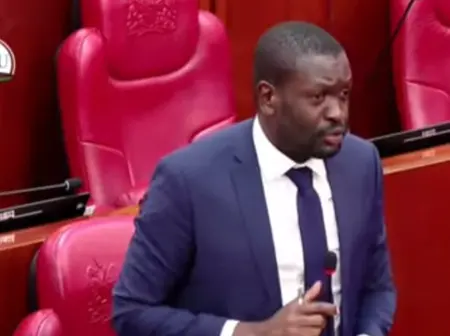
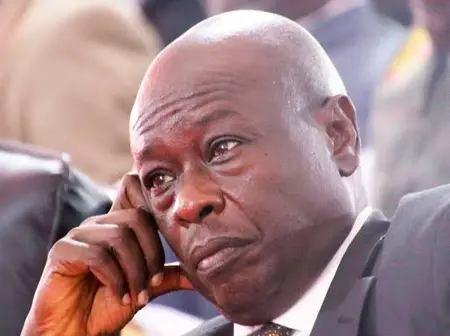
Nairobi Senator and Linda Mwananchi party leader Hon Edwin Sifuna has cited recent political developments in the United States as an example of how voters can change established political power structures, expressing confidence in the Linda Mwananchi movement ahead of Kenya’s 2027 General Election.
Speaking in the Senate, Sifuna pointed to the performance of the US Democratic Party, saying the results showed that political strongholds could be challenged when voters demand accountability and better leadership.
He argued that the developments offered lessons for Kenya’s opposition, particularly the Linda Mwananchi movement, which is seeking to build grassroots support ahead of the next general election.
Sifuna expressed confidence that the movement could make political gains in regions traditionally associated with Kenya Kwanza administration, including Kericho, Nandi and Uasin Gishu.
He maintained that focusing on the concerns of ordinary citizens and strengthening grassroots mobilisation could help alternative political movements gain support across the country.
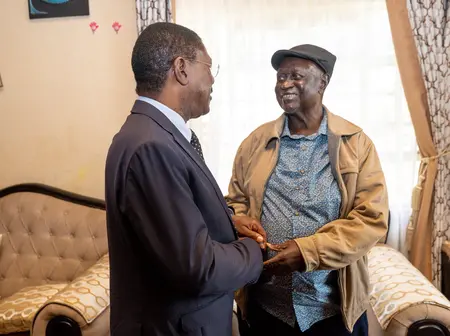
National Assembly Speaker Moses Wetang’ula has revealed an encouraging update on the health of ODM Party Leader Oburu Oginga following a visit by a delegation of Members of Parliament and Senators to his Nairobi residence.
Wetang’ula said he was accompanied by Senate Speaker Amason Kingi and other legislators from both Houses of Parliament to check on Oburu, who is recovering after being discharged from hospital.
The Speaker expressed happiness at Oburu’s progress, saying his recovery had been remarkable.
He noted that despite his recent illness, the ODM leader remained cheerful and entertained the visitors with his usual jokes and humour.
According to Wetang’ula, Oburu expressed confidence that he would soon return to active duty, although he admitted that his illness had temporarily slowed him down politically.
Wetang’ula, however, encouraged him to put his health first and take enough time to recover before returning to his political activities.
"I encouraged him to put his health first and allow himself enough time to recover fully before resuming his political engagements," Wetang’ula said.
He also praised Oburu’s courage, resilience and positive spirit as he continues his recovery.
Wetang’ula thanked the legislators who joined the visit, describing Oburu as a valuable pillar in Parliament and an important figure in Kenya’s political landscape.
He wished the ODM leader continued recovery, renewed strength and good health.
In a statement, Gachagua said Kimemia visited him on Wednesday evening alongside his delegation after receiving instructions from the people of Nyandarua.
Gachagua expressed happiness over the visit, describing DCP as the party of the moment and the future. He also praised Kimemia for listening to the wishes of his supporters and choosing to align himself with their political interests.
Kimemia reportedly explained that although he had maintained a long relationship with the Jubilee Party as one of its founding members, he had decided to follow the advice of the people he represents.
Gachagua welcomed the decision and assured the former governor that DCP would conduct free and fair nominations in March next year. This comes as political leaders begin positioning themselves for different elective seats ahead of the 2027 polls.
The former Deputy President also revealed that DCP is working towards becoming the majority party in both the National Assembly and Senate, as well as gaining a strong presence in the Council of Governors.
His latest remarks show that DCP is continuing to attract experienced political leaders as it seeks to expand its support across the country.
Gachagua ended his message with a strong statement, saying, "The future is green. Green is wealth."
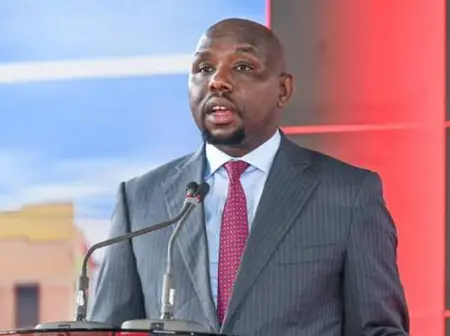
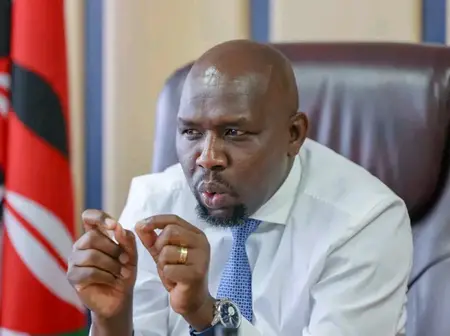
Appearing before the National Assembly on Wednesday, November 4, Murkomen maintained that the government had made progress in addressing extrajudicial killings and kidnappings, arguing that the situation was different from what was being witnessed under previous administrations.
The CS said there had been a reduction in cases since the Kenya Kwanza administration took office in 2022, citing the absence of incidents involving bodies being recovered from River Yala and other areas as evidence of improved security.
Murkomen further stated that the government remained committed to its campaign promise of ending extrajudicial killings and unlawful abductions.
He assured lawmakers that recent cases of alleged abductions were being investigated and that individuals found responsible would face arrest and prosecution.
However, the Interior CS raised concerns over what he described as staged abductions, claiming that some individuals had fabricated incidents to attract public attention, gain political sympathy or advance hidden agendas.
He also cautioned against confusing arrests of political leaders with abductions, citing the arrest of Manyatta MP Gitonga Mukunji over allegations of theft and incitement.
On growing concerns over political violence, Murkomen said security operations had been strengthened ahead of the 2027 General Election.
He added that security agencies were working with political leaders from both the government and opposition to obtain advance schedules of political events and make adequate security arrangements.
Despite Murkomen's position, concerns over enforced disappearances remain a major issue in the country.
The Kenya National Commission on Human Rights (KNCHR) recently reported 46 new cases of enforced disappearances in a National Reparations Framework report presented to President Ruto in June 2026.
The commission noted that most of the reported cases involved protesters who were allegedly held incommunicado and tortured.
It called on the government to establish the whereabouts of missing persons and account for those whose fate remains unknown.
The latest remarks by Murkomen are likely to renew debate over the government's handling of abduction allegations as political activities intensify ahead of the 2027 elections.
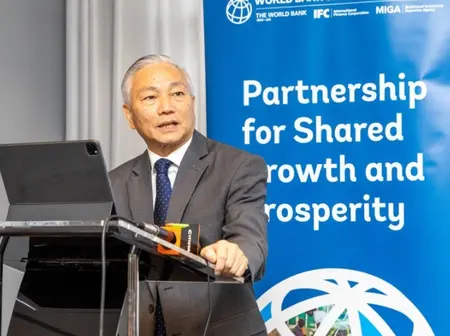
A new economic report has raised concerns about the challenges facing Kenyans when seeking services from public institutions. The findings highlight how bribery continues to affect service delivery, businesses and the country's economic performance.
The findings are contained in the World Bank's 34th edition of the Kenya Economic Update, released in November 2026. The report uses data from Transparency International, the Ethics and Anti-Corruption Commission and Afrobarometer to examine bribery experiences across different institutions.
According to the report, the police service recorded the highest score on the bribery index, at 84.0 in the 2025 survey. This was an increase from 64.0 in 2019 and was significantly higher than the scores recorded by other institutions.
Land services ranked second with 45.0, while motor vehicle licensing services came third with 43.7. The judiciary followed with a score of 40.8. Other institutions included in the ranking were civil registration offices, medical and health services, business licensing, education services, tax services and Huduma Centres.
The report also highlighted the economic impact of bribery. It noted that people from poorer households were more likely to pay bribes to police officers than those from wealthier households. Among boda boda riders, such payments were estimated to take up between 5% and 20% of their daily earnings.
For businesses, 39% of surveyed firms considered corruption a major or severe obstacle to their operations in 2025, compared with 25% in 2013.
The World Bank estimated that corruption and collusion cost Kenya about 2% of its gross domestic product annually through higher fiscal deficits. It also warned that governance challenges continue to limit economic growth and job creation.
Source link : .https://www.tuko.co.ke/business-economy/645616-new-world-bank-economic-report-lists-corrupt-institutions-kenya/
Former Deputy President Rigathi Gachagua has withdrawn one of the two petitions he filed at the High Court challenging his impeachment and removal from office in October 2024.
Gachagua's lawyer, Victor Swanya, confirmed the withdrawal of Petition E522 of 2024, explaining that the decision was made on the instructions of his client.
The legal team said it had opted to discontinue the case because most of the issues raised in it had already been addressed in a separate but related petition, E565 of 2024.
Speaking before the court, Swanya explained that continuing with both cases would unnecessarily consume judicial time, particularly because the legal team was already pursuing an appeal against the High Court's decision in the second petition.
"What we don't want is to spend a lot of judicial time arguing a petition whose issues have sort of been determined by E565 of 2024," Swanya said.
He added that the team preferred to concentrate its efforts on the appeal rather than pursue another case raising substantially similar questions.
Why Gachagua withdrew his impeachment case
The two petitions were filed at different stages of Gachagua's impeachment process.
Petition E522 was filed before the Senate concluded the proceedings against him. It challenged the legality and constitutionality of the impeachment process initiated by the National Assembly.
However, Petition E565 was filed after the Senate voted on October 17, 2024, to uphold the impeachment charges and remove Gachagua from office. The case directly challenged the Senate's decision.
The High Court had previously clarified that its judgment in E565 would also apply to E522, a position that informed the decision to withdraw the earlier petition.
Swanya confirmed that Gachagua's legal team would now focus on challenging the High Court's findings at the Court of Appeal.
The appellate matter has been scheduled for directions on July 19.
The withdrawal effectively narrows Gachagua's legal battle against his impeachment, leaving the pending appeal as the main avenue through which he intends to challenge his removal from office.
The decision by the county boss to decamp from the ruling party represents a substantial blow to President William Ruto’s administration.
This development signals growing political realignments in the vote rich Mount Kenya region, which has traditionally been a stronghold for the current government.
The governor’s exit from the ruling party could potentially inspire other leaders in the region to reconsider their political affiliations ahead of the next general election.
The departure is expected to reshape the local political dynamics, creating a new challenge for the UDA leadership as they seek to consolidate support in Kiambu.
Citizen TV Kenya broke the news via its social media platforms, highlighting the gravity of the announcement with reports of a large crowd accompanying the governor.
The political move comes amid shifting alliances and increasing opposition to the current administration's policies.
Analysts suggest that losing a sitting governor in such a strategic county weakens the party's grassroots influence and organizational structure.
The exact political party that Wamatangi intends to join remains a subject of speculation, though reports indicate he will align with an established entity. His move shows the intensifying political maneuvering within the country.
As the ruling party grapples with this internal challenge, all eyes will be on how the presidency responds to this latest defection from within its ranks.
Interior Cabinet Secretary Kipchumba Murkomen has dismissed claims that cases of abductions and enforced disappearances have increased since 2024, insisting that the situation has improved under President William Ruto's administration.
Speaking before the National Assembly on Wednesday, November 4, 2026, Murkomen maintained that available statistics do not support allegations of an increase in abduction cases.
The CS argued that since the Kenya Kwanza administration assumed office in 2022, the country has witnessed a reduction in cases of enforced disappearances and extrajudicial killings.
Murkomen contrasted the current administration with previous governments, citing historical incidents involving bodies recovered from River Yala and other unexplained deaths.
He maintained that President Ruto had made a commitment during his campaigns to end extrajudicial killings and abductions, adding that the government remained committed to fulfilling that promise.
The Interior CS further assured lawmakers that reported cases of abductions were being investigated and that individuals found responsible would face arrest and prosecution.
He also cautioned against confusing arrests of political leaders over alleged criminal activities with cases of abduction.
His remarks come amid growing public concern over missing persons and alleged enforced disappearances, particularly following the 2024 Gen Z protests.
The Kenya National Commission on Human Rights (KNCHR) recently reported 46 additional cases of enforced disappearances in a report presented to President Ruto in June 2026. The commission called on the government to establish the whereabouts of missing persons and account for those who remain unaccounted for.
Murkomen's latest remarks are likely to reignite debate over the government's handling of abduction allegations, accountability and the protection of human rights in Kenya.
The petition, which was originally filed at the High Court in Nairobi alongside several consolidated applications, challenged the procedural constitutionality, public participation standards, and fairness of the National Assembly and Senate proceedings that led to his removal from office.
Through formal instructions submitted to his legal defense team, Gachagua filed a notice of withdrawal, effectively pulling back the long-standing constitutional challenge.
The move marks a significant legal shift in the post-impeachment battle that dominated Kenya's judiciary and political landscape following the confirmation of his ouster.
While initial court challenges sought to block his removal and overturn the parliamentary resolutions, the legal focus has gradually shifted over time.
Sources close to the former Deputy President indicate that the withdrawal forms part of a broader political realignment strategy designed to clear legal entanglements and allow Gachagua to focus entirely on building his political vehicle, the Democracy for the Citizens Party (DCP).
The withdrawal of Petition E522 comes as Gachagua continues an aggressive political campaign across the Mount Kenya region and key voting blocs nationwide, positioning himself and his allies for the 2027 General Election.
Legal experts note that withdrawing specific constitutional petitions allows the former second-in-command to streamline his ongoing court applications while shifting public energy toward grassroots political mobilization and electoral preparations.
Do you think withdrawing his impeachment petitions in court is the right move for Rigathi Gachagua as he prepares for the 2027 elections? Share your views in the comments below.
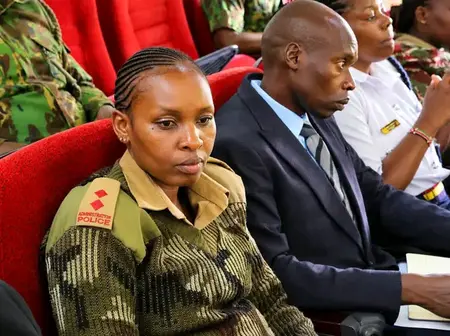
The National Police Service (NPS) has embarked on plans to strengthen police training following a national conference that brought together senior officers to examine existing training gaps and identify priority areas for improvement.
The meeting provided a platform for stakeholders to review findings from the Training Needs Assessment and discuss ways of developing a more effective training system.
Dr. Gideon Kirui, Deputy Director of Training and Research at the National Police Service Headquarters, presented the assessment report, highlighting existing training requirements, institutional weaknesses and areas requiring additional investment.
According to the report, the assessment seeks to establish a clear understanding of the skills and competencies required by police officers to perform their duties effectively.
Participants held thematic discussions aimed at developing practical recommendations that would guide the implementation of a competency-based and career-long training framework.
Musai said the assessment presented an opportunity for the Service to improve professional standards, strengthen training structures and ensure officers acquire skills relevant to operational demands.
"This process is bigger than an assessment. It is our chance to strengthen the architecture of police training, raise professional standards and align competencies with operational demands," he said.
He further commended the leadership of the National Police Service for recognising training as an essential pillar of effective policing.
Musai noted that the success of the assessment would ultimately depend on how effectively its recommendations are implemented across the Service.
The conference was supported by the United Nations Office on Drugs and Crime (UNODC) and International Narcotics and Law Enforcement Affairs (INL).
Their continued partnership has played an important role in supporting police training programmes and strengthening institutional capacity within Kenya's security sector.
Article 244 of the Constitution requires the National Police Service to train its officers to the highest possible standards of competence and integrity.
The constitutional provision also requires police officers to respect human rights, fundamental freedoms and the dignity of every individual.
Through the Training Needs Assessment, the Service hopes to establish an evidence-based training system that supports officers throughout their careers.
The recommendations are expected to provide direction on addressing existing institutional gaps while improving professionalism, operational effectiveness and service delivery.