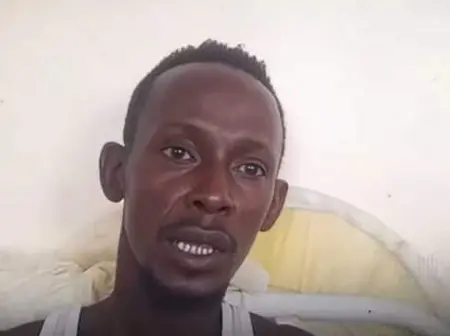
A 34-year-old man from Garissa County has been hospitalised after armed robbers allegedly forced him to swallow a four-inch nail during a terrifying robbery along a road near Madogo town.
Daniel Musyoka was reportedly travelling home through Mororo when he encountered four armed men dressed in black clothes and wearing face masks. The gang had positioned themselves along the road, with two men standing on either side.
As he approached them, one of the attackers placed a machete on the ground, apparently warning him not to attempt escaping.
The robbers proceeded to search Musyoka and stole KSh 420 and four cigarettes. However, what followed was a horrifying ordeal that left him fighting for his life.
How Garissa man was forced to swallow nail
According to Musyoka, the attackers gave him two options: swallow a nail or face a brutal death.
"They gave me two options: either swallow a nail or they would brutally kill me so that the police would have a difficult time identifying me," he recounted.
Fearing for his life, Musyoka chose to swallow the four-inch nail. The attackers subsequently allowed him to leave.
Upon reaching home, he reportedly began worrying about the possible effects of the foreign object in his stomach. In a desperate attempt to minimise the damage, he purchased cooking oil from a nearby shop, swallowed two handfuls and drank some more.
He later went to sleep and woke up the following morning, hoping to resume his normal activities.
Musyoka initially hesitated to report the incident because he was frightened and did not know how to identify the masked attackers.
Garissa man admitted to hospital after swallowing nail
However, as concerns about his condition persisted, he eventually sought medical attention and was admitted to Garissa Referral Hospital.
He said doctors had been monitoring his condition and informed him that he would be discharged after the nail was removed.
"I am currently in hospital and have received treatment. The doctors have told me that I will be discharged once the nail is removed. I have been here since that day," he said.
Musyoka added that his condition had stabilised and that he was feeling better while continuing with treatment.
The incident reportedly occurred in an area where police patrols are common. However, the attackers allegedly understood the patrol patterns and struck when officers were not immediately present.
Authorities are expected to investigate the incident and establish the identities of the four suspects.
Chinese vehicle manufacturers in Kenya nearly doubled their share of new vehicle sales in the nine months to September 2026, driven primarily by rising demand for commercial trucks as government payments to road contractors helped revive construction activity.
Sales of Chinese brands increased 152% to 1,847 vehicles from 733 in the corresponding period last year, according to data from the Kenya Motor Industry Association (KMI). Their combined market share rose to 14.65% from 7.39%, meaning Chinese manufacturers accounted for almost one in every seven new vehicles sold through local showrooms.
The growth significantly outpaced the wider market, where total new vehicle sales increased 27% to 12,606 units from 9,924. Sinotruk accounted for most of the Chinese manufacturers’ expansion, highlighting the importance of heavy commercial vehicles in their growing presence in Kenya.
Sinotruk, distributed locally by CFAO Mobility Kenya, increased deliveries by 169.5% to 1,442 vehicles from 535 during the nine-month period. The truckmaker added 907 vehicles, representing 81.4% of the additional 1,114 units sold collectively by Chinese brands.
Its contribution also meant Sinotruk accounted for approximately 78% of all Chinese vehicle sales recorded during the period. The figures place the manufacturer at the centre of the competitive gains made by Chinese brands, particularly in a market where construction companies, transporters and businesses depend on trucks to move materials and distribute goods.
Foton, another Chinese commercial vehicle manufacturer distributed in Kenya by Mobikey Truck and Bus, also recorded stronger deliveries, with sales rising to 168 units from 88. The performance suggests that demand for Chinese commercial vehicles is extending beyond a single manufacturer.
The expansion has also reached passenger vehicles, where BYD, Changan and Chery recorded higher deliveries as their local distributors developed their showroom presence.
BYD, distributed by CFAO Mobility Kenya, increased sales to 54 vehicles from two in the same period last year. Changan, represented by Inchcape Kenya, doubled deliveries to 73 from 36, while Chery Tiggo, whose distribution is handled by Salvador Caetano, recorded 50 sales against none a year earlier.
Other Chinese manufacturers posted mixed results. Great Wall Motors (GWM) increased deliveries to 18 vehicles from eight, while JMC sales rose to 21 from 15. Haval, distributed by Crown Motors, recorded a decline to four vehicles from 31, while Beiben sales edged down to 17 from 18.
The passenger vehicle gains add another dimension to Chinese manufacturers’ expansion, particularly as BYD develops its presence in electric and hybrid mobility. CFAO Mobility Kenya’s distribution of both Sinotruk and BYD also places the established automotive group within two of the most visible areas of Chinese brand growth.
The wider manufacturing ambitions are reflected in a proposed KSh390 billion investment involving Endelevu Enterprise Corporation and Geely Auto Group. The partnership, reported in October 2026, includes plans for vehicle assembly facilities, charging infrastructure and a digital mobility platform, placing Chinese automotive investment within Kenya’s broader industrial development ambitions.
Other developments include Dongfeng’s entry into Kenya’s electric vehicle market through ePureMotion, alongside local assembly ambitions, and the growth of financing arrangements supporting electric commercial transport. NCBA and BasiGo, for example, announced a financing programme targeting 1,000 electric vehicles, with qualifying businesses and SACCOs able to access financing covering up to 90% of vehicle costs over 60 months.
The recovery in new vehicle sales has coincided with increased government spending on road infrastructure, which has helped restore activity among contractors that had struggled with unpaid bills.
Isuzu East Africa, Kenya’s market leader, attributed much of the industry’s expansion to the government’s mobilisation of KSh139 billion to settle contractors’ outstanding payments and restart stalled road projects.
“Industry performance was primarily propelled by government fiscal intervention—specifically the mobilization of Sh139 billion to clear contractor bills and restart road projects, which spurred heavy commercial vehicle demand,” Isuzu said in the KMI report for September.
The payments have eased financial pressure on contractors, some of whom had abandoned projects or faced the risk of losing vehicles and equipment financed through bank loans.
The State Department for Roads’ pending bills declined 23.5% to KSh98.17 billion in the financial year ended June, extending a reduction from the KSh166.76 billion peak recorded in the 2023/24 financial year. The latest decline amounted to KSh30.19 billion, following a KSh38.40 billion reduction in the previous financial year.
Lower borrowing costs have provided additional support to businesses seeking to acquire trucks, delivery vehicles and other commercial equipment. Central Bank of Kenya data shows the weighted average commercial lending rate fell to 14.34% in August 2026 from 15.17% a year earlier, extending a decline from the 17.22% peak recorded in November 2024.
The lower rates can ease financing expenses for businesses purchasing vehicles through bank loans and asset-financing arrangements, although the actual cost depends on individual lending terms.
Competition between vehicle manufacturers will also depend on acquisition prices, operating costs, spare parts availability and the strength of local servicing networks. CFAO Mobility Kenya, which represents 15 automotive brands in the country, has highlighted the importance of distribution capacity, technical expertise and after-sales support in its wider automotive operations.
For established manufacturers such as Isuzu, the growth of Sinotruk and other Chinese truckmakers adds competitive pressure in a segment where purchase costs and vehicle operating economics influence business decisions.
The latest sales figures show that Chinese manufacturers are gaining ground across Kenya’s new-vehicle market, with commercial trucks providing the largest contribution while passenger brands build a presence through established local distributors. Their ability to maintain that growth will make them important competitors in Kenya’s automotive industry.
When people first learn about diabetes, cutting out all carbohydrates can sound like the easy answer. But managing diabetes is more complex—there’s no quick fix (Evert et al., 2019). In fact, going totally carb-free can bring new risks, and most leading diabetes organizations do not recommend this approach for everyone (Evert et al., 2014). What matters most is understanding the types and amounts of carbs you eat, your medications, activity level, and your own health priorities (CDC, 2020).
You can’t cure diabetes by avoiding one food group.
Diabetes is a lifelong condition; it happens when the body either doesn’t make enough insulin or can’t use insulin properly (CDC, 2020). If you have Type 1 diabetes, your pancreas produces little or no insulin, so taking insulin is always necessary, regardless of what you eat. In type 2 diabetes, the body becomes less sensitive to insulin. Managing it often requires a combination of good nutrition, regular exercise, and sometimes medications (Evert et al., 2019). Some individuals with Type 2 diabetes can achieve remission, often by losing weight, but remission isn’t a cure—you still need to keep an eye on your blood sugar (Evert et al., 2014). No diet or single food group can “reverse” diabetes.
There are different types of carbs.
There are three main types of carbohydrates:
Sugars—These cause the sharpest spike in blood sugar. You’ll find them in sweets, sugary drinks, and, in smaller amounts, in foods like fruit and milk (CDC, 2020).
Refined grains – Such as white bread, white rice, and white pasta. They mostly contain starch and little fiber (Evert et al., 2019).
Whole grains, pulses, vegetables, and fruits – These foods come packed with fiber, vitamins, and essential minerals (Evert et al., 2019).
Fiber is passed through the body undigested. It makes you feel full, lowers blood sugar levels, and lowers your cholesterol (Evert et al., 2019).
If you cut out all carbs, you might also exclude foods that actually help keep your blood sugar steady.
Why cutting out carbohydrates completely can cause issues
Going extremely low carb can cause problems in some diabetes patients:
Hypoglycemia – Patients taking insulin or some diabetes tablets can become dangerously low in blood sugar.
Ketones—If you go extremely low carb, then your body will start using fat as its energy source, causing ketones to build up. This can increase your risk of a serious condition called diabetic ketoacidosis in type 1 diabetes or with some medications (Evert et al., 2019).
Lack of nutrients—Fruit, whole grains, and pulses contain fiber and micronutrients that can be harder to replace.
Hard to stick with—Extremely strict diets are tough for most people to maintain long-term. If you stop suddenly, you may see blood sugar swings and even gain back weight.
Before making any significant changes to your diet, speak to a healthcare professional to ensure your medication is adjusted safely (Evert et al., 2019).
Expert opinion
The American Diabetes Association brought together an expert panel. They reviewed over 600 nutrition studies. They concluded that no single dietary pattern suits all people with diabetes. Furthermore, they found no evidence of a perfect balance of calories from carbohydrates, protein, and fat. It should be personalized. Evidence supports low-fat and Mediterranean-style diets, as well as low-carbohydrate diets. They agreed we should reduce added sugars and refined grains and focus on eating plenty of non-starchy vegetables. They also agreed to eat whole foods rather than processed foods (Evert et al., 2019; Evert et al., 2014).
So, for some people, cutting back on carbs makes sense—but you don’t have to avoid them altogether.
How to make better carb choices
Try to eat high-fiber foods:
Make vegetables, beans, lentils, whole grains, and whole fruits the staples of your meals. Skip refined grains and fruit juices when you can.
Reduce added sugars – Sweets, sugary drinks, and desserts will cause a rapid increase in your blood sugar, with little nutritional value (Evert et al., 2019).
Plate method – Fill about half your plate with non-starchy vegetables. Split the remainder between lean protein and carbs (CDC, 2020).
Pair with protein or healthy fats – This can slow how quickly glucose enters the blood (Evert et al., 2019).
Eat regularly – Regular meals make your blood sugar levels easier to predict (Evert et al., 2019).
Ask for individualized advice—talk to a registered dietitian or diabetes educator to create a plan that fits your medication, culture, budget, and preferences (Evert et al., 2019).
Stay active—being active, sticking to your medication, and regularly checking your blood sugar levels is just as important (CDC, 2020).
Conclusion
While carbohydrates will affect your blood sugar levels, they aren’t the only cause of diabetes. Going completely carb-free won’t cure diabetes (Evert et al., 2019). Many people will find it safer and more sustainable to choose better carbs, control portion sizes, and have a plan created by their healthcare team. Your healthcare team can best manage diabetes by reviewing your diet, activity, medication, and monitoring (Evert et al., 2014).
Note: This article provides general information. Always check with a qualified healthcare professional before you change your diet or medication.
Evert, A. B., Dennison, M., Gardner, C. D., et al. (2019). Nutrition therapy for adults with diabetes or prediabetes: A consensus report. Diabetes Care, 42(5), 731–754.
Evert, A. B., Boucher, J. L., Cypress, M., et al. (2014). Nutrition therapy recommendations for the management of adults with diabetes. Diabetes Care, 37(Supplement 1), S120–S143.
Centers for Disease Control and Prevention. (2020). National Diabetes Prevention Program: Participant guide. https://www.cdc.gov/diabetes/prevention/pdf/participant-portal/participant-guide.pdf
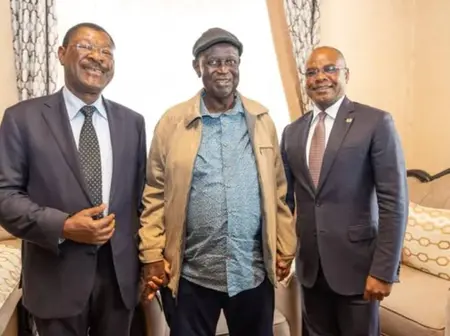
The visit, which took place on Wednesday, November 4, brought together legislators from both the National Assembly and Senate, who wanted to check on the Siaya senator following his recent hospitalisation and discharge.
Wetang’ula said the delegation was encouraged by Oburu’s recovery and expressed optimism about his progress. He also urged the veteran politician to prioritise his health rather than rushing back into demanding political engagements.
The National Assembly Speaker praised Oburu for maintaining a positive attitude despite his health challenges, noting that the ODM leader remained cheerful throughout their meeting.
According to Wetang’ula, Oburu entertained the visiting lawmakers with his usual jokes and humour, demonstrating his determination to overcome the difficult period.
During the meeting, Oburu thanked the two parliamentary leaders and other legislators for finding time to visit him, saying their gesture had deeply touched him.
The ODM leader also addressed reports circulated on social media during his hospitalisation claiming that he had died.
He said the false reports had only strengthened his determination to overcome his illness and continue serving Kenyans.
Oburu further reassured his supporters that his political absence was temporary, expressing confidence that he would soon resume his activities.
"The sickness slowed my political activities. Very soon, I will be back, roaring in the best way I know how," he said.
He also revealed that he missed parliamentary debates and other political engagements, asking his supporters to remain patient as he completes his recovery.
The visit comes at a time when ODM is navigating important political discussions ahead of the 2027 General Election, with Oburu remaining a central figure in the party's leadership.
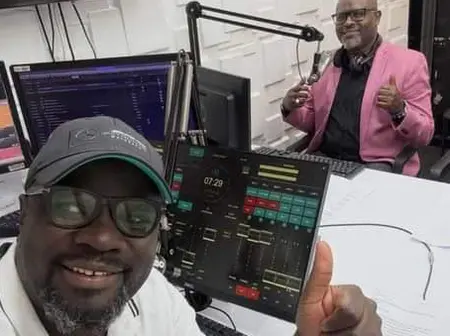
Veteran Radio Jambo presenters Joseph Ogidi Opiyo, popularly known as Gidi, and Jacob 'Ghost' Mulee are celebrating 18 years of entertaining Kenyan listeners through their popular breakfast programme, Gidi na Ghost Asubuhi.
The celebrated radio duo marked the major milestone on Tuesday, November 4, 2026, reflecting on their remarkable journey since they first hosted the show together on November 4, 2008.
Gidi announced the anniversary through a heartfelt post on his official Instagram page, attracting thousands of reactions from fans and fellow celebrities who congratulated the presenters for their consistency and contribution to Kenyan radio.
Over the years, Gidi na Ghost Asubuhi has established itself as one of the country's most recognisable morning radio programmes. The show airs every weekday from 6am to 10am on Radio Jambo 97.5 FM, entertaining audiences through humour, music, discussions and conversations about everyday issues affecting Kenyans.
One of its most popular segments is 'Patanisho', where the presenters help reconcile people experiencing disagreements in their relationships, families and friendships. The segment has earned the duo widespread recognition for giving ordinary Kenyans an opportunity to resolve personal disputes on air.
In his anniversary message, Gidi thanked listeners for supporting the programme throughout its 18-year journey.
"18 years of waking up Kenya, informing, entertaining, educating, sharing laughter, tackling serious issues and giving ordinary Kenyans a voice!" he wrote.
He also celebrated his longtime co-host, describing their relationship as one built on friendship, laughter, debates and unforgettable broadcasting moments.
Gidi previously gained fame as one half of the celebrated music duo Gidi Gidi Maji Maji, known for their hit song Unbwogable.
Ghost, meanwhile, brings a rich sporting background to the programme, having previously served as head coach of Kenya's national football team, Harambee Stars.
Their 18-year partnership remains a significant milestone in Kenya's competitive radio industry.
Speaking on Wednesday, November 4, 2026, Ruto said the programme would train between 600,000 and one million youths on how to benefit from government tenders through the Access to Government Procurement Opportunities (AGPO) programme.
The President explained that the initiative was intended to increase the participation of young people in public procurement and create more opportunities for them to establish businesses.
Under the AGPO programme, 30 per cent of government procurement opportunities are reserved for young people, women and persons with disabilities.
Ruto said successful participants would receive certificates after completing the training. They would also benefit from free business name registration to help them establish enterprises and participate in government tenders.
The announcement comes as the government seeks to expand economic opportunities for young people through public procurement and business development initiatives.
At the same time, Ruto revealed plans to establish a modern leather manufacturing facility in partnership with a South Korean investor.
The proposed factory will complement the government's KSh5.8 billion investment in the Kenya Leather Industrial Park in Kenanie, Machakos County.
According to the President, the planned facility has an ambition of producing one million pairs of shoes, creating employment opportunities and supporting local manufacturing.
He added that government institutions, including the National Police Service and other security agencies, would provide markets for locally manufactured footwear.
The President said the government was committed to promoting locally produced goods and reducing dependence on imported finished products.
He maintained that expanding industrial production alongside trade opportunities would help Kenyan businesses access markets across Africa and other international destinations.
The leather industry investment is expected to strengthen local manufacturing, encourage private investment and create additional employment opportunities.
Meanwhile, the government training programme is expected to give thousands of young entrepreneurs the skills and knowledge needed to compete for public tenders.
The initiative could also increase youth participation in business and strengthen the role of small enterprises in Kenya's economy.
New details have emerged what angry residents did to a suspected car thief after being cornered along Eldoret-Kaptagat Road in Naiberi revealed.
Angry residents reportedly turned up in large numbers after a vehicle allegedly stolen from Nyahururu was cornered as police officers pursued the suspect.
Drama unfolded in Naiberi along the Eldoret-Kaptagat Road after a suspected car thief was cornered while driving a vehicle allegedly stolen from Nyahururu.
An angry crowd reportedly descended on the suspect, threatening to lynch him before police officers intervened and rescued him from the mob.
The suspect was taken into police custody as investigations into the alleged vehicle theft continue.
According to reports, the incident attracted the attention of residents who gathered at the scene after learning that the vehicle had allegedly been stolen from Nyahururu.
The suspect's presence in the area reportedly sparked tension as members of the public sought to confront him.
The situation quickly escalated, with some residents allegedly threatening to take the law into their own hands.
Police officers pursuing the stolen vehicle rushed to the scene and managed to prevent the crowd from attacking the suspect.
The officers subsequently secured the suspect and escorted him away from the angry residents, averting what could have turned into a fatal incident.
The recovery of the vehicle is expected to form part of the ongoing investigations as police seek to establish the circumstances surrounding the alleged theft and determine whether the suspect was acting alone or had accomplices.
Authorities are expected to investigate how the vehicle was stolen from Nyahururu and the route it took before being intercepted along the Eldoret-Kaptagat Road.
Residents have been urged to report suspected criminal activities to law enforcement officers and allow authorities to handle investigations and arrests.
Today Liberial Democratic Party leader James Orengo has caused stir online. This comes after he meet with LDP party aspirants from Garissa and Turkana counties. Below is a Facebook link post with full evidence.
https://www.facebook.com/share/p/14wguzvXVMq/
James Orengo has thanked LDP party aspirants for coming out in large numbers and for also willing to collaborate with him in the upcoming elections. Orengo has also told his supporters that he will walk all parts of the country campaign with other opposition leaders making sure that president William Ruto goes home very early in the morning.
Furthermore, James Orengo is currently supporting Linda Mwanaichi Movement party leader Edwin Sifuna. But James Orengo has not confirmed whether his party will form a coaliton with Azimio or DCP party of Rigathi Gachagua which is currently in talks with Linda Mwanaichi Movement party. This will be a big move to James Orengo and his allies. What advice can you share with James Orengo concerning this matter.
Speaking on Wednesday, November 4, Waruguru said opposition leaders should demonstrate their commitment to Gachagua's political ambitions instead of leaving their positions unclear as negotiations over a joint presidential candidate continue.
The remarks come as opposition leaders intensify consultations aimed at settling on a single presidential candidate to challenge President William Ruto in the August 2027 General Election.
Gachagua, Wiper Patriotic Front leader Kalonzo Musyoka, Nairobi Senator Edwin Sifuna and Democratic Action Party of Kenya (DAP-K) leader Eugene Wamalwa have emerged as key figures in the camp involved in the ongoing discussions.
Gachagua and Kalonzo have both expressed willingness to support a joint opposition candidate, even if either of them is not selected to lead the coalition. Gachagua has also indicated that he would be willing to deputise Sifuna if the opposition's political arithmetic favours the Nairobi senator.
However, Sifuna has maintained his own presidential ambitions, creating an additional challenge for leaders seeking to agree on a joint ticket. The senator has publicly defended his suitability for the presidency and expressed confidence in his 2027 bid.
The opposition is expected continue with consultations over how the different political interests will be accommodated.
ODM party leader Oburu Odinga has responded to critics who previously claimed he was dead, saying their remarks gave him additional strength to continue standing.
The veteran politician said those who had written him off were ironically among the people who motivated him to remain strong despite the challenges.
“Those who said I was dead are the ones who gave me the strength to stand,” Oburu stated.
His remarks appeared to target individuals who had questioned his wellbeing, political relevance and ability to remain influential in Kenya's political landscape.
The statement also highlighted his determination to remain active in politics despite facing criticism from different quarters.
Oburu has remained a significant figure within the Orange Democratic Movement, particularly following developments surrounding the party's leadership and succession arrangements.
His political position has attracted considerable attention following the death of his younger brother, former Prime Minister Raila Odinga, in October 2026.
Following Raila's death, Oburu emerged as a central figure in discussions surrounding the future direction of ODM and its leadership structure.
The veteran politician has since been involved in efforts to maintain the party's political influence while navigating competing interests among its members.
His latest remarks come against the backdrop of increased political debate surrounding ODM's future, internal unity and relationships with other political formations.
His statement also sends a message to political opponents that he remains prepared to withstand criticism and continue participating in national political affairs.
However, Oburu's remarks have also renewed attention on the circumstances surrounding the earlier claims about his death and the individuals responsible for spreading them.
The ODM leader has not indicated any intention to step away from politics, with his continued public engagements keeping him firmly in the political conversation.
His response reflects a defiant position as he faces the challenges of leading one of Kenya's most influential political parties during a period of transition.