
The former wife of Zimbabwean businessman Wicknell Chivayo is set to take joint control of his estate alongside his sister, in a development that could reshape the handling of his multimillion-dollar fortune and an outstanding US$25 million (about Sh3.2 billion) matrimonial property dispute.Sonja Louise Madzikanda and Esther Chivayo reached an agreement to jointly manage the estate of the late businessman, who died in a helicopter crash alongside his wife, Lucy Muteke, in September.
Blog
-
Ruiru, Thika and Ruaka Lead Nairobi Satellite Towns in Land Price Growth
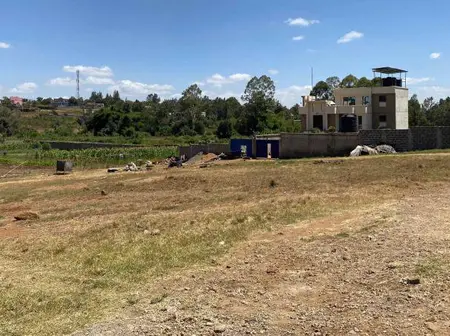
GrowthRuiru, Thika and Ruaka were among the leading Nairobi satellite towns in annual land price appreciation in the third quarter of 2026, with Ruiru recording the highest.Ruiru, Thika and Ruaka were among the leading Nairobi satellite towns in annual land price appreciation in the third quarter of 2026, with Ruiru recording the highest yearly increase at 11.5 per cent.
-

Hospital in Bungoma pledges transparency after three-year-old girl dies during surgery
Bungoma Children's Hospital has expressed condolences to the family of three-year-old Leila Mutenyo, who died during an adenotonsillectomy procedure at the facility, pledging full cooperation with investigations into the incident.
The hospital's director, Dr Dickens Lubanga, said the facility deeply regretted the loss and was committed to supporting the bereaved family as it seeks answers surrounding the child's death.
Dr Lubanga said a post-mortem examination conducted in the presence of a pathologist appointed by the family established sudden cardiac arrest during the operation as the primary cause of death.
He said the findings, together with the medical and procedural records, would inform a comprehensive internal review aimed at establishing the circumstances surrounding the incident.
"We wish to express our deepest sympathy and sincere condolences to the family. The loss of a young child is a profound tragedy and our entire hospital community shares in their grief," Dr Lubanga said.
He maintained that established clinical protocols were observed before and during the procedure, which was conducted by an experienced medical team comprising a senior ear, nose and throat (ENT) surgeon with more than 20 years of experience and an equally experienced anaesthesiologist from a national referral hospital.
Dr Lubanga said the hospital would continue cooperating with relevant regulatory authorities and investigative agencies to ensure transparency and help the family understand what happened.
"We stand unreservedly with the family during this difficult moment and remain committed to offering every possible assistance to help them find clarity, understanding and closure," he said.
The hospital said it would uphold patient safety standards while reviewing the circumstances surrounding the incident.
However, the child's father, Johnson Wafula, alleged that Leila had been taken to the facility for a medical check-up before she died during the procedure.
Wafula said the family wanted to understand how the toddler died during the medical procedure.
-
Safaricom wants M-PESA to become a business management platform for Kenya’s small traders
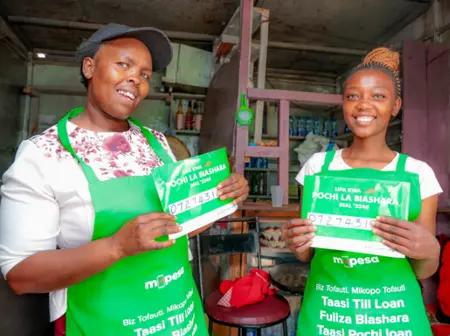
Safaricom wants M-PESA to play a larger role in how businesses operate, with plans to extend its merchant services into credit, invoicing, reconciliation and business administration. The strategy builds on a reported merchant population of 4.5 million and reflects the company’s ambition to make its payments platform more useful to small traders and businesses beyond the point at which a customer pays for goods or services.
Speaking during the company’s HY27 results briefing, CEO Peter Ndegwa said Safaricom was working to develop services that help merchants manage their businesses. He cited small operators such as boda boda riders and mama mboga traders, who may need tools to track payments, organise their transactions and access financial services. The company wants to combine its consumer and enterprise capabilities around the needs of people who use M-PESA both as customers and as business operators.
The merchant network has grown substantially. Safaricom reported 4.5 million merchants during the six months ended September 2026, up 90.3%. Pochi la Biashara reached 3.2 million customers, an increase of 115.3%, while Lipa na M-PESA had 1.3 million merchants. Merchant transaction volumes increased 52.6% to 4.7 billion, generating KSh8.18 billion in revenue, up 34.6%.
The company is now looking beyond the number of businesses accepting M-PESA payments. Ndegwa said merchant services would include financial products developed with partners, alongside tools that help businesses handle administrative tasks. These include reconciliation and invoicing, functions that can be difficult for small businesses to manage when transactions are spread across cash, mobile money and other payment channels.
Credit is another part of the proposed expansion. Merchants often need working capital to purchase stock, pay suppliers or manage fluctuations in daily cash flow. Safaricom’s wider financial services business already includes credit products, and the company wants to use partnerships and its merchant relationships to extend relevant services to businesses on its platform.
Chief Financial Officer Dilip Pal said merchant acquisition was only one part of the strategy, with engagement and retention also important. He described the reported active merchant base as reflecting the net effect of businesses joining and leaving the platform. This puts attention on whether merchants continue using M-PESA services after registering, rather than simply counting new payment acceptance points.
The strategy also has a connection to the government’s efforts to expand electronic invoicing. TechTrendsKE previously reported discussions between the Kenya Revenue Authority and Safaricom over the potential use of M-PESA merchant information and payment infrastructure to support eTIMS and electronic tax invoicing. The development places digital payment platforms within a wider effort to improve record-keeping and tax compliance among small businesses.
For merchants, the combination of payment acceptance, business records and financial products could make a mobile money account more useful in daily operations. A trader receiving payments through Pochi or a till could also use digital tools to reconcile sales, organise invoices and access services linked to the business. Safaricom’s merchant strategy is therefore built around a wider relationship with businesses, rather than the individual transaction alone.
The expansion also creates a larger commercial opportunity for M-PESA. Merchant payments generated KSh8.18 billion in revenue during the half-year, while the wider financial services business recorded revenue growth of 55.3% to KSh7.1 billion. Safaricom is seeking to connect these activities through a platform that serves consumers, merchants and businesses with payments, financial products and operational tools.
-
Safaricom half-year profit up 72pc to Sh50 billion
Safaricom reported a 72.8 percent jump in half-year profit to September, driven by higher M-Pesa and mobile data revenues in Kenya, while losses from its Ethiopia business narrowed.
First-half net profit rose to Sh50.3 billion from Sh29.1 billion, raising the telco’s dividends outlook.
-

My OneApp records 7.3 million downloads as Safaricom works to complete customer migration
Safaricom’s My OneApp has reached 4.5 million monthly active users following a launch that CEO Peter Ndegwa acknowledged disappointed some customers. The company reported 7.3 million downloads and KSh2 trillion in transactions processed through the platform as it works to bring users of its standalone M-PESA and MySafaricom applications into one digital environment.
Ndegwa told analysts and journalists that the company had made mistakes during the initial rollout and had since worked to address customer complaints. He said Safaricom had made progress in improving the experience, with customer feedback on iOS and Android standing above 75%. The company is now concentrating on growing engagement and moving customers from its older applications.
The migration involves two main customer groups. Safaricom said approximately 100,000 users of the standalone M-PESA app were yet to move to My OneApp, while about 1.8 million MySafaricom users remained to be migrated. Ndegwa said the company was allowing customers to move at their own pace while encouraging them to understand the additional capabilities available through the unified platform.
The transition also requires Safaricom to ensure that customers retain access to the services they previously used. Ndegwa said the company was taking a structured approach to moving MySafaricom users, with attention to ensuring that customers did not lose information or functionality during the process. He said the capabilities available through the older applications had been incorporated into My OneApp, alongside additional features.
Safaricom also addressed problems experienced by customers living outside Kenya. Ndegwa said the company had resolved several issues affecting diaspora users, an important group for a platform that combines mobile money, connectivity and other digital services. The improvements followed customer feedback that had identified difficulties with the earlier experience.
My OneApp brings together services that previously operated through separate Safaricom applications. Its features include M-PESA transactions, connectivity services, digital commerce, mini-applications, savings and investment products, credit, insurance and customer rewards. The company has also introduced features such as eSIM, Tap to Pay, Split Bill and Shop and Pay as part of its wider digital offering.
The platform’s commercial potential rests on how effectively Safaricom can connect these services. A customer who opens the application to make a payment may also access savings, investment products, credit or insurance. Businesses can use the platform to reach customers through digital commerce services, while connectivity features give Safaricom another way to bring its telecommunications products into the same customer experience.
Safaricom said it had also been using artificial intelligence to personalise customer recommendations and offers. The company’s presentation reported that AI-powered recommendations reached 17.7 million customers monthly. The approach forms part of a wider strategy to use customer data and digital services to improve engagement across its business.
The reported 4.5 million monthly active users provide a more useful measure of platform engagement than downloads alone. Safaricom’s next task is to complete the migration of customers from its older applications while encouraging existing users to make greater use of the services available through My OneApp. The company is positioning the platform as a central access point for its financial, connectivity and digital commerce businesses.
-

Britam Supports ‘Karura Walk’ in Health and Financial Wellness Push
At least 200 people from Nairobi and Mombasa braved early morning rain on Sunday to complete a 25-kilometer walk through Karura Forest, marking the 2026 edition of a corporate industry backed wellness initiative.The “Twende Karura” walk combines physical endurance with public health advocacy, and is supported by financial services player Britam, the Karura Running Club and the Mombasa Walkers Movement.
-

Nairobi’s Most Expensive and Cheapest Estates to Buy Land
Buying an acre of land in Nairobi can cost as little as KSh81.8 million in one suburb and more than KSh570 million in another, highlighting the wide gap in property prices across the capital.A new HassConsult Quarter Three report ranked 18 Nairobi suburbs and 14 satellite towns by average land prices, with Upper Hill emerging as the most expensive and Karen recording the lowest asking price per acre in the third quarter of 2026.
-

Equity Foundation targets 1,200 youth in new TVET scholarship drive across 47 institutions
At least 1,200 young Kenyans are expected to benefit from full scholarships under the Equity Group Foundation's Wings to Fly – Promotion of Young People Through TVET programme, in an initiative seeking to expand access to technical training and employment opportunities.The programme, implemented in partnership with the Ministry of Education and the German Government through KfW Development Bank, targets young people interested in pursuing certificate and diploma courses in agriculture-related fields.
-
Safaricom Reveals How Much M-PESA Generated as Half-Year Profit Hit Ksh50B
ReportSafaricom PLC reported a significant increase in its half-year earnings, with profit after tax rising to Ksh50.35 billion for the six months ended September 30, 2026.Safaricom PLC reported a significant increase in its half-year earnings, with profit after tax rising to Ksh50.35 billion for the six months ended September 30, 2026.