PAY ATTENTION:TUKO is in WhatsApp Channels now! Subscribe and read news in your favourite messenger.
Nancy Odindo is a Current Affairs Editor at TUKO.co.ke, covering political and world news. Odindo has over six years of journalism experience and joined TUKO.co.ke in 2023.
Former deputy president Rigathi Gachagua has publicly accused President William Ruto of exploiting his name and reputation to woo voters in Kisii and Nyamira counties, warning that such tactics would not save him from defeat at the polls in 2027.
In a pointed message posted on his official X account on Monday, November 9, Gachagua said Ruto had travelled to the Gusii region armed with little more than a memorised list of village and road names, a strategy he described as a stale script lifted directly from the 2022 election campaign.
Rigathi Gachagua credits US Democrats' win to himself: "I educated them"
PAY ATTENTION:TUKO is in WhatsApp Channels now! Subscribe and read news in your favourite messenger.
The former deputy president was blunt in his assessment of the president's four-year record in the region, stating that Ruto had delivered no roads, no water, no electricity, and no airport to the Gusii Nation.
He also took a swipe at a cancer hospital project, urging Ruto to stage its launch ceremony for the fifth time and claiming that he launched it twice in his own presence, with nothing to show for it.
The DCP leader framed his response as a broader political warning, referencing what he called a "half dose" administered during a previous political confrontation in Ol Kalou, Nyandarua county, which he described as merely a rehearsal for what lies ahead.
Rigathi Gachagua, Fred Matiang'i and Kalonzo Musyoka meet amid opposition rift: "We're together"
The fierce opposition leader also suggested that public servants, citing frustrations over pay and healthcare access, were privately ready to express their grievances at the ballot box.
He concluded with a direct prediction, telling the president he would "vacate State House in shame and humiliation," and signing off with the word "Adios."
Gachagua was impeached as deputy president in October 2024 following a parliamentary vote, and has since positioned himself as a vocal critic of the Ruto administration.
In Summary:Witnesses have recounted how a matatu was allegedly driven at high speed while making dangerous ‘Manyoka’ manoeuvres moments before it overturned.The investigating officers also presented their findings, with one linking excessive speed to the accident.Five witnesses have recounted how a matatu was allegedly driven at high speed while making dangerous ‘Manyoka’ manoeuvres moments before it overturned along Enterprise Road, killing four people and injuring several others.
Mount Kenya University (MKU) is a chartered University committed to a broad-based, holistic and inclusive system of education. The University is a member of the Inter-University Council of East Africa as well as the Association of Commonwealth Universities. MKU is largely known for its dynamic, comprehensive and thorough academic and vocational training system as well as linkages with internationally reputable institutions.
The Future of Human Freedom, Privacy, and SurvivalThere are growing concerns around the world about the expansion of digital identification systems and the possibility that they could eventually become an essential requirement for participating in everyday life. What is being presented as technological progress and administrative convenience could, if implemented without adequate safeguards, raise serious questions about individual freedom, privacy, human rights, and government control.
In Summary:The family of a Baringo businessman, Enock Chebon Chelimo, has moved to the High Court in Nairobi seeking orders compelling police to disclose his whereabouts.He says the family had previously received threats from local authorities over allegations that Chelimo possessed an AK-47 rifleThe family of a Baringo businessman, Enock Chebon Chelimo, has moved to the High Court in Nairobi seeking orders compelling police to disclose his whereabouts after he allegedly went missing following an incident involving armed officers.
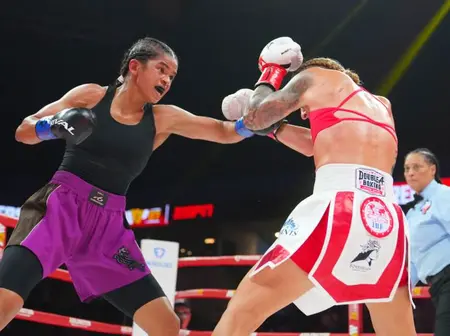
Ramla Ali, a British Somali boxer whose life story is the subject of a new film, has realised a long-held dream and won her first world title to claim two vacant junior featherweight belts in the United States.
The 36-year-old landed the biggest titles of her career by winning the IBO and WBF belts in a controversial split-decision victory over American fighter Mikiah Kreps in Arlington, Texas, on Sunday.
The nail-biting nature of the 10-round contest should not have come as too much of a surprise, as the duo are former sparring partners and ended the night with an expression of mutual respect.
“Mikiah, I want to share this victory with you because you pushed me for 10 rounds,” an emotional Ali said while addressing her opponent, who she stopped from exiting the ring after being declared the winner.
“I kept saying I’m so tired because your work rate was next level. I don’t know how I kept up, so thank you for being such a great boxer.”
The 30-year-old Niagara Falls native reciprocated the emotion. “I respect you,” Kreps said as both fighters wrapped an arm around each other.
During the fight, Ali had Kreps on the canvas in round three, but she was behind her younger opponent in the overall punch count at the end of the fight.
The outcome of the fight caused controversy from the moment the referee lifted Ali’s arm when the decision was announced.
According to the official punch statistics from the fight, Kreps outlanded Ali by 115 blows to 78 and the American was also way ahead in the power shot count.
One judge scored the bout 98-91 for Kreps but the other judges saw the fight differently and gave Ali the win with scores of 97-92 and 96-93.
Veteran promoter Lou Di Bella wrote on social media, “Mikiah Kreps won that fight and it wasn’t even close. Stevie Wonder could see that.”
The external noise would have mattered little to Ali, who dropped to her knees when the scores were announced.
Ali and her family are no strangers to adversity, having settled in London in 1992 after fleeing Somalia during its civil war.
Years after picking up the sport as a teenager in East London, Ali became the first Somali boxer to compete at the Olympic Games when she represented the country of her birth at Tokyo 2020. She later became the first Muslim woman to win an English amateur boxing title.
Ali’s journey has provided the inspiration for the movie ‘In the Shadows’ starring Top Boy actor Jasmine Jobson.
The fighter lost her father earlier this year and said she stayed up all night prior to the fight, wishing he would have been around to see her in the ring.
“My father passed away in May, so I was really emotional,” she said in a post-fight interview with All The Smoke Boxing.
“Every round, I kept going to my corner to tell my coach I couldn’t do it any more because I was physically exhausted. I boxed through my skin and I’m glad I got the victory.”
Ali’s career has always been multi-dimensional. As a model and UNICEF ambassador, she has projected her voice beyond sporting arenas.
“I can’t put into words what this means to me and what this means to all of Somalia,” she said, fighting back tears, while standing inside the ring.
“I’ve hopefully inspired so many young girls and boys out there to dream big and that’s all I’ve ever wanted to do.”
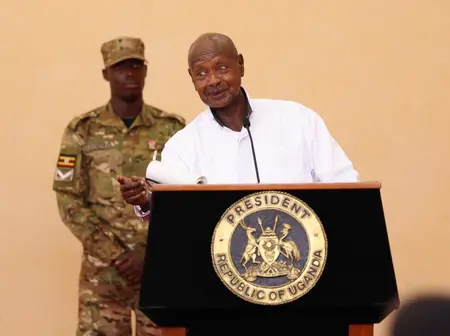
President Yoweri Museveni has retired 11 permanent secretaries and other senior government officials, redeployed 11 others to different government offices and retained 16 officials in their current positions as part of changes in the public service leadership.Among those retiring are Adolf Mwesige, who has been serving as Clerk to Parliament; Maj. Gen. David Kasura, from the Ministry of Agriculture; Dr Rose Nassali Lukwago of the Judicial Service Commission; Alex B. Okello; Dorcus Okalany of the Ministry of Lands; and Bageya Waiswa of the Ministry of Works and Transport.
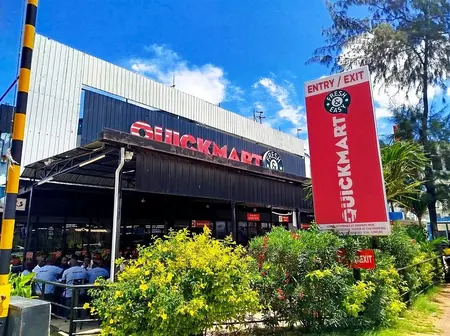
Five founding shareholders of Quickmart sought to acquire an additional 118.6 million shares worth Sh889.9 million in the supermarket chain’s initial public offering (IPO), but received no allocation after demand exceeded the number of shares available to investors.
The applications were among the insider bids frozen after Quickmart received applications for approximately 2.45 billion shares against the two billion shares offered at Sh7.50 each. The IPO was therefore oversubscribed by about 22.5%, forcing the retailer to adjust allocations across several investor categories.
“Given the offer was oversubscribed, no offer shares have been allocated to the founder shareholders who applied for the offer,” Quickmart said in its IPO results notice. The five applications show that a section of the retailer’s original owners wanted to increase their exposure to the business as it prepared to join the Nairobi Securities Exchange (NSE).
Quickmart’s founders are Duncan Kinuthia, Gladys Kinuthia, Elijah Okello, Moses Nditika, Joram Njoga, Zipporah Kinuthia and William Kinuthia. They established the business through the combination of Tumaini Supermarket and Quickmart in 2019, creating the supermarket chain that has since expanded its national footprint.
The attempted purchases came as Quickmart’s existing shareholders offered half of their combined ownership through the IPO, creating an opportunity for new investors to acquire shares in the retailer while the original owners retained a substantial interest.
Before the listing, the founders held their interests through Sokoni Retail Kenya Limited, alongside private equity investor Adenia Partners and Quickmart chief executive Peter Kang’iri. Adenia held an effective 48.6% interest in the supermarket chain, while Kang’iri owned 5.4%.
The founders’ applications present an interesting contrast with Adenia’s decision to sell part of its investment. The private equity firm was using the IPO to realise capital gains from its investment, while some of the original business owners were seeking to commit more money to the retailer at the offer price.
The applications also come against the backdrop of Quickmart’s expansion from four supermarkets to a network of 72 stores across 16 counties. The retailer reported revenue of Sh50.43 billion and statutory net profit of Sh1.51 billion for the year ended December 2025, according to its IPO disclosures.
Quickmart’s revenue grew at a compound annual growth rate of 18.4% between 2021 and 2025, while its adjusted profit after tax stood at Sh1.7 billion in 2025. The IPO valued the retailer at approximately Sh30 billion, equivalent to about 19.9 times its reported statutory net profit.
The company’s expansion plans include opening between 10 and 15 additional stores annually, with management targeting a network of more than 100 outlets. Quickmart has also been developing its digital distribution channels, including a partnership with Bolt Food that made more than 12,000 products available through the platform across over 60 stores.
The IPO will see Quickmart’s original shareholders receive gross proceeds of approximately Sh15 billion from the sale of two billion shares at Sh7.50 each. They will retain a combined two billion shares, representing 50% of the retailer following the transaction, with the remaining ownership distributed among investors who participated in the offer.
The partial sale gives Adenia an opportunity to realise part of its investment while maintaining exposure to the supermarket chain through its remaining interest. The transaction also marks an important stage in Quickmart’s transition from a privately held, private equity-backed retailer to a company with a broader public-market shareholder base.
The original shareholders’ relationship with Quickmart has also extended beyond equity ownership. The retailer’s earlier disclosures showed that several founder-linked businesses provided consultancy, property and management-related services, with payments to three related entities totalling Sh638.1 million in 2025.
Quickmart subsequently ended several founder-linked service agreements in July 2026, while continuing to lease some supermarket premises from related parties. The arrangements formed part of the company’s disclosures ahead of the NSE listing and provide additional context to the changing relationship between the retailer and its original owners.
Quickmart’s chief executive, Peter Kang’iri, also applied for additional shares as part of the IPO, seeking to increase his ownership in the retailer.
The company said Kenyan and East African retail investors submitted aggregate applications for 69.4 million shares valued at Sh520.6 million from direct employees, including the group chief executive. These applicants received all the shares they requested, allowing employees participating in the offer to secure additional ownership in the business.
Kang’iri held a 5.4% stake in Quickmart before the IPO. His participation places the retailer’s management alongside the founders in seeking additional exposure to the company as it prepares to trade publicly.
The employee allocations also demonstrate the participation of people directly connected to Quickmart’s operations in the share sale, complementing demand from individual, institutional and foreign investors.
The oversubscription also affected allocations to international institutional investors, with the International Finance Corporation (IFC) and UK-backed investment programme Mobilist receiving fewer shares than they had applied for.
Mobilist, which participated as a cornerstone investor with a guaranteed allocation, agreed to reduce its subscription by approximately $5 million (Sh649.4 million) to allow more shares to be allocated to Kenyan and East African institutional investors and foreign investors.
The programme had applied for 259.8 million shares but received 173.3 million shares worth approximately Sh1.29 billion, giving it a 4.33% stake in Quickmart after the IPO.
The IFC had sought 266.6 million shares but was allocated 258 million shares at a cost of approximately Sh1.9 billion, representing a 6.45% interest in the retailer.
Investment firm 337 Frontier and RWC Asset Management, meanwhile, received their full targeted allocations. Quickmart sold 259.7 million shares, representing 6.49% of the company, to 337 Frontier for approximately Sh1.9 billion, while RWC acquired 173.1 million shares worth Sh1.29 billion for a 4.32% stake.
The allocations reflect the different arrangements made with institutional investors participating in the IPO, including Mobilist’s decision to accommodate additional demand from other investor categories.
Quickmart’s listing will introduce a major supermarket operator to the NSE’s commercial services segment, adding a profitable retailer with an established dividend policy to a section of the market where several listed companies have struggled to generate consistent returns for shareholders.
The company reported a net profit of Sh1.5 billion in 2025 and intends to distribute 80% of its net profits as dividends going forward. The proposed payout ratio would translate to approximately Sh1.2 billion based on its 2025 statutory earnings.
Quickmart has also reported a customer base supported by its Q-Points loyalty programme, which had attracted 2.5 million members by the first half of 2026. The retailer averaged approximately five million customer transactions monthly and recorded revenue of Sh27.3 billion during the six months to June 2026.
Its NSE debut will take place on November 12, giving investors an opportunity to trade shares in a supermarket business whose expansion, profitability and dividend policy will now be assessed through the public markets.
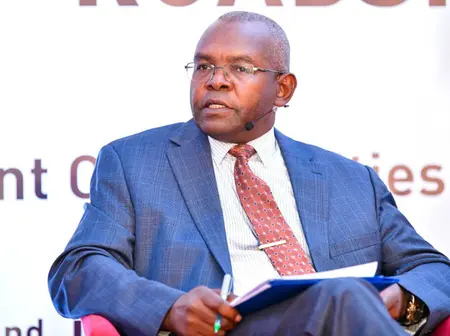
The National Treasury and the Central Bank of Kenya (CBK) are negotiating over Kenya’s Sh10 billion bank capital requirements following a disagreement over the deadline for commercial lenders to meet the higher threshold. Treasury Cabinet Secretary John Mbadi confirmed ongoing discussions with CBK Governor Kamau Thugge, with both institutions seeking consensus on how banks should transition to the new capital rules.
The discussions follow Mbadi’s proposal to extend the final compliance deadline from December 2029 to December 2032 and remove the annual capital-raising milestones. However, the CBK has maintained that commercial banks must continue working towards the existing requirements, including the Sh5 billion minimum core capital target due by December 2026.
Mbadi said the Treasury was committed to resolving the disagreement through discussions with the banking regulator, adding that the eventual position would be guided by what best serves the economy.
“We are in conversations with the governor of the central bank. This is a simple matter; we will sit with CBK, agree and communicate,” Mbadi told the Business Daily. He said the two institutions were considering the implications of the requirements for the wider economy and did not regard the disagreement as a major issue of concern.
The disagreement emerged after Mbadi proposed changes to the banking capital requirements during his June 2026 Budget Statement. The Treasury wanted banks to have until December 2032 to reach the Sh10 billion minimum core capital threshold, removing the annual milestones introduced through the Business Laws (Amendment) Act 2024.
Under the existing framework, banks were required to raise their minimum core capital from Sh1 billion to Sh3 billion by December 2025, followed by Sh5 billion by December 2026. The subsequent milestones require lenders to reach Sh6 billion by December 2027, Sh8 billion by December 2028 and Sh10 billion by December 2029.
Mbadi’s proposal was intended to give banks more time to raise capital while continuing to support lending to households and businesses. The Treasury’s position was that a longer transition would allow financial institutions to pursue commercially sustainable capital-raising strategies without diverting too much funding away from private-sector credit.
The proposal, however, was not accompanied by the necessary legislative amendment to change the existing capital requirements. This prompted the CBK to direct commercial banks to continue complying with the original timetable, leaving the industry facing conflicting positions from the Treasury and its banking regulator.
Banking industry sources told the Business Daily that the Treasury had not consulted the CBK before announcing the proposed extension. The move followed lobbying from smaller lenders that were struggling to meet the higher capital requirements.
The immediate compliance deadline is December 2026, when commercial banks are required to have minimum core capital of Sh5 billion. CBK Governor Kamau Thugge told the National Assembly Finance and National Planning Committee in October that institutions below the threshold had been asked to explain how they intended to meet the requirement.
“We want them to come to us and tell us how they are going to meet the target for 2026, which is Sh5 billion,” Thugge told the committee. He said one or two banks might struggle to meet the requirement, but the regulator wanted to hear their plans for reaching the target.
The CBK also said banks below the Sh5 billion threshold had yet to respond to its query on their capital-raising measures. The regulator has warned that institutions which fail to meet the requirements could face downgrading, although it had not taken enforcement action against the affected banks at the time of the report.
The pressure follows the first phase of the capital transition, which required banks to raise minimum core capital to Sh3 billion by December 2025. The requirement was introduced through the Business Laws (Amendment) Act 2024, which raised the previous Sh1 billion floor as part of efforts to strengthen the banking sector.
As at the end of June 2026, 14 commercial banks had core capital below the Sh5 billion threshold required for December 2026. The institutions included Middle East Bank, M-Oriental Bank, Bank of Africa, Premier Bank, Guardian Bank, DIB Bank and Habib Bank AG Zurich.
Seven banks were also reported to have fallen short of the earlier Sh3 billion requirement for December 2025. They included Credit Bank, UBA Bank, Development Bank of Kenya, African Banking Corporation, Access Bank and Consolidated Bank of Kenya.
Meeting the higher thresholds will require affected lenders to mobilise additional shareholder funds, retain more earnings or pursue other capital-raising strategies. Banks that struggle to raise sufficient funds could also consider strategic investors or consolidation as they seek to maintain their position in the market.
The requirements have raised concerns about the future of smaller locally owned lenders, particularly those serving specialised customer segments and communities that may not be adequately served by larger institutions. The possibility of consolidation has therefore become part of the wider debate over how Kenya should strengthen its banking sector while maintaining competition.
The National Assembly Finance and National Planning Committee has cautioned against implementing the requirements in a manner that could weaken domestic banking institutions or reduce access to financial services.
The Treasury’s push for a longer transition is partly driven by concerns that banks could restrict lending while setting aside more resources to meet the higher capital requirements. Commercial banks told Mbadi that institutions below the required thresholds were likely to preserve funds for capital accumulation, potentially reducing the money available for loans to households and businesses.
A slowdown in private-sector lending would complicate government efforts to expand credit to businesses and support economic growth, particularly among micro, small and medium enterprises (MSMEs). The Treasury has argued that giving banks more time would allow them to maintain lending activities while pursuing capital-raising strategies suited to their financial positions.
Kenya Bankers Association (KBA) Chief Executive Officer Raimond Molenje previously supported a longer compliance period, arguing that it would help banks continue financing customers rather than concentrating their resources on meeting the regulatory thresholds.
“Allowing a longer timeframe facilitates banks to serve customers better and uninterrupted, deploying more capital into lending to the private sector,” Molenje said.
The debate also comes as the government expects commercial banks to expand financing for businesses, particularly smaller enterprises that depend on bank credit to manage working capital, purchase inventory and finance expansion. A longer transition could ease immediate capital pressures, while stronger capital positions are intended to improve banks’ ability to withstand financial shocks and sustain lending over time.
The National Assembly Finance and National Planning Committee has called for a balanced approach to implementing the new capital requirements, warning that the rules could affect financial stability, competition and financial inclusion.
Committee chairperson Kuria Kimani told MPs that although consolidation could strengthen individual financial institutions, policymakers needed to protect competition and local ownership. He also cautioned against weakening the participation of domestic banks serving communities and market segments that larger lenders might not adequately reach.
“While consolidation may strengthen individual institutions, it is important to safeguard competition, local ownership and the continued participation of domestic banking institutions, particularly those serving communities and market segments that may not be adequately served by larger banks,” Kimani said.
He added that implementation should account for financial stability, competition, financial inclusion and the sustainability of locally owned banks.
The Treasury and CBK discussions will determine how the two institutions approach the competing priorities of stronger bank capitalisation and continued access to credit. For commercial lenders below the Sh5 billion threshold, the December 2026 milestone remains the immediate focus as they work to meet the requirements set out in the existing banking capital framework.
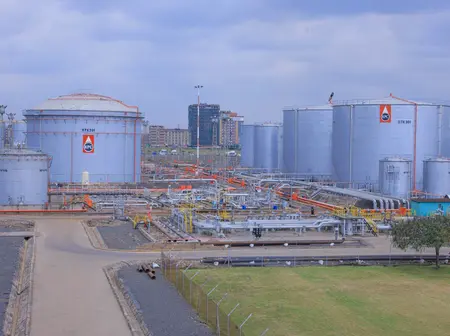
Kenya Pipeline Company (KPC) was on Monday forced to shut down a section of Line 5, its Mombasa-Nairobi petroleum artery, after the pipeline was punctured during third-party works near Tassia, off Outer Ring Road, in Embakasi Central Sub-County.The incident occurred at about 9:00am on Monday on Line 5, which carries petroleum products from Mombasa to Nairobi.