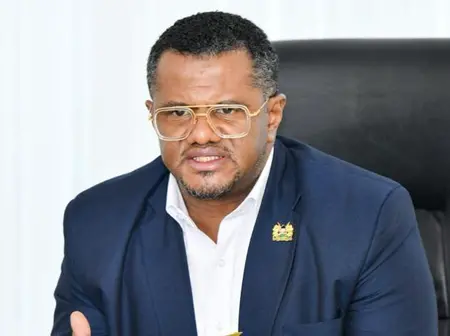
GuiltyIEBC has found UDA Secretary General Hassan Omar guilty of breaching the Electoral Code of Conduct over remarks he made at a public rally in Mombasa.The Independent Electoral and Boundaries Commission (IEBC) has found UDA Secretary General Hassan Omar guilty of breaching the Electoral Code of Conduct over remarks he made at a public rally in Mombasa.
Blog
-

Ruto Links Supermarket Milk Shortages to Rising Employment in Kenya
Speaking on Wednesday, November 4, 2026, Ruto said Kenya’s annual milk production had risen from about 4.6 billion litres to approximately 5.5 billion litres in the previous year. He also cited Kenya National Bureau of Statistics figures showing that milk processing capacity had grown by 36 per cent.
Ruto said the increase in production had not kept pace with the rising number of people who could afford to buy milk. He pointed to his economic adviser’s explanation from the previous day:
“There are too many people now who can afford some tea and some milk because we have close to another two million people who are not working. Now they are working. 1.1 million of them are in the affordable housing space,” Ruto said.
The president added that rising employment was changing consumption patterns in other sectors, including coffee and tea. He said workers entering the job market, particularly through affordable housing construction, had gained more purchasing power and were buying more everyday goods.
Ruto’s remarks came as Kenyans continue to question why supermarkets were running out of milk despite the country’s higher production. The president said the same shift in demand could affect other sectors as more Kenyans gained an income.
Ndii spoke about the issue on Tuesday at the 2026 NCBA Economic Forum in Nairobi, challenging claims that falling production had caused the milk shortages.
Citing Kenya National Bureau of Statistics data, he said milk production had climbed to about 5.6 billion litres, while processors’ milk intake had risen by 34 percent.
“If there is no reduction in supply, and there is actually a very sharp increase in both production and the intake by processors, what can explain the stock-outs on the shelves?” Ndii asked.
He attributed the stronger demand to affordable housing construction sites, where contractors provide workers with milk as part of their daily provisions.
Then on Wednesday, Ndii shared a social media post quoting a statement about how people eventually accept new ideas, even after initially opposing them.
“All truth passes through three stages. First, it is ridiculed. Second, it is violently opposed. Third, it is accepted as being self-evident,” he wrote.
-

Gachagua to Open New Wamunyoro Bases in Two Counties
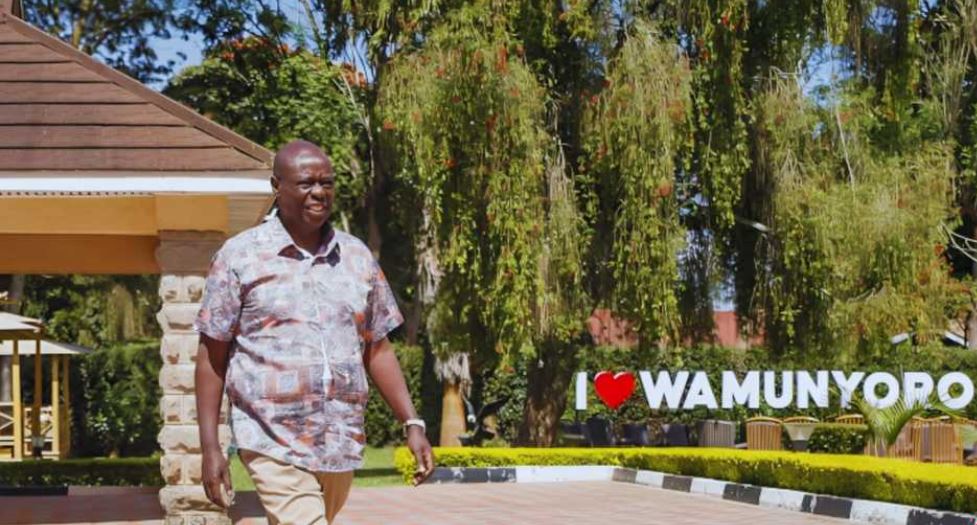
Speaking on Wednesday at his Wamunyoro residence in Nyeri County, Gachagua addressed a delegation from Gilgil Constituency in Nakuru and described the county as a key battleground in the next election.
“Currently, Nakuru County has 1.3 million votes. That figure might reach 1.5 million votes by the close of mass voter registration in January.”
“It is county number three in terms of votes. Number one is Nairobi, number two Kiambu, and Nakuru number three. So, Nakuru is very important,” he said.
Gachagua said he would open an annex in Nakuru to bring his political operations closer to voters he sees as crucial to the 2027 presidential race.
“So, I am going to spend a lot of time in Nakuru. I have planned to open Wamunyoro Annex in Nakuru. Let me come near where the votes are. Let me stay near the 1.4 million votes.”
He also plans to open an annex in Meru, extending his political network beyond his traditional Mt Kenya strongholds.
“I will open Wamunyoro Annex in Nakuru and in Meru. I don’t play around. Sometimes, some people look down upon me. I know politics because I am a political scientist. I have been involved in every succession since the transition from single-partyism to multi-partyism. Politics is a game of numbers. You go to where numbers are,” said Gachagua.
Gachagua said he had strong support in several counties, including Nairobi, Kiambu, Nakuru, and Meru.
“I am firmly in Nairobi. I have more than half of that city. Kiambu, 100 percent. Nakuru, 90 percent; Meru 100 percent. Kakamega: we shall join hands with Sifuna [Edwin] and [Eugene] Wamalwa, we agree.”
He said his campaign strategy would focus on counties with large voter populations, where he believes political mobilization could have the greatest impact.
“We are in a very strong position. Therefore, I want to take a lot of time working on counties that have huge numbers, because that is politics. That is being strategic.”
Gachagua’s Nyeri residence has since become a beehive of political activity since he was impeached in October 2024, drawing opposition leaders, political delegations, and supporters as the former DP plots to ensure his former boss Ruto doesn’t get a second term in office.
-
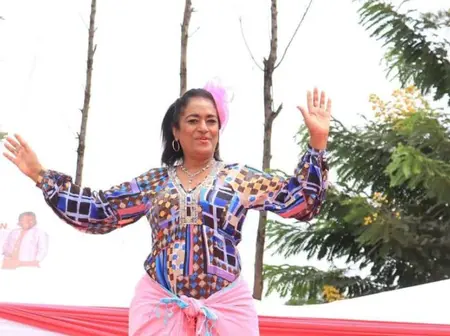
Passaris Reveals Why She Wants Ruku to Replace Sakaja as Nairobi Governor

In a statement Wednesday, Passaris, who last month toyed with the idea of joining the race for what promises to be a hotly contested seat in the upcoming 2027 elections, took aim at incumbent Governor Johnson Sakaja over his recent switch from UDA to ODM.
According to Passaris, it is President William Ruto who has been running Nairobi as a result of Sakaja’s poor leadership.
“Nairobi just got more interesting. Governor Sakaja’s entry into ODM does not guarantee him the Nairobi Governor’s seat in 2027. That decision belongs to Nairobians. For too long, H.E President William Ruto has been Nairobi’s de facto Governor, stepping in where county leadership should have delivered,” she wrote.
Passaris quipped that Nairobi needs a no-nonsense governor who gets things done. As such, she threw her weight behind CS Ruku, citing his track record in the Public Service docket.
“Nairobi needs a hands-on, decisive, no-nonsense administrator. Someone who shows up, takes charge and gets things done. I’ve watched CS Geoffrey Ruku handle Special Programmes and disaster response. His energy, decisiveness, and hands-on leadership are exactly the qualities Nairobi needs,” she added.
The woman rep expressed her love for Nairobi, recounting her earlier ambitions for Nairobi mayor.
“In 2007, I wanted to be Mayor of Nairobi. That dream never materialized, but my love for this city and its people has never diminished. Today, I simply want Nairobi to have the best Governor possible. CS Geoffrey Ruku, if elections were held today, you would have my vote! August 10, 2027 is still ahead of us. No candidate owns Nairobi. Every vote must be earned, every promise must count, and every leader must be accountable.”
She concluded, “A well-governed Nairobi would be a tremendous asset to President Ruto and to every Kenyan who calls this city home. Let the best candidate win. Nairobi deserves nothing less!”

Passaris’s endorsement of Ruku came shortly after the minister said he was ready to seek Nairobi’s governorship and improve service delivery in the capital.
CS Ruku said Nairobi needed a leader with integrity, vision, and strong leadership skills to address the city’s challenges and realize its potential.
“Nairobi is for all Kenyans, is the capital city of our country, and must be led as such. This is the hub of East Africa and the greater East and Central Business Hub,” Ruku said in South B, Nairobi.
He added that whoever takes the governor’s office should demonstrate honesty, hard work, vision, and integrity to steer the county towards development.
Ruku also cited his experience in elective politics and said he was capable of leading Nairobi.
“You people know very well that I was previously an elected leader. Is there any problem if I vie and get elected here in Nairobi? Am I not able to lead this county?” he asked.
Before joining President William Ruto’s Cabinet, Ruku served as Mbeere North MP. He was elected in 2022 on a Democratic Party of Kenya ticket.
Ruto nominated Ruku to the Cabinet in March 2025. Parliament approved his appointment, and he took over the Public Service docket from former Cabinet Secretary Justin Muturi.
-

World Bank Reveals How Much Corruption Costs Kenya’s Economy

According to the report, corruption alone increases the fiscal deficit by about 2 percent of gross domestic product (GDP). While many Kenyans may find the finding unsurprising, the report offers a stark estimate of corruption’s economic cost.
The report says corruption also raises the cost of basic services, including electricity and logistics, to more than twice the levels seen in other parts of the world. Businesses rank corruption among their top concerns, with 39 percent of firms identifying it as the main constraint on their operations.
Households also bear the burden. The World Bank says Kenya will need to address governance problems to achieve faster economic growth.
“The economic gains from stronger governance can be quite substantial, and the report suggests that 2025, if marked by governance reforms, could raise GDP by almost 9 percent relative to the current path, while more ambitious reforms could raise GDP by more than 20 percent,” said Qimiao Fan, World Bank Country Director for East Africa.
“Control of corruption lags behind our peers, adding costs to public finances, raising the cost of doing business, and burdening firms and informal workers. Second, the payoff from reform is large: modelled anti-corruption reforms could raise GDP by 8.7 percent by 2025,” added Treasury Principal Secretary Chris Kiptoo.
The World Bank estimates that ambitious anti-corruption reforms could help create more than 7.7 million additional, higher-quality jobs across sectors by 2035 while reducing public debt as a share of GDP.
The report links the potential benefits of tackling corruption to stronger economic growth, more jobs, and improved public finances, which could ultimately raise living standards.
“These improvements are achievable, and I want to emphasize that most of these reforms actually do not require additional fiscal spending,” Fan added.
“Citizens are worried about the economic cost of corruption, seeing it as even more critical than the impact on service delivery and how it hampers the improvement of living standards,” said the World Bank’s Lead Governance Specialist.
The bank said it remains optimistic that the Treasury will act on the report’s recommendations and pursue the opportunities and benefits of tackling corruption.
-

Gachagua Sneaks Home in a Probox, Skips Convoy Over Safety Fears
The Democracy for the Citizens Party (DCP) leader had spent nearly two months in the US, where he met Kenyans living abroad and discussed issues including the Opposition’s preparations for the 2027 General Election.
Gachagua arrived at Jomo Kenyatta International Airport on October 20 but avoided publicity. Instead of arranging the high-profile welcome that greeted him on previous visits, he made an unannounced journey to his rural home.
His return contrasted with his 2025 homecoming, when large crowds of supporters gathered at the airport. In an interview with a vernacular television station, Gachagua said he feared that publicizing his arrival would expose him to people he accused of plotting against him.
“I returned silently. I made sure there were no photos and I got into a Probox car and headed directly to Wamunyoro,” said Gachagua.
He said he did not spend the night at his Karen residence in Nairobi. Instead, he travelled to Nyeri shortly after landing.
“I did not sleep here [Karen home]. I arrived around 9 pm; by 12 a.m., I was at my home [Wamunyoro],” said Gachagua.
Gachagua claimed that his usual convoy would have made it easier for security agencies and his alleged political opponents to track him.
“They [security agencies] would have noted my usual convoy. These are not good people…they can plan evil deeds against me.”
He recalled that publicity around his 2025 return had allegedly exposed him to threats.
“Last time [2025], I had publicized my return, and my followers turned up in large numbers at the airport. There were plans to harm me. Many goons were sent. It is God who saved my life.”

Gachagua said the experience persuaded him not to repeat what he called a security mistake.
“I told myself, ‘You can’t repeat the same mistake’. As my detractors are not happy with my decision to stand with our people and the country and speak the truth, I saw it wise to return silently.”
He also said he kept his travel plans secret from everyone, including his drivers and security personnel, because he feared details of his arrival might leak.
“I informed no one, not even my drivers and security guards. I told no one, as people would have publicized it, yet they [my detractors] are not good people. They have been hatching evil plans against me.”
Gachagua also referred to the attack at Witima Anglican Church of Kenya (ACK) in Othaya, Nyeri, where armed individuals entered the church during a service he was attending with his allies. He cited the incident as an example of the threats he faces and said it had led him to take greater care over his movements.
He said he would continue to keep his whereabouts and travel plans private while pursuing his political activities ahead of the 2027 elections.
-
Fewer Kenyan Women Are Getting Married as Separations Nearly Double

The landmark report paints a clear picture of evolving family structures, changing social norms, legal registration gaps, and a steadily declining national fertility rate.
The survey highlights a significant shift in marital status among Kenyan women aged 15 to 49 over the past 20 years:
Never Married: 32.9% of women have never married, up from 30% in 2003.
Married or Cohabiting: The proportion of women who are married or living with a partner fell from 60% in 2003 to 55% (47.7% married; 7.3% living with a partner).
Divorced or Separated: The combined rate rose sharply, climbing from 6% in 2003 to 10% (8.2% separated; 1.4% divorced).
Widowed: Widows account for 2.5% of the total demographic.
Despite legal frameworks recognizing marriage, only 17.6% of women who are married or living with a partner reported having registered their union, and just 14% overall possess a formal marriage certificate.
Urban women are significantly more likely to register their marriages (22.6%) compared to their rural counterparts (13.6%).
The KMDHS tracked behavioral patterns among young women aged 15 to 24:
Multiple Partners: Overall, 2.2% of women aged 15 to 24 reported having two or more sexual partners in the year preceding the survey.
By Age: 0.9% among ages 15–19 (0.4% for 15–17; 1.8% for 18–19) vs. 3.5% among ages 20–24 (3.3% for 20–22; 3.9% for 23–24).
By Marital History: Ever-married young women were more likely to report multiple partners (3.5%) than those who had never married (1.7%).
By Education: Rates were highest among women with higher education (3.1%), followed by primary (2.5%) and secondary (2.0%), while women with no formal education recorded the lowest rate (0.1%).
Higher-Risk Intercourse: Defined by the survey as sex with someone other than a spouse or cohabiting partner, 21.6% of women aged 15 to 24 engaged in higher-risk intercourse in the past year. Older youth aged 20–24 recorded a rate of 30.4%, compared to 13.5% among adolescents aged 15–19.
Mirroring global demographic trends, Kenya’s total fertility rate has dropped to 3.1 children per woman in 2025, down from 3.4 in 2022 and 4.9 in 2003.
Geography and urbanization play a decisive role in birth rates:
Urban vs. Rural: Urban women average 2.6 children, compared to 3.6 children per woman in rural areas.
Lowest Birth Rates: Embu leads the country with the lowest fertility rate at 2.2 children per woman, closely followed by Kiambu and Mombasa at 2.3.
Highest Birth Rates: Mandera recorded the highest fertility rate at 6.8 children per woman, followed by Wajir (5.8) and Tana River (5.7).
-
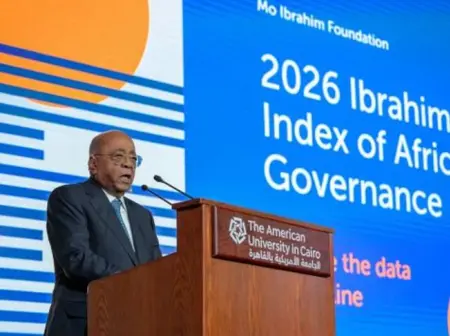
Kenya Ranks 10th in Africa’s 2026 Governance Index as Key Score Declines

The Mo Ibrahim Foundation released the report on October 31, 2026. Kenya scored above the continental average of 50.1 and Eastern Africa’s regional average of 47.5.
Kenya’s overall score rose by 0.9 points between 2016 and 2025. Its strongest improvement came in Foundations for Economic Opportunity, which gained 4.1 points to reach 65.3. Participation, Rights, and Inclusion scored 62.4, while Human Development reached 62.3.
Security and Rule of Law was the country’s biggest concern. Its score fell by 4.2 points to 54, making it the only one of the index’s four main categories to decline.
The assessment also identified weaknesses in public procurement. Kenya scored 29.7 in that area after losing 36.4 points over the review period. Other indicators that declined included public perceptions of the rule of law, which fell to 37.3; media freedom, at 56.6; and public perceptions of anti-corruption efforts, at 27.9.
Kenya improved in several other areas, including protection against discrimination, internet and energy access, and education completion.
Seychelles led the continental rankings, followed by Mauritius, Cabo Verde, Botswana, and South Africa. Namibia, Morocco, Senegal, and Ghana joined Kenya in the top 10.
The index assesses governance in 54 African countries using 96 indicators drawn from 51 independent data sources. It covers four areas: Security and Rule of Law; Participation, Rights and Inclusion; Foundations for Economic Opportunity; and Human Development.
South Sudan ranked last at 54th, behind Somalia, Sudan, Eritrea, the Central African Republic, Niger, the Democratic Republic of Congo, Chad, Libya, and Guinea-Bissau.
-

Kenya Could Have Saved KSh117 Billion on SGR, World Bank Report Shows
The World Bank details these findings in its November 2026 Kenya Economic Update, which examines how governance weaknesses affect public spending, economic growth, and job creation.
“With the same cost metric as the Tanzanian line, Kenya could have saved up to US$900 million in initial construction costs,” the report states.
The World Bank estimates that governance issues, including non-competitive contracting, land speculation, and fraudulent land titles, valuations, and compensation payments, account for at least 30 percent of the potential savings. The report clarifies that this figure represents estimated potential savings rather than definitive proof of stolen or recoverable funds.
The report puts construction costs at US$7.6 million per kilometre for Kenya’s Mombasa–Nairobi railway, compared with US$5.7 million for Tanzania’s Dar es Salaam–Dodoma line and US$5.3 million for the Djibouti–Addis Ababa railway.
Kenya spent about Ksh247 million more per kilometre than Tanzania – a 33 per cent premium over the Tanzanian benchmark, and Ksh299 million more per kilometre than the Djibouti–Addis Ababa line. Applying Tanzania’s rate per kilometre to the Mombasa–Nairobi route shows potential savings of US$900 million, or roughly Ksh116 billion to Ksh117 billion.
The World Bank says governance weaknesses account for at least 30 percent of that estimated potential saving. It cites direct contracting rather than competitive tendering, land speculation, and suspected fraud related to land titling, valuation, and compensation.
The lender warns that limited competition can weaken scrutiny of contract prices and create opportunities for inflated costs.
“Once contracts are awarded to connected companies, this also raises the likelihood of further collusion and cost markups during project execution,” the report states.
The comparison has limits. Kenya’s SGR is diesel-powered, while the Tanzania and Djibouti–Addis Ababa lines are electrified, which requires additional infrastructure. The projects also differ in specifications, construction periods, terrain, and other physical conditions.
All three are single-track railways. The Djibouti–Addis Ababa line was built between 2011 and 2016 and has an elevation gain of about 2,300 metres. Kenya’s Mombasa–Nairobi line was constructed between 2014 and 2017, with an elevation gain of about 1,600 metres. Tanzania’s Dar es Salaam–Dodoma line was built between 2017 and 2024, with an elevation gain of approximately 1,060 metres.
The Ethiopian line therefore crosses more mountainous terrain and has a greater elevation gain than Kenya’s railway. The World Bank also acknowledges that land acquisition costs were significantly higher in Kenya but says they do not fully explain the cost difference. Tanzania’s railway was built later and to a higher specification, including electrification.
The report does not conclude that every additional shilling spent on Kenya’s SGR resulted from corruption. Rather, it identifies governance weaknesses as one explanation for part of the estimated potential savings.
The findings echo Transparency International Kenya’s June 2026 Corruption Risk Assessment of Infrastructure Projects, which examined vulnerabilities in major public investments, including the SGR. The World Bank cites the assessment’s findings on risks involving procurement transparency, public participation, oversight, and access to project information.
The concerns are particularly significant for infrastructure financed through public borrowing, as construction costs affect taxpayers through debt repayments and other fiscal commitments.
-
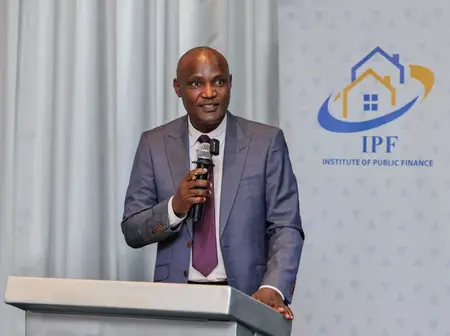
State disburse Sh19billion in e procurement tenders in three months
The government awarded contracts worth Sh19 billion in the first quarter of the current financial year through the electronic government procurement (e-GP) system, according to National Treasury Cabinet Secretary John Mbadi.
This he said, surpasses the value of tenders processed for the entire previous financial year.
The National Treasury says the platform is gaining traction following its nationwide rollout in July 2025, with 4,950 contracts awarded in the first three months compared with about 4,000 contracts worth Sh18.2 billion recorded in the whole of the 2025/26 financial year.
The growing uptake comes amidst increased resistance from individuals’ national treasury says are cartels
The e-GP system project manager for the e-GP system, Lawrence Kanyinyi, said the platform was recording increased activity, with between 700 and 900 tender notices available to suppliers on a daily basis.
“We are looking at having 4,950 contracts currently after our first quarter, and in terms of the amount, we are looking at approximately Sh19 billion,” Kanyinyi said.
The system, which became mandatory for government procuring entities from July 1, 2025, digitises the procurement process from supplier registration and tender advertising to bidding, evaluation, contract awards and contract management.
Treasury cabinet secretary John Mbadi said so far they have registered approximately 50,000 suppliers and is targeting 100,000 by the beginning of the next financial year, in a move expected to widen participation in government tenders.
“I am encouraged by the strong progress recorded, with overall system adoption standing at 78.8 per cent as at 31st July 2026. The respective adoption rates across institutions are Ministries, Departments and Agencies (MDAs) are at 96.75 per cent, County Governments have adopted 100,” said Mbadi.
He added that State Corporations, SAGAs and Funds are at 94 adoption and TVETs, Tertiary Institutions and TTCs are at 81.9per cent
However, the CS noted that government is still working to address technical and institutional challenges, including integrating the platform with the Integrated Financial Management Information System (IFMIS).
Kanyinyi said development and testing of the integration had been undertaken, with the remaining step being deployment within the IFMIS environment.
The integration is expected to link procurement plans with approved budgets, reserve funds before procurement begins and connect purchase orders, invoicing and asset management to government financial records.
The Treasury has partnered with the Institute of Public Finance (IPF) through a memorandum of understanding to strengthen implementation, capacity building and resource mobilisation for the digital procurement reforms.
IPF chief executive Daniel Ndirangu said the success of the platform should not be measured solely by the number of suppliers registered or contracts processed, but by whether it delivers better value for public money.
“The second one is that there's value for money through stronger competition, lower cost and fewer opportunities for inflated prices, collusion or waste,” Ndirangu said.
Ndirangu said IPF would support the Treasury through institutional capacity building, supplier sensitisation, procurement governance research and technical assistance.
Mbadi said the government was working with development partners to address weaknesses that could undermine the system's effectiveness, including cybersecurity, data integrity, system reliability and inadequate capacity in some public institutions.
“Procurement information must be accurate, must be secure, and must be accessible to authorised users only, with appropriate safeguards for confidential information,” Mbadi said.
He noted that some county governments faced staffing and technical capacity constraints, which had affected the onboarding of personnel responsible for operating the platform.
The government is seeking technical assistance in cybersecurity, systems integration, data quality and performance monitoring, alongside training for procurement professionals, accounting officers, county officials and suppliers.
Mbadi also acknowledged resistance to the transition from the manual procurement system, saying some individuals who benefited from the old arrangement were still attempting to frustrate implementation.
He said some public entities had continued seeking exemptions from procurement requirements, particularly as the country approaches an election period, when pressure to fast-track spending could increase.
The government is also developing a second phase of the platform that will introduce electronic auctions, e-catalogues, an e-marketplace and performance ratings for suppliers and procuring entities.