Blog

  • Samsung bets on connected living to win over Kenyan homes

    Samsung bets on connected living to win over Kenyan homes

    Samsung connected living

    As Samsung rolls out its Connected Living Experience in Kenya, Sam Odhiambo, Head of Consumer Electronics Business at Samsung Kenya, explains how SmartThings, AI-powered appliances and energy monitoring are being positioned as practical tools for everyday households rather than luxury upgrades.

    For most Kenyan households, the television, fridge, washing machine and smartphone have always lived separate lives, each bought, used and managed on its own. Samsung wants to change that.

    Through its Connected Living Experience, the electronics maker is inviting consumers to see first-hand how compatible devices can work together through SmartThings, its connected-home platform, which lets users monitor appliances, adjust settings remotely and set up routines from a single app on their phone.

    The pitch is grounded in everyday concerns. With electricity costs top of mind for many families, Samsung is putting energy visibility at the centre of the conversation, alongside AI features such as AI Wash and AI Energy Mode that aim to cut down on manual decision-making around the home.

    Odhiambo is equally clear about the barriers. Smart-home technology is still widely seen as complicated and expensive, and he argues that connected living does not require replacing every appliance at once, but can be built gradually, device by device, at a pace that suits each household’s budget.

    In this interview, he speaks to TechTrends about the thinking behind the initiative, what AI really brings to home appliances, how households can manage energy consumption more intelligently, and why after-sales support matters as much as innovation in winning consumer confidence.

    Samsung has introduced its Connected Living Experience in Kenya. What is the idea behind this initiative?

    The idea is to demonstrate how technology can work together to make everyday life easier, rather than having consumers think about each device as a separate purchase. We have televisions, refrigerators, washing machines and mobile devices that serve different purposes, but when compatible products connect through SmartThings, the experience becomes much more integrated.

    Through Connected Living, we are giving consumers an opportunity to see what this looks like in practice. They can explore different areas of a home, understand how the devices communicate and experience how connectivity can simplify everyday routines. Ultimately, our focus is on making technology more useful, intuitive and relevant to the way people live.

    What exactly is SmartThings, and how does it work?

    SmartThings is Samsung’s connected-home platform that allows users to manage compatible devices through one application on their smartphone. Instead of switching between different controls for different appliances, users can bring supported devices together and manage them from a central point.

    For example, depending on the products and features available, a consumer can monitor a connected appliance, adjust certain settings remotely or create routines that allow devices to work together. The platform also supports compatible products from other manufacturers, helping consumers build a connected home around their needs.

    What matters is that the technology should feel straightforward. Consumers should not need to be technology experts to appreciate the convenience of having their devices work together.

    How does connected living translate into practical benefits for Kenyan households?

    For Kenyan households, connected living has to deliver practical value. It could mean having greater visibility into how much energy an appliance consumes, checking the status of a connected device while away from home, or simplifying household tasks through intelligent appliance features.

    Energy management is particularly relevant because households are conscious of their electricity costs. SmartThings Energy, on compatible devices, can help users monitor consumption and understand their usage patterns. That information can support more informed decisions about how and when they use their appliances.

    There is also the benefit of convenience. When people are balancing work, family and other responsibilities, technology that helps reduce unnecessary steps and makes household routines easier can make a meaningful difference.

    Artificial intelligence is becoming increasingly prominent in consumer electronics. How is Samsung applying AI to home appliances?

    We see AI as a way of making appliances more responsive to the user’s needs, rather than simply adding technology for its own sake. In compatible Samsung appliances, AI-powered features can help optimise certain functions and reduce the amount of manual decision-making required.

    For example, Samsung’s AI Wash technology uses information about the laundry load and its level of soiling to help determine appropriate washing conditions and detergent use. SmartThings also supports features that provide insights into appliance performance and energy consumption.

    These capabilities demonstrate how AI can move beyond the smartphone and become part of the wider home experience. Our focus is on practical applications that help consumers manage their homes more efficiently and conveniently.

    Energy efficiency is an important consideration for consumers. How does Samsung help households manage energy consumption?

    Energy efficiency is an important part of how we approach home appliances. We are developing technologies that help consumers use their appliances more intelligently, while giving them greater visibility into their consumption.

    Through SmartThings Energy, users with compatible devices can track energy usage over different periods and identify consumption patterns. AI Energy Mode, where supported, can also help reduce energy use in certain operating conditions.

    The benefit is not simply having an appliance that performs a task. It is helping consumers understand how they use that appliance and where adjustments may be possible. Actual savings depend on the device, settings, usage habits and household conditions, so we encourage consumers to explore the features available on the specific models they own.

    Does a consumer need to replace all their existing appliances to enjoy connected living?

    No. We recognize that consumers have different needs, budgets and stages of adoption. Connected living does not have to mean upgrading every device in the home at once.

    The starting point is understanding which devices a consumer already owns and which are compatible with SmartThings. From there, they can identify the features that would be most useful and gradually expand their connected ecosystem as their needs evolve.

    Compatibility is important because not every product supports every SmartThings feature. We therefore encourage consumers to check the specifications of individual devices before purchasing. Our broader objective is to make the connected-home experience accessible and understandable, while allowing people to adopt the technology at their own pace.

    Some consumers may find smart-home technology complicated or expensive. How is Samsung addressing that concern?

    One of the reasons we are taking this experience directly to consumers is to make the technology easier to understand. Reading about a connected home is one thing; seeing how it works and trying the features yourself is another.

    We want consumers to understand the benefits before making a purchasing decision. They can see how devices connect, ask questions about compatibility and identify which features are relevant to their households.

    We also recognise that consumers have different purchasing priorities. Our role is to demonstrate the value of the technology and help people make informed decisions based on their needs. Connected living should not be presented as something that every household must adopt all at once. It is an experience that consumers can build over time.

    How important is after-sales support when introducing connected appliances and smart-home technology?

    After-sales support is essential because the customer experience does not end when a product is purchased. Consumers need confidence that they can access guidance, maintenance and authorised repair services when required.

    This becomes particularly important with connected products, where customers may need assistance with setup, device registration, software updates or understanding specific features. We want people to feel confident using the technology, not intimidated by it.

    At Samsung, product innovation and customer support must work together. We encourage customers to familiarise themselves with their product manuals, compatibility requirements and available support channels so that they can get the best possible experience from their devices.

    What would you like consumers to take away from this experience?

    I would like consumers to leave with a clearer understanding of what connected living means for them personally. It is not simply about owning more devices or having the latest technology. It is about making the technology they use every day work better together.

    Whether that means simplifying laundry, managing energy consumption, enhancing entertainment or gaining greater control over compatible appliances, the value lies in the experience.

    We invite consumers to explore the possibilities, ask questions and see how connected technology could fit into their own homes. At Samsung, we want to keep creating experiences that make innovation tangible and show how technology can contribute to more convenient everyday living.
  • CS Ogamba reveals what Kenyan universities must prove beyond awarding degrees

    CS Ogamba reveals what Kenyan universities must prove beyond awarding degrees

    CS Ogamba reveals what Kenyan universities must prove beyond awarding degrees

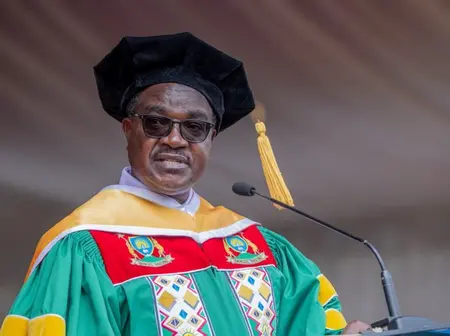
    Education Cabinet Secretary Julius Ogamba has challenged universities to focus on the quality of education and the skills graduates acquire, saying institutions must look beyond student enrolment to the knowledge and values they impart.

    “We must not only ask ourselves how many students enter universities, but also focus on what they learn. What problems they can solve, what values they carry, and what they give back after graduation,” Ogamba said.

    Speaking on Thursday, November 5, 2026, at State House, Nairobi, during the award of a charter to International Leadership University (ILU), Ogamba said universities must demonstrate their contribution to Kenya, Africa and the world through quality teaching, relevant academic programmes, research and effective governance.

    “The true measure of this charter will be reflected in the quality of teaching, the relevance of academic programs, the integrity of the governance in place, the value of research and the contribution of the university’s graduates to Kenya, Africa and the world,” he said.

    Ogamba said private universities had widened access to higher education and created new academic pathways, contributing to research, innovation and human capital development.

    “Your Excellency, Kenya currently has 41 private universities which have widened access to university education and created new academic pathways, contributing to research, innovation and human capital development,” he said.

    The Cabinet Secretary said private universities had enrolled 153,999 students, representing 21.7 per cent of the country’s university student population.

    “Currently, the private universities have enrolled a total of 153,999 students out of the 707,150,000 students in all our universities in Kenya, accounting for 21.7% of university students,” Ogamba said.

    The figure of 707,150,000 in the supplied transcript appears inconsistent with the stated percentage and should be verified against the official speech before publication.

    Ogamba cautioned that expanding university enrolment must go hand in hand with better education and improved learning outcomes.

    “Well, the numbers are impressive. More students must also mean better education, not just more seats,” he said.

    He described private universities as important partners in improving higher education and urged institutions to focus on equipping students with knowledge and values that would benefit society.

    “Private universities are key partners in this effort,” he said.

    The Education CS said quality assurance was essential in protecting the credibility of academic qualifications and maintaining public confidence in Kenya’s education system.

    “Your Excellency, ladies and gentlemen, in this regard, quality assurance is indispensable. It protects the value of honest degrees and protects public confidence in our education system,” he said.

    Ogamba said the award of the charter confirmed that International Leadership University had undergone the required assessment and met the established standards.

    “Today’s charter tells every family that the International Leadership University has been through the process and has met the standards,” he said.

    Ogamba’s remarks came as President William Ruto challenged universities to redesign their teaching around real-world problems and strengthen partnerships with employers to prepare students for the workplace.

    During the same State House event, Ruto urged institutions to incorporate practical problem-solving into their academic programmes and ensure students gain workplace experience before graduation.

    “I therefore challenge International Leadership University and every university in Kenya to make four commitments. First, teach through real challenges and problems,” Ruto said.

    President William Ruto addressing during Mashujaa Day celebratuion at Kipchoge Keino Stadium in Eldoret city.PHOTO/@WilliamsRuto/X

    He proposed that counties provide students with urban planning challenges, hospitals share service delivery problems and cooperatives present post-harvest losses for students to investigate and solve.

    “Let students apply their knowledge and give us results,” he added.

    Ruto also highlighted demand for workplace experience after the government received 150,000 applications within 24 hours for 50,000 internship opportunities.

    “Yesterday, we did announce, as Government of Kenya in internship opportunities for 50,000 students. The application will be on a digital platform. I am informed that by this morning we had 150,000 applicants within 24 hours,” he said.

    The President urged universities to work more closely with employers to expand practical attachments and help students acquire experience before completing their studies.

    The remarks by both leaders place renewed emphasis on the need for universities to produce graduates who can apply their knowledge to challenges in healthcare, agriculture, manufacturing and public service.

  • Why sleeping in separate bedrooms can benefit married couples

    Why sleeping in separate bedrooms can benefit married couples

    thumbnail

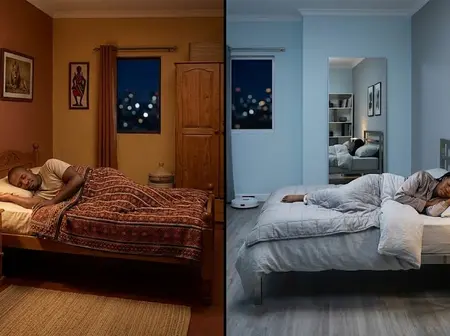
    In Kenya, some millennial and Generation Z couples are embracing the idea of sleeping in separate bedrooms, challenging the traditional belief that married partners must share a bed every night.While the arrangement may raise eyebrows among people who associate sharing a bedroom with intimacy and a healthy marriage, some couples are prioritising quality sleep, personal space and comfort without necessarily compromising their relationships.

  • How Sh6.8bn pension hole leaves TUK workers in retirement uncertainty

    How Sh6.8bn pension hole leaves TUK workers in retirement uncertainty

    More than 1,800 members of the Technical University of Kenya (TUK) staff pension scheme risk losing Sh6.8 billion saved for retirement, as a Senate-tabled report shows the cash-strapped scheme can pay only 13 percent of accumulated benefits.

    The report, which focuses on the winding up of the scheme, shows that the liquidator had identified outstanding receivables of Sh6.83 billion as at April 2026, comprising unremitted pension contributions of Sh3.04 billion and accrued interest of Sh3.782 billion.

  • Father who lost six children in Kenya cult tragedy says justice cannot undo loss

    Father who lost six children in Kenya cult tragedy says justice cannot undo loss

    thumbnail

    What you need to know:When Kenyan starvation cult leader Paul Mackenzie is sentenced on Friday for the murders of 190 children and an adult, Stephen Mwiti and other relatives of the victims will be worried that he may continue spreading his deadly messages.Mwiti says all six of his children died in the Shakahola Forest, where his wife took them in 2022.

  • Illicit Cigarette Trade Cost Kenya Ksh 47 Billion In Revenue

    Illicit Cigarette Trade Cost Kenya Ksh 47 Billion In Revenue

    thumbnail

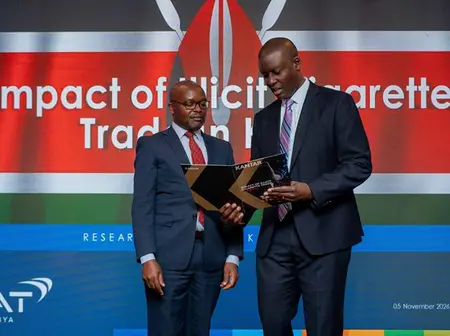
    Illicit cigarettes cost Kenya an estimated KSh 47 billion in lost excise duty and VAT revenue between 2021 and 2025, according to new research by global research firm Kantar.Illicit cigarettes cost Kenya an estimated KSh 47 billion in lost excise duty and VAT revenue between 2021 and 2025, according to new research by global research firm Kantar.

  • Sarah Mtalii Claims Divorce Favours Financially Independent Women as Men Struggle to Move On

    Sarah Mtalii Claims Divorce Favours Financially Independent Women as Men Struggle to Move On

    Businesswoman and reality television personality Sarah Mtalii has sparked debate over divorce and relationships after claiming that financially stable women are better positioned to walk away from failed marriages.

    Mtalii argued that divorce can be a victory for women who have achieved financial independence, suggesting that they are less likely to struggle with the decision to leave unhappy relationships.

    She further observed that many men have a harder time moving on after separating from their wives, with some experiencing emotional difficulties long after the marriage has ended.

    According to Mtalii, financial stability gives women the freedom to make difficult decisions about their marriages without feeling trapped by economic dependence.

    She suggested that women who can comfortably support themselves are better equipped to rebuild their lives after divorce and embrace a fresh start.

    Her remarks also challenged traditional perceptions of divorce, particularly the idea that women are always the biggest losers when marriages collapse.

    Mtalii also turned attention to the emotional consequences of divorce for men, claiming that many struggle to come to terms with losing their wives.

    She suggested that while financially independent women may find it easier to establish new lives, some men continue experiencing emotional turmoil as they attempt to adjust to life after marriage.

    Her observations have opened up conversations about how men and women experience separation differently, particularly when it comes to financial independence, emotional attachment and rebuilding their lives.

  • Beware! Govt warns fans over fake circulating Bayern Munich-Ajax ticket alert

    Beware! Govt warns fans over fake circulating Bayern Munich-Ajax ticket alert

    thumbnail

    Sports Principal Secretary Elijah Mwangi has warned football fans to be cautious of fake ticketing information ahead of the historic Bayern Munich versus Ajax Amsterdam clash at the Raila Odinga International Stadium.The warning comes as excitement builds ahead of the January 5, 2027 international friendly, which will officially open the new 60,000-capacity stadium in Nairobi.

  • Gospel DJ Mo Charged With Three Traffic Offences After Thika Road Incident

    Gospel DJ Mo Charged With Three Traffic Offences After Thika Road Incident

    Gospel DJ Samuel Muraya, popularly known as DJ Mo, has been charged with three traffic-related offences following an incident along Thika Road in Nairobi.

    The entertainer appeared in court on Wednesday, November 4, 2026, to answer charges relating to his alleged failure to comply with traffic regulations.

    According to the charges, Muraya is accused of driving a motor vehicle without valid third-party insurance, an offence under Kenya’s traffic laws.

    He also faces a charge of failing to display an insurance certificate as required by law.

    The third charge relates to allegedly disobeying police directives during the incident along the busy Nairobi highway.

    The three charges place the gospel DJ at the centre of a legal matter involving compliance with road safety regulations.

    DJ Mo, who is married to gospel singer Size 8, is a prominent figure in Kenya’s gospel entertainment industry, having built a career as a disc jockey and media personality.

  • Kyabazinga and Queen Jovia Mutesi welcome their third child

    Kyabazinga and Queen Jovia Mutesi welcome their third child

    thumbnail

    The Kyabazinga of Busoga, His Majesty William Gabula Nadiope IV, and his wife, Inebantu Jovia Mutesi, have welcomed their third child, a baby boy named Prince Nadiope Ezra Josiah.The royal family announced that the prince was born on 1 November 2026, which is also the Kyabazinga’s birthday, making the occasion particularly special for the royal couple.