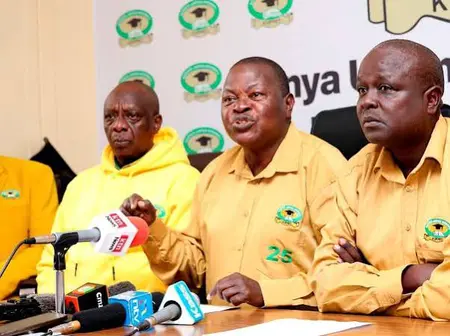
The standoff puts the union on a fresh collision course with the government over how Grades 7, 8, and 9 should be governed across the country.
Opposition to the Comprehensive School Model
KUPPET Secretary-General Akelo Misori announced that over 2,000 delegates resolved to oppose the comprehensive school arrangement. Under the model, pre-primary, primary, and Junior School levels sit under one administration led by a primary school headteacher.
Misori argued that placing JSS under primary school heads is a mistake because Junior Schools deliver a secondary-level curriculum. He maintained that sharing a school compound should not mean sharing the same administration, noting that JSS learners already use separate classrooms and staffrooms.
Constitutional Concerns and Legal Warnings
The union’s renewed push comes days after President Ruto directed the Ministry of Education to work with school heads and propose amendments to the Basic Education Act within 90 days. Those changes aim to create a legal framework for staffing, financing, and running comprehensive schools.
However, Misori questioned the constitutional basis of the plan, citing Schedule Four of the Constitution, which outlines distinct education levels. Deputy Secretary-General Moses Nthurima added that KUPPET is ready to challenge the proposals through dialogue or in court if the government pushes ahead without following the law.
Demands Over Pay, Promotions, and Exam Marking
Beyond JSS autonomy, KUPPET delegates raised urgent concerns about teachers’ welfare. The union urged the government to honor its commitment to double the teacher promotion budget in 2027 and fix ongoing gaps in the teachers' medical cover.
KUPPET National Chairman Omboko Milemba also demanded better pay for teachers who supervise and mark national examinations. He urged Parliament to reject proposals that would classify exam marking as an essential service, warning that such a move would strip teachers of their right to industrial action.
Leave a Reply