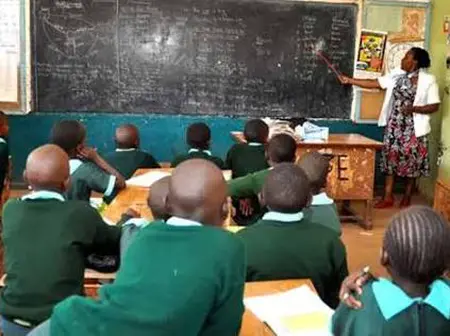
Public schools in Kenya are waiting to find out whether the government will increase the money allocated to support learners and whether funding will continue reaching institutions before the start of each term.
The two issues came into focus during the Kenya Comprehensive School Heads Association (KECSHA) annual conference in Mombasa on November 12, 2026.
President William Ruto directed the Ministry of Education and the Teachers Service Commission (TSC) to review school capitation and submit recommendations by January 2027.
The announcement has raised questions among school administrators about the amount of money they will receive and when any changes could take effect.
Capitation is government funding provided to public schools to support the education of learners.
The amount allocated is linked to the number of students in an institution. The funding helps schools meet expenses associated with teaching and learning.
However, the cost of running schools can change over time. This is why the amount allocated to each learner may need to be reviewed.
During the Mombasa conference, Ruto asked Education Cabinet Secretary Julius Ogamba and the TSC to examine the existing figures and recommend whether the allocations should be increased.
According to Kenya Broadcasting Corporation (KBC), primary school capitation had previously increased from KSh1,400 to KSh2,340 per learner.
The President indicated that the figures required further consideration, taking into account inflation and the financial demands facing schools.
Although the government has announced a review, schools should not assume that higher capitation rates have already been approved.
The Ministry of Education and TSC are expected to examine the current arrangements and submit their recommendations by January 2027.
Ruto will then consider the report before deciding on the way forward.
This means that the January deadline is for the recommendations, not a confirmed date for introducing new funding rates.
School administrators will therefore have to wait for the government's decision before knowing whether the amount allocated per learner will change.
The amount allocated to schools is only one part of the funding question. The timing of disbursement also matters.
School heads need to know when government funds will arrive so they can organise activities and plan expenditure at the beginning of each term.
During the same conference, Ruto said the government would release capitation before schools reopen each term from 2027.
He cited disbursements of KSh44 billion in January 2026, KSh23.4 billion in April and KSh18.5 billion in August.
The commitment is intended to make funding available before the beginning of each term rather than leaving school administrators waiting for the money after learners have returned.
It is important to distinguish this promise from the proposed review of capitation rates. Releasing funds earlier does not automatically mean that schools will receive a higher amount.
Another issue discussed during the conference was the government's plan to bring primary and junior schools together under a comprehensive school arrangement.
This change will require clear guidelines on how the institutions are managed, staffed and funded.
Ruto directed the Ministry of Education to work with KECSHA on proposals to amend the Basic Education Act.
The proposed amendments are intended to provide a legal framework for the governance, staffing and financing of comprehensive schools.
The funding arrangements will be particularly important because primary and junior school levels will operate within the same institutional structure.
However, the proposed legal changes should not be confused with an approved increase in the amount allocated to learners.
For school heads, the main issue will be whether the government changes the amount allocated to each learner and how the comprehensive school arrangement will affect institutional funding.
They will also be interested in whether the promised early disbursement of capitation becomes a consistent practice from 2027.
Parents should understand that the review concerns government funding to schools. It does not, by itself, announce a change in school fees or confirm that parents will pay less.
The recommendations expected in January 2027 should provide more information about the proposed funding adjustments.
Until the government makes a further announcement, schools should continue using the existing capitation arrangements.
Leave a Reply