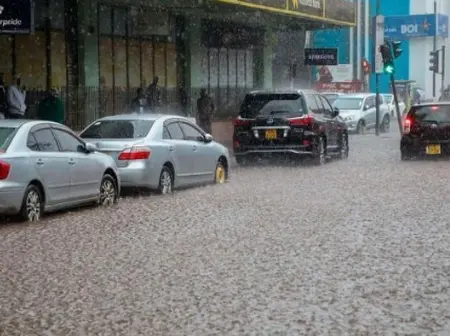
The Kenya Meteorological Service has explained why Nairobi and other parts of the country have not received the heavy El Niño rains many Kenyans had expected.
Speaking during an interview on Spice FM on Wednesday, November 11, Eastern Region Meteorological Services Deputy Director Richard Muita clarified that El Niño does not automatically mean every country will experience heavy rainfall.
Muita explained that El Niño is a climate phenomenon that influences weather patterns across the world but is not rainfall itself.
His remarks come after the World Meteorological Organisation (WMO) indicated an almost 100 per cent likelihood of El Niño developing, raising expectations of above-average rainfall in several parts of Kenya.
However, the expected rainfall has not been experienced in some areas, particularly Nairobi, prompting questions from residents about the country's weather forecast.
According to Muita, the actual impact of El Niño depends on how it interacts with other climate factors. He specifically pointed out that conditions in the Indian Ocean also play an important role in determining rainfall patterns in East Africa.
"We have not received rainfall as forecast because El Niño is just a factor that drives rainfall patterns across the world, and it is not rainfall itself; that should be clearly distinguished," Muita stated.
He further explained that El Niño originates from the central and eastern Pacific Ocean, meaning its influence on rainfall must be considered alongside other oceanic and atmospheric conditions.
The clarification comes as Kenyans continue monitoring weather conditions following earlier expectations of enhanced rainfall during the current rainy season.
Nairobi residents, in particular, have been waiting for the expected showers, with some areas experiencing less rainfall than anticipated.
The latest explanation means that the presence of El Niño alone cannot guarantee heavy rains across the country.
The Meteorological Service's clarification is important as Kenyans rely on official forecasts to prepare for changing weather conditions, including farming activities, transport and possible flooding.
Muita's remarks also highlight why rainfall patterns can differ significantly from one region to another.
Leave a Reply