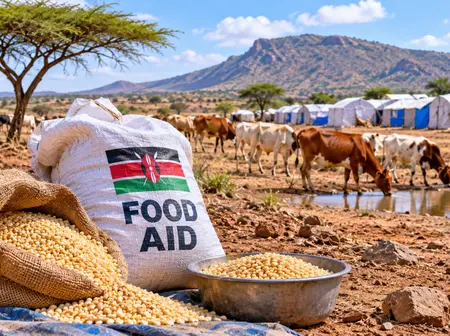
Kenya could see a significant decline in the number of people requiring emergency food assistance by May 2027, but up to 1.99 million people are still projected to need humanitarian support, with refugee communities and pastoralist households facing persistent food insecurity.
A new assessment by the Famine Early Warning Systems Network (FEWS NET) estimates that between 1.5 million and 1.99 million Kenyans will require urgent food assistance in May 2027, down from 3.5 million to 3.99 million in November 2026.
The projected improvement offers hope for communities that have endured repeated weather shocks, livestock losses and declining household purchasing power.
However, the outlook reveals a more complicated situation in parts of northern Kenya, particularly Turkana County and the Dadaab refugee camps, where food insecurity is expected to persist despite anticipated improvements in weather conditions.
In its November 2026 Food Assistance Outlook Brief, FEWS NET projects that Kenya’s food assistance needs will be lower in May 2027 than both last year and the recent five-year average.
But the decline in national figures does not mean vulnerable households will have recovered from the effects of previous crises.
The situation in Dadaab refugee camps remains a major concern, with anticipated flooding expected to disrupt humanitarian operations and worsen food insecurity between November and December 2026.
FEWS NET warns that flooding could severely restrict access to humanitarian assistance, pushing affected households into Emergency (IPC Phase 4) conditions.
The report states that anticipated flooding is expected to “severely limit humanitarian access and drive deterioration to Emergency (IPC Phase 4)” in Dadaab.
The warning is particularly significant for refugee households that have limited opportunities to grow their own food and few income-generating options.
Although floodwaters are expected to recede before May 2027, the improvement is unlikely to resolve the underlying food security challenges.
FEWS NET projects that Crisis (IPC Phase 3!) conditions will persist across all refugee camps in Kenya by May, driven by “limited opportunities for own food production and extremely restricted income-earning opportunities.”
This suggests that even when immediate weather threats subside, refugee communities will continue facing difficulties accessing sufficient food without humanitarian support.
In Turkana County, improved rainfall is expected to support the recovery of grazing land and livestock productivity, but households are unlikely to recover fully from previous losses by May 2027.
FEWS NET projects that Crisis (IPC Phase 3) food insecurity will persist in the county, where livestock holdings remain low following previous poor seasons.
The assessment anticipates favourable rains during the October-December 2026 and March-May 2027 seasons, which should improve rangeland conditions and animal productivity.
However, the recovery of pastoralist livelihoods remains a challenge after repeated losses of livestock and other productive assets.
FEWS NET warns that improved rangeland conditions “cannot fully offset the cumulative animal and livelihood asset losses of previous poor seasons.”
For pastoralist families, livestock provide food, income and a financial safety net. When herds decline, households lose an important source of livelihood, making it harder to purchase food and withstand future droughts.
The projected improvement in rainfall therefore offers some relief, but does not guarantee an immediate recovery in household food security.
Kenya’s food security outlook comes amid a wider humanitarian challenge across countries monitored by FEWS NET.
The organisation projects that between 155 million and 165 million people across its selected monitored countries will need urgent humanitarian food assistance in May 2027, representing approximately 11 per cent of their combined population.
For Kenya, the anticipated reduction in food assistance needs is an encouraging development. However, the persistence of Crisis-level food insecurity in Turkana and refugee camps highlights the difficulty of rebuilding livelihoods after prolonged shocks.
The central question is whether improved seasonal conditions will translate into lasting recovery for households that have lost livestock, productive assets and reliable sources of income.
As May 2027 approaches, Turkana’s pastoralist communities and refugee households in Dadaab will remain important indicators of whether Kenya’s projected improvement in food security is reaching its most vulnerable populations.
Leave a Reply