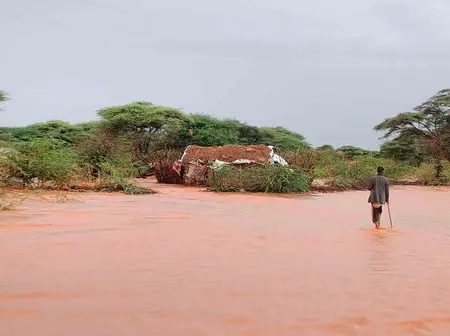
The rising floodwaters have destroyed homes, submerged farmland, disrupted transport and forced residents in low-lying areas to seek safer shelter.
Tana River County has recorded the highest number of affected households, with 796 families affected and 525 displaced. In Taita-Taveta, flooding in Voi has also forced several families to leave their homes after rivers burst their banks.
The six reported deaths occurred in three counties. According to the Kenya Red Cross, two children were swept away by flash floods in Kajiado County, while two other people drowned in Turkana County.
In Kitui County, two people died after a boat capsized. Two passengers who were travelling in the same boat remain missing as search and rescue efforts continue.
Tana River is one of the counties worst affected by the ongoing floods. Communities in Tana North have experienced significant flooding following the overflow of the seasonal Laga Wardesa River.
More than 300 households in Eldera, Kono Ramadha and Mata Wardesa have been affected, with floodwaters entering homes and surrounding settlements.
The flooding has also disrupted farming and livestock activities, which are important sources of livelihood for many residents.
At least 400 livestock have been reported missing, while approximately 250 acres of farmland have been submerged. The affected agricultural areas include Manono, Lailoni, Bubu, Kipao and Tarasaa.
Access to clean water and sanitation has also been affected. Six hand-pump water sources have been damaged, while 15 pit latrines have been submerged. Another 50 latrines and 11 hand pumps are at risk if the flooding continues.
Transport services have equally suffered disruptions. Sections of the Mombasa-Nairobi Highway near Maungu became impassable on Monday, leaving motorists and truck drivers stranded for several hours.
The Kono Ramadha-Mlanjo road has also been cut off, making it difficult for residents and emergency response teams to move between affected areas.
Elsewhere, flooding at Mbakini Bridge has disrupted traffic along the Kitui-Mwingi-Garissa Road. The Doldol-Nanyuki Road in Laikipia has also experienced flooding following the overflow of River Salama Ngororo.
The Kenya Red Cross has deployed emergency response teams to affected communities to assess the damage and assist families displaced by the floods.
In Tana River, the organisation is working with humanitarian partners, including the United Nations Office for the Coordination of Humanitarian Affairs, to support households facing the effects of the disaster.
Kenya Red Cross Emergency Response Manager Anthony Muturi said 15,500 people in the county had been registered for cash assistance to support their relocation to safer areas.
The organisation is also distributing emergency shelter materials and essential household supplies to families whose homes have been affected.
In Turkana County, 38 households have been displaced, while 382 livestock have been reported missing.
The Kenya Meteorological Department has warned that several parts of the country are expected to continue receiving rainfall between November 17 and 23.
The forecast has raised concerns about further flooding, particularly in areas near rivers, dams and other flood-prone locations.
November is traditionally part of Kenya's October-November-December short-rains season, when several regions experience increased rainfall. Continued downpours could lead to more flash floods, rising river levels and damage to roads and other infrastructure.
Authorities and humanitarian organisations have urged residents living in flood-prone areas to remain alert, follow official weather updates and comply with evacuation instructions where necessary.
Residents have also been advised to move to higher ground when water levels begin rising and avoid crossing flooded roads or rivers.
As rescue teams continue assisting affected communities, attention remains focused on preventing further loss of life and ensuring that displaced families receive food, shelter and other essential supplies.
Leave a Reply