The claimant argued that the land should be shared among relatives because it had originally belonged to their family. But could family history and decades of occupation prove a customary trust?
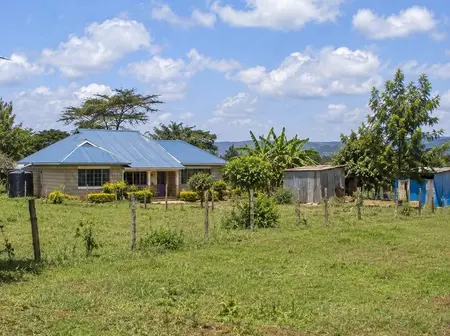
The case concerned land parcel Karingani/Muiru/1975. This is the land that the family was fighting over in court.
The claimant maintained that the registered proprietor had held the land in trust for his father and other family members. He said the registered owner was not the only owner.
He claimed his family had occupied the property since 1966 and relied on earlier decisions by clan elders and Land Disputes Tribunals that he believed supported their entitlement. He said the elders had already decided in their favour.
The respondents disputed this. They argued that their predecessor had acquired the land in 1964 and owned it absolutely.
One respondent testified that he had lived on the property with his brothers for over 40 years, while the claimant occupied only about half an acre. He said the claimant's occupation was small.
The trial court dismissed the claim because the claimant had failed to prove a customary trust. The claimant was not happy, and he appealed.
On appeal, the court examined Section 28(b) of the Land Registration Act, which recognizes customary trusts as overriding interests. This means registration in one person's name does not automatically defeat a properly established trust.
The court also considered the Supreme Court decision in Isack M'Inanga Kiebia v Isaaya Theuri M'Lintari & another. That decision gives guidance on how to prove a customary trust.
The court looked at whether the land was originally family, clan or group land. It also looked at whether the claimant belongs to that family or group.
It looked at the closeness of the family relationship. It also looked at whether the claimant would have been entitled to registration but for intervening circumstances.
It also looked at whether the registered proprietor belongs to the same family or group. All these factors must be considered together.
The court emphasised that being related to the registered owner and occupying the land do not automatically establish a customary trust. Family relationship alone is not enough.
It examined the property's history, family relationships, occupation and previous proceedings. It looked at all the evidence before making a decision.
It also explained that decisions by clan elders or Land Disputes Tribunals do not automatically establish ownership. Their jurisdiction and legal effect must be examined.
Similarly, a claim of res judicata must satisfy Section 7 of the Civil Procedure Act. The court said a previous decision must meet the law to stop a new case.
The court found that the claimant had not sufficiently demonstrated that the registered proprietor held the property in customary trust for his father. The evidence was not enough.
Although the evidence established family relationships and raised questions about the land's ancestral history, it did not adequately prove the original nature of the landholding or the existence of the alleged trust. The court needed stronger proof.
The appeal was dismissed, the original judgment upheld and the appellant ordered to pay the appeal costs. The claimant lost the case, and he must pay costs.
This case is Mbogo v Samuel & another (Environment and Land Appeal E018 of 2025). It is now a lesson for families fighting over ancestral land.
The lessons are clear. Family relationship does not automatically establish a customary trust. Evidence must show the land's history and the circumstances creating the trust.
Occupation is not automatic ownership. Living on family land may support a claim but must be considered alongside other evidence.
Old dispute decisions are not automatically proof of ownership. Their jurisdiction and legal effect matter.
If a grandfather registered family land in one son's name to hold it for the wider family, should that son's children inherit the entire property? Or should other relatives be allowed to prove a customary trust? What evidence would convince you that land was genuinely held for an extended family? Tell us in the comments section below.
https://www.facebook.com/share/p/1LSmxEnA2F/
Leave a Reply