The bureau's Leading Economic Indicators report shows that 320,030 passengers departed JKIA for international destinations during the month, compared with 357,167 in August.
This represented a decline of 37,137 passengers, equivalent to approximately 10.4 per cent.
East and Central Africa recorded the highest number of departures, attracting 76,642 passengers despite a 10.5 per cent drop from the previous month.
Europe followed closely with 75,793 departing passengers, although the region experienced a sharper 18.1 per cent decline compared with August.
The Middle East ranked third, recording 73,308 passengers after departures fell by 15 per cent.
The figures show that the three regions accounted for a significant share of international passenger traffic from Kenya's main airport, although all recorded monthly declines.
Among individual destinations in the Middle East, Dubai led with 27,219 departing passengers, while Doha followed with 23,947.
In Europe, London was the most popular destination, attracting 23,637 passengers travelling from Nairobi. Paris came second with 19,505 passengers.
Within East and Central Africa, Addis Ababa topped the list with 17,452 passengers. Entebbe followed with 14,119, while Dar es Salaam recorded 9,907.
The report also highlighted a decline in international passenger arrivals at JKIA during the same period.
Arrivals dropped from 338,157 in August to 295,381 in September, representing a decrease of 42,776 passengers.
East and Central Africa accounted for the largest number of arrivals, with 80,763 passengers entering Kenya from the region.
Europe recorded 61,893 arrivals, while the Middle East accounted for 54,246.
The September figures point to a slowdown in both international departures and arrivals through JKIA, with East and Central Africa maintaining its position as the leading regional travel market for passengers using the airport.
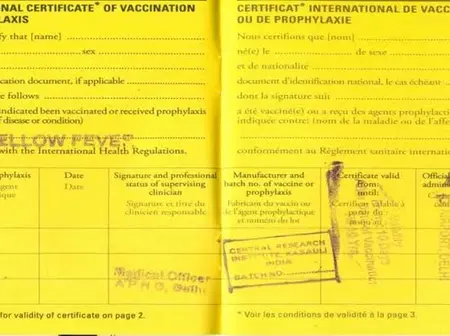
India has proposed a six-day quarantine for travellers arriving from areas considered at risk of yellow fever transmission if they cannot produce valid vaccination certificates, a move that could have implications for Kenyans travelling to the Asian country.
The proposal is contained in India's draft Indian Aircraft (Public Health) Rules, 2026, which seek to tighten disease surveillance and public health controls at international airports.
Under the proposed provisions, travellers arriving from areas where the Indian government has identified a risk of yellow fever transmission would be quarantined until their vaccination certificates become valid or until six days have elapsed from their last possible exposure to the infection, whichever comes first.
The proposed measure is based on the six-day incubation period of yellow fever, the time between infection and the appearance of the first symptoms.
The draft, prepared by India's Ministry of Health and Family Welfare, is part of efforts to replace the existing Aircraft (Public Health) Rules of 1954 and strengthen safeguards against infectious diseases entering the country through international air travel.
Kenya is among the 29 African countries specifically listed by India as having a risk of yellow fever transmission, placing Kenyan travellers within the scope of the proposed health requirements.
The list, contained in Annexure VI of the draft regulations, also includes Uganda, Ethiopia, Nigeria, Ghana, Burundi and other African countries, as well as 13 other countries in Central and South America.
The inclusion of Kenya means travellers departing from the country could be required to demonstrate that they have received the yellow fever vaccine before being allowed to enter India without quarantine.
The draft makes vaccination against yellow fever a condition of entry for travellers leaving areas where the World Health Organisation has identified a risk of transmission.
It states: "Vaccination against yellow fever shall be required of any traveller leaving an area where WHO has determined that a risk of yellow fever transmission is present."
However, travellers with valid vaccination certificates would be exempted from being treated as suspected cases, even when arriving from countries considered at risk.
"A traveller in possession of a valid certificate of vaccination against yellow fever shall not be treated as suspect, even if coming from an area where World Health Organisation has determined that a risk of yellow fever transmission is present," the draft states.
The regulations further provide that yellow fever vaccines approved by WHO offer protection against infection beginning 10 days after administration.
The certificate would remain valid throughout the vaccinated person's lifetime, beginning on the 10th day after receiving the jab.
This means Kenyans planning to travel to India would need to ensure they receive the vaccine at least 10 days before departure and carry the appropriate international vaccination certificate.
Those who have received the vaccine but whose certificates have not yet become valid could still be allowed to depart, although they may face quarantine upon arrival in India.
The draft states that a traveller with a certificate that is not yet valid "may be permitted to depart", but could be subjected to quarantine measures upon arrival.
For those without valid certificates, the proposed rules provide that they "shall be quarantined until the certificate becomes valid, or until a period of not more than six days, reckoned from the date of last possible exposure to infection, has elapsed, whichever occurs first."
The six-day period is tied to the incubation period of yellow fever, which can make it difficult to identify infected travellers immediately after exposure.
Yellow fever is a viral disease transmitted through the bite of infected mosquitoes. Symptoms may include fever, headache, muscle pain, nausea and vomiting, while severe cases can lead to jaundice, internal bleeding, organ failure and death.
The disease remains a public health concern in parts of Africa and South America, with vaccination considered the most effective preventive measure.
For Kenya, the proposed restrictions underscore the importance of vaccination and proper travel documentation, particularly for people travelling to countries with strict international health requirements.
India's draft rules go beyond yellow fever, setting out a broader framework for managing public health threats associated with international aviation.
They provide for medical examinations, laboratory investigations, isolation and quarantine where airport health officials establish reasonable grounds to believe a traveller poses a public health risk.
The proposed regulations also give airport health officers powers to request health documents and other information from passengers to establish their exposure history and assess possible threats to other travellers.
The wider framework seeks to strengthen disease surveillance, aircraft sanitation, vector control and reporting of suspected infectious diseases at airports.
India's Ministry of Health and Family Welfare issued an office memorandum on November 16, 2026, inviting comments and suggestions on the proposed rules.
The ministry said the existing 1954 regulations needed updating following the enactment of the Bharatiya Vayuyan Adhiniyam, 2024, which replaced the Aircraft Act, 1934.
The ministry has invited stakeholders, including government agencies and aviation industry players, to submit their views within 30 days.
After considering the submissions, the draft will be forwarded to the Ministry of Civil Aviation for further action, including publication in the Official Gazette where required.
The proposed six-day quarantine provision is therefore not yet an operative travel requirement. It will be subject to the required approval and formal adoption process before taking effect.
Kenyans travelling to India could soon face up to six days of quarantine. This applies to those who arrive without a valid yellow fever vaccination certificate. The change is part of the draft Indian Aircraft (Public Health) Rules 2026.
The new rules would replace regulations that have been in force since 1954. Travellers from yellow fever affected countries must show proof of vaccination. The list includes Kenya and Nigeria. Rwanda and Uganda are also named along with Sudan and Ghana.
The draft sets a maximum quarantine of six days. It is counted from the day a traveller leaves the affected country. Current rules allow isolation for up to nine days.
Passengers who refuse quarantine could be denied entry and sent back. They would stay in the airport transit area until their return. Those who are quarantined would pay for their own stay at designated facilities.
Airlines would also carry new duties. They must transport affected passengers to quarantine facilities. Carriers and airport authorities would face extra health reporting requirements.
India's Ministry of Health has invited comments from airlines and airport operators. Other stakeholders can also respond within 30 days of a November 16 memorandum. The draft will then go to the Ministry of Civil Aviation.
Yellow fever is a viral disease spread by infected mosquitoes. Symptoms include fever and headache. Severe cases can cause jaundice and organ failure. The World Health Organisation says one vaccine dose protects most people for life.
The rules could hit Kenyans seeking treatment in India. The Indian mission says about 90 per cent of Kenya's medical travel goes there. Trade is also strong at Ksh560.52 billion in the 2025/26 financial year.
Passenger traffic at Jomo Kenyatta International Airport (JKIA) declined by 11.5 per cent in September 2026, with fewer travellers arriving in and departing from Kenya’s main international airport, according to the latest Kenya National Bureau of Statistics (KNBS) data.
The decline reflects a slowdown in passenger movements at the Nairobi aviation hub, with both international arrivals and outbound travellers recording lower numbers compared with August.
KNBS reported that the number of passengers departing JKIA fell from 357,167 in August to 320,030 in September, representing a 10.4 per cent drop within a month.
Arrivals also declined, with passengers landing at the airport falling from 338,157 in August to 295,381 in September, a decrease of about 12.7 per cent.
Combined, the airport handled 615,411 arriving and departing passengers in September, down from 695,324 in August, a reduction of nearly 80,000 passenger movements.
In its September 2026 Leading Economic Indicators report, KNBS said: “The number of embarked passengers at JKIA by port of destination decreased from 357,167 in August 2026 to 320,030 in September 2026.”
The decline was recorded across key travel destinations, with East and Central Africa remaining the leading destination region for departing passengers, accounting for 76,642 travellers in September.
However, departures to the region fell by 10.5 per cent during the period. Passenger departures to Europe declined by 18.1 per cent to 75,793, while those travelling to the Middle East dropped by 15 per cent to 73,308.
Inbound travel also weakened across the major regions.
KNBS reported that East and Central Africa accounted for the largest share of arrivals, with 80,763 passengers landing at JKIA in September, although arrivals from the region fell by 12.3 per cent.
Passengers arriving from Europe declined by 15.4 per cent to 61,893, while arrivals from the Middle East dropped by 22 per cent to 54,246.
The statistics highlight a month-on-month contraction in passenger movement through JKIA, as both outbound and inbound travel declined across the airport’s major international markets.
The KNBS figures form part of its monthly Leading Economic Indicators report, which tracks developments across Kenya’s transport, tourism, manufacturing and other economic sectors.
Official performance figures released by the Kenya National Bureau of Statistics (KNBS) indicate that passenger volume dropped from 289,689 in August down to 208,542 in September.
Concurrently, total passenger revenue generated by the Madaraka Express declined to Ksh392 million, reflecting the direct impact of reduced passenger demand along the flagship Nairobi-Mombasa rail corridor.
Transport and economic analysts attribute the sharp decline primarily to traditional seasonal travel fluctuations, following the conclusion of the busy August school holidays and mid-year vacation season.
During peak travel months, high demand for domestic tourism between the capital city and coastal destinations typically drives near-capacity occupancy across both morning and afternoon train services.
However, as schools reopened and household expenditure shifted back toward regular living expenses and academic fees in September, long-distance domestic travel naturally cooled down across the transport sector.
Despite the temporary monthly contraction in passenger receipts, Kenya Railways Corporation continues to rely on steady freight operations to sustain overall rail revenue performance.
Operational adjustments, improved container clearance times at the Port of Mombasa, and optimized cargo scheduling have helped buffer the state logistics agency against off-peak passenger dips.
Transport authorities maintain that while passenger figures experience expected cyclical drops during non-holiday months, upcoming festive season bookings are anticipated to restore strong demand and revenue momentum across the modern railway infrastructure.
What are your thoughts about this article? Share your reactions in the comment section and don't forget to share and follow for more updates.
Ghana's government has defended its purchase of a new presidential jet amid criticism over its cost, as many citizens continue to struggle with the high cost of living.The $60m (£46m) French-made Falcon 6X has sparked political row, with opposition politicians accusing President John Mahama's administration of misplaced priorities.
On Saturday, 7 November 2026, Kenyan viewers tuned in to Diaspora Connect and found the show somewhere new: live from the island of Barbados. The special edition was made possible by a partnership between Barbados Tourism Marketing Inc. (BTMI) and ViuTravel, the media-led travel curator under Royal Media Services.
A Chinese woman was filmed walking through the streets of Lodwar, Turkana county, with a fully packed camping bag, in a video that has since gone viral and sparked widespread curiosity among Kenyans online.
The clip, posted on Facebook, was recorded outdoors in a handheld, street-vlog style.
The narrator follows the woman at a distance as she walks away, bag on her back, apparently determined to leave.
PAY ATTENTION:TUKO is in WhatsApp Channels now! Subscribe and read news in your favourite messenger.
Throughout the short clip, the person behind the camera narrates in a teasing, observational tone, suggesting that the woman had been bothered until she could no longer bear it.
Video of Chinese woman stranded in Turkana leaving guest house in sandals puzzles Kenyans
The woman does not appear to respond or engage with the camera. She simply continues walking, bag in tow, as the narrator films her departure.
The video spread quickly across social media, with many viewers puzzled by what had driven a Chinese woman to be wandering the streets of Turkana, one of Kenya's more remote and arid counties, with what appeared to be all her belongings.
The question on many lips was simply: "Anahama?" — Swahili for "Is she moving out?"
Chinese nationals have become a visible presence in various parts of Kenya, often linked to infrastructure and construction projects funded through Chinese investment.
Turkana County, home to significant oil exploration activity and ongoing development works, has attracted workers from various backgrounds in recent years.
Chinese Woman Wandering Lodwar for a Week Becomes Unlikely Tourist Attraction in Turkana
What specifically prompted this particular woman's departure, however, remains unclear from the video alone.
In another story, TUKO also highlighted facts about a tourist who offered a Turkana woman a lift while driving through the region.
The two could not communicate because she spoke only Turkana, leaving him unsure where she wanted to go.
China has just taken a big step in aviation. The country has reportedly completed the first passenger-carrying test flight of its new all-electric commercial aircraft.
The plane is called the CE-25A and it was developed by COMAC, China’s aircraft maker.
The CE-25A is an electric plane. This means it does not use fuel like normal planes.
The biggest headline is that it produces zero direct emissions during flight. No smoke, no fuel burn in the air.
What makes the CE-25A different is its flexibility. Reports say the plane is designed to fly with a pilot or without a pilot.
This means it can be flown like a normal aircraft, or it can fly on its own using computer systems. The "without pilot" option is being tested for cargo and future passenger services.
Engineers say this technology could help airlines save money and solve pilot shortages in the future.
Electricity is cheaper than jet fuel, and electric motors have fewer parts to maintain. If those savings are real, airlines could offer cheaper tickets for short flights.
It is important to note that the CE-25A is still in the testing stage. The recent flight carried passengers, but it was a test to check safety and performance.
COMAC will need to do many more tests before the plane can be used for regular commercial flights. Aviation rules are very strict, especially for new technology.
But experts say this is still a major development. Short-haul flights under 500km make up a large part of air travel in China and around the world.
Kenyans planning festive season trips from Nairobi to Nakuru, Eldoret, and Western Kenya face a harsh holiday reality check after a parliamentary inspection revealed that the wider Rironi–Naivasha–Gilgil highway section will not be fully usable until March 2027.
Briefing the delegation on site, project engineers disclosed that overall construction along the Rironi Gilgil stretch stands at approximately 40 per cent a stark contrast to weeks of bullish official assurances promising seamless holiday travel.
While Roads and Transport Cabinet Secretary Davis Chirchir has maintained that the Rironi–Naivasha segment will be opened to traffic before Christmas 2026 even after missing an earlier October 31 deadline the government has already acknowledged that motorists will initially drive on an incomplete asphalt layer lacking full road furniture before contractors return for final paving.
The inspection also underscored the high financial stakes for Kenyan workers. Following parliamentary approval of NSSF’s 40 per cent equity stake alongside China Road and Bridge Corporation (CRBC), the state pension fund relies on timely completion targeted for June 2027 across the entire corridor to begin recouping retirement funds through the 30-year tolling concession. Until March 2027, however, festive motorists must pack extra patience.