Category: Travel

  • Bitter Reason Why Turkana Official Is Urging Residents to Stop Interfering With Viral Chinese Woman

    Bitter Reason Why Turkana Official Is Urging Residents to Stop Interfering With Viral Chinese Woman

    A Chinese woman whose presence in Lodwar town, Turkana County, attracted widespread attention has been confirmed to have valid travel documents allowing her to remain in Kenya until 2029.

    Dr CPM Paul Jelinga, an official in the Turkana County Department of the County Attorney, said the woman was legally in the country and had the freedom to move around without interference.

    In a Facebook video shared on Saturday, November 21, 2026, Jelinga urged residents to respect her freedom following a court decision that ordered her release.

    “She is free. Madam may walk in Turkana and in Kenya and has valid documentation allowing her to stay until 2029. Let her not be disrupted. Stop preventing her from walking around,” he said.

    Jelinga explained that the woman had been at the centre of court proceedings for more than a week before the Lodwar court ordered her release.

    He cautioned residents against restricting her movements, warning that anyone who interfered with her could face legal consequences.

    The official also encouraged members of the public to assist her whenever she needed basic necessities such as water.

    “And when you see her asking for help like water, give her. We should not hold her, and now because the court has allowed her to be free, you may face consequences,” he warned.

    County official addresses concerns over woman's condition

    Jelinga further said that the relevant authorities had examined the woman's travel documents and established that they were valid.

    He also sought to reassure residents about her wellbeing, saying she was in good condition.

    "And she is okay, both mentally and in other things. Her travel documentation is okay and she is allowed to be in Kenya and we have checked all her documents,” he added.

    How the Chinese woman went missing in Lodwar

    The latest update came after Kenyan content creator Statue Man raised concerns about the woman's whereabouts, saying he had not seen her for two days.

    In a Facebook post on Wednesday, November 18, he appealed to Lodwar residents to inform him if they spotted her.

    “Ni siku ya pili hatujaonana my dear 🥺🥺 guys mkimwona mniupdate 🙏,” he wrote.

    His appeal followed reports that the woman had been seen wandering around Lodwar for about a week before police detained her at Lodwar Police Station.

    Her presence in the town had attracted attention on social media, with questions emerging about her circumstances and why she was in the area.

    The county official's statement has now clarified her immigration status and the court's decision regarding her freedom of movement.

    https://www.facebook.com/100064760708552/posts/1737204318448242/?app=fbl

  • Turkana County govt reveals viral Chinese woman has permit to stay in Kenya up to 2029

    Turkana County govt reveals viral Chinese woman has permit to stay in Kenya up to 2029

    thumbnail

    New details have emerged about the Chinese woman who has been wandering around Lodwar town in Turkana County, with a county official revealing that her travel documents allow her to remain in Kenya until 2029.Dr CPM Paul Jelinga, who works in the Turkana County Department of the County Attorney, said the woman was legally permitted to stay in the country and was free to move around Turkana without interference.

  • Easy Coach Releases New December Fares for Western and Nyanza

    Easy Coach Releases New December Fares for Western and Nyanza

    Long-distance bus operator Easy Coach has released new ticket prices for travellers heading from Nairobi to Western Kenya and Nyanza. According to a report by TUKO.co.ke, the updated fares range between KSh 1,550 and KSh 1,950 ahead of the December festive rush.

    Travellers heading to Busia will pay the top fare of KSh 1,950, while tickets to Kisumu, Maseno, and Siaya cost KSh 1,900. Passengers going to Kakamega and Mumias will part with KSh 1,800.

    On the South Nyanza corridor, fares to Migori and Rongo stand at KSh 1,600. Trips to Kisii and Homa Bay are slightly cheaper at KSh 1,550.

    Alongside the new rates, the bus company has rolled out an online campaign urging passengers to book their seats early. Promotional posters shared on social media ask travellers, "Have you booked Easy Coach ama wewe ni wa Climax?" to encourage quick reservations before buses fill up.

    .ke further noted that these rates follow earlier fare increases in April 2026 triggered by high fuel prices. Rival bus company ENA Coach has also revised its December tickets, setting fares between KSh 1,700 and KSh 3,000 for the holiday season.

    Source

  • US Announces Tough Travel Rules That Could Affect Visitors From 8 Countries

    US Announces Tough Travel Rules That Could Affect Visitors From 8 Countries

    The measures mainly affect travellers from countries participating in the US Visa Waiver Programme (VWP), which allows eligible foreign nationals to visit America for tourism or business for up to 90 days without applying for a conventional visa.

    Under the existing regulations, citizens of participating countries who travelled to certain designated destinations on or after March 1, 2011, generally lose their eligibility to use the visa-free arrangement.

    The countries affected by this rule include Iran, Iraq, Libya, Somalia, Sudan, Syria, Yemen and North Korea.

    The restrictions were introduced under the Visa Waiver Programme Improvement and Terrorist Travel Prevention Act of 2015. The legislation strengthened screening requirements for travellers seeking to enter the United States without obtaining an ordinary visa.

    There are, however, limited exceptions. Individuals who visited the affected countries while carrying out official diplomatic or military assignments may qualify for exemptions, depending on their circumstances.

    Cuba was later added to the list of countries covered by the restrictions.

    Under the additional provisions, citizens of Visa Waiver Programme member states who travelled to or were present in Cuba on or after January 12, 2021, generally lose access to visa-free entry into the United States.

    The regulations also cover people with dual citizenship. Individuals who hold nationality in a participating Visa Waiver Programme country alongside citizenship in Cuba, North Korea, Iran, Iraq, Sudan or Syria are generally not allowed to use the programme.

    This requirement applies even if the individual has never travelled to the country linked to their second nationality.

    The American government introduced the tougher screening measures following concerns among lawmakers that foreign fighters could take advantage of international travel arrangements to move across borders without undergoing sufficient security checks.

    Despite the restrictions, affected individuals are not completely barred from travelling to the United States.

    Those who no longer qualify for the Visa Waiver Programme can still apply for a regular American visa through the US embassy or consulate in their country of residence.

    The process involves completing the required application, attending an interview where necessary and undergoing the usual security checks before a travel decision is made.

    The Visa Waiver Programme continues to serve eligible travellers from participating countries, including the United Kingdom, Australia, Japan and several European nations.

    Successful applicants under the arrangement can visit the United States for business or tourism for a period of up to 90 days without obtaining a traditional visa.

    Travellers planning trips to America are encouraged to check the programme's requirements before purchasing tickets or making travel commitments.

    Those affected by the restrictions should consider applying for an ordinary visa early to avoid possible delays associated with appointments and processing.

    https://www.facebook.com/share/1Jxz7yiPhw/

  • US Names 8 Countries Whose Citizens Risk Losing Visa-Free Entry, Explains Travel Restrictions

    US Names 8 Countries Whose Citizens Risk Losing Visa-Free Entry, Explains Travel Restrictions

    The restrictions affect citizens of countries participating in the US Visa Waiver Programme (VWP), who may lose their eligibility for visa-free travel after visiting designated countries.

    Under the rules, travellers who visited any of the eight listed countries on or after March 1, 2011, are generally barred from using the visa waiver system. The affected countries are Iran, Iraq, Libya, Somalia, Sudan, Syria, Yemen and North Korea.

    The restrictions were introduced through the Visa Waiver Programme Improvement and Terrorist Travel Prevention Act of 2015, which tightened eligibility requirements amid concerns about foreign fighters travelling between conflict zones and Western countries.

    A limited exception applies to people who travelled to the affected countries in an official diplomatic or military capacity.

    Cuba Added to the Restricted Destinations

    Cuba was subsequently added to the list of destinations that could affect a traveller's eligibility for visa-free entry into the United States.

    Under the additional restriction, citizens of Visa Waiver Programme countries who visited or were present in Cuba on or after January 12, 2021, are generally no longer eligible to travel to the US under the programme.

    Dual nationality can also affect eligibility, even for travellers who have never visited the restricted destinations.

    Citizens of VWP-participating countries who also hold citizenship in Cuba, North Korea, Iran, Iraq, Sudan or Syria are generally excluded from visa-free travel under the programme.

    Travellers Can Still Apply for US Visas

    Losing eligibility for the Visa Waiver Programme does not automatically mean a traveller is permanently barred from entering the United States.

    Those affected can still apply for a regular US visa through an American embassy or consulate, although they must undergo the standard application, appointment and processing procedures.

    The Visa Waiver Programme allows citizens of participating countries, including the United Kingdom, Australia, Japan and several European nations, to travel to the US for tourism or business for up to 90 days without obtaining a traditional visa.

    Travellers who suspect they may be affected by the restrictions are advised to confirm their eligibility before booking flights or making other travel arrangements. Those required to obtain a standard visa should also allow adequate time for the application and processing.

    The restrictions do not affect every traveller in the same way, as eligibility depends on nationality, travel history, the dates of visits and other circumstances.

    Europe Introduces Biometric Border Checks

    Meanwhile, the European Union has introduced a new Entry/Exit System (EES) to record the movements of non-EU nationals entering and leaving the Schengen Area.

    The system collects biometric information, including facial images and fingerprints, replacing traditional passport stamping for eligible short-stay travellers.

    Travellers heading to Europe are therefore advised to familiarise themselves with the new entry procedures before departure to avoid delays at border checkpoints.

    Source

  • Easy Coach Announces December Festive Travel Plans: What Passengers Should Expect

    Easy Coach Announces December Festive Travel Plans: What Passengers Should Expect

    Long-distance bus operator Easy Coach has published a revised fare schedule for major Western Kenya and Nyanza routes from Nairobi as festive season travel gathers momentum. For thousands of Kenyans eager to reunite with loved ones for the holidays, predictable pricing offers much-needed relief amid seasonal travel anxieties.

    Under the updated schedule, fares from Nairobi range between KSh 1,550 and KSh 1,950 depending on the destination. Travellers heading to Kisii or Homa Bay will pay KSh 1,550, while Migori and Rongo tickets are set at KSh 1,600. Journeys to Kakamega and Mumias cost KSh 1,800, while Kisumu, Maseno, and Siaya are priced at KSh 1,900, and Busia stands at KSh 1,950. The structure reflects broader efforts to stabilise transport costs after earlier fuel price pressures.

    Alongside the fare announcement, Easy Coach has launched an early booking campaign while restoring customer helpline access and digital ticketing channels. Because December brings heavy passenger demand and tight seating across long-distance corridors, early reservations help travellers lock in preferred departure times and avoid long terminal queues. Passengers are advised to carry valid identification for verification and arrive early at designated boarding points, including Railways Godown along Haile Selassie Avenue in Nairobi.

    In accordance with Kenyan public service transport regulations, Easy Coach operates licensed commercial passenger vehicles under statutory oversight from the National Transport and Safety Authority (NTSA), adhering to passenger manifest requirements, speed governance, and consumer protection standards.

    Whether travelling home for family celebrations or taking a well-earned holiday break, planning ahead ensures a smoother, safer journey across the country this December.

    https://www.facebook.com/share/p/1M7JbpQ5zt/

  • Malaysia removes 20 African countries from visa-free entry, does Kenya remains exempt

    Malaysia removes 20 African countries from visa-free entry, does Kenya remains exempt

    Malaysia has revised its immigration policy, removing 20 African countries from its visa-free entry program and requiring citizens from the affected nations to obtain a Single Entry eVisa before travelling to the Southeast Asian country.

    The 20 affected African countries are Angola, Burkina Faso, Burundi, Cameroon, Central African Republic, Democratic Republic of Congo, Republic of Congo, Djibouti, Equatorial Guinea, Eritrea, Ethiopia, Ghana, Guinea-Bissau, Ivory Coast, Liberia, Mali, Mozambique, Niger, Nigeria and Rwanda.

    Travelers from these countries will now be required to apply for a Single Entry eVisa, with processing reportedly taking between two and seven working days.

    Applicants are expected to provide a passport with at least six months' validity, a recent passport-sized photograph, a confirmed return ticket and proof of accommodation. The new guidelines also restrict nationals of the affected countries to entering Malaysia by air.

    Kenyan passport holders are not affected by the new restrictions. Kenya remains on Malaysia's visa-free exemption list, allowing citizens to visit for tourism or social purposes for up to 30 days without obtaining a visa in advance.

    However, Kenyan travelers are still required to meet standard entry conditions, including carrying a valid passport, a confirmed return ticket, proof of accommodation and a Yellow Fever vaccination certificate. They must also complete the Malaysia Digital Arrival Card (MDAC) online within three days before travelling.

    The policy change is expected to affect travel planning for thousands of African travelers, particularly those visiting Malaysia for tourism, business, education or family-related activities.

    Malaysia says the revised framework is part of efforts to strengthen border security and streamline immigration procedures while continuing to welcome visitors from countries that remain on its visa-exemption list.

     https://www.tuko.co.ke/…/647437-malaysia-drops-20…/

  • Christmas Travel Relief as Government Prepares to Open Parts of Rironi-Naivasha Highway

    Christmas Travel Relief as Government Prepares to Open Parts of Rironi-Naivasha Highway

    The move is aimed at easing congestion along the highway ahead of the festive season, when thousands of Kenyans travel from Nairobi to various destinations across the country, including the Rift Valley and Western Kenya.

    In a statement issued on Saturday, November 21, the Ministry of Roads and Transport said construction works on the wider Rironi-Mau Summit highway were being accelerated to allow motorists to use sections that are already complete before Christmas.

    The completed portions are expected to be opened before the final asphalt finishing works are undertaken, allowing traffic to resume on sections where construction has progressed sufficiently.

    The Ministry said motorists would be informed about the specific sections being opened and the traffic arrangements that would guide movement through the construction zone.

    Transport Cabinet Secretary Davis Chirchir is expected to provide further guidance on how motorists will navigate the reopened portions as contractors continue working on the remaining sections.

    The announcement comes after the government missed an earlier October 30 deadline to complete the road section and allow motorists to use it. Despite the previous commitment, construction was still ongoing when the deadline passed.

    On October 31, Chirchir announced a revised timeline, indicating that the government was targeting December to complete the dualling works and restore traffic along the highway.

    The Rironi-Naivasha section stretches approximately 60 kilometres and is part of the larger 233-kilometre Rironi-Mau Summit highway project. The road is a major transport corridor connecting Nairobi to the Rift Valley and routes leading towards Western Kenya and Uganda.

    The Ksh200 billion project involves expanding the existing highway to accommodate growing traffic volumes. The Rironi-Naivasha section is being upgraded into a four-lane road to improve traffic flow along the increasingly busy route.

    China Road and Bridge Corporation (CRBC) is undertaking the construction works, which were officially launched in November 2025. The entire Rironi-Mau Summit highway project is scheduled for completion by June 2027.

    However, motorists travelling during the Christmas period will still need to follow temporary traffic arrangements as construction continues on sections that have not yet been completed.

    Source

  • Photos Of Kenya Airways Air Hostess Who Returned 1.2 Million To A Passenger

    Photos Of Kenya Airways Air Hostess Who Returned 1.2 Million To A Passenger

    Kenya Airways cabin attendant Caroline Limo has won praise online after she returned a passenger's bag containing US$9,600, about KSh1.2 million, together with a passport and other personal belongings.

    The incident happened after flight KQ762 landed in Johannesburg. Limo discovered the bag during routine security checks on the aircraft. Instead of handing it over and moving on, she went the extra mile to trace the owner, making sure the passenger was reunited with the property.

    The entire amount was returned untouched, along with the passport and the other items that were in the bag. For a traveller, losing a passport and such a large sum of money in a foreign country could have turned into a major ordeal, so the gesture came as a huge relief.

    Photos of Limo have been shared widely online, with many Kenyans celebrating her honesty and professionalism. Her action has been held up as an example of integrity at a time when public trust in many institutions is being questioned, and many have said she deserves to be recognised by her employer.

    The story has also brought positive attention to Kenya Airways and its staff, who are often the face of the national carrier to travellers from across the world. Kenya Airways had not issued a formal statement on the matter at the time of publishing.

    https://x.com/omwambaKE/status/2123764780188000353?a=AsiYkJFL9NzpIWzTvc4&s=19

  • Kenyans to Pay New Airport Access Fees as KAA Unveils Proposed Charges

    Kenyans to Pay New Airport Access Fees as KAA Unveils Proposed Charges

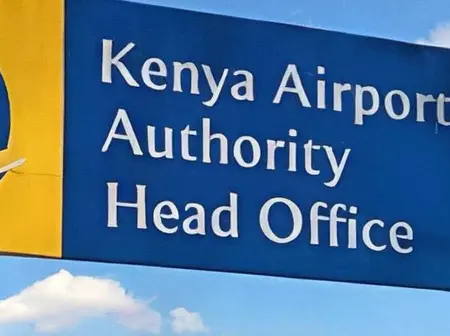
    Kenyan motorists, taxi operators and other airport users could soon face new charges following a proposal by the Kenya Airports Authority to revise commercial fees at airports across the country.

    The proposed changes are contained in the Kenya Airports Authority PLC Commercial Charges Order, 2026, which seeks to introduce a revised charging framework covering airport access, parking and other commercial activities.

    Under the proposal, ride-hailing and taxi operators accessing Jomo Kenyatta International Airport could be required to pay KSh250 for every completed trip.

    Those operating at Moi International Airport in Mombasa would pay KSh150, while operators serving Wilson Airport, Kisumu and Eldoret international airports could pay KSh100 per trip.

    Other smaller airports and airstrips could attract charges starting from KSh25.

    KAA has also proposed increased parking fees at JKIA, with motorists expected to pay more depending on how long their vehicles remain within the airport.

    Under the proposed rates, parking a saloon car, minibus or pick-up for up to 30 minutes would cost KSh150, compared to the current KSh100.

    Those parking between 30 minutes and one hour would pay KSh200, while motorists staying for between one and two hours would be charged KSh400.

    Parking for two to four hours would attract KSh500, while those leaving their vehicles for between four and six hours would pay KSh750.

    The authority has further proposed hefty penalties for motorists who violate airport parking regulations.

    Losing a parking ticket could attract a KSh1,000 charge, while parking in undesignated areas could result in a KSh8,000 penalty.

    Motorists found tailgating other vehicles to bypass airport payment systems could face a fine of KSh20,000.

    The proposed changes have sparked interest among airport users, particularly motorists and commercial transport operators who regularly access the country's major airports.

    However, KAA has clarified that the proposed access charges target commercial transport operators and do not amount to a general entry fee for every Kenyan visiting an airport.

    The authority is reviewing its commercial charging framework, which is largely based on regulations introduced in 1996.

    KAA is seeking public feedback on the proposed changes, with submissions expected by December 1, 2026.

    The charges are not yet in force and will require the necessary approvals before implementation.

    Sources;

    https://peopledaily.digital/business/how-much-could-kenyans-pay-to-access-airports-under-new-kaa-charges?fbclid=IwY2xjawVtdb5leHRuA2FlbQIxMQBwZG9mAXNydGMGYXBwX2lkDDM1MDY4NTUzMTcyOAABH19k_SpI5TN1f4eOB3oZNX6H6tHGOzx8pfC70RZinDoinh26j9QSCtz_aXls_aem_gyG9Pznkd4WdTvfOGWFIHg