Category: Travel

  • Duale: Kenya will not serve as a quarantine destination for other jurisdictions

    Duale: Kenya will not serve as a quarantine destination for other jurisdictions

    Duale: Kenya will not serve as a quarantine destination for other jurisdictions

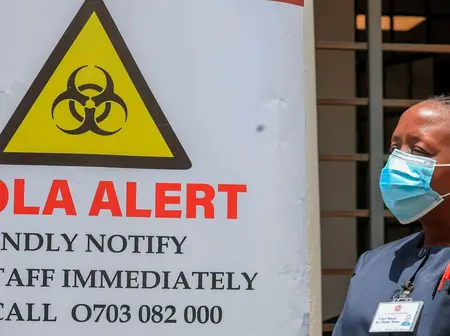
    Health Cabinet Secretary Aden Duale has said Kenya will not detain travellers to fulfil quarantine requirements imposed by their destination countries, insisting that the country will not become a holding ground for international travel restrictions.

    In a press briefing on Wednesday, November 11, 2026, Duale announced that Kenya would begin its 42-day countdown towards an Ebola-free declaration on Thursday, November 12, following the discharge of the last patient receiving treatment for Bundibugyo Ebola Virus Disease.

    The declaration is expected on or about December 23, provided no new infections are reported during the monitoring period.

    “Kenya will not serve as a quarantine destination for other jurisdictions,” Duale said.

    He clarified that travellers would not be detained in Kenya to satisfy entry requirements imposed by other countries, adding that the Ministry of Health would not issue quarantine or Ebola-free certificates for travel purposes.

    “Such requirements have no basis in the International Health Regulations,” he said.

    Health workers in protective gear provide care at an Ebola treatment center.

    On October 30, Saudi Arabia suspended travel by its citizens to Kenya, stopped issuing visas to people arriving from the country and barred entry to travellers coming directly from Kenya.

    The restrictions also cover travellers transiting through other countries if they had stayed in Kenya or another country experiencing an active Ebola outbreak within the preceding 21 days.

    The measures have raised concerns over the movement of Kenyan workers, business travellers and other passengers seeking to travel to the Gulf country.

    Kenya subsequently criticised Saudi Arabia’s decision, arguing that the restrictions were disproportionate to the country’s epidemiological situation.

    The Africa Centres for Disease Control and Prevention (Africa CDC) has also called on Saudi Arabia to review its decision, saying countries should not be punished for detecting and transparently reporting disease outbreaks.

    The World Health Organization (WHO), in its November 6 update, similarly advised against travel and trade restrictions on countries responding to the outbreak.

    Duale urged jurisdictions that had imposed restrictions on Kenya to reconsider their decisions, maintaining that the country had demonstrated transparency and complied with international public health requirements.

    “Kenya remains open for business, tourism, trade and travel, with no restrictions on movement or public gatherings,” he said.

    Health Cabinet Secretary Aden Duale was speaking at Afya House in Nairobi on Tuesday, October 6, 2026, where he confirmed Kenya’s first imported Ebola case and announced that the patient had died. PHOTO//https://www.facebook.com/adenduale

    Kenya’s progress towards ending the outbreak comes 37 days after it confirmed its first imported case on October 6, 2026.

    The country recorded nine confirmed cases, all linked to a single transmission cluster originating from the imported index case. Two people died, while the remaining seven recovered.

    The Ministry said all 135 contacts linked to the index case had been successfully traced and monitored.

    The final 11 contacts completed their mandatory 21-day monitoring period and were released in good health, clearing the remaining group under surveillance.

    No community transmission was recorded, with all confirmed infections remaining within the original transmission cluster.

    The Government also declared Ebola a formidable epidemic disease and gazetted the Public Health (Ebola Disease) Rules to provide a legal framework for containment and response measures.

    Health workers in protective gear provide care at an Ebola treatment center

    Despite the progress, the Ministry warned that Kenya would maintain heightened surveillance and emergency preparedness throughout the countdown period.

    Rapid Response Teams will remain on standby across counties, supported by active surveillance in health facilities and communities, investigations of suspected infections and continued screening at points of entry.

    The Government will also maintain follow-up care and support for Ebola survivors.

    Duale urged Kenyans to remain vigilant, seek medical attention early if they develop symptoms associated with Ebola, particularly after travelling to affected areas, and report suspected cases through the toll-free 719 hotline.

    He also acknowledged the contribution of national and county governments, health facilities, WHO, Africa CDC, IGAD, and the governments of the United States and India in containing the outbreak.

    On accountability, the CS pledged that the Government would publicly disclose support received from development partners and account for resources mobilised towards the Ebola response.

    The 42-day countdown will provide an additional observation period to establish whether any new infections emerge following the last patient’s recovery.

    If no new cases are detected by the end of the period, Kenya will be eligible for an official declaration that the Bundibugyo Ebola outbreak has ended.


  • Kenya will not issue Ebola-free certificates or serve as a quarantine centre for other countries – Duale

    Kenya will not issue Ebola-free certificates or serve as a quarantine centre for other countries – Duale

    thumbnail

    Listen to articleCS Aden Duale insisted that the government would not provide quarantine or Ebola-free certificates to travellers seeking to use them to satisfy foreign entry conditions.Kenya has ruled out serving as a quarantine centre for other countries or issuing Ebola-free certificates to travellers, saying such arrangements have no basis under international health regulations.

  • UAE lifts Ebola-related visa suspension on Ugandans, sets new entry conditions

    UAE lifts Ebola-related visa suspension on Ugandans, sets new entry conditions

    thumbnail

    The United Arab Emirates (UAE) has lifted its suspension on issuing new visas to Ugandan nationals, easing travel restrictions introduced in June 2026 following concerns over the Ebola virus outbreak.The decision was announced by the National Emergency Crisis and Disaster Management Authority (NCEMA), in coordination with the UAE Ministry of Health and Prevention (MoHAP) and the Federal Authority for Identity, Citizenship, Customs and Port Security (ICP).

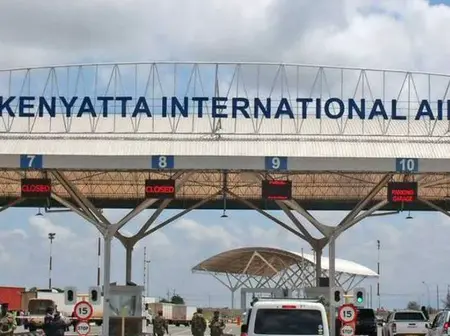
  • Sh154 billion JKIA upgrade: MPs raise alarm over foreign firms dominating contracts meant for Kenyans

    Sh154 billion JKIA upgrade: MPs raise alarm over foreign firms dominating contracts meant for Kenyans

    thumbnail

    Listen to articleThe project, currently under the implementation of China Road and Bridge Corporation (CRBC), is expected to improve the airport’s infrastructure and increase its capacity to handle the growing number of passengers.The modernisation of the Jomo Kenyatta International Airport (JKIA) has come under scrutiny amid concerns that local companies and consultants may not be getting adequate opportunities to participate in the Sh154 billion project.

  • Rift Valley Viewpoint to Get Cable Cars, Luxury Hotels in Major Tourism Upgrade

    Rift Valley Viewpoint to Get Cable Cars, Luxury Hotels in Major Tourism Upgrade

    The government has unveiled plans to transform the iconic Great Rift Valley Viewpoint along the Nairobi-Nakuru highway into a world-class tourism hub, introducing cable car transport, luxury hotel developments, and redesigned commercial spaces.

    Transport Cabinet Secretary Davis Chirchir announced that the proposed cable car system will cross the escarpment corridor, linking the A8 and A8 South highway segments.

    “The viewpoint will be world-class, with cable cars connecting the A8 to the A8 South, the Escarpment corridor. It will be a magnificent tourism point,” Chirchir said during an interview with Kenyan Historian Enock Sikolia.

    The cable car network will transport visitors in suspended passenger cabins, offering panoramic aerial views of Mount Longonot, the floor of the Great Rift Valley, and the surrounding escarpment landscape.

    Alongside the aerial cable system, the state plans to upgrade commercial infrastructure and attract private investment to lengthen visitor stays at the landmark stopover.

    “We are going to redo the curio shops that will force tourists to stop and want to spend time. We will probably let investors put up hotels. We want to leverage the God-given tourist attractions of the Rift Valley,” he added.

    The planned redevelopment coincides with ongoing widening works along the Rironi-Mau Summit highway, which have already disrupted local business operations at the viewpoint.

    Demolitions of existing curio stalls and commercial premises have raised anxiety among long-term traders, who warn that structural shifts threaten hundreds of local livelihoods reliant on souvenir sales, wood carvings, and traditional ornaments.

    Impacted vendors have appealed to the government to designate alternative trading zones or guarantee space allocation within the modernized complex once construction finishes.

    CS Chirchir did not provide a specific timeline for cable car procurement, project costs, or funding models.

    The viewpoint enhancement forms part of the broader Ksh200 billion Rironi-Mau Summit highway expansion.

    The Ministry of Transport recently adopted an accelerated construction strategy targeting the completion of one kilometer of road daily on the Rironi-Naivasha stretch. Contractors are prioritizing base-course preparation before laying final asphalt layers, aiming to open the 60-kilometer section to traffic before the end of 2026.

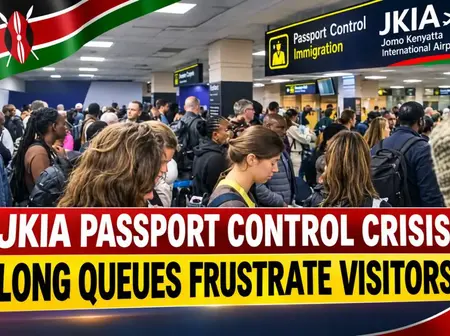
  • JKIA Passport Control Delays Frustrate Kenya Visitors

    JKIA Passport Control Delays Frustrate Kenya Visitors

    thumbnail

    JKIA Passport Control Delays: Kenya Must Improve Airport Arrival ExperienceLong immigration queues at Jomo Kenyatta International Airport raise concerns about Kenya’s first impression on tourists, international investors, and returning Kenyans in the diaspora.Long Queues at JKIA Raise Concerns Over Passenger ProcessingJomo Kenyatta International Airport (JKIA) in Nairobi is Kenya’s main international gateway, welcoming tourists, business travelers, returning citizens, and members of the Kenyan diaspora from around the world.

  • Building Kenya’s next global events destination: Inside the Bomas project

    Building Kenya’s next global events destination: Inside the Bomas project

    thumbnail

    Kenya is positioning itself to capture a larger share of Africa’s growing Meetings, Incentives, Conferences and Exhibitions (MICE) industry through the development of the Bomas International Convention Centre (BICC), a flagship facility expected to expand the country’s capacity to host major international gatherings.

  • Why the US has kept Uganda on its highest ‘Do Not Travel’ warning

    Why the US has kept Uganda on its highest ‘Do Not Travel’ warning

    thumbnail

    The United States has maintained Uganda on its highest travel warning, advising American citizens against visiting the country because of concerns over violent crime, terrorism, health risks and possible civil unrest.Uganda remains under Level 4, the most serious category in the US Department of State’s travel advisory system.

  • US Lists 22 Dangerous Countries Marked “Do Not Travel for Any Reason”, 9 in Africa

    US Lists 22 Dangerous Countries Marked “Do Not Travel for Any Reason”, 9 in Africa

    PAY ATTENTION: Mark TUKO.co.ke as a preferred source, and our content will appear higher in your Google feed!

    Elijah Ntongai is an experienced editor at TUKO.co.ke, with more than four years in financial, business, labour and technology research and reporting. His work provides valuable insights into Kenyan, African, and global trends.

    The United States Department of State has issued Level 4 travel advisories for 22 countries worldwide, urging American citizens not to visit any of these destinations under any circumstances. Nine of the flagged nations are in Africa.

    US Level 4 travel advisory.

    Level 4 is the highest category in the State Department's four-tier advisory system.

    The department describes these destinations as places where local conditions or its limited ability to assist Americans justify the strongest possible warning.

    European nation blocks foreigners from 2 African countries from residence permit applications

    PAY ATTENTION:TUKO is in WhatsApp Channels now! Subscribe and read news in your favourite messenger.

    While the warning carries no legal force, it has real consequences: insurance coverage is typically affected, and the US government's capacity to evacuate or assist its citizens in these countries is severely restricted.

    The nine African countries on the list are Burkina Faso, the Central African Republic, Chad, the Democratic Republic of the Congo, Libya, Mali, Niger, Somalia, South Sudan, and Uganda.

    Burkina Faso, Mali, and Niger are flagged primarily for terrorism, kidnapping, and deteriorating security across the Sahel region.

    The Central African Republic and Chad face warnings tied to armed groups, crime, and kidnapping risks near border zones. Chad was added to the Level 4 list in April 2026, reflecting heightened concerns about militant activity.

    Libya remains listed due to ongoing armed conflict, terrorism, and the collapse of effective state authority in several parts of the country. Somalia and South Sudan are cited for violence, kidnapping, and severely limited access to emergency consular services.

    UK issues fresh travel warning for Kenya, lists areas British citizens should avoid

    The DRC features prominently on the list for a combination of crime, unrest, terrorism, kidnapping, and health risks. The country has also been dealing with an Ebola outbreak that led the World Health Organisation to declare a public health emergency of international concern in May 2026.

    Uganda was elevated to Level 4 in June 2026, citing the Ebola outbreak and violent crime, including armed robbery, home invasion, and sexual assault, as well as terrorism and civil unrest.

    The remaining 13 countries are Afghanistan, Belarus, Burma (Myanmar), Haiti, Iran, Iraq, Lebanon, North Korea, Russia, Syria, Ukraine, and Yemen.

    Active conflict zones such as Afghanistan, Syria, Ukraine, and Yemen are included alongside countries like Belarus and Russia, which are flagged for the risk of wrongful detention of American citizens.

    North Korea and Iran are cited for arbitrary detention and the absence of normal diplomatic relations with the US.

    The State Department recommends that all travellers check current advisories before making plans and enrol in the Smart Traveller Enrolment Program (STEP) to receive real-time safety updates.

    Source: TUKO.co.ke

  • Saudi travel ban on Kenya unjustified, says Africa CDC

    Saudi travel ban on Kenya unjustified, says Africa CDC

    thumbnail

    Africa CDC has called on Saudi Arabia to review its travel restrictions on Kenya, arguing that a country that detects and contains an imported Ebola case should be supported, not penalised. The appeal comes as Kenya says it has gone 18 days without a new case.On October 30, Saudi Arabia suspended travel by its citizens to Kenya and halted all visa issuance for individuals arriving from Kenya.