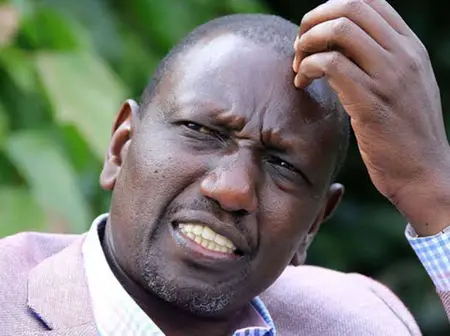
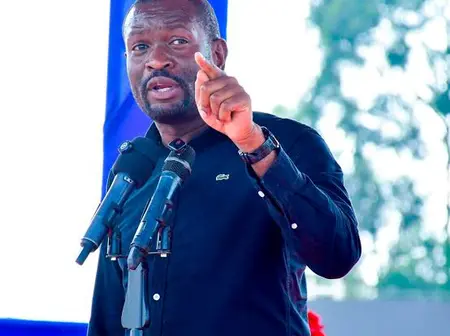
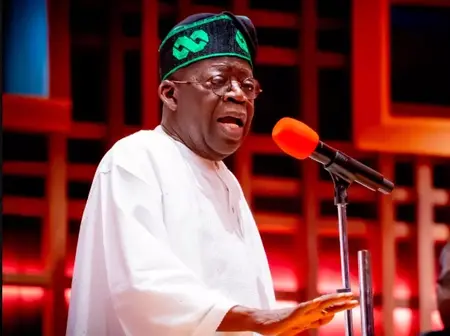
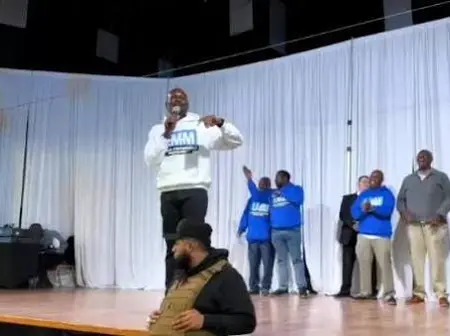
Speaking on Monday, November 23, 2026, Tongoyo expressed confidence that he would defeat Ntutu decisively in the ruling party primaries, asserting that the incumbent is on his way out.
Affirming his loyalty to the ruling outfit, Tongoyo stated that he remains a committed UDA member and would not cross over to the Orange Democratic Movement (ODM) or any alternative vehicle.
He also voiced trust that President William Ruto—whom he described as a personal friend and UDA party leader—will guarantee a free, fair, and neutral playing field during nominations.
Tensions between the two camps recently spilled into the open during the fourth Maa Cultural and Tourism Festival at Sekenani Gate on November 14, 2026, where clashes among rival supporters prompted President Ruto to urge both leaders to rein in their followers and compete peacefully through ideas rather than violence.
With both prominent leaders staying inside UDA, the upcoming Narok primaries promise to be a major test of grassroots influence and party cohesion.
What are your thoughts about this articles? Share your reactions in the comment section and don't forget to share and follow for more updates.
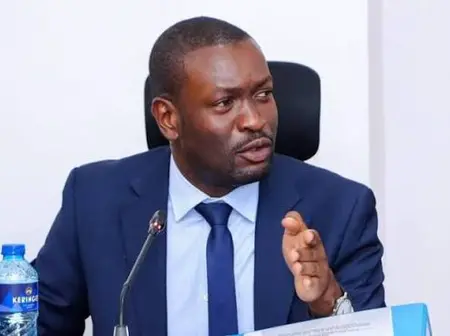
Speaking on Monday, November 23, 2026, Sifuna revisited the political tensions surrounding Gachagua’s removal from office while addressing shifting alliances ahead of the August 2027 General Election.
Sifuna noted that during his tenure in government, Gachagua was among the strongest architects and defenders of the ruling administration’s exclusionary "shares" approach to power—a posture that directly provoked opposition legislators.
He questioned the consistency of leaders who previously condemned Gachagua’s rhetoric on government shares and advocated democratic principles, yet quickly adopted similar power-sharing demands once they gained access to state positions.
Defending his current collaboration with Gachagua within the broader opposition front, Sifuna maintained that Gachagua already paid the political price for his past missteps through impeachment and cannot be punished twice for the same actions.
His remarks underscore how rapidly Kenya’s political landscape has shifted as former rivals unite around shared 2027 electoral goals.
What are your thoughts about this articles? Share your reactions in the comment section and don't forget to share and follow for more updates.
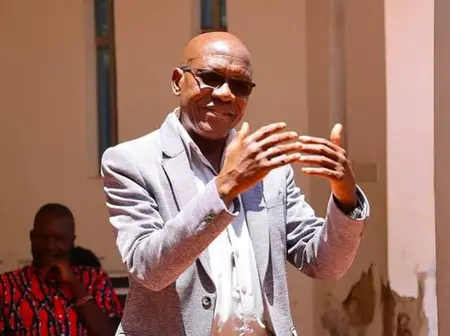
The remarks come as political temperatures continue to rise ahead of the 2027 general election. By grouping top regional figures under one banner, the movement aims to consolidate Western Kenya's voting bloc and reshape its national bargaining power.
A Growing Alliance Under Linda Mwananchi
Khalwale, who serves as the Linda Mwananchi movement's Director of Political Affairs, made it clear that the coalition is gaining serious momentum. Speaking alongside like-minded leaders, he framed the partnership as a fresh chapter for local voters tired of traditional political alignments.
"Together with Edwin Sifuna, George Natembeya and other like-minded leaders in Linda Mwananchi, we are witnessing a new political awakening in Western Kenya," Khalwale stated.
The grouping brings together influential voices from different political backgrounds. While Sifuna leads the movement as its Party Leader and proposed presidential flagbearer, Natembeya heads the movement's presidential campaigns. Together with Khalwale's grassroots mobilization in Kakamega, the trio is actively courting disaffected supporters from both the government and traditional opposition parties.
Reshaping Western Kenya's Voting Bloc
For decades, Western Kenya has been a fiercely contested battleground, often split among rival parties during national elections. Leaders within Linda Mwananchi argue that this division has weakened the region's influence at the national level.
Recent mobilization drives in Kakamega and neighboring counties show a deliberate effort to change that script. Khalwale has consistently urged former members of UDA, ODM, and other regional outfits to join the movement, promising fair party nominations and a unified front.
Meanwhile, Natembeya has echoed this call for unity, backing Sifuna's leadership and urging younger leaders to take charge of the region's political destiny. Their combined push has sparked intense debate across the country, with supporters arguing that the political ground is shifting fast.
What Lies Ahead for 2027
While the Linda Mwananchi team projects confidence, the road to 2027 remains competitive. Broader opposition coalition talks are still navigating competing ambitions from other national figures, including Wiper leader Kalonzo Musyoka.
Even so, Khalwale's latest declaration sends a clear message to political rivals. The movement is determined to lock down Western Kenya early and present a united front before the campaigns enter full swing.
Do you think the alliance between Boni Khalwale, Edwin Sifuna, and George Natembeya will successfully unite Western Kenya ahead of 2027? Share your thoughts in the comments below!
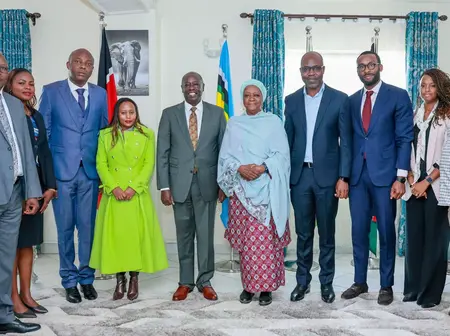
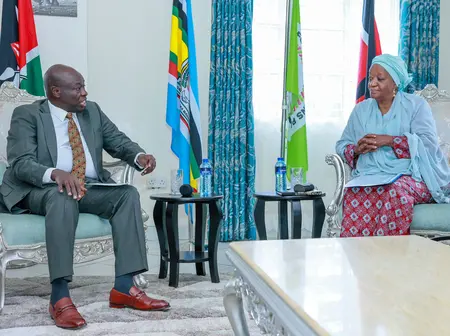
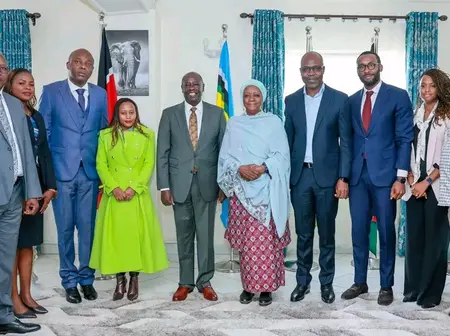
Former Deputy President Rigathi Gachagua has met United Nations Office at Nairobi Director-General Zainab Bangura in an engagement that has attracted attention within Kenya's political circles.
Gachagua, who has remained an influential figure in Kenya's opposition politics, continues to engage in activities that place him in the national and international spotlight. His political activities have attracted considerable attention as leaders position themselves ahead of the 2027 General Election.
On the other hand, Zainab Bangura serves as the Director-General of the United Nations Office at Nairobi. Her position places her at the centre of the UN's operations in Kenya and its wider engagement with the country.
The United Nations plays a significant role in addressing global challenges, including peace and security, humanitarian assistance, climate change, sustainable development and the protection of human rights.
For Kenyan leaders, maintaining constructive relationships with international institutions can create opportunities for dialogue and cooperation on issues that affect the country and its people.
However, the significance of Gachagua's meeting with Bangura should not be overstated without knowing the specific agenda and discussions that took place. A meeting between political leaders and international officials does not automatically mean that an agreement or political endorsement has been reached.
Nevertheless, the engagement highlights the importance of dialogue between Kenyan political figures and international institutions.
Kenyans will undoubtedly be interested in understanding the purpose of the meeting and whether any important issues affecting the country were discussed.
Ultimately, the attention surrounding this engagement demonstrates how interactions between influential Kenyan figures and international representatives can generate public interest.
What do you think about Rigathi Gachagua's meeting with UN Nairobi Director-General Zainab Bangura? Share your views in the comments.
He said, We will not change who we are to please anyone or seek political endorsements. The Sifuna that you see today should be the Sifuna who comes back seeking your support for reelection in 2032.
His words have sparked debate in Nairobi and across Kenya. Supporters say Sifuna is one of the few leaders who speaks his mind, even when it is uncomfortable.
They say many politicians in Kenya change their words to please their party leaders. They say they walk on eggshells, fearing they will be kicked out of the party.
They say Sifuna is different. They say he speaks the truth, even within the opposition, even when his own side does not like it.
He said he will not walk on eggshells, even within the opposition. He said being in opposition does not mean being silent or being afraid.
He said opposition leaders must also be honest with each other. He said if something is wrong in the opposition, he will say it.
Supporters say that is the kind of leadership Kenya needs. They say Kenya does not need leaders who just clap for their party, they need leaders who think.
They say Sifuna has been vocal in the Senate. He has defended Nairobi people, questioned the government, and spoken on issues affecting ordinary Kenyans.
They say he has fought for devolution, for Nairobi, and for the rights of Kenyans. They say he has not been afraid to speak, even when it cost him.
They say his message about 2032 is important. He is telling Nairobi people, judge me by who I am today, not by who I pretend to be during campaigns.
He said, The Sifuna that you see today should be the Sifuna who comes back seeking your support for reelection in 2032. He said he will not change for votes.
That means, supporters say, Sifuna will not become a different person in 2032. He will not suddenly become humble, generous, and quiet, only to change after elections.
They say many Kenyan politicians change during elections. They say they visit churches, they give money, they hug mothers, and they promise heaven.
They say after elections, they disappear. They say they stop picking calls, they stop visiting villages, and they stop fighting for the people.
They say Sifuna is promising that he will not do that. He says the Sifuna you see today is the real Sifuna.
Critics, however, have questioned his message. They say Sifuna is also playing politics by talking about 2032 so early.
They say 2032 is still far away. They say Nairobi people have problems today, not in 2032. They say Sifuna should focus on today, not on 2032.
They say Nairobi has garbage, traffic, water shortages, and insecurity. They say a senator should be solving those problems, not talking about 2032.
They say Sifuna should show what he has done for Nairobi since 2022. They say Nairobi people want results, not bold speeches.
They say walking on eggshells is sometimes wisdom. They say a leader must know when to speak and when to listen, when to fight and when to negotiate.
They say Sifuna's boldness has also caused him trouble. They say he has clashed with his own party, with other leaders, and with the government.
Political analysts say Sifuna's statement is a sign of the growing fight inside the opposition. They say the opposition is not united.
They say different leaders in the opposition have different ambitions for 2027 and 2032. They say Sifuna is positioning himself early.
They say by saying he will not seek political endorsements, Sifuna is telling Kenyans he will not beg for support from party bosses. He will seek support from the people.
They say Sifuna knows that risk, but he is ready to take it. He says his strength is the people, not the party bosses.
For now, Sifuna says he will continue to be himself. He says he will speak, he will fight, and he will not walk on eggshells.
He says Nairobi people should watch him. He says if he changes in 2032, they should reject him.
Should leaders speak boldly even within their own parties? Or should they walk on eggshells to keep unity?
Is Sifuna right to promise he will be the same in 2032? Or is he just playing early 2032 politics?
Former Deputy President Rigathi Gachagua has held talks with United Nations Nairobi Office Director-General Zainab Bangura, raising concerns over alleged human rights violations, political violence and the preparedness of the electoral commission ahead of the 2027 General Election.
In a statement shared on his official X account, Gachagua said the meeting took place on Monday morning at the Office of the 2nd Deputy President of the Republic of Kenya in Nairobi, where Bangura had paid him a courtesy call.
Gachagua revealed that their discussions focused on several issues affecting the country, including alleged State-sponsored militias, abductions, extrajudicial killings and political violence targeting young people.
He also questioned the independence of the Independent Electoral and Boundaries Commission (IEBC), claiming that the electoral body had become partisan ahead of the August 10, 2027 General Election.
According to Gachagua, the commission had lost public confidence, raising concerns about the possibility of irregularities in the forthcoming elections.
He called on the IEBC to remain objective, independent and non-partisan while engaging all stakeholders to address concerns surrounding the electoral process.
The former Deputy President further urged the United Nations to intervene by encouraging the electoral commission to listen to stakeholders and restore public confidence ahead of the polls.
Gachagua also appealed to the international organisation to urge the Kenyan government to stop what he described as violence, extrajudicial killings, abductions and brutal killings of young people, while respecting human rights and the rule of law.
He warned that Kenya risked experiencing recurring cycles of pre-election, election and post-election violence, arguing that actions and omissions by electoral bodies had historically contributed to political tensions.
Gachagua also acknowledged Kenya's strategic relationship with the United Nations, welcoming the organisation's continued expansion in Nairobi and its call for peaceful, transparent, free, fair and verifiable elections.
His remarks come as political attention increasingly shifts towards preparations for the 2027 General Election.
The Nairobi senator attracted attention after travelling to America for a series of political engagements targeting Kenyans living in the diaspora.
His visit sparked discussions among Kenyans online, with some suggesting that he should use the opportunity to meet Mamdani, who has gained international recognition following his rise in American politics.
However, Sifuna has now set the record straight about his trip, addressing the speculation surrounding the proposed meeting.
The senator's clarification comes at a time when his political activities have continued to attract public attention, particularly as Kenya moves closer to the 2027 General Election.
Before travelling, Sifuna had announced plans to engage Kenyans living in different American cities. The engagements were expected to provide an opportunity to interact with Kenyans abroad and discuss issues affecting them.
His visit has also attracted interest because of his position in the ongoing political developments within the Orange Democratic Movement (ODM) and the wider opposition.
Mamdani, on the other hand, has become a popular figure in international political discussions, with his political journey attracting attention beyond the United States.
The suggestions of a possible meeting between the two politicians therefore generated interest among Kenyans who wanted to know whether such an engagement was part of Sifuna's itinerary.
In a video shared online, Sifuna addressed the matter and explained his position, putting to rest speculation about his planned activities.
The senator's remarks have since added another talking point to his ongoing American visit, which has attracted considerable attention on social media.
Kenyans are now following his engagements as he continues with his planned activities in the United States.
Former Deputy President Rigathi Gachagua says he has taken his concerns about human rights, political violence and the Independent Electoral and Boundaries Commission (IEBC) to the head of the United Nations Office at Nairobi.
In a statement, Gachagua said Director-General Zainab Bangura paid him a courtesy call in Nairobi and that they discussed abuse of human rights, political violence, what he described as state-sponsored militias, and the IEBC's conduct ahead of the August 2027 General Election.
He said he told the UN that the IEBC is partisan and has lost public confidence, and called on the world body to urge the commission to engage all stakeholders.
He also urged the UN to press the government to end violence, extrajudicial killings and abductions.
Bangura, a Sierra Leonean, has led UNON since her appointment by UN Secretary-General António Guterres in December 2019.
Before that, she served as the UN Special Representative on Sexual Violence in Conflict and co-founded Sierra Leone's Campaign for Good Governance, which documented human rights violations.
On November 19, Gachagua led opposition leaders out of a consultative session with the IEBC in Nairobi, saying the agenda excluded their issues.
He told the gathering the commission had not responded to letters sent on February 12, May 10 and June 24, according to Kenyan Digest.
Gachagua has previously raised concerns about IEBC tenders for 2027 election technology, and Ruto allies have hit back, according to The Standard.
No response from the UN office or the IEBC was available at the time of writing.
Gachagua said he welcomed the UN's call for peaceful, transparent, free and fair elections and described Kenya as a strategic UN member state whose growing UN presence in Nairobi is vital to its global image.
The government has defended its record.
In a September 2025 diplomatic briefing, Prime Cabinet Secretary Musalia Mudavadi cited the swearing-in of IEBC commissioners and efforts to uphold human rights as evidence of Kenya's democratic credentials.
Nigerian President Bola Tinubu has shared his experience of a water outage at the Presidential Villa in Abuja, saying the interruption happened while he was shaving
The admission drew laughter from the audience as he recalled the incident and acknowledged the need to address the country's electricity and water supply challenges.
Tinubu was speaking at a special prayer event organised by his family in Lagos on Sunday, November 22, where he also spoke about his administration's plans for the country.
He said the interruption occurred during the previous week, giving his audience a glimpse of how the disruption affected even the country's seat of power.
"If I stay too long in Lagos, I will not want to rush back to Abuja. If I tell you some of you, on Wednesday last week, I was shaving and the water went off in the Villa," he said, prompting laughter.
The President went on to promise improvements in essential services, saying his administration was determined to address the challenges.
"We will correct all this: no light, no water, no electricity, no development. We are just starting. We can do it, and we will do it for Nigeria," he said.
His remarks brought attention to two longstanding infrastructure challenges in Africa's most populous country, where access to reliable electricity and water remains a major development concern.
Nigeria's electricity difficulties predate Tinubu's administration, with efforts to reform the sector stretching back more than two decades.
The government began pursuing major reforms in the early 2000s, leading to the Electric Power Sector Reform Act of 2005, which established the Nigerian Electricity Regulatory Commission and provided a framework for restructuring the industry.
In 2013, the government unbundled the state-owned Power Holding Company of Nigeria and transferred generation and distribution companies to private investors, while the transmission network remained under government ownership.
The reforms were intended to improve efficiency, attract investment and expand electricity supply, but challenges involving generation, transmission and distribution have continued.
Figures from the Nigerian Electricity Regulatory Commission show that grid-connected power plants had an average available capacity of 4,744 megawatts in October 2026, while average hourly generation stood at 4,047 megawatts.
The regulator said this represented utilisation of 85 per cent of the available generation capacity during the month.
Tinubu's 2023 presidential campaign manifesto, titled 'Renewed Hope: Action Plan for a Better Nigeria', identified electricity as a priority, promising to generate, transmit and distribute sufficient and affordable power.
The plan also proposed encouraging off-grid and renewable energy projects and working with state governments and private investors to expand electricity access.
Water supply was also included in Tinubu's campaign commitments.
His manifesto proposed a national potable water supply campaign, with a target of ensuring that by the end of the decade, no Nigerian would live more than five minutes away from a reliable source of drinking water.
The plan also proposed improving water infrastructure around major dams and expanding small-scale irrigation and water catchment systems.
Data from Nigeria's 2024 Demographic and Health Survey, published in September 2025, shows that 38 per cent of households had drinking water on their premises.
The survey further found that 71 per cent of the population had access to at least basic drinking water services, while 66 per cent had sufficient quantities of drinking water when needed.
Tinubu was sworn in as President on May 29, 2023. He has therefore been in office for more than three years as his administration continues to pursue its infrastructure and development agenda.
The Nairobi senator, who was engaging Kenyans in the diaspora on Sunday, November 22, 2026, jokingly told participants to avoid the popular two-finger salute associated with President William Ruto's re-election campaign slogan, 'Tutam'. Sifuna demonstrated an alternative gesture, asking attendees to raise a clenched fist instead.
He explained that photographs taken during the meeting could be misinterpreted and circulated to suggest that Kenyans in the United States were supporting Ruto's second-term bid. The remarks drew laughter from the audience as participants eventually agreed on two minutes per speaker and one question each during the engagement.
Beyond the humour, Sifuna defended his leadership style, saying he had no intention of changing his personality, dressing style or approach to politics to win support. He insisted that he wanted supporters to know him as he is, promising honesty rather than making unrealistic political promises as he continues his engagements ahead of the 2027 elections.