Category: Politics

  • Unusual Campaign Strategy: How a Kisii aspirant’s underwear giveaway sparked public debate

    Unusual Campaign Strategy: How a Kisii aspirant’s underwear giveaway sparked public debate

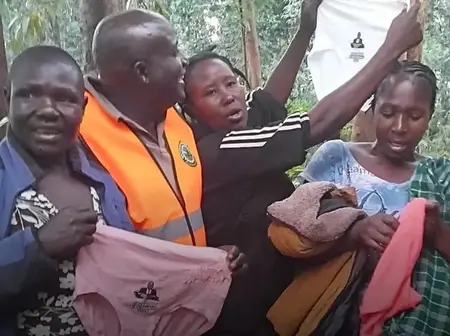
    A Kisii gubernatorial aspirant has sparked widespread debate across Kenya after distributing women’s underwear branded with his portrait and 2027 campaign slogans during grassroots outreach. Despite facing swift online criticism and public scrutiny, the aspirant, Kevin Nyamari, remains unbothered, defending the unconventional gesture as a genuine effort to restore dignity and support vulnerable women.

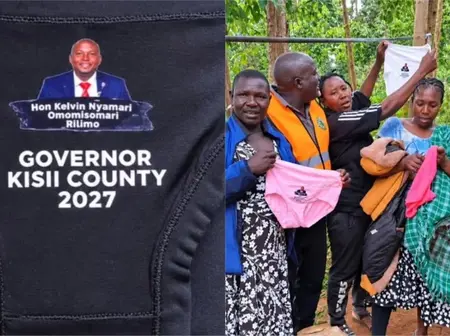
    Images circulating on social media show women receiving undergarments printed with Nyamari’s photograph alongside messages drumming up support for his 2027 Kisii gubernatorial bid. While critics dismissed the move as a bizarre campaign gimmick and an affront to voter dignity, Nyamari stood his ground in a formal statement addressing the uproar.

    According to Nyamari, the initiative stems from his broader commitment to social responsibility and women’s welfare, rather than mere political theatrics. He noted that access to basic personal necessities remains a pressing yet overlooked challenge for many low-income women and girls in the region. Linking the distribution to his previous donations of sanitary towels, the aspirant argued that menstrual and personal hygiene should be treated with seriousness rather than ridicule.

    Furthermore, Nyamari claimed that demand for the items has surged on the ground, insisting that online backlash does not reflect the realities facing ordinary residents. Maintaining a defiant tone, he emphasized that leadership is rooted in practical service rather than chasing online popularity, adding that he will not be distracted from his mission to serve the people of Kisii County.

    The incident adds to a growing trend of unusual campaign giveaways ahead of the 2027 General Election, prompting renewed national conversation on political ethics, voter empowerment, and campaign standards under Kenyan electoral guidelines.

    For related context on similar controversies involving branded undergarments in Kenyan politics, watch Kirinyaga politicians trade blame over branded underwear.

    https://www.facebook.com/share/p/1EHPPFFfmE/
  • Kisii Governor Aspirant Hands Out Underwear With His Face On It To Locals In Bid To Woe Votes

    Kisii Governor Aspirant Hands Out Underwear With His Face On It To Locals In Bid To Woe Votes

    A Kisii gubernatorial aspirant has stirred wide debate online after giving out colourful women's underwear printed with his photograph. Kelvin Mabeta Nyamari is seeking support ahead of the 2027 General Election.

    Videos circulating on social media show women receiving the garments. They come in pink, white, red and brown. His photograph is printed on the front alongside the words "Governor Kisii County 2027".

    In one clip a man handing out the items urges women to come and collect theirs. He tells them to take videos of the giveaway as it continues. The women are seen receiving the items with smiles.

    The unusual choice of campaign merchandise has become the main talking point online. It has also raised questions about the kind of strategies politicians are using to win votes. Many Kenyans want to know where the line should be drawn.

    Nyamari wants to take the seat currently held by Governor Simba Arati. Arati won in 2022 and is eligible to seek a second term. Other names linked to the race include former Education Cabinet Secretary Ezekiel Machogu and Senator Richard Onyonka. The contest is shaping up to be a tough one.

    This is not the first time such a gift has caught attention in the county. In August 2026 Kisii Woman Representative Donya Toto gave out women's underwear at a political gathering at Nyangoge Primary School in Bonchari. The donation split opinion among politicians. Some questioned the use of personal items as campaign gifts while some beneficiaries defended the gesture.

    Handouts and branded items have become a common part of political mobilisation in many parts of the country. The latest incident adds to the unusual campaign activities seen ahead of 2027 as aspirants look for ways to make their names known to voters.

    https://www.facebook.com/share/1N2zGcLz9i/?mibextid=wwXIfr

  • Joakim Simiyu Alleges Names of Two Communities That Give a Presidential Candidate 50 Plus Percent

    Joakim Simiyu Alleges Names of Two Communities That Give a Presidential Candidate 50 Plus Percent

    Safina Party Secretary General Joakim Simiyu has triggered fresh debate about Kenya's presidential politics after highlighting the challenges facing smaller ethnic communities in their quest to produce a Head of State.

    Simiyu reportedly identified the Mijikenda and Maasai communities, arguing that their relatively smaller voting populations could make it difficult for presidential candidates from these communities to secure the numbers required to win a national election.

    His remarks have brought renewed attention to the influence of ethnic voting patterns in Kenya, where political alliances are often shaped by regional interests and the numerical strength of different communities.

    According to the argument raised by Simiyu, presidential elections should not be determined primarily by the size of a candidate's ethnic community. Instead, he believes Kenyans should embrace a political environment where leadership is determined by competence, policies, integrity and the ability to unite the country.

    The discussion comes at a time when political leaders are increasingly focusing on the 2027 General Election, with different camps working to establish alliances that could give their presidential candidates a competitive advantage.

    Under the Constitution of Kenya, a presidential candidate must secure more than 50 per cent of all valid votes cast, alongside at least 25 per cent of the votes in more than half of the 47 counties.

    This constitutional requirement has made coalition-building an important aspect of presidential campaigns, with politicians seeking support from different regions to improve their chances of winning.

    The situation has also raised questions about political representation for communities that may not command substantial voting numbers but have equally qualified individuals interested in national leadership.

    Simiyu's observations come amid growing calls for a political system that gives every Kenyan an equal opportunity to seek the country's highest office without facing disadvantages associated with their ethnic background.

    As the 2027 political contest gathers momentum, the debate over tribal numbers, national coalitions and inclusive leadership is expected to remain a significant issue.

    The question is whether Kenya can move beyond ethnic arithmetic and create an environment where presidential candidates win through national support, strong policies and public confidence rather than the voting strength of their communities.

    Link

    https://x.com/RadioGenKe/status/2124740092434514361?a=yiokPthTcrZ1NaCIvUo&s=19

  • Ledama Ole Kina faces public scrutiny after alleged threat in viral video

    Ledama Ole Kina faces public scrutiny after alleged threat in viral video

    Narok Senator Ledama Ole Kina has reportedly come under intense public scrutiny following the circulation of a video allegedly showing him threatening to shoot individuals during a heated confrontation.

    The video has attracted attention online, with Kenyans expressing concern over the conduct displayed during the confrontation. Some have called for a clear explanation of what happened, while others have urged authorities to establish the facts surrounding the incident.

    The reported remarks have also reignited debate about the responsibility of leaders to exercise restraint, particularly when dealing with disputes involving members of the public.

    As discussions continue, many are waiting for further clarification from the senator and other parties reportedly involved in the confrontation.

    The circumstances surrounding the incident, including what triggered the disagreement and whether any formal complaint has been made, remain important questions.

    The claims should be treated as allegations until independently verified, and the full context of the video should be established before concluding.https://www.facebook.com/share/p/1A1kxiPwf1/

  • Tinubu Reveals Water Outage Interrupted Him While Shaving at Presidential Villa

    Tinubu Reveals Water Outage Interrupted Him While Shaving at Presidential Villa

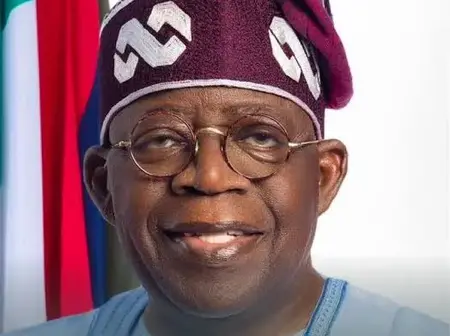
    Bola Ahmed Tinubu (GCFR) - The State House, Abuja

    According to reports by The Punch and TheCable, the President said the incident occurred on Wednesday, November 18, while he was shaving at the Villa.

    “On the Wednesday of last week, I was shaving, and the water went off. And the Villa, you won't know punishment there too,” Tinubu said while addressing those attending the gathering.

    The President acknowledged that the Presidential Villa was not exempt from challenges involving essential services such as water and electricity.

    He used the incident to emphasize the need for improvements in Nigeria's infrastructure, promising that his administration would work towards addressing the country's supply challenges.

    “The water went off. So we will correct all this. No light, no water, no electricity, no development. We have just started. We can do it, and we will do it for Nigeria,” he added.

    According to BusinessDay, Tinubu made the remarks while discussing infrastructure development and the challenges facing different parts of the country.

    His comments come amid longstanding concerns over unreliable electricity supply and inadequate access to essential services in several Nigerian communities.

    The President also used the gathering to address political mobilization ahead of Nigeria's 2027 general elections, urging supporters of the ruling All Progressives Congress (APC) to increase voter participation and resolve internal disagreements.

    The water interruption has since attracted public attention, with political figures and commentators reacting to the President's account and questioning the state of basic infrastructure at the Presidential Villa.

    However, the Presidency had not publicly provided further technical details explaining the cause or duration of the reported water interruptionhttps://www.facebook.com/share/p/1UywqQwCqh/

  • Huge Twist on Sifuna’s US Tour: His Response to Kivutha Kibwana Has Kenyans Talking

    Huge Twist on Sifuna’s US Tour: His Response to Kivutha Kibwana Has Kenyans Talking

    Kibwana warns Babu Owino, Sifuna against splitting Linda Mwananchi

    The exchange began on Sunday, November 22, 2026, when Kibwana stated that if Babu Owino were to visit the United States, he would strongly urge the legislator to prioritize meeting the 35-year-old New York City Mayor for leadership mentorship.

    Kibwana’s suggestion came amid ongoing commentary surrounding Sifuna’s multi-state United States diaspora tour, which kicked off on Saturday, November 21, 2026, with the opening of the Linda Mwananchi Movement’s first international office in Hackettstown, New Jersey.

    Speaking during a town hall engagement with Kenyan diaspora supporters in Allentown, Pennsylvania, on Monday, November 23, 2026, Sifuna brushed off criticism of his itinerary and clarified the core purpose of his American trip.

    According to reports by Tuko News and The Kenya Times, Sifuna declared in Swahili that he did not travel to the United States to meet Mayor Mamdani, but rather to engage fellow Kenyans living abroad because they hold the votes ahead of the 2027 General Election.

    The Senator added that he plans to meet Mamdani next year when he returns to New York for the United Nations General Assembly.

    Mamdani, a 35-year-old progressive politician who assumed office as New York City’s Mayor in January 2026 after a grassroots-driven campaign, has increasingly been cited by Kenyan political commentators as an example of youthful, movement-based urban mobilization.

    Meanwhile, Kibwana—who was recently appointed patron of Babu Owino’s political outfit—has repeatedly weighed in on the evolving dynamics between Sifuna and Owino, urging the two youthful leaders not to let competing ambitions fracture opposition momentum ahead of 2027.

    As Sifuna continues his diaspora outreach across Maryland, Washington DC, Texas, Seattle, and California, the sharp exchange highlights how every move made by key opposition figures on the international stage is closely scrutinized back home.

    https://x.com/thekenyatimes/status/2124736214049726747?a=q7iOrMa8RU2eHGDNf8w&s=20

  • Kevin Nyamari Defends Branded Underwear Campaign as Demand Surges After Online Backlash

    Kevin Nyamari Defends Branded Underwear Campaign as Demand Surges After Online Backlash

    Kevin Nyamari, who is seeking to become the next governor of Kisii County, faced criticism after photos of the branded underwear circulated online, with some Kenyans questioning whether the campaign strategy was appropriate for someone seeking public office.

    The merchandise featured his name alongside the words "GOVERNOR KISII COUNTY 2027," making it clear that the distribution was connected to his political ambitions.

    Nyamari Explains the Purpose of the Initiative

    Nyamari defended the initiative, arguing that it was intended to promote women's dignity and support members of the community rather than simply attract attention to his political campaign.

    In a Facebook post accompanying the photograph, he said even a small contribution could make a difference in someone's life, particularly when it helped improve their confidence and dignity.

    He described the gesture as part of his broader commitment to supporting women and vulnerable members of society, insisting that his intentions were rooted in compassion and social responsibility.

    However, the unusual campaign merchandise quickly attracted mixed reactions, with some social media users questioning the choice of underwear as a promotional item and others turning the initiative into a subject of online jokes.

    Aspirant Responds to Public Criticism

    Following the growing criticism, Nyamari issued a statement acknowledging the discussions surrounding the distribution of underwear carrying his name and photographs.

    He maintained that his efforts to support women were not new, pointing to previous initiatives, including donations of sanitary towels to schoolgirls.

    According to the aspirant, menstrual hygiene and access to essential items are issues that deserve meaningful attention, and he urged the public not to dismiss such initiatives simply because they had attracted controversy.

    Nyamari also defended his political ambitions, saying his desire to serve Kisii County remained bigger than the criticism directed at him online.

    He maintained that leadership should be measured by service to the public rather than popularity, adding that he would not allow the controversy to distract him from his plans.

    Demand for Branded Underwear Grows

    Interestingly, Nyamari later claimed that the publicity surrounding the distribution had triggered a surge in requests for the branded underwear.

    He said the requests had reportedly reached thousands, making it difficult for him to satisfy everyone interested in receiving the merchandise.

    The aspirant jokingly acknowledged that the growing demand had placed pressure on his campaign budget, asking those seeking the underwear to be patient as he worked to manage the requests.

    He also disclosed that some people had expressed dissatisfaction with the black colour used for the first batch, suggesting that recipients had different preferences.

    The incident has added an unusual twist to early political activities in Kisii County, where aspirants are increasingly seeking creative ways to attract public attention as the 2027 election approaches.

    Source

  • Waluke Rebukes Silent Crowd At Ruto Nzoia Sugar Event Over Tutam Chant – VIDEO

    Waluke Rebukes Silent Crowd At Ruto Nzoia Sugar Event Over Tutam Chant – VIDEO

    Sirisia MP John Waluke on Monday lectured sections of the crowd at President William Ruto's event at Nzoia Sugar Company. The people had declined to join the chants of "TUTAM" and raise their hands in support of the Head of State.

    The incident happened during a presidential visit focused on bonus payments for sugarcane farmers in the Nzoia belt. The area includes Kanduyi Constituency, which is the home ground of Nairobi Senator Edwin Sifuna and his Linda Mwananchi movement.

    Waluke is a consistent Ruto ally in Bungoma. He addressed those he identified as Sifuna's supporters who stayed silent when the pro-government slogan was called.

    "Nataka heshima kwa Rais," Waluke said as he demanded respect for the President. He urged the audience to sing along and raise their hands for TUTAM. He framed the refusal as a lack of courtesy toward the office of the President and not just a political difference.

    Nzoia Sugar Company has been central to Ruto's engagements in Western Kenya. The government has highlighted the revival of the factory and faster payments to farmers. It has also pointed to the disbursement of bonuses. Monday's event formed part of these efforts and drew local leaders and residents amid debates over the mill's future and reforms in the sugar sector.

    The remarks come against a backdrop of sharp political contest in Bungoma. Sifuna has roots in Kanduyi and has built strong support across Western Kenya through Linda Mwananchi activities. The movement is positioned as a challenge to the ruling side ahead of 2027.

    The exchange captured the friction between Ruto's push for visible support in the region and crowds that lean toward the opposition. A video of Waluke's address spread widely online. It showed him directing his words at those who refused to take part.

    The moment reflects the tense political mood in Bungoma as both sides mobilise.

    https://www.facebook.com/share/v/1dHtB11S3h/?mibextid=wwXIfr

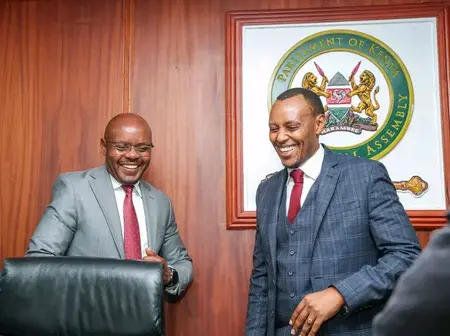
  • PS Patrick Mariru Shares Light Moments With MP Nelson Koech During Key 2027 Budget Talks

    PS Patrick Mariru Shares Light Moments With MP Nelson Koech During Key 2027 Budget Talks

    The session was chaired by Belgut MP Nelson Koech, who led members in considering ministry’s expenditure proposals as contained in the 2027 Budget Policy Statement.

    In a statement following the meeting, Mariru said discussions centred on the ministry’s policies, programmes and proposed expenditure ceilings.

    The engagement came after the 2027 Budget Policy Statement was tabled before the National Assembly on November 13, 2026.

    Mariru explained that the appearance provided an opportunity for the ministry to outline its priorities and financial requirements for consideration by lawmakers.

    He noted that the process was conducted in accordance with Section 25(2) of the Public Finance Management Act, 2012, which provides for parliamentary consideration of budget proposals.

    Also present were senior officials from state corporations operating under the Defence Ministry.

    The committee's engagement with the ministry forms part of parliamentary scrutiny of government spending plans ahead of the next financial year.

    The discussions are expected to inform lawmakers as they examine proposed allocations and assess whether the ministry's priorities are adequately reflected in the national budget.

    https://www.facebook.com/100047143085981/posts/1676396867275067/?app=fbl

  • Usawa ni Sawa’ Faces Tough Questions Over Stalled Projects and High Taxes

    Usawa ni Sawa’ Faces Tough Questions Over Stalled Projects and High Taxes

    A heated debate has erupted over whether President William Ruto's latest development slogan is actually delivering equal projects across Kenyan counties.

    During Monday morning's Sema na Citizen broadcast on Citizen TV, panelists dissected the politics behind the government's "Usawa ni Sawa" campaign. The studio discussion brought together Democracy for Citizens Party (DCP) National Coordinator Njeri Kahiga and education activist Okoth Obondo to examine whether state funds are truly reaching historically marginalized areas.

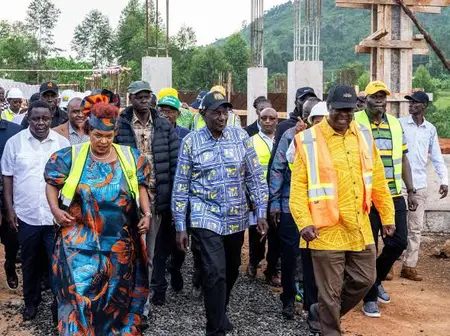
    Under the broad-based government, President Ruto and Deputy President Kithure Kindiki have framed "Usawa ni Sawa"—a Swahili phrase meaning "equality is right"—as a policy to end regional exclusion. Speaking during recent development tours in Nyamira, Nakuru, and Western Kenya, the two leaders insisted that roads, housing, and electricity projects are now distributed fairly regardless of how a region voted in 2022.

    "We are putting money in their pockets because we have removed brokers, and we have increased their earnings," Ruto stated while defending the initiative, pointing to over one million housing jobs, digital work programs, and support for coffee, tea, milk, and sugarcane farmers.

    However, opposition figures and civil society voices on the Citizen TV panel questioned whether the slogan matches reality on the ground. Critics argued that since the 2010 Constitution introduced devolution, true fairness requires transparent budget allocations and empowering county governments rather than launching national tours ahead of the 2027 elections.

    Skeptics also pointed out that many citizens are still struggling with high living costs, stalled local projects, and heavy taxation despite the government's promises of shared prosperity. To opposition allies, branding state projects under a catchy political theme risks turning taxpayer-funded infrastructure into an early campaign tool.

    Ordinary Kenyans following the broadcast echoed this divide, with many arguing that visible improvements in local hospitals, schools, and roads matter far more than political slogans. Others maintained that breaking traditional ethnic voting blocs to share national resources evenly is long overdue if implemented transparently.

    With billions of shillings earmarked for infrastructure and social programs across all 47 counties, citizens are closely watching how funds are spent in their own backyards. Looking at the roads, schools, and clinics in your own ward today, do you feel the "Usawa ni Sawa" promise is reaching your community or remaining just another political slogan?