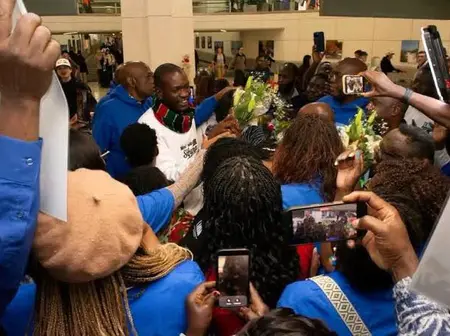
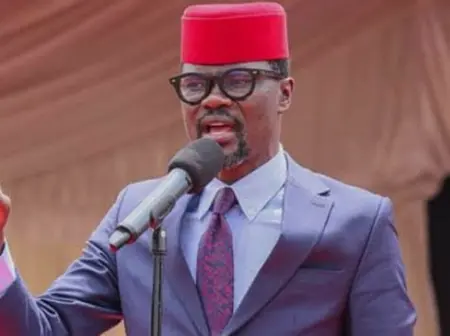
Chachu was reported missing on Saturday, November 21, before North Horr MP Adhe Wario announced the following day that he had been found and taken to hospital. He was allegedly drugged along Ngong Road in Nairobi, although the circumstances surrounding the incident remain unclear.
The incident has drawn attention to wider concerns over disappearances, intimidation and violence targeting political gatherings.
With the next general election approaching, questions are emerging about whether Kenyans will be able to express their political opinions, attend rallies and support their preferred candidates without fear of attacks.
The concerns extend beyond abductions to the use of organised groups to disrupt political meetings. An analysis by the Armed Conflict Location and Event Data project (ACLED) warned in 2026 about rising political goonism and retaliatory mob violence ahead of the elections.
Human Rights Watch also raised concerns in September 2026 over attacks by unidentified armed groups targeting civil society organisations and opposition gatherings, warning that such incidents threaten fundamental political freedoms.
Security agencies are being urged to investigate reported disappearances promptly and ensure that anyone found responsible for unlawful acts faces justice.
Political leaders across the divide have also been challenged to discourage violence and avoid using young people to intimidate opponents. Instead, political competition should be conducted through peaceful campaigns, public debate and voting.
The Independent Electoral and Boundaries Commission, political parties, religious institutions and civil society organisations have a role in promoting peaceful participation as election preparations gather momentum.
Although Chachu's recovery was welcome, questions about what happened to him remain. His case has reinforced calls for stronger protection of citizens and accountability for those involved in political violence.
As the 2027 elections approach, the ability of Kenyans to participate freely and safely will remain an important test of the country's democratic environment.
Media personality Willis Raburu has announced his association with Embakasi East MP Babu Owino’s The Mwananchi Party as he continues positioning himself for the Kisumu Senate seat in the 2027 General Election.Raburu made the announcement in a social media post on Monday, November 23, 2026, in which he expressed support for Owino’s political movement and declared his intention to help popularise the party after they held a successful rally in Nairobi over the weekend.
Speaking during a church service at Grace Community Church on Sunday, November 22, 2026, Sifuna revisited the political events that led to Gachagua's impeachment, questioning the former deputy president's current criticism of a political arrangement he previously supported.
The senator argued that Gachagua had been among the leaders who promoted demands for government positions based on political support before falling out with President William Ruto.
Sifuna claimed that similar negotiations had taken place during previous coalition arrangements involving leaders such as Musalia Mudavadi and Moses Wetang'ula, where political partners reportedly secured a share of government appointments.
He also recalled negotiations between ODM and the United Democratic Alliance (UDA) following the formation of the broad-based government, alleging that some leaders demanded the deputy presidency and other influential positions in exchange for supporting the administration.
According to Sifuna, Gachagua was previously a strong defender of the political hierarchy he now criticises.
He compared the former deputy president's political transformation to the biblical story of Saul, who persecuted Christians before becoming an apostle.
The Nairobi senator further disclosed that Gachagua once told him he would also have supported his impeachment had their political positions been reversed.
"Gachagua also told me that if he were in my position, he would impeach me," Sifuna recalled.
He maintained that removing a sitting deputy president was not an easy political decision and required leaders to put accountability ahead of personal relationships.
Gachagua was removed from office on October 17, 2024, after the Senate upheld an impeachment motion initiated by the National Assembly. A total of 54 senators supported his removal over the charge of gross violation of the Constitution, while 13 opposed it.
Sifuna's latest remarks come amid changing political alliances as the former ODM Secretary-General continues to chart a separate political path following his fallout with the party leadership.
The former presidential candidate argued that politicians with meaningful agendas should focus on explaining their policies rather than insulting opponents, remarks that have attracted attention amid growing political competition ahead of the 2027 General Election.
In a statement that quickly caught public attention, Wajackoyah said, “You cannot hear candidates in America abusing each other. It is only leaders without an agenda who attack their rivals verbally.”
His remarks appeared to question the growing culture of political insults, where some leaders spend more time attacking opponents than explaining what they would do if elected.
The comments come at a time when Kenya's political atmosphere is becoming increasingly heated, with leaders from different political camps exchanging sharp words as they position themselves for the next election.
For many ordinary Kenyans, the biggest concern is whether political competition will produce better ideas or simply become another battle of personal attacks.
Wajackoyah's comparison with American politics also opened another discussion about whether Kenyan politicians should borrow lessons from other democracies, especially when it comes to issue-based campaigns and public accountability.
However, his remarks may not sit well with everyone. Some political supporters believe tough language is part of political competition, while others argue that insults only distract voters from important national issues such as unemployment, the cost of living and poor service delivery.
The incident sparked reactions online, with many people left talking about the difference between leaders who sell ideas and those who attack personalities. Supporters appeared divided over whether Wajackoyah had raised an important point or was being too critical of Kenya's political culture.
What happened next surprised many as the discussion shifted towards the kind of leadership Kenyans want in 2027.
Do you agree with Wajackoyah that leaders who insult their opponents lack a clear agenda?
Former Makueni Governor Kivutha Kibwana has clarified his remarks about New York City Mayor Zohran Kwame Mamdani after Nairobi Senator Edwin Sifuna responded to suggestions that he should meet the American politician during his ongoing United States tour.
Kibwana explained that his original message was directed at Embakasi East MP Babu Owino and had nothing to do with the people Sifuna should prioritise meeting during his American trip.
In a statement shared on Monday, November 23, 2026, the former governor said he had suggested that Babu, also a prominent figure in Nairobi politics, seek an opportunity to meet Mamdani because the two are close in age and could benefit from exchanging leadership ideas.
“My tweet was about @HEBabuOwino, a Nairobi city chief meeting an agemate Mayor @ZohranKMamdani of New York. It wasn’t a comment about whom you should meet,” Kibwana stated.
He also used the opportunity to reassure Sifuna of his confidence in his political journey, cautioning him against allowing disagreements among supporters to distract him from his broader objectives.
“Omwami @edwinsifuna, we have faith in you. Don’t allow some supporters to detract you. We must keep our eyes on the ball,” he added.
The clarification followed public discussion of Kibwana’s earlier recommendation and Sifuna’s later remarks while addressing Kenyans in the United States.
The controversy started on Sunday, November 22, when Kibwana suggested that Babu should prioritise meeting Mamdani if he travelled to the United States.
The former governor argued that the New York mayor, who is 35, could offer valuable mentorship to the 37-year-old Embakasi East MP.
“If 37-year-old Babu Owino was to tour USA, I would strongly urge him to prioritize seeking 35-year-old Mayor Zohran Kwame Mamdani of New York City for one-on-one mentoring. Then the icing on the cake should be a visit with former celebrated President Barack Obama,” Kibwana wrote.
His remarks generated debate, with some Kenyans interpreting the suggestion as an indirect comment on Sifuna’s ongoing American tour.
Sifuna subsequently addressed the discussion while speaking to Kenyans during a Linda Mwananchi Movement town hall meeting in Pennsylvania on Sunday.
The Nairobi Senator dismissed suggestions that meeting Mamdani was among his priorities, explaining that his main objective was to interact with Kenyans living in the diaspora.
He argued that Kenyans abroad were an important constituency because they participate in elections and have a stake in determining the country’s political leadership.
“Some people are saying I should have gone to meet so-and-so. I did not come here to meet Mamdani. I came to meet my fellow Kenyans because they have votes,” Sifuna said.
He nevertheless indicated that he expected to meet the New York mayor during his next visit to the United States for the United Nations General Assembly in 2027.
The latest exchange comes against the backdrop of Kibwana’s repeated interventions in discussions surrounding the political relationship between Sifuna and Babu.
On November 15, the former governor urged the two politicians not to allow their individual political ambitions to undermine their relationship ahead of the 2027 General Election.
He suggested that one could become President while the other serves as Nairobi Governor, arguing that their cooperation could be important to the country’s political future.
Kibwana has also publicly encouraged Sifuna ahead of his American tour, advising him that anyone seeking to lead Kenya requires wisdom, humility, tact, magnanimity and God’s grace.
Interestingly, Babu appointed Kibwana patron of The Mwananchi Party on November 6, adding another dimension to the former governor’s involvement in the emerging political arrangements around the two leaders.
Sifuna is undertaking a United States tour running from November 21 to December 7, 2026, as part of efforts to popularise the Linda Mwananchi Movement and engage Kenyans living abroad.
The programme includes diaspora town hall meetings, community engagements and interactions with different groups across several American states.
The tour comes as Sifuna increasingly positions himself for national leadership ahead of the 2027 General Election.
Kibwana’s latest clarification appears aimed at putting the Mamdani debate behind the senator while encouraging him to remain focused on his political engagements.
For the former governor, his original suggestion was about creating a mentorship opportunity for Babu, not questioning Sifuna’s choice of meetings during his American tour.
The legislator made the remarks while criticising Governor Johnson Sakaja’s administration over its handling of building collapses, particularly the October 23 tragedy in Eastleigh that claimed eight lives.
Hassan described the rescue operation as a major failure, saying poor coordination, inadequate equipment and weak leadership hampered efforts to save people trapped beneath the rubble.
He questioned why it took rescue teams 15 days to complete the recovery operation, arguing that the first 72 hours after a building collapse are crucial for locating and rescuing survivors.
According to the MP, emergency workers lacked sufficient fuel and other essential supplies, while operations reportedly stopped at night because of resource challenges. He, however, praised personnel from the National Youth Service, Kenya Red Cross, Kenya Defence Forces and Nairobi County, insisting that their commitment was not the problem.
Hassan also claimed that a Chinese rescue team had detected two people alive beneath the debris during the early stages but that rescuers lacked the capacity to reach them quickly.
The MP said he had requested a parliamentary statement on the incident and expected the matter to be listed for discussion on Tuesday, November 24. He wants the government to explain how the operation was managed and what measures will prevent similar tragedies.
He further accused the county government of failing families affected by the collapse, claiming that promises to cover DNA testing and assist with burial arrangements had not been fulfilled. He also said three people were still reported missing at the time of his interview.
Turning to building regulation, Hassan alleged that Nairobi’s planning department was compromised and called for its disbandment. He argued that blaming the Eastleigh collapse on a lack of building approvals was insufficient without explaining how the county would strengthen oversight and enforce accountability.
Linda Mwananchi movement leader Edwin Sifuna is expanding his political ambitions beyond Kenya, reaching out to Kenyans living in the United States as he prepares for the 2027 presidential race.
The move signals a growing effort by the politician to build support among Kenyans abroad, particularly those who remain interested in the country's political affairs despite living thousands of kilometres away.
Sifuna's decision to extend his campaign beyond Kenya's borders comes at a time when political leaders are increasingly seeking support from different groups ahead of the next General Election.
Kenyans living in the diaspora form an important section of the country's population, with many maintaining strong connections with their families and communities back home. Their views on leadership, governance and national development could become an important part of political discussions ahead of 2027.
By targeting this group, Sifuna appears determined to broaden his political appeal and establish a support network that goes beyond local political strongholds.
His outreach also provides an opportunity to engage Kenyans abroad on issues affecting the country, including the economy, employment opportunities, accountability and the quality of public services.
The move could also give Sifuna a platform to communicate his political ideas to an international audience while presenting himself as a leader seeking national support.
However, expanding a political campaign internationally comes with its own challenges. Building trust among voters requires more than public appearances and political statements. It also demands clear policies, consistent engagement and convincing solutions to the problems facing ordinary Kenyans.
As the 2027 elections draw closer, Sifuna's growing political activities are likely to attract attention from both supporters and critics.
His decision to take his presidential ambitions beyond Kenya demonstrates an effort to build a wider political base as the race for the country's top seat gradually takes shape.
At face value, the transatlantic pilgrimage appears puzzling. In the 2022 general election, fewer than 600 registered voters cast ballots across the entire United States hardly enough to swing a single Kenyan ward.
Yet beneath the town halls, church services, and diaspora galas lies a calculated hunt for three strategic prizes that cannot easily be secured at home: diplomatic insurance, untraceable war chests, and international legitimacy.
First, opposition chiefs are building an early pre-election dossier in Washington. When Kalonzo’s delegation sat before the Council on Foreign Relations on November 16 to flag concerns over the independence of the Independent Electoral and Boundaries Commission (IEBC), state resource abuse, and alleged attacks on opposition rallies, they were laying down a formal international paper trail.
Second is campaign financing insulated from domestic interference. Kenyan-Americans remit billions of shillings back home annually and wield immense financial influence over rural households.
Raising funds across Maryland, Texas, Massachusetts, and Silicon Valley enables emerging outfits like Gachagua’s Democracy for the Citizens Party (DCP) and Sifuna’s Linda Mwananchi Movement to build dollar war chests safely beyond local tax audits and state surveillance.
Finally, opposition principals are racing to break President William Ruto’s diplomatic monopoly in Washington.
Yet while American boardrooms offer prestige and funding, overseas momentum carries a stark limit: unless rival leaders resolve their flagbearer deadlock back in Nairobi, no amount of diaspora applause will win a Kenyan ballot box.
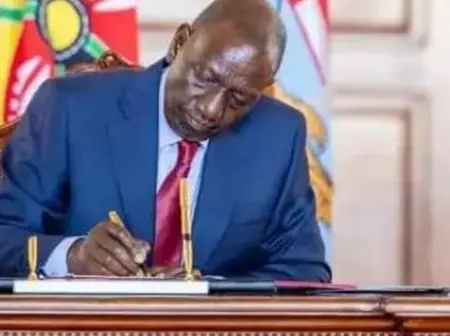
President William Ruto and several Cabinet Secretaries have announced fresh appointments across various state agencies, bringing changes to leadership positions in different government institutions.
The latest appointments are part of ongoing efforts by the Kenya Kwanza administration to strengthen public institutions and improve service delivery. They also signal continued changes in the management of government bodies responsible for implementing national policies and overseeing key public programmes.
The appointments involve different agencies operating under various ministries, with the new officials expected to take up responsibilities in their respective positions. Such changes are significant because state agencies play an important role in implementing government projects, managing public resources and delivering essential services to Kenyans.
President Ruto has previously defended changes within government institutions, arguing that placing the right people in leadership positions is necessary to improve efficiency and accountability.
Cabinet Secretaries also have an important role in overseeing institutions under their ministries and ensuring that government policies are implemented effectively.
However, the latest appointments are likely to attract public attention, particularly regarding the experience and qualifications of those selected. Kenyans will be keen to see whether the new leadership teams can deliver meaningful improvements in the institutions they have been assigned to manage.
The changes also come at a time when the government faces pressure to address concerns surrounding unemployment, the cost of living and the performance of public institutions.
As the newly appointed officials prepare to assume their duties, attention will turn to their ability to meet expectations and deliver on their respective mandates.https://www.facebook.com/100064288795404/posts/1590821886404089/?app=fbl
Kimilili MP Didmus Barasa has urged Deputy Inspector General of Police Eliud Lagat's counterpart, Mr Masengeli, to take action against young men who consume traditional alcohol known as busa.
In a statement on Monday, November 23, 2026, Barasa asked Masengeli to ensure young men found drinking the local brew are arrested on Sundays and taken to church for prayers.The lawmaker said the initiative would help the young men abandon alcohol consumption and change their behaviour.
Barasa appealed for the intervention as concerns over alcohol consumption among young people continue to feature in public discussions.
He suggested that taking the affected youths to church would give religious leaders an opportunity to pray for them and encourage them to stop drinking alcohol.
His remarks have presented a religious approach to addressing alcohol consumption, with the MP calling for police involvement in the proposed initiative.
Remember to like, share and follow me for more of these updates.