Category: Politics

  • EACC Reveals How Many Candidates With Integrity Issues Were Blocked in 2017 and 2022

    EACC Reveals How Many Candidates With Integrity Issues Were Blocked in 2017 and 2022

    The commission says Kenya's existing laws and constitutional provisions have not been adequately enforced, allowing candidates flagged over integrity concerns to proceed with their political ambitions.

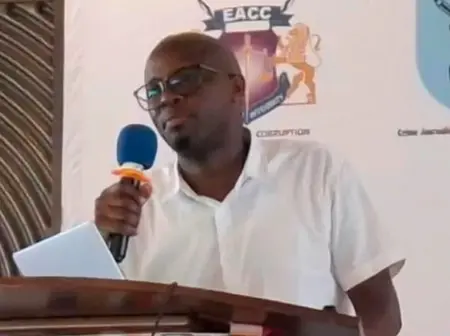
    EACC Regional Manager for Western Kenya, Eric Ngumbi, said the commission identified 87 individuals with outstanding integrity issues during the 2017 General Election. The number rose to 241 in the 2022 election.

    However, only a small number were prevented from contesting, raising questions about the effectiveness of the current enforcement system.

    Speaking during a media engagement in Mombasa on November 23, Ngumbi said none of the 87 individuals flagged in 2017 was barred from contesting, while only five of the 241 identified in 2022 were blocked by the Independent Electoral and Boundaries Commission (IEBC).

    The commission argues that the figures demonstrate the gap between identifying candidates with integrity concerns and taking action to stop them from seeking public office.

    EACC is proposing reforms to strengthen the authority of its recommendations on the suitability of people seeking public appointments and elective positions. It also wants clear legal procedures and timelines established for the verification of candidates.

    The commission says the current framework remains inadequate, particularly where candidates are under active corruption investigations or have criminal cases pending in court but are still allowed to contest elections.

    It has also raised concerns about conflicting court decisions on the eligibility of candidates facing corruption investigations and criminal proceedings.

    According to EACC, uncertainty over the interpretation of Articles 99(3) and 193(3) of the Constitution, including questions surrounding the exhaustion of appeals and review processes, has complicated efforts to enforce integrity requirements.

    The commission wants lawmakers to address legal ambiguities surrounding disqualification, integrity standards and the threshold of proof required in ethics-related matters.

    It has also called for integrity cases involving aspiring leaders to be handled promptly so that disputes over their eligibility are settled before elections, rather than dragging on after candidates have been cleared or elected.

    Political parties have also come under scrutiny for failing to adequately enforce integrity requirements during nominations.

    Ngumbi said some parties prioritise popularity, political influence and other considerations over constitutional standards, allowing candidates with integrity concerns to secure nomination.

    The EACC is urging political parties to strengthen their internal vetting systems, conduct thorough background checks and ensure that candidates meet constitutional requirements before being nominated.

    The commission also raised concerns about public officers seeking elective positions without complying with the requirement to resign at least six months before elections.

    Some officers reportedly return to their government jobs after failing to secure party nominations, a practice that raises questions about compliance with the Elections Act.

    EACC says enforcing integrity standards also requires greater public involvement, arguing that voter apathy and tolerance of unethical behaviour weaken accountability efforts.

    The commission maintains that legislation alone cannot guarantee credible elections without cooperation from accountability institutions, political parties, civil society, the media and citizens.

    It also highlighted public interest litigation and court decisions that strengthen accountability as important tools in protecting the rule of law.

    According to EACC, integrity checks should cover the entire electoral cycle, from the early stages of political activity and nominations to campaigns, voting and the period after elections.

    As Kenya prepares for the 2027 General Election, the commission plans to verify the integrity of aspirants and launch a nationwide integrity awareness campaign in December 2026, targeting young people among other groups.

    It says it will receive and act on complaints before, during and after elections, establish complaint desks during campaigns, engage political parties and aspirants, participate in court proceedings and issue advisories on emerging integrity risks.

    Among the issues it intends to monitor are voter bribery, misuse of public resources during campaigns, theft of public funds, deployment of public officers to political activities and failure by government employees to resign within the required period before seeking elective office.

    Other concerns include forged academic certificates, politicians using their names to brand public projects for political gain, misinformation, manipulation of public narratives and failure to comply with wealth declaration requirements.

    The commission reminded public officers of the requirement to submit initial wealth declarations within 30 days of assuming office and final declarations within 30 days of leaving office.

    Ngumbi said credible elections should not be judged solely by the conduct of the electoral process or the eventual winner, but also by the integrity of the people entrusted with public authority and the confidence citizens have in state institutions.

    It urged journalists to continue investigating integrity concerns and educating citizens on the importance of ethical leadership as the country approaches the 2027 elections.

    Source
  • Ruto Takes Fresh Swipe at Opposition, Says They Have Nothing to Show for Years in Government

    Ruto Takes Fresh Swipe at Opposition, Says They Have Nothing to Show for Years in Government

    The President suggested that he had been trying to understand why his political opponents were struggling to present a convincing agenda to Kenyans, but claimed he had now discovered what he considers the main reason behind their predicament.

    In remarks that could spark fresh political reactions, Ruto turned the spotlight on the opposition's past performance, arguing that their time in government had not produced a track record they could confidently present to voters.

    “I have been wondering why those opposition fellows have no agenda, but today I finally got the answer,” Ruto said.

    He continued by making a direct accusation against his political rivals, questioning what they had accomplished during their years in government.

    “I found out that those people have no track record to show for the years they spent in government,” he added.

    The remarks represent a political challenge to opposition figures who have been positioning themselves as alternatives to the current administration while criticising government policies and demanding changes in the country's leadership.

    Ruto's argument appears to centre on the idea that politicians seeking to convince Kenyans to support them should first demonstrate what they achieved when they previously held positions of power.

    By bringing their past government experience into the debate, the President has shifted the political discussion from criticism of his administration to questions about the opposition's own record.

    The statement is likely to attract strong reactions from across the political divide, with government supporters potentially agreeing that opposition leaders should explain their achievements, while critics could argue that Ruto is attempting to deflect attention from challenges facing his administration.

    The opposition's response, if any, could further fuel the political exchange, particularly if its leaders decide to defend their past achievements or counter the President's accusations with criticism of the current government.

    Source:https://x.com/MutembeiTV/status/2124816938618511488?a=lIMGt3NxMi-ihCakeBk&s=19

  • ‘ Fagia Wote ‘: Faith Gitau Turns Gachagua’s Slogan Against His Allies Over Development

    ‘ Fagia Wote ‘: Faith Gitau Turns Gachagua’s Slogan Against His Allies Over Development

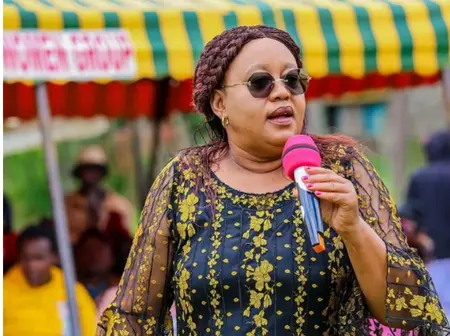
    Gitau, who is aligned with President William Ruto's administration, challenged voters to reject leaders she claimed had abandoned their responsibilities to constituents in favour of political rallies, motorcades and early campaigns ahead of the 2027 General Election.

    In a pointed political message, she urged residents to sweep out leaders who had failed to deliver on their promises, arguing that political mobilisation should not take priority over development.

    “FAGIA WOTE! Every one of them who has abandoned their responsibilities for political theatrics, endless convoys and rallies, leaving the people to bear the burden of broken promises,” Gitau declared.

    Her remarks appeared to turn the slogan associated with Gachagua's political mobilisation against members of his own camp, escalating the political rivalry in the Mt Kenya region.

    Gachagua, who leads the Democracy for the Citizens Party (DCP), has been using the 'Fagia' slogan to mobilise residents against legislators allied to President Ruto. He accuses them of betraying the region by supporting his impeachment in October 2024.

    The former Deputy President has repeatedly called on residents to vote out leaders who continue to support the current administration, with his political campaign targeting several legislators, including National Assembly Majority Leader Kimani Ichung'wah, Gitau, Ndaragwa MP George Gachagua, Kwenya Thuku of Kinangop and Ol Joro Orok MP Michael Muchira.

    Gitau has now adopted the same political language to challenge leaders associated with Gachagua, accusing them of prioritising campaigns at the expense of service delivery.

    She made the remarks during the flag-off of the Marimu B Rural Electrification Project in Kipipiri constituency over the weekend, where she questioned the commitment of leaders who spend much of their time campaigning instead of addressing the needs of their constituents.

    Gitau argued that voters should hold elected leaders accountable for the development projects they promised, particularly those involving access to essential services such as electricity.

    “Anyone who will come here and stand before you, and says, ‘you elected me, I followed someone, and I have never returned here because I am always on top of a vehicle campaigning; that is why I have never brought electricity to you,’” she said.

    She questioned what such politicians would tell residents when seeking another mandate, urging voters to reject leaders who could not point to tangible achievements in their constituencies.

    “What do such people have to tell you? Waende, wasiende!” she added.

    Gitau also dismissed the 'Fagia' chants that have been used by Gachagua's supporters, insisting that voters would now turn the slogan against leaders she accused of neglecting development.

    “Leave aside what they have been singing, ‘Fagia’. We are going to sweep them now! We shall vote out those people. Isn’t it?” she posed.

    Although she did not directly name anyone in her remarks, her comments appeared to target Kipipiri MP Wanjiku Muhia, a close political ally of Gachagua in Nyandarua.

    The two politicians have been involved in political rivalry, reflecting the broader contest between Ruto's supporters and Gachagua's faction over the future political direction of the Mt Kenya region.

    Gitau is also seeking the Nyandarua governorship on a United Democratic Alliance (UDA) ticket, placing her in the wider political contest ahead of the 2027 elections.

    She attended the electrification project launch alongside Ichung'wah, further highlighting the presence of leaders allied to the President at the event.

    The Marimu B Rural Electrification Project, being implemented by the Rural Electrification and Renewable Energy Corporation (REREC), is expected to connect 110 households to electricity.

    The political exchange comes as leaders across the Mt Kenya region intensify efforts to consolidate support ahead of the 2027 General Election, with development records, political alliances and campaign messaging increasingly becoming central to their public engagements.

    Source

  • Babu Owino Brings New Political Energy as He Eyes Nairobi Governor Seat

    Babu Owino Brings New Political Energy as He Eyes Nairobi Governor Seat

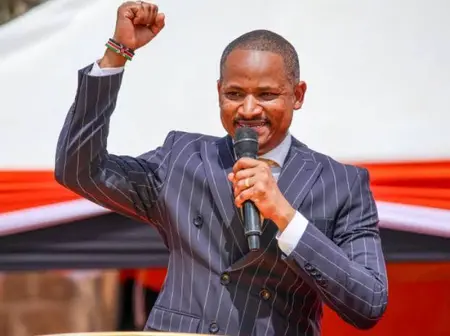
    Embakasi East Member of Parliament Babu Owino is positioning himself for the Nairobi gubernatorial race ahead of the 2027 General Election. His supporters describe him as an energetic politician with experience in public office and a strong connection to local residents.Owino has represented Embakasi East since 2017 and has said he wants to succeed Governor Johnson Sakaja at City Hall. He has also been organising support across Nairobi, a county with 85 wards and many registered voters. In September, he said he would reduce his attendance at some Linda Mwananchi rallies to concentrate on building the movement’s support base in the capital.

    The MP has begun presenting proposals on how he would manage the county if elected. In a media interview on November 21, he identified garbage collection, corruption, alleged ghost workers and poor street lighting as some of the issues he would prioritise during his first 100 days in office.He also proposed setting up a call centre where residents could report problems such as water shortages, sewer blockages and urgent concerns. The proposed service, he said, would help the county respond to complaints from neighbourhoods.

    Owino has argued that his experience representing Embakasi East gives him a foundation for managing an administration. He has also pointed to service delivery and accountability as areas that would guide his proposed leadership.However, the Nairobi governor's seat is expected to attract several contenders, and Owino will need to explain how his proposals would be funded and implemented. Managing the capital involves responsibilities that include roads, health services, waste management, county finances and coordination with the national government.

    His campaign message comes as political parties and movements begin shaping their strategies ahead of the next election. Nairobi's voters will have an opportunity to compare candidates on their records, plans and ability to address everyday challenges.The description of Owino as an accessible leader largely reflects the views of his supporters. The election contest will test how far that public image, his political organisation and his policy proposals resonate with residents across the county.Owino continues to build his profile as he seeks to turn his Nairobi ambitions into a formal campaign.

    sourcehttps://x.com/crystal_szn/status/2124840536435552349?a=5RZAkLLIJb9yWKy6pcI&s=20

  • Pauline Njoroge Explains What Sets Sifuna’s Linda Mwananchi Campaign Apart From Other Parties

    Pauline Njoroge Explains What Sets Sifuna’s Linda Mwananchi Campaign Apart From Other Parties

    In a statement on Sunday, November 22, Njoroge compared the movement’s approach with her experience working on a presidential campaign in 2013, when political mobilisation relied heavily on substantial financial resources and centrally coordinated structures.

    She recalled the scale of the earlier campaign, which included branded helicopters and extensive resources for nationwide visibility.

    However, Njoroge said the Linda Mwananchi campaign was developing through contributions and initiatives organised by supporters rather than depending entirely on a powerful central campaign machinery.

    According to her, groups such as Dada Za Sifuna and Sifuna Mashinani have taken up fundraising and mobilisation activities independently in different parts of the country.

    She also highlighted the role of Kenyans living abroad, saying members of the diaspora were contributing money, time, organisational skills and ideas to support the movement.

    Njoroge argued that the campaign's growing support reflected a willingness among ordinary citizens to participate in shaping the country's future.

    She praised Sifuna for inspiring people to identify ways they could contribute to the movement, regardless of their location or financial capacity.

    Her remarks came as the Nairobi Senator continued engaging Kenyans living in the United States during his diaspora tour.

    During a meeting in Allentown, Pennsylvania, on Sunday, Embu-born Kenyan George Njue, who lives in North Carolina, pledged at least KSh100 million towards Sifuna’s presidential campaign.

    Njue said he had travelled for approximately nine hours to attend the meeting and expressed confidence in Sifuna's leadership.

    He urged the campaign team to establish a formal mechanism through which Kenyans abroad could channel their financial contributions to the movement.

    The pledge adds to the growing discussion around diaspora involvement in the Linda Mwananchi campaign as its supporters seek ways to mobilise resources ahead of the 2027 General Election.

    https://nairobileo.co.ke/news/article/31629/how-sifunas-campaign-is-different-from-others-pauline-njoroge

  • Ruto Now Says He Eventually Passed 2024 Finance Bill After Cancelling It Due to Gen Z Demos, Details

    Ruto Now Says He Eventually Passed 2024 Finance Bill After Cancelling It Due to Gen Z Demos, Details

    President William Ruto has defended his decision to bring back tax proposals after the 2024 Gen Z protests, claiming that young Kenyans were manipulated into rejecting the Finance Bill and that the law caused no harm to the country once it was eventually passed.

    According to Citizen TV Kenya, the President has made the remarks while addressing residents during his ongoing western Kenya tour.

    The station has quoted him as saying that the 2024 Finance Bill was eventually passed and that the nation suffered no damage as a result. The report has only just been published, and the full context of the speech has yet to emerge.

    The President has argued that the opposition misled the public about the bill's likely effects, painting a picture of hardship that, in his view, never materialized.

    He has said that the manipulation of young people led to the destruction of property and the loss of lives during the demonstrations, a tragedy he has suggested could have been avoided had the facts been presented honestly.

    Having publicly withdrawn the bill after the protests, he has maintained that the later passage of a Finance Bill proved the warnings wrong.

    The 2024 bill was withdrawn and never became law, however President Ruto has now revealed that they silently passed the bill in Parliament without Kenyans knowledge yo avoid misinterpretation again.

    The remarks have landed in a sensitive space. The June 2024 protests remain one of the most painful episodes of his presidency, and families of those who died have continued to seek accountability.

    Critics have long argued that the demonstrations were driven by genuine anger over the cost of living and taxation, not by political manipulation, and they are likely to challenge his version of events.

    His supporters, on the other hand, have welcomed the explanation, saying it shows a leader willing to defend difficult decisions.

    They have pointed to the steady rollout of projects across the region as evidence that government revenue is being put to use.

    Link.

    https://www.facebook.com/share/v/1AEQg5mUcp/

  • Kibwana Warns Sifuna Supporters Against Distractions as He Reaffirms His Faith in Nairobi Senator

    Kibwana Warns Sifuna Supporters Against Distractions as He Reaffirms His Faith in Nairobi Senator

    Former Makueni Governor Kivutha Kibwana has stepped into the ongoing political conversation surrounding Nairobi Senator Edwin Sifuna and his supporters, delivering a carefully calculated message urging the emerging opposition camp to remain focused on its broader political ambitions rather than being consumed by unnecessary confrontations.

    Kibwana clarified that his earlier social media remarks were specifically intended to celebrate Nairobi politician Babu Owino's meeting with New York Mayor Zohran Mamdani, whom he described as his generational counterpart.

    His observation was therefore centred on the significance of the encounter between two leaders of a similar age and was never intended to dictate whom other political figures should associate with.

    However, his clarification comes against the backdrop of heightened political discussions among supporters of the Linda Mwananchi movement, where social media exchanges and competing interpretations of political statements have occasionally threatened to overshadow the movement's central message.

    In a significant show of confidence in Sifuna, Kibwana reaffirmed his faith in the Nairobi Senator, urging him not to allow distractions from sections of his own support base to derail his political journey.

    His intervention effectively underscored the importance of maintaining discipline, strategic thinking and political maturity within an opposition movement seeking to establish itself as a formidable force ahead of the 2027 General Election.

    The former governor's message also carried a broader implication for Sifuna's supporters, particularly those who frequently engage in heated exchanges over seemingly minor disagreements.

    He appeared to caution against allowing online confrontations to become stumbling blocks to a potentially consequential political undertaking.

    Ultimately, Kibwana's intervention reinforced the need for unity, restraint and strategic coordination, insisting that the opposition's attention must remain firmly fixed on its ultimate political objectives rather than internal disagreements and social media theatrics.

  • The Gachagua Slogan That’s Now Biting His Own Allies as UDA Lawmaker Starts Using It Against Them

    The Gachagua Slogan That’s Now Biting His Own Allies as UDA Lawmaker Starts Using It Against Them

    According to available reports, Nyandarua Woman Representative Faith Gitau has taken former Deputy President Rigathi Gachagua's "Fagia" campaign slogan and aimed it at his own political allies, deepening a contest over who will control the Mt Kenya region ahead of the 2027 general election.

    The development has been reported by The Star, Kenya, whose story has been circulating on Facebook under the headline "Woman Rep turns 'Fagia' slogan against Gachagua allies."

    The slogan, which Gachagua popularized as a call to sweep away leaders he considers disloyal or unfit, has become one of the most recognisable phrases in the region's politics. It has been used mostly to target those seen as standing in the way of his movement.

    Gitau's decision to turn the word around on his supporters has therefore been read as a pointed reversal, one that borrows the energy of his own message and uses it against his camp.

    Her move comes as rival groups in Mt Kenya jostle for influence. The region has long been a prized vote basket, and with the next election approaching, leaders on every side have been working to show that they command the support of ordinary residents.

    Gitau, who has aligned herself with the government side, has been among the leaders challenging Gachagua's grip on the area.

    Political observers have noted that slogans of this kind often take on a life of their own once they enter public conversation.

    When a phrase becomes widely known, opponents can repurpose it, and that can blunt its force for the person who first made it popular.

    Gachagua's allies have not yet responded to the remarks. Reactions from both camps are expected in the coming days, and how residents of Nyandarua and the wider region respond will say a good deal about where the contest stands.

    Link.

    https://www.facebook.com/share/1CetXyV5GC/

  • Rigathi Gachagua Hosts UN Nairobi Director-General Zainab Bangura for a Meeting in Nairobi

    Rigathi Gachagua Hosts UN Nairobi Director-General Zainab Bangura for a Meeting in Nairobi

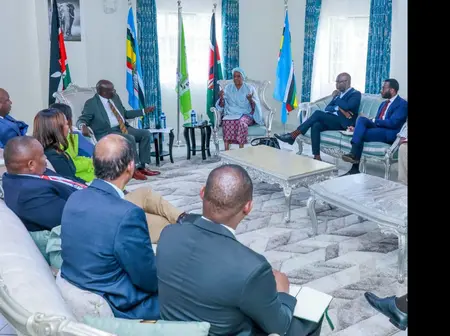
    Former Deputy President Rigathi Gachagua has hosted the Director-General of the United Nations Office in Nairobi, Zainab Bangura, in a meeting that has drawn attention to his continued engagement with international leaders.

    The meeting brought together two leaders from different areas of public service. Gachagua, who previously served as Kenya's Deputy President, has remained active in national political discussions since leaving office.

    Bangura serves as the Director-General of the United Nations Office in Nairobi. She is an experienced international leader who has held several senior positions in the United Nations. Her work has focused on international cooperation, peace, human rights and development.

    The meeting provided an opportunity for the two leaders to interact and discuss matters of mutual interest. However, the specific issues discussed during their meeting were not immediately made public.

    Gachagua's decision to host the UN official comes at a time when Kenya continues to engage with international organisations on different matters affecting the country and the wider region.

    The United Nations has maintained an important presence in Kenya through its Nairobi office, which serves as a major centre for its operations in Africa. The office supports different programmes and activities aimed at promoting development, peace and cooperation among countries.

    Bangura's position places her at the centre of the organisation's activities in Nairobi. She works with different government officials, international partners and other leaders to support the United Nations' work.

    For Gachagua, the meeting offered another opportunity to interact with a senior international representative. His public engagements have continued to attract attention as he remains a major figure in Kenya's political environment.

    Meetings between Kenyan leaders and international representatives are important because they provide opportunities to exchange ideas and strengthen relationships.

    Although further details about the discussions were not available, the meeting highlighted the continued interaction between local political leaders and representatives of international organisations.

    More information may emerge regarding the issues raised during the meeting and any possible areas of cooperation between the two leaders.

    source:https://www.facebook.com/share/p/19oZQzkpMT/

  • Gachagua Urges UN to Press IEBC on Stakeholder Engagement Ahead of 2027 Polls

    Gachagua Urges UN to Press IEBC on Stakeholder Engagement Ahead of 2027 Polls

    Gachagua made the appeal on Monday, November 23, 2026, following a meeting in Nairobi with United Nations Office at Nairobi (UNON) Director-General Zainab Bangura. During the discussions, the Democracy for the Citizens Party (DCP) leader raised concerns over what he described as growing public skepticism toward the electoral commission, alongside allegations of political violence and human rights violations.

    "We called on the UN to urgently intervene and ask the IEBC to engage all stakeholders and address issues that could undermine public trust in the electoral process," Gachagua said after the meeting. He maintained that the commission must remain objective and non-partisan rather than aligning itself with the administration in power.

    Warning that unresolved disputes over electoral management risk pushing Kenya back into its historical cycle of election-related violence, Gachagua urged the international body to pay closer attention to democratic governance and human rights in the country. He noted that Kenya remains a strategic member state of the United Nations and welcomed the organization’s expanding presence in Nairobi, saying its voice in promoting transparent, free, fair, and verifiable elections is timely.

    The meeting comes four days after Gachagua, Wiper leader Kalonzo Musyoka, and Nairobi Senator Edwin Sifuna led opposition figures in walking out of an IEBC consultative forum chaired by commission chairperson Erastus Ethekon on November 19. Opposition leaders objected to the meeting’s agenda, arguing that the commission had sidelined proposed electoral reforms and unresolved grievances outlined in earlier letters sent in May and June 2026.

    President William Ruto, however, has dismissed the opposition’s claims, accusing his rivals of attempting to manufacture excuses and disrupt preparations for the 2027 polls.