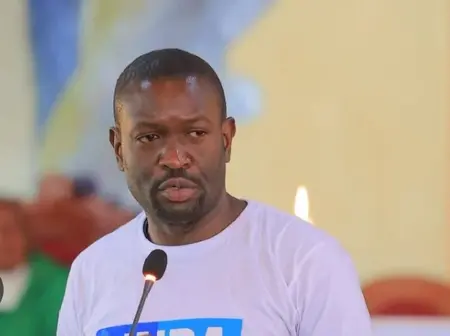
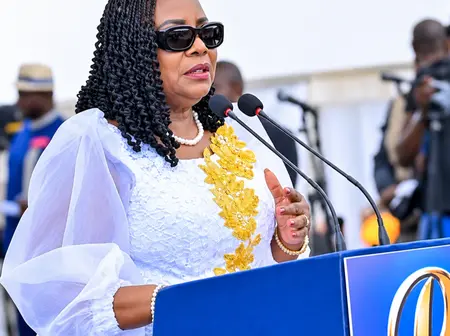
According to a post shared by The Kenyan Vigilante on X, Uhuru said he pays attention to the views of ordinary citizens and believes the public knows what it wants.
He reportedly made the remarks during a requiem mass for his cousin, Beatrice Wambui Muturi, at PCEA Nairobi West, where several opposition leaders had gathered to mourn with the family.
Among those present were Wiper leader Kalonzo Musyoka and former Deputy President Rigathi Gachagua, whom Uhuru addressed during the gathering.
His comments came amid growing debate over who should lead the opposition in the next presidential election and how competing political interests can be brought together.
He did not reportedly mention a preferred candidate or directly endorse either Kalonzo or Gachagua.
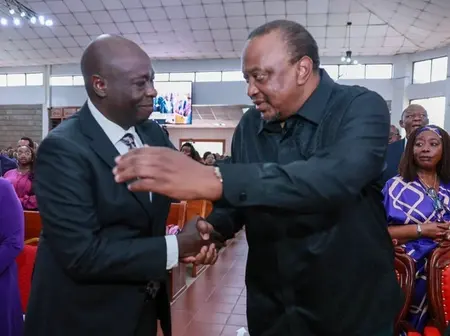
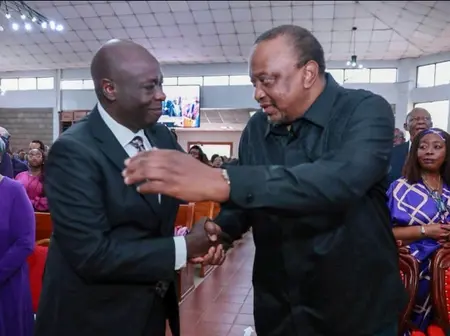
The gathering also featured a lighter moment between Uhuru and Gachagua, drawing laughter from those present. The former President further welcomed opposition leaders who attended the service.
The remarks have attracted attention because of the political weight attached to Uhuru's views as former Head of State and his continued involvement in discussions about opposition unity.
However, the report is based on The Kenyan Vigilante's post, and the full context of Uhuru's statement has not been independently confirmed.
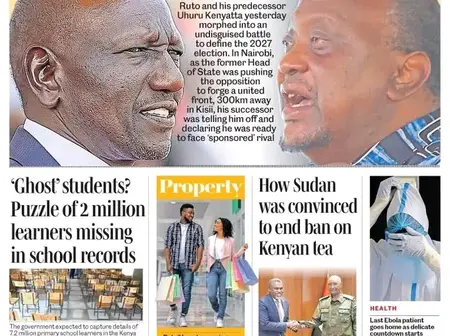
The front pages of the leading newspapers on Thursday, November 12, are dominated by 2027 politics, with President William Ruto's latest exchange with his predecessor, Uhuru Kenyatta, taking centre stage.
Here is a look at the main headlines and other top stories featured in the leading newspapers.
The Daily Nation focuses on the escalating political exchanges between Ruto and Uhuru, with its main headline capturing the president's readiness to face his predecessor's political challenge.
The newspaper examines how disagreements between the two leaders have developed into a wider contest over the direction of the 2027 elections. While Uhuru is encouraging opposition politicians to put aside their differences and work together, Ruto has dismissed his predecessor's recent political activities and maintained that he is prepared for the contest.
The front page features remarks from both leaders, reflecting their contrasting positions on the country's political future.
Other top stories include questions surrounding approximately two million learners missing from school records, developments in the property market along Mombasa Road and how Sudan was persuaded to lift its ban on Kenyan tea.
The Standard examines the growing hostility in Kenya's political environment, particularly the increasingly personal exchanges between Ruto and his former deputy, Rigathi Gachagua.
Taifa Leo also places opposition politics at the centre of its front page, focusing on Uhuru's appeal for leaders seeking to challenge Ruto to overcome their differences.
The newspaper highlights the former president's argument that competing presidential ambitions among opposition figures could weaken efforts to establish a strong political alliance.
Other stories include Mama Ida Odinga's reported decision to support Ruto and developments in Kenya's Ebola response following the recovery of the last patient.
Business Daily shifts attention to the corporate and financial sector, focusing on billionaire Narendra Raval's legal battle with the Kenya Revenue Authority over a Sh5.4 billion tax demand.
Other top stories at the front page of Business Daily newspaper include Vodacom's reported Sh181 billion gain following its takeover of control of Safaricom, Co-operative Bank's improved interim dividend after recording Sh27 billion in profits and a government bond sale that attracted limited investor interest.
People Daily focuses on Uhuru's renewed political intervention, highlighting his position that cooperation among opposition leaders will be important in determining their chances in the 2027 elections.
The newspaper also examines the public reunion between Uhuru and Gachagua at the requiem mass of Beatrice Wambui Muturi, the former president's cousin. Their appearance together has drawn attention given their previous political differences.
The light-hearted scene began when Diamond Platnumz’s hit song, Happy Birthday, played at the event. Olekina, who was standing on stage, gestured towards the President and invited him to join the celebration.
“Kuja tucheze kidogo,” the senator told Ruto as he encouraged him to come closer.
The President responded by asking the crowd to join him in celebrating the Narok senator before launching into his own version of the birthday song.
“Huyu jamaa, tumwambie happy birthday,” Ruto told the gathering before singing directly to Olekina.
He repeated the senator’s name as he delivered the birthday message, drawing attention from those attending the rally.
“Happy birthday to you, happy birthday Olekina, happy birthday Olekina, happy birthday to you,” the President sang.
Olekina appeared pleased with the gesture and thanked Ruto for joining his celebration. He responded with a brief appreciation, saying, “Thank you very much. Asante sana.”
The birthday tribute came during Ruto’s development tour of the Gusii region, where the President had also attracted attention with remarks about the country's healthcare system.
A day earlier, while commissioning Nyankororo Primary School at Kenyoro Junction, Ruto asked residents whether they knew what a payslip was.
He used the question to explain the transition from the National Health Insurance Fund (NHIF) to the Social Health Authority (SHA), arguing that the former system relied on formal employment and payslips. His remarks came as he explained how the new health insurance arrangement was intended to operate.
Uhuru jokingly said he would visit Gachagua's Wamunyoro residence in Nyeri County to collect money that the former Deputy President had received to support his 2017 re-election campaign.
The exchange attracted attention because of the political history shared by the two leaders.
During the memorial service of Beatrice Wambui Muturi, Uhuru's cousin, at PCEA Nairobi West Church.
While addressing mourners, Gachagua recalled how the deceased had given him KSh1.5 million after the Supreme Court nullified the 2017 presidential election.
He explained that the money was intended to support Uhuru's campaign during the repeat election but admitted that he had used it to settle other expenses.
When Uhuru took to the podium, he responded to Gachagua's account with humour, telling him that he had not forgotten about the money.
He jokingly suggested that he would travel to Wamunyoro with his friends to recover the amount.
His remarks sparked laughter among mourners, turning the political exchange into one of the memorable moments of the gathering.
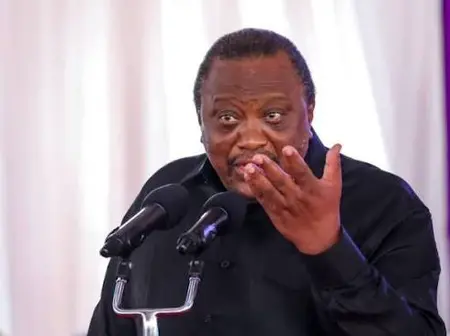
Beyond the humorous exchange, Uhuru also addressed the political situation in the country, urging opposition leaders to put their differences aside and work together ahead of the 2027 General Election.
He challenged Gachagua and other opposition figures, including Wiper leader Kalonzo Musyoka, to find common ground instead of allowing personal ambitions to stand in the way of political unity.
The interaction has attracted attention because Uhuru and Gachagua previously belonged to opposing political camps following the 2022 General Election.
Their friendly exchange at the memorial service has therefore raised fresh interest in their relationship and the possibility of greater cooperation among opposition leaders.
With the next election approaching, their public interactions are likely to remain a subject of political discussion.
Speaking during Citizen TV’s JKLive programme, Walubengo suggested that the political language used during election campaigns is no longer enough to satisfy a public facing rising expectations and economic pressure. In his view, repeatedly promising roads, water and other basic services cannot substitute for tangible improvements in the lives of ordinary Kenyans.
Walubengo’s remarks reflect a wider debate that has increasingly dominated Kenya’s political conversation: the gap between campaign promises and citizens’ day-to-day experiences. Since independence, infrastructure and access to essential services have remained central themes in political campaigns. However, many voters now appear to demand greater accountability, faster delivery and meaningful engagement with public concerns.
His comments also underline the changing nature of Kenyan politics. Younger and more politically aware citizens are increasingly questioning leaders, scrutinising promises and demanding explanations for government decisions. Social media and digital platforms have further amplified public voices, making it more difficult for political leaders to ignore widespread dissatisfaction.
The future political consequences of this public frustration will depend largely on how the government responds. Clear communication, accountability and visible results could help rebuild confidence. On the other hand, continued tension between leaders and citizens could deepen public discontent.
Walubengo’s remarks may be strongly worded, but they raise a fundamental question for Kenya’s leaders: are citizens being adequately heard, and are promises being matched with results?
What is your view on Walubengo’s criticism and the state of leadership in Kenya today? Share your remarks, views and comments in the comment section below.
Democracy for the Citizens Party (DCP) leader Rigathi Gachagua has challenged opposition leaders seeking to unseat President William Ruto in 2027 to intensify grassroots mobilisation, arguing that political meetings and public statements alone will not deliver victory at the ballot.
Speaking to the People Daily, political analyst Maina Kamunya explained why Gachagua has been pressing his United Opposition colleagues to increase their political activities, particularly at the grassroots level.
According to Kamunya, the former deputy president understands Ruto's campaign machinery from his experience working alongside him during the 2022 presidential election.
Gachagua's remarks have put leaders such as Wiper Patriotic Front leader Kalonzo Musyoka and Jubilee Party leader Fred Matiang'i under pressure to demonstrate their ability to mobilise voters ahead of the next General Election.
The DCP leader recently questioned the level of activity among his opposition colleagues, accusing some of remaining comfortable while Ruto and his allies continued strengthening their political networks.
He maintained that defeating the president would require consistent engagement with voters, warning that press conferences and occasional political gatherings could not match an organised campaign.
Kamunya argued that Gachagua's experience inside the Kenya Kwanza administration gives him an understanding of the strategies and mobilisation techniques that helped Ruto secure victory in 2022.
The analyst further suggested that Gachagua wants opposition leaders to recognise the scale of political organisation required to challenge the president, rather than assume that public dissatisfaction with the government will automatically translate into votes for the opposition.
He also linked Gachagua's determination to his desire to overturn the political outcome of the 2022 election, arguing that the former deputy president is keen to demonstrate that the same grassroots mobilisation machinery that helped Ruto win can be used against him.
Beyond the criticism of his colleagues, Gachagua's demands raise questions about how opposition leaders intend to share responsibilities in the campaign and demonstrate their individual political influence.
With several figures reportedly interested in the coalition's presidential ticket, their ability to mobilise voters could become an important consideration in negotiations over who eventually represents the opposition in 2027.
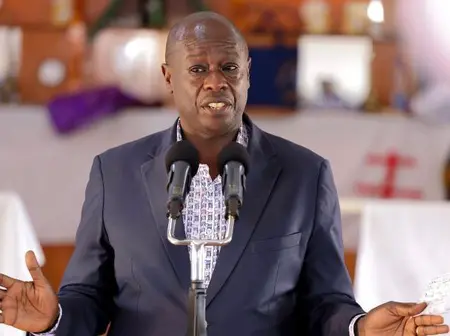
Gachagua suggested that efforts by unnamed individuals to create a rift between him and Uhuru had failed, insisting that their connection remained intact.
“Someone tried to come between Uhuru Kenyatta and me, but who is God?” he remarked.
The statement has attracted attention given the political history between the two leaders and the changes that have shaped their relationships with other political figures in recent years.
Uhuru and Gachagua served in the same government after the 2022 General Election, when William Ruto became president. However, their political paths have since been a subject of public discussion.
By making the remarks, Gachagua appeared to dismiss the idea that outside efforts could permanently damage his relationship with the former Head of State.
His comments have also renewed interest in the political significance of their association as leaders begin positioning themselves ahead of the 2027 General Election.
Uhuru remains a prominent figure in Kenyan politics, particularly in the Mount Kenya region, where his views on national leadership and political alignments continue to attract attention.
Gachagua, meanwhile, has remained active in opposition politics, making his relationship with the former president a subject of interest amid ongoing political realignments.
However, Gachagua’s statement does not establish that the two leaders have entered into a formal political agreement or settled on a shared strategy for the next election.
Their appearance together and the former Deputy President’s remarks have nevertheless brought their relationship back into the political conversation.
Whether the renewed public engagement will translate into closer political cooperation remains to be seen as the 2027 election approaches.
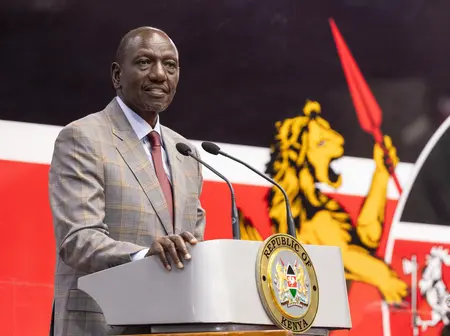
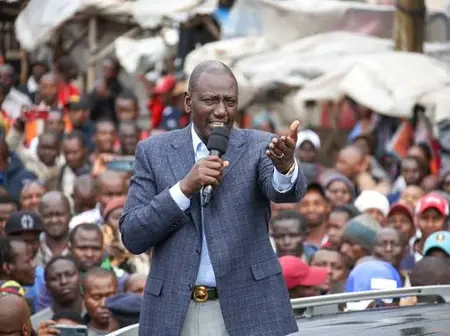
During a rally in Kisii town on Wednesday, November 11, Ruto dismissed Uhuru’s remarks, suggesting that the former President was receiving misleading information from people he described as drunkards.
"Uhuru unasema Wakenya hawako na mimi, hizo ni mambo unasikia kutoka kwa walevi wenzako, hao watu hawana mpango," Ruto declared.
The President made the comments while concluding his four-day development tour of Kisii and Nyamira counties. His response followed Uhuru’s appeal for opposition leaders to overcome their differences and agree on one presidential candidate to face the incumbent in 2027.
Uhuru had spoken during a requiem mass for the late Beatrice Wambui at PCEA Nairobi West. He said people he encounters during visits to villages often tell him they are not prepared to support Ruto for another term.
Ruto, meanwhile, used his Kisii address to defend his administration’s record, pointing to development projects launched, inspected and commissioned during his visits to the two counties.
He maintained that his government was delivering on commitments made during the 2022 election campaign.
The Head of State also credited the broad-based political arrangement involving the United Democratic Alliance (UDA) and the Orange Democratic Movement (ODM) with supporting the government's development agenda.
The exchange has renewed attention on the relationship between Ruto and Uhuru, who were political allies before their differences became public. Their latest remarks have also brought the 2027 succession contest back into focus, with opposition leaders facing calls to settle on a common candidate.
Nairobi Senator Edwin Sifuna has launched a fresh verbal attack on Prime Cabinet Secretary Musalia Mudavadi questioning his commitment and energy when it comes to political mobilisation and attending public meetings.
Speaking during a political engagement Sifuna appeared to take issue with Mudavadi's alleged lack of enthusiasm using Cabinet Secretary Kawira Mwangaza as an example of a leader he believes is more active on the ground.
In his remarks, Sifuna claimed that while Kawira Mwangaza could attend as many as ten political meetings Mudavadi would allegedly still be asleep.
"Musalia Mudavadi ni mtu mzembe, wakati mama Kawira Mwangaza amepiga mikutano kumi, Musalia anakuwaga hajaamka," Sifuna remarked.
The statement, which directly targeted Mudavadi's political work ethic could spark fresh reactions within Kenya's political circles particularly as politicians begin positioning themselves ahead of the 2027 General Election.
Sifuna's comments also appeared to highlight the growing competition among political leaders in demonstrating their grassroots mobilisation abilities and commitment to political activities.
Mudavadi, who serves as Prime Cabinet Secretary and Foreign Affairs Cabinet Secretary remains one of the senior figures in President William Ruto's administration.
However, Sifuna's remarks have added another layer to the ongoing political exchanges between government allies and opposition figures.
With political temperatures gradually rising ahead of 2027 such remarks are likely to intensify debate over leadership, political energy and the ability of prominent politicians to mobilise supporters across the country.
At the center of the debate is Ambassador Mama Ida Odinga, who has issued a firm warning to party members considering abandoning the broad-based government arrangement.
Speaking during a public event in Suba North, Homa Bay County, on November 11, 2026, Dr. Odinga made her political loyalties unmistakably clear.
She declared that her late husband, former Prime Minister Raila Odinga, left her firmly rooted inside ODM and within the cooperative framework led by President William Ruto.
“He left me in ODM, and that is where I stand,” Mama Ida told the gathering, insisting she has no intention of charting a different political course.
She reminded party faithful that Raila recognized Ruto's leadership before his passing in October 2025, urging supporters to remain exactly where the late leader left them.
Her remarks come amid growing internal friction over whether ODM should back President Ruto's 2027 re-election bid or field its own presidential candidate.
According to reports by People Daily and Citizen TV, sharp divisions have emerged within the party ranks regarding the future of the partnership.
While a section of leaders led by ODM party leader Oburu Oginga favors maintaining ties with the ruling administration, other prominent voices have urged caution.
East African Legislative Assembly MP Winnie Odinga has previously stated that she remains undecided on backing Ruto, arguing that party delegates must formally decide ODM's 2027 direction.
Meanwhile, Ruth Odinga has warned that she would exit the party if it strays from her late brother's core ideals.
By drawing a hard line in defense of the broad-based pact, Mama Ida has effectively challenged dissenting factions within her late husband's party.
Her intervention signals that any attempt to pull ODM away from President Ruto ahead of the August 10, 2027 polls will face stiff resistance from within the Odinga family.
As competing camps weigh their options, Mama Ida's message leaves little room for ambiguity: loyalty to Raila's legacy means staying the course.