Category: Politics

  • What Ruto’s 2032 declaration means for Kenya’s political succession #Kenya

    What Ruto’s 2032 declaration means for Kenya’s political succession #Kenya

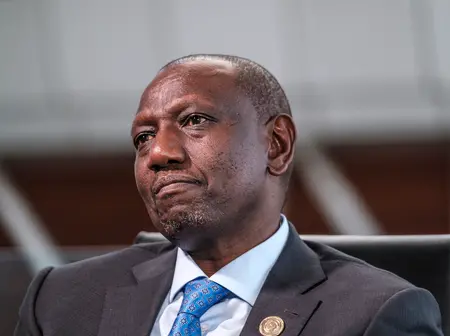
    Speaking during his development tour of the Gusii region on Tuesday, November 10, 2026, Ruto dismissed attempts by opposition leaders to form a united political alliance, insisting that he would eventually leave the political arena together with his political rivals.

    “I am the same age as these leaders, and I want to assure Kenya’s young people that I will bring all of them together, including Mr 40 (Kalonzo) and Mr Texas (Gachagua), and take them with me. We will all leave politics in 2032,” Ruto declared.

    The remarks were widely interpreted as a response to the growing political cooperation between Gachagua and Kalonzo, who have been holding consultations with other opposition leaders as they explore the possibility of forming a united political alliance to challenge Ruto in the next presidential election.However, the President’s statement remains a political declaration and does not amount to a formal agreement among the three leaders to retire from active politics in 2032.

    Ruto’s comments come at a time when opposition leaders are engaged in discussions over coalition-building, leadership arrangements and the identification of a possible presidential candidate for the 2027 General Election.

    ![World Report 2023: Kenya | Human Rights Watch](https://images.openai.com/static-rsc-4/UjcKG7-h-YWRe7maI3Wlr-cpBVLjMCTO3GxjV14zdZ53YqZDodtlbEFeJBzKpw89EGPnxb6D_QzWfP1-cUx9tu9OJyX-eCEDFJpBTqBJnkNudS5soZwL0d3irhe3aJ4711EUfze9zMxcIE4NnNBxu3JUboGOZElLM-OKvrp-tefwB1vgbCbhVBpOsdYzzVr6?purpose=fullsize)

    On November 8, 2026, Gachagua, Kalonzo and Jubilee Party leader Fred Matiang’i held consultations as opposition figures sought to address internal disagreements over the coalition’s leadership structure and the inclusion of different political formations.

    The talks highlighted the challenges facing opposition leaders as they attempt to bring together their respective political support bases and establish a common platform to compete against the incumbent President.Meanwhile, Ruto faces an emerging political alliance whose strength will depend on the leaders involved, their cooperation and their ability to mobilise supporters across different regions.

    The year 2032 has increasingly featured in political discussions because it comes after the next two presidential election cycles, bringing questions about succession and the future of established political figures into focus.

    Ruto’s declaration has also sparked discussion about how political leaders intend to navigate life beyond elective positions and whether they will continue influencing national politics through political parties, close allies or preferred successors.

    Nevertheless, there has been no indication that either Gachagua or Kalonzo has accepted Ruto’s prediction that the three leaders will leave active politics together in 2032.The President made the statement while undertaking a four-day development tour of Kisii and Nyamira counties, where he launched and inspected various infrastructure projects.On Tuesday, he presided over the launch of the upgrading of the 22.1-kilometre Kenyoro SDA–Riana Market and Kerina–Mwata roads in Bonchari Constituency, Kisii County.

    Ruto also announced a KSh22 billion allocation towards road construction and rehabilitation projects across the two counties. Additionally, he launched a KSh1.7 billion Last Mile Connectivity programme expected to extend electricity access to another 25,000 households.The initiatives are aimed at improving rural road networks, expanding electricity connectivity and creating better opportunities for businesses and local communities.With the 2027 General Election drawing closer, development promises, opposition coalition negotiations and long-term succession plans are expected to remain prominent issues in Kenya’s political discussions.
  • Ruto’s Kisii Tour Takes a Dramatic Turn After Kibet-Arati Exchange

    Ruto’s Kisii Tour Takes a Dramatic Turn After Kibet-Arati Exchange

    Exclusive: President Ruto says Kenya still undecided over Eurobond

    The incident caught the attention of residents and other leaders who had gathered to witness the President's visit.

    Kibet, who is among President Ruto's close aides, was captured engaging in a disagreement with Governor Arati. The exchange created a tense moment during the tour, attracting public attention.

    Governor Arati is an influential political figure in Kisii County and has continued to play an active role in local and national politics.

    President Ruto's visit to the region was expected to provide an opportunity for leaders to discuss development matters and address issues affecting residents.

    However, the exchange between his aide and the governor appeared to shift attention from the main activities of the tour.

    The incident has also sparked discussions among Kenyans, with some questioning why leaders would engage in public disagreements during an important presidential visit.

    Others are waiting for more details to understand what led to the confrontation and whether the matter could affect future engagements between the leaders.

    Political differences between leaders are not new in Kenya, especially during public events where national and county leadership meet.

    Despite the incident, the need for cooperation between national and county governments remains important in delivering services and development projects to citizens.

    Kenyans will be keen to know whether Kibet and Arati will address the disagreement and put the matter behind them.

    For now, the reported exchange has become one of the talking points from President Ruto's Kisii tour.

    Source:https://www.facebook.com/share/p/1e9SL1Fi6o/

  • Manyora explains why Ruto could lose Western Kenya to Sifuna in 2027

    Manyora explains why Ruto could lose Western Kenya to Sifuna in 2027

    Manyora explains why Ruto could lose Western Kenya to Sifuna in 2027

    Political analyst Herman Manyora has warned President William Ruto against assuming that he can secure Western Kenya’s votes in the 2027 General Election because the Luhya community is politically divided, arguing that Nairobi Senator Edwin Sifuna could attract overwhelming support in the region.

    Speaking during an interview with a local station on Thursday, November 12, 2026, Manyora dismissed the argument that divisions within the Luhya community would give Ruto an advantage, predicting that Sifuna could command particularly strong support in Vihiga and Busia counties.

    Manyora argued that political loyalties in Western Kenya are more complex than the divisions between different Luhya subgroups, warning Ruto’s allies against relying on the assumption that Sifuna’s community background would automatically weaken his appeal.

    “I want to tell those people who think Ruto will penetrate the West merely because Sifuna is a Bukusu; they are wrong,” Manyora said.

    He maintained that Vihiga could deliver Sifuna his strongest percentage of votes from the Mulembe community if the senator contests the presidency in 2027.

    Manyora predicted that Vihiga would give Sifuna the highest percentage of votes among Luhya voters, followed by Busia.

    “In terms of percentages, not in terms of absolute numbers, in terms of percentages, the highest percentage of votes from the Mulembe nation that Edwin Sifuna will get, will come from Vihiga, followed by Busia” he said.

    He added: “Almost to a man, the Vihiga people will vote for Sifuna.”

    Senator Edwin Sifuna addressing Linda Mwananchi's leaders' meeting in Bungoma on Friday, October 16, 2026. PHOTO/@HonWamboka/X

    The analyst attributed his prediction to the region’s political and cultural dynamics, arguing that differences in language and dialect do not necessarily translate into the voting patterns some politicians expect.

    He cautioned Ruto’s camp against treating divisions within the Luhya community as a guaranteed route to winning Western Kenya.

    Manyora said Bungoma’s political situation was different, citing the influence of leaders such as National Assembly Speaker Moses Wetang’ula and the presence of other communities in the county.

    He described Wetang’ula as “a master chess player” and warned against writing off established political figures and local leaders.

    Manyora also questioned the influence of Prime Cabinet Secretary Musalia Mudavadi, arguing that he was not sufficiently active on the ground.

    He said the political composition of Bungoma made it difficult to assume that all voters would support a particular candidate based on ethnic identity alone.

    “Anybody on the Ruto side building on getting Western because of this Bukusu narrative, I want to advise them. Please look for another thing,” he said.

    Manyora’s latest remarks follow his earlier warning that Ruto’s public attacks on Sifuna could increase the senator’s popularity rather than weaken it.

    In an earlier political analysis in October, Manyora argued that Sifuna’s supporters were not particularly concerned by allegations that the senator was being sponsored by retired President Uhuru Kenyatta.

    “The more you attack Sifuna, the more popular he becomes,” Manyora said.

    President William Ruto during a past church event.PHOTO/@WilliamsRuto/X

    The exchanges between Ruto and Sifuna have also touched on government policies, affordable housing and the senator’s political ambitions.

    Ruto has previously challenged Sifuna to make his agenda public, while Sifuna has criticised aspects of the government’s housing programme.

    Manyora’s latest assessment suggests that the contest for Western Kenya could depend on more than political alliances and divisions within the Luhya community.

    However, his predictions remain political analysis, and the actual distribution of votes will depend on the candidates, alliances and issues shaping the 2027 election.

  • Uhuru Kenyatta Sends Message to Kalonzo and Gachagua as Ruto Responds to His 2027 Election Remarks

    Uhuru Kenyatta Sends Message to Kalonzo and Gachagua as Ruto Responds to His 2027 Election Remarks

    Former President Uhuru Kenyatta has urged opposition leaders to put aside their political differences and unite ahead of the 2027 General Election.

    Uhuru challenged leaders hoping to challenge President William Ruto to set aside their individual ambitions and agree on a common political direction, saying Kenyans wanted to see a united opposition.

    The former Head of State made the remarks on Wednesday, November 11, during the requiem mass of his cousin, Beatrice Wambui Muturi, at PCEA Nairobi West Church in Lang'ata, Nairobi.

    The service brought together several prominent opposition figures, including former Deputy President Rigathi Gachagua, Wiper Party leader Kalonzo Musyoka and Democratic Action Party of Kenya (DAP-K) leader Eugene Wamalwa.

    While addressing the leaders, Uhuru reminded them that only one person could occupy the country's top seat at a time. He urged them to prioritise unity instead of allowing individual presidential ambitions to divide them.

    He also revealed that his interactions with ordinary Kenyans had convinced him that many people wanted opposition leaders to work together rather than remain divided by political disagreements.

    According to the former President, one of the major challenges facing the opposition was its inability to agree on a common direction despite growing calls for unity.

    His remarks have attracted attention as several opposition leaders continue to position themselves ahead of the 2027 elections, with some expressing interest in succeeding President Ruto.

    However, President William Ruto also had a response to Uhuru's remarks.

    While addressing residents during his tour of the Gusii region on Wednesday, Ruto criticised the former President's involvement in opposition politics, describing him as a political broker rather than a statesman.

    The President questioned Uhuru's efforts to bring opposition leaders together and challenged him to continue engaging in politics.

    Ruto also defended his administration's record, maintaining that his government was moving the country forward despite criticism from political opponents.

    The exchange has once again drawn attention to the relationship between the two leaders, who were once close political allies before falling out during the build-up to the 2022 General Election.

    With the 2027 elections approaching, Uhuru's latest remarks have renewed discussions about the opposition's efforts to agree on a common presidential candidate.

    Attention will now turn to whether Kalonzo Musyoka, Rigathi Gachagua, Eugene Wamalwa and other opposition leaders can overcome their differences and agree on a candidate to challenge

    President Ruto at the ballot.

  • Wajackoyah calls for review of Kenya’s historical debts and land ownership

    Wajackoyah calls for review of Kenya’s historical debts and land ownership

    Wajackoyah calls for review of Kenya’s historical debts and land ownership

    Roots Party leader George Wajackoyah has called for a comprehensive review of government borrowing, public contracts and historical land ownership in Kenya, arguing that the country must confront decisions made since independence to address its economic and social inequalities.

    Wajackoyah said Kenya could not properly examine its current financial position without investigating how successive administrations accumulated public debt, entered into government contracts and managed public resources.

    Speaking during a morning interview on a local radio station on Thursday, November 12, the 2027 presidential candidate questioned the secrecy surrounding government borrowing, saying Kenyans should have an opportunity to examine and contribute to major financial decisions before they are implemented.

    “We shall have to look into all those contracts that the government has signed. Right from independence,” Wajackoyah said.

    He argued that the review should extend to the country’s fiscal policy, public financial management and constitutional framework, particularly the involvement of citizens in decisions made on their behalf.

    The Roots Party leader said Kenyans should be informed about borrowing plans in advance instead of learning about major financial commitments after decisions have been made.

    “We need to see why there is some kind of secrecy when it comes to borrowing. Why aren’t we told in advance so that you can also put an input?” he asked.

    Drawing comparisons with the United Kingdom, where he said he had practised law for many years, Wajackoyah argued that public participation should allow citizens to question government projects and expenditure before they proceed.

    He cited town hall engagements as an example of how communities could scrutinise proposed projects and express their priorities.

    “People can debate, and the bill will be stayed for a while. People can come up and say, no, we don’t need this road. We need this school. Why do we have to?” he said.

    He maintained that citizens should have a meaningful opportunity to influence decisions affecting public resources, adding that courts should intervene where disputes or questions about the economic implications of government decisions arise.

    The former presidential candidate also called for investigations into historical land allocations and the accumulation of large properties by some families, arguing that the country needed to establish how such disparities emerged.

    He questioned why some families own extensive tracts of land while other Kenyans continue to experience poverty.

    “We better find out why some families own large tracts of land in this country, whereas some people are very poor,” he said.

    Roots party leader George Wajackoyah. PHOTO/@glwajackoyah/X

    Wajackoyah further called for investigations into properties he claimed had been taken unfairly, saying historical injustices should not remain unexamined simply because they occurred many years ago.

    His proposal would involve examining inherited public debt, alleged theft of public funds and the circumstances surrounding historical property ownership.

    “Look at the debt that was inherited by every president. Look at the monies that were stolen. Look at where we are today,” he said.

    He insisted that the country needed to establish what happened before determining how to address the consequences.

    He cited Israel’s pursuit of individuals accused of involvement in Holocaust-era atrocities as an example of why accountability should not be abandoned because of the age of a case.

    “Nothing is indispensable. Let us dig out. It doesn’t matter how long it will take,” he said.

    When asked whether opening up historical records and investigating past decisions could trigger a dramatic political reckoning similar to that associated with Ghana’s former leader Jerry Rawlings, Wajackoyah maintained that Kenya should proceed carefully.

    He said the country did not necessarily need to adopt an entire model from another nation but could gradually examine historical decisions and allow citizens to determine the appropriate corrective measures.

    “We should go slowly with issues of finding out how we can actually correct ourselves and let the people decide,” he said.

    Wajackoyah also proposed that individuals found guilty of wrongdoing should face public accountability through the courts.

    “It doesn’t matter if you find me guilty and you put a placard on me through the courts. I was a thief, so that I can walk all over the streets in Nairobi for people to know that I actually stole,” he said.

    His proposals place public debt, historical land injustices, government transparency and accountability at the centre of his latest political message as Kenya moves towards the 2027 General Election.

  • Political War Erupts: Ruto Tells Uhuru To Face Sober Citizens Instead Of Inebriated Crowds

    Political War Erupts: Ruto Tells Uhuru To Face Sober Citizens Instead Of Inebriated Crowds

    Uhuru to ODM: Keep alive Raila's fight for democracy, accountability and  inclusion

    Speaking publicly, the Head of State did not hold back as he addressed what he described as Uhuru's ongoing engagements with specific groups.

    The President boldly claimed that he had received reports of the former leader moving around and seeking opinions primarily from intoxicated individuals.

    According to Ruto, these actions reflect poorly on the nature of the feedback being gathered regarding the current state of national affairs.

    In a sharp and unyielding counter-message, Ruto openly challenged his predecessor to shift his focus entirely.

    He strongly advised that instead of interacting with people under the influence of alcohol, engagement should be directed toward sober citizens who have abstained from drinking.

    Ruto asserted that ordinary, sober Kenyans would provide a vastly different and much more accurate perspective on the country's trajectory.

    He maintained with absolute confidence that these individuals would readily affirm that Kenya is steadily progressing forward.

    The explosive remarks have immediately ignited intense debates across various political circles and social media platforms.

    Analysts are closely monitoring how this sharp public exchange will influence the shifting dynamics between the current administration and key opposition figures.

    As reactions continue to pour in from citizens and leaders alike, the political temperature in the country has risen significantly.

    This dramatic confrontation highlights the ongoing friction and deep-seated political rivalry that continues to shape Kenya's evolving national landscape.

    https://x.com/UzalendoNews_KE/status/2120490042196111426?a=4u3Kt5B_UWdLBuuU13g&s=20

  • “Call Me Whatever You Want, But Respect My Mother,” Babu Owino Tells Critics Calling Him Indian

    “Call Me Whatever You Want, But Respect My Mother,” Babu Owino Tells Critics Calling Him Indian

    In a statement attributed to him, Babu questioned whether people were only now discovering that he was Indian, appearing to address the conversations and comments surrounding his background.

    "Is this the first time people are discovering that Babu Owino is Indian? One minute it's Patel, the next it's Mumbai," he said.

    However, the legislator made it clear that while people were free to call him whatever they wanted, his mother should not be dragged into the exchanges.

    "Call me whatever you want but please, respect my mother. One day she will be the one to open for you State House gate," Babu stated.

    His remarks took a personal turn as he defended his mother while responding to the comments directed at him.

    The MP also used the opportunity to make a political statement about his relationship with his supporters, presenting his political journey as one that extends beyond his individual ambitions.

    "Voting Babu Owino IN, brings hope to your family. Fighting Babu, you're fighting your own family," he added.

    His message combined a response to remarks about his identity with a defence of his family and a statement about his political support.

    The reference to State House also added a political dimension to his message, as he portrayed his family's future role in a manner that suggested confidence in his political ambitions.

    Watch the video here

    https://x.com/PeterReagan777/status/2120609575317504268?a=vBP05OMArEVuDOgBwRI&s=19

  • Tension Erupts During Ruto’s Kisii Tour as Farouk Kibet Clashes with Governor Arati.

    Tension Erupts During Ruto’s Kisii Tour as Farouk Kibet Clashes with Governor Arati.

    Exclusive: President Ruto says Kenya still undecided over Eurobond

    The incident attracted attention as the two leaders appeared to disagree during the president's visit, creating an uncomfortable moment during the public event.

    The cause of the disagreement was not immediately clear, but the incident raised questions about the relationship between leaders in the region and those close to the Head of State.

    President Ruto's visit to Kisii was part of his ongoing engagements with residents and local leaders. Such visits are usually aimed at inspecting development projects, launching new programmes and addressing issues affecting local communities.

    Governor Arati, who is a prominent political figure in the region, has previously been vocal about political and development matters affecting Kisii County.

    The exchange involving Kibet and Arati comes at a time when political relationships and competition continue to attract public attention across the country.

    The incident also sparked interest among Kenyans, with many waiting to understand what caused the disagreement and whether it could affect the working relationship between the leaders.

    Source:https://www.facebook.com/share/p/1e9SL1Fi6o/

  • Poghisio Calls on Ruto and Uhuru to Exercise Respect in Public Exchanges

    Poghisio Calls on Ruto and Uhuru to Exercise Respect in Public Exchanges

    “Let William Ruto speak about Uhuru Kenyatta respectfully, and let Uhuru Kenyatta also speak about William Ruto respectfully. It is the Office of the President he holds, not a personal office,” the statement attributed to Poghisio reads.

    He further observed that the manner in which the two leaders communicate with each other shapes the image of the country, particularly because of their previous and current positions in national leadership.

    The appeal comes amid renewed public exchanges between Ruto and Kenyatta, who have increasingly expressed opposing political positions.

    According to The Star in a report published on November 11, 2026, President Ruto criticized his predecessor following Kenyatta's call for opposition leaders to unite ahead of the 2027 General Election.

    During a public address in Kisii County, Ruto questioned Kenyatta's involvement in efforts to bring opposition leaders together, describing him as a political broker. He also challenged the opposition to settle on a presidential candidate.

    The latest disagreement has renewed attention on the relationship between the two former political allies, who worked together under the Jubilee administration and won the 2013 and 2017 presidential elections.

    According to the official Office of the President website, Ruto assumed office on September 13, 2022, succeeding Kenyatta, who served as Kenya's fourth president.

    Poghisio's reported appeal highlights the importance of civility, institutional respect and responsible communication among senior political leaders.

    Verification note: The specific statement attributed to Poghisio could not be independently confirmed in the reliable online sources located. It should therefore be treated as an attributed, unverified quotation pending confirmation from an original recording or published interview. https://web.facebook.com/share/v/1AEzb83poL/

  • Murkomen Orders Crackdown on Armed Gangs in Ruiru

    Murkomen Orders Crackdown on Armed Gangs in Ruiru

    Interior Cabinet Secretary Kipchumba Murkomen has ordered police action in Ruiru, placing residents’ security concerns under national attention.

    The directive targets Two Rivers Crescent and Imani Estates in Mukuyu. Residents there have reported intimidation, alleged illegal occupation and threats linked to land ownership.

    Murkomen issued the order after meeting representatives of the estates on Wednesday, alongside senior security officials. He instructed Inspector General Douglas Kanja to ensure that people occupying the properties unlawfully are removed.

    The Cabinet Secretary also warned that anyone found misusing firearms would face legal action. He said even licensed gun holders could lose their licences if investigations establish that they had broken the law.

    The intervention comes as residents seek protection amid competing claims over the disputed properties. Some residents maintain that they acquired their plots legally and hold title deeds, while other claims over the land have been challenged.

    Media reports indicate that members of the family of the late former intelligence chief James Kanyotu have challenged some transactions involving the disputed land.

    Those competing claims make the police role particularly sensitive. Security officers are expected to prevent intimidation and protect people, but land ownership must be determined through the proper legal processes.

    Murkomen also warned police officers against neglecting their duties or failing to respond appropriately to complaints. Officers found culpable, he said, would face disciplinary action.

    The government has promised to increase police deployments in Ruiru and provide the local police station with an additional vehicle. The measures are intended to strengthen patrols and improve response times in the affected neighbourhoods.

    Deputy Inspector General Eliud Lagat urged residents to share credible information with security agencies. Directorate of Criminal Investigations Director Mohamed Amin also said security agencies would not allow criminal gangs to operate.

    However, Murkomen did not announce a timetable for the operation or explain how the disputed ownership claims would be resolved. That leaves residents waiting to see how quickly the promised measures will be implemented.

    For families living in the estates, the immediate concern is safety, while property owners also want their legal rights respected. Can the government restore security in Ruiru while ensuring that every land claim is handled fairly under the law?

    Sources