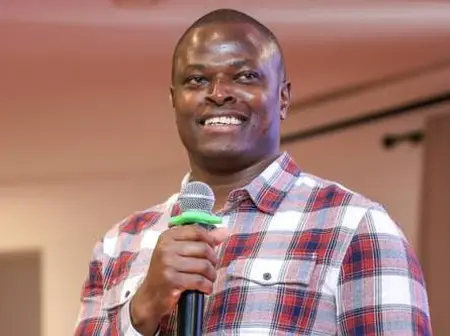
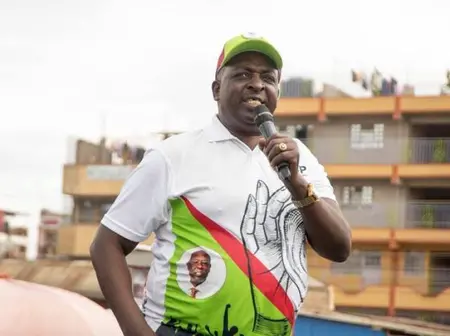
The legislator recently attracted attention after explaining why he considers dressing an important aspect of public engagements, particularly when meeting residents in his constituency.
Nyoro had stated that he had never attended public meetings in Kiharu wearing round-neck T-shirts or jeans, remarks that sparked discussions among Kenyans on social media.
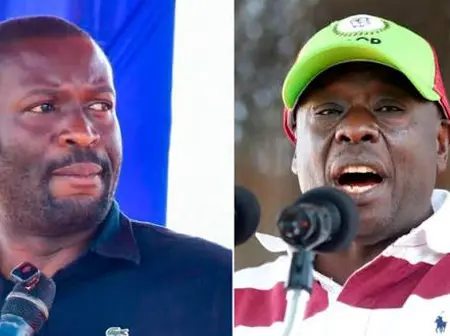
His comments also drew attention after some people interpreted them as indirect criticism of other political leaders, including Nairobi Senator Edwin Sifuna, whose dressing and hairstyle have featured in recent political conversations.
However, Nyoro has now urged Kenyans to look beyond the surface of the discussion and understand what he intended to communicate.
"Wadosi, hii story ya Tshirts ni muhimu you get the context. Let's not manufacture animosity where there's none at all," Nyoro stated.
Through his remarks, the MP emphasised the importance of understanding the context behind public statements rather than creating disagreements where none were intended.
The latest clarification comes amid increased political conversations involving different leaders as the country gradually approaches the 2027 General Election.
Dressing and personal presentation have increasingly become topics of discussion in political circles, with leaders expressing different views on how public officials should present themselves during meetings and other engagements.
Nyoro's statement has therefore sought to redirect the conversation towards the original context of his remarks, cautioning against interpretations that could create unnecessary hostility between individuals.
The legislator did not, however, provide further details in the quoted statement about the specific interpretations he was responding to.
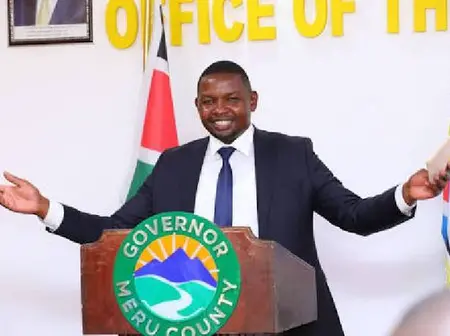
Speaking to journalists at his official residence on Sunday, November 15, 2026, Mutuma disclosed that the pronouncement was made earlier in the year during a high-level engagement also attended by Meru Senator and Senate Deputy Speaker Kathuri Murungi.
According to the county chief, President Ruto endorsed his candidature in recognition of his success in restoring political stability among local leaders and spearheading tangible development initiatives across Meru County.
Mutuma dismissed suggestions that he should step down from the gubernatorial race or settle for a senatorial bid, emphasizing that he remains focused on completing his development agenda as governor.
Highlighting healthcare, road, water, and market projects implemented across every ward during his tenure, the governor expressed confidence that voters will back his track record even if the ruling party conducts competitive primaries.
The remarks come days after Senator Kathuri Murungi publicly declared his own bid for the Meru governorship on a UDA ticket, dismissing claims of a pact to support Mutuma and daring the incumbent to hunt for votes independently.
Beyond the internal UDA rivalry between Mutuma and Murungi, the 2027 Meru gubernatorial contest is shaping up into a crowded battle involving former Agriculture Cabinet Secretary Mithika Linturi, former Governor Peter Munya, and Murega Baichu, the husband of impeached former Governor Kawira Mwangaza.
Ultimately, the escalating war of words between the governor and the senator underscores growing fractures within the ruling party's regional structures as ambitious leaders jostle for State House backing ahead of the 2027 polls.
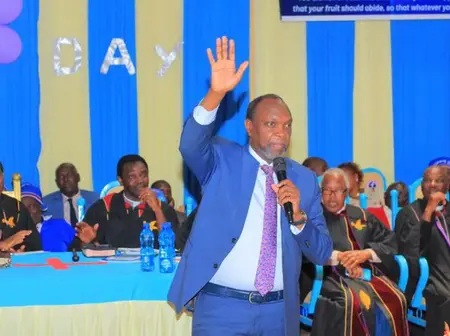
Speaking publicly on November 16, 2026, the former Ndaragwa Member of Parliament revealed that he has been largely sidelined from planning Matiang'i's political meetings, despite playing a key role in introducing the former Interior Cabinet Secretary to opposition circles.
Kioni recounted his extensive efforts to salvage and rebuild Jubilee following the 2022 elections, noting that he ultimately chose to step aside rather than engage in internal confrontations that could undermine Matiang'i's presidential ambitions.
According to Kioni, his noticeable absence from recent Jubilee activities reflects a quiet decision to avoid friction, though he insisted there is no open war within the party.
Using the biblical story of Abraham and Lot separating over grazing land to describe the impasse, Kioni indicated that the time has come for him to look for an alternative political platform to achieve his goals.
The deputy party leader also questioned Jubilee’s current grassroots strength in the Mt Kenya region, warning that aspirants seeking to run on the party's ticket in the August 2027 General Election face an uphill battle.
The remarks follow earlier expressions of disappointment by Kioni after he was bypassed for the top party leadership seat during recent structural changes that elevated Matiang'i.
While Jubilee leadership has previously maintained that the reorganization was intended to strengthen party structures and national alliance-building, Kioni’s latest statements highlight fresh divisions as political actors reposition themselves ahead of the 2027 polls.
Gachagua warned that he would not participate in campaigning for other political parties, insisting that every outfit within the opposition coalition must establish its own political identity and attract supporters.
The former Deputy President urged constituent parties to embrace healthy competition instead of depending on other leaders to popularise their political organisations across the country.
He maintained that political parties should be allowed to market themselves independently as opposition leaders prepare for the next General Election, arguing that competition would strengthen their individual political positions.
His remarks come amid growing political realignments within the United Opposition, with several leaders positioning themselves and their parties ahead of the 2027 presidential contest.
The opposition alliance has also witnessed emerging disagreements over presidential succession, particularly following Edwin Sifuna's growing political profile and his supporters' push for him to become the coalition's presidential flag bearer.
Gachagua's latest remarks signal his determination to protect DCP's political interests while allowing other opposition parties to pursue their individual ambitions without expecting his support during their campaigns.
The DCP leader has previously emphasised the importance of building a strong political movement capable of challenging President William Ruto's administration in the forthcoming elections.
The debate over political coalitions and the sharing of elective positions ahead of the 2027 General Election has taken another interesting direction following remarks by James Gakuya.
His position highlights an important question about the relationship between political parties, coalition agreements and the democratic rights of citizens.
Voters Should Have the Final Say
In Kenya's political environment, negotiations between political parties often involve discussions about parliamentary seats, governorships and other elective positions.
However, Gakuya's remarks suggest that political leaders should avoid making decisions that could limit the freedom of voters to choose their preferred representatives.
Under this approach, political coalitions would focus on broader national interests, including presidential arrangements, policy agreements and the formation of a united political front.
At the county and constituency levels, candidates would have to convince voters through their leadership records, development plans and ability to address local challenges.
This would give citizens greater influence over the political direction of their respective areas.
A Different Approach to Coalition Politics
Coalition negotiations are an important part of Kenya's multiparty democracy. Political parties often come together because they believe working as a team gives them a stronger opportunity to win elections.
However, disagreements can emerge when coalition partners begin negotiating individual constituencies and county positions.
Some politicians may feel disadvantaged when powerful parties demand certain seats as part of political agreements.
Gakuya's position could therefore attract support from leaders who believe local political competition should remain open and democratic.
Nevertheless, political parties must also balance individual ambitions with the need to build strong partnerships capable of competing nationally.
What This Means Ahead of 2027
As political formations continue positioning themselves for the next General Election, the question of how coalition agreements should work is likely to remain significant.
Political alliances may negotiate national power arrangements, but the credibility of any democratic process depends on allowing citizens to make their choices freely.
Whether other political leaders will embrace Gakuya's position remains to be seen.
What is your opinion? Should coalitions negotiate national positions and leave local seats entirely to voters? Share your views in the comments.
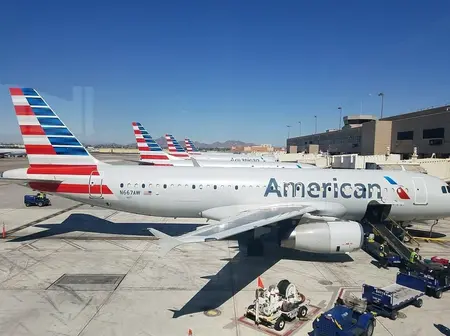
A flight carrying a senior American politician was forced to make an emergency landing after developing an engine problem while travelling to Washington, D.C.
The passenger was United States Senator Ashley Moody, who was aboard an American Airlines plane that diverted to Orlando, Florida, on Monday, November 16, 2026, following a reported engine failure.
According to reports, the aircraft was travelling from Tampa, Florida, to Washington when the crew encountered the mechanical problem and decided to make an emergency landing at Orlando International Airport.
The plane, identified as American Airlines Flight AA496, landed safely at approximately 3:02 p.m. local time. No injuries were reported among passengers and crew members.
Moody's office confirmed the incident and praised the pilots and cabin crew for their handling of the situation. The senator was grateful that everyone on board was brought safely to the ground.
Ashley Moody is an American politician who represents Florida in the United States Senate. She is a member of the Republican Party, one of the two major political parties in the United States.
For readers unfamiliar with American politics, a senator is an elected or appointed lawmaker who represents an entire state in the country's national legislature, known as Congress.
Moody was born on March 28, 1975, in Plant City, Florida. Before joining the Senate, she served as Florida's Attorney General from 2019 to 2025, making her the state's chief legal officer.
She entered the US Senate on January 21, 2025, after Florida Governor Ron DeSantis appointed her to replace Marco Rubio, who left the Senate to become US Secretary of State.
The incident has highlighted the importance of quick decisions by flight crews when aircraft develop technical problems during journeys.
In a social media post on Tuesday, Gachoka declared that neither leader would secure their perceived upcoming political seats saying that Musyoka will not become the next President of Kenya.
The declaration came as a direct response to political commentator Mary Njoroge, who questioned his focus on the Wiper leader.
Gachoka did not hold back in his assessment, dismissing the ambitions of both the national and county-level leaders.
His commentary quickly sparked debate online, drawing attention to shifting political alliances and strategies in the lead up to the next general election.
Gachoka is actively contesting for the Nairobi gubernatorial seat under the KANU party banner.
His political strategy has seen him align with Edwin Sifuna, whose presidential bid he is supporting.
This endorsement places Gachoka at odds with the existing political dynamics in the capital particularly regarding the influence of Babu Owino who is rumored to be eyeing the gubernatorial seat.
The statement signals a hardening of political lines as candidates prepare for upcoming electoral battles.
Gachoka aims to position himself as a key political kingmaker in the capital and a significant voice within the broader national coalition supporting Sifuna.
The coming months will determine whether his declarations hold weight or merely serve as rhetoric.
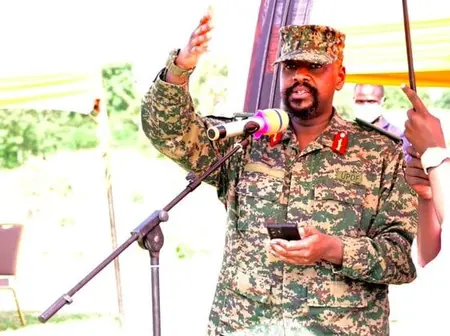
Uganda’s Chief of Defence Forces, General Muhoozi Kainerugaba, has sparked fresh international alarm after threatening to impose 10-year prison sentences and sweeping operational restrictions on foreign media outlets that publish critical coverage of his father, President Yoweri Museveni.
In a statement issued on Tuesday, November 17, 2026, the outspoken military chief signaled plans to target international news organizations and correspondents operating in Uganda whose reporting is deemed hostile to the veteran leader.
By extending punitive threats from domestic newsrooms to foreign bureaus, the army commander widely viewed as positioning himself within Uganda’s succession matrix has raised urgent legal and diplomatic questions across East Africa. Under Uganda’s constitutional order, criminal offences and custodial sentences fall strictly under the mandate of Parliament and the judiciary rather than the military high command.
For regional correspondents, including Nairobi-based media houses with bureaus in Kampala, the warning carries an immediate chilling effect. Press freedom advocates warn that criminalizing critical political reporting with decade-long jail terms effectively turns journalism into a high-risk offence, isolating Uganda from international scrutiny at a sensitive political juncture.
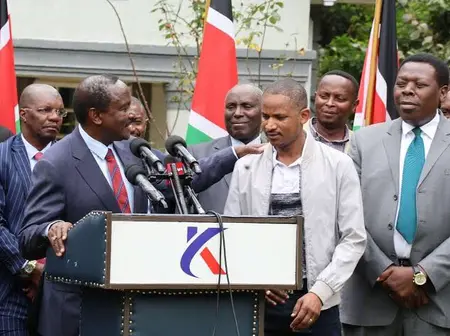
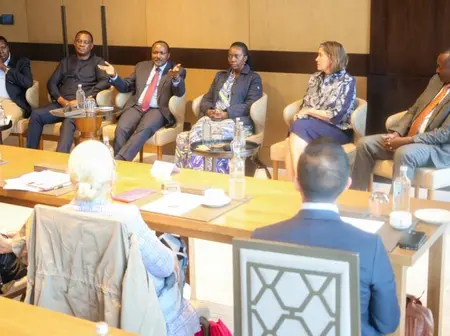
Accompanied by People's Liberation Party leader Martha Karua, Democratic Party leader Justin Muturi, DAP-K leader Eugene Wamalwa, and National Assembly Deputy Minority Leader Robert Mbui, Musyoka engaged the Council's leadership led by its President, Michael Froman.
In a statement issued following the engagement, Musyoka argued that the independence and impartiality of the Independent Electoral and Boundaries Commission (IEBC) remain central to determining whether the upcoming polls will be free and fair.
The opposition delegation also accused President William Ruto’s administration of utilizing public resources and civil servants for political campaigning while alleging instances of open voter bribery.
Furthermore, TV47 Digital and People Daily noted that the leaders presented documentation alleging a pattern of intimidation, tear gas incidents, and attacks targeting opposition rallies, journalists, and vehicles.
Musyoka emphasized to the foreign policy organization that Kenyans remain determined to seek political change peacefully through the ballot and urged international partners to closely monitor the country's democratic environment.
While The Star noted that the opposition's claims reflect their presented position and have not been independently verified, the IEBC has consistently maintained that it is fully committed to conducting a free, fair, transparent, and credible election, recently confirming on November 11 that 105 registered political parties had submitted their certified nomination rules.
Ultimately, the meeting forms part of broader international engagements by opposition figures seeking to spotlight governance and electoral reforms as political alignments intensify ahead of 2027.
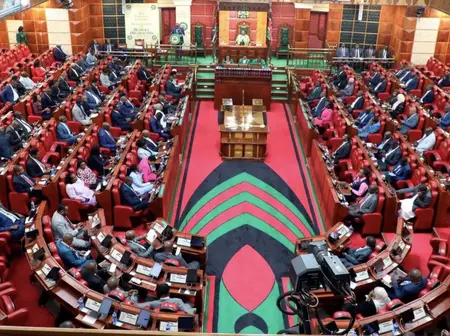
The concerns emerged during a National Assembly Trade Committee meeting where legislators questioned why Kenya did not have its own pavilion at the Osaka Expo 2025 in Japan.
Kajiado South MP Samuel Parashina strongly criticised the country’s dependence on external support, arguing that Kenya should invest in promoting its products and interests rather than repeatedly relying on other governments for assistance.
“These free things will be the end of us. These free things will finish this country,” Parashina said during the committee session held last week.
The Osaka Expo, which took place on the artificial island of Yumeshima between April 13 and October 13, 2025, brought together countries to showcase their cultures, innovations, products and investment opportunities.
Kenya participated through a shared exhibition space alongside other East African Community member states, including Uganda, Tanzania, Rwanda and Burundi. Its participation was sponsored by the Japanese government at a cost of approximately US$2.2 million, equivalent to about KSh286.1 million.
The Kenya Export Promotion and Branding Agency (Keproba) coordinated the country's participation.
However, MPs questioned why Kenya did not establish an independent pavilion, especially considering its position as one of Africa’s major economies.
Committee chairperson and Ikolomani MP Bernard Shinali sought an explanation from the State Department for Trade, asking why the country had opted for a shared exhibition space and how much it would have cost to operate its own pavilion.
Principal Secretary for Trade Regina Akoth acknowledged the concerns raised by the legislators, admitting that accepting free support does not necessarily mean a country avoids costs.
“I must confess that the love for free things is actually very costly,” Akoth told the committee.
She explained that Kenya had accepted the Japanese government's support as part of the arrangements for participating in the exhibition.
According to the PS, Kenya opted for a shared pavilion because it did not have the financial resources required to construct and operate a standalone exhibition space.
She noted that Angola managed to establish its own pavilion, while Kenya and Tanzania received support from the Japanese government.
A standalone pavilion would have allowed Kenya greater freedom in designing its exhibition space and presenting its national identity. However, it would also have required additional financial and logistical resources.
Akoth promised to revisit the financial implications of the arrangement and assess the benefits Kenya received from participating under the sponsorship.
Beyond the Japan Expo arrangement, legislators raised broader concerns about the country's ability to benefit from the numerous trade agreements it has signed with other nations and regional blocs.
Parashina questioned whether Kenya was making sufficient use of its economic position, arguing that the country should be more visible in international markets.
He also criticised the continued reliance on partnerships to promote agricultural products such as coffee, saying Kenya should have the capacity to market its exports independently.
Shinali challenged the Ministry of Trade to educate businesses and ordinary Kenyans on the opportunities available through existing trade agreements.
He argued that signing trade deals should be accompanied by practical efforts to ensure local businesses understand how to access foreign markets and benefit from preferential trade arrangements.
The legislators also questioned the performance of Keproba, accusing the agency of failing to do enough to promote Kenyan products abroad.
They expressed concern that exports had remained largely stagnant over the previous two years, despite the agency's responsibility to strengthen the country's international brand and expand access to foreign markets.
Established in 2019 through the merger of the Brand Kenya Board and the Export Promotion Council, Keproba is responsible for implementing national branding and export promotion policies.
Shinali further questioned why Kenya should depend on foreign governments to support its micro, small and medium-sized enterprises (MSMEs).
In response, Akoth clarified that the department responsible for MSMEs falls outside the Ministry of Trade and Investment. However, she said her office would work with the relevant department to coordinate efforts and avoid duplication.
Kenya is party to several trade arrangements, including the East African Community, COMESA and the African Continental Free Trade Area. It also benefits from preferential access to markets in the United States, the European Union and the United Kingdom.
The committee's concerns have placed renewed focus on whether Kenya is translating these agreements into meaningful opportunities for local businesses.
The debate also highlights a wider question about the country's approach to international partnerships: whether foreign support is helping Kenya build lasting economic capacity or encouraging continued dependence on external assistance.