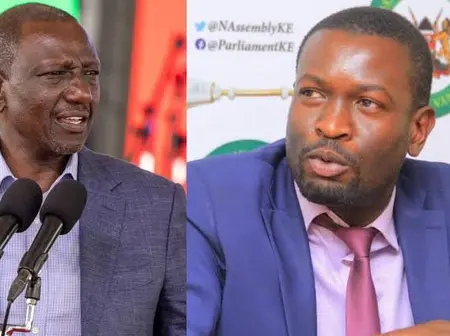
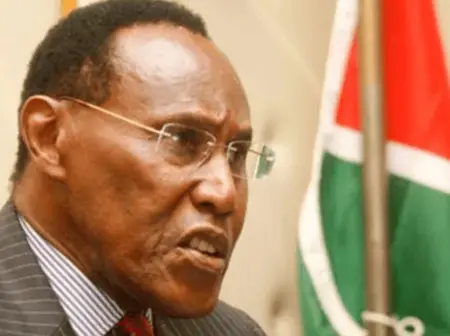
In his latest remarks, Sifuna accused the President of being dishonest, insisting that he has deliberately kept away from his official functions because he does not agree with the government's leadership and communication.
The Nairobi Senator made it clear that he has no interest in attending events organised by Ruto's administration, including the recently held State of the Nation Address.
"Kasongo's job is to lie. I don't attend his events or anything of his, such as the so-called State of the Nation Address," Sifuna stated.
His remarks have added to the growing political exchanges between opposition leaders and the Kenya Kwanza administration as the country moves closer to the 2027 General Election.
Sifuna has increasingly positioned himself among politicians demanding greater accountability from the government, particularly over its handling of national issues and promises made to Kenyans.
His latest criticism also comes amid growing political realignments within the opposition, with several leaders exploring ways of building a united front against Ruto's re-election bid.
The former ODM Secretary-General has remained outspoken about the direction of the opposition and has attracted attention through his political engagements under the Linda Mwananchi Movement.
Meanwhile, Ruto has continued defending his administration's record, maintaining that his government is implementing programmes aimed at improving the country's economy and addressing challenges facing ordinary Kenyans.
Sifuna's decision to publicly distance himself from presidential functions is likely to generate further debate, particularly among political leaders divided over how the opposition should engage with the government.
His latest remarks underline the widening political differences between him and Ruto's administration as competition for the 2027 elections continues to take shape.
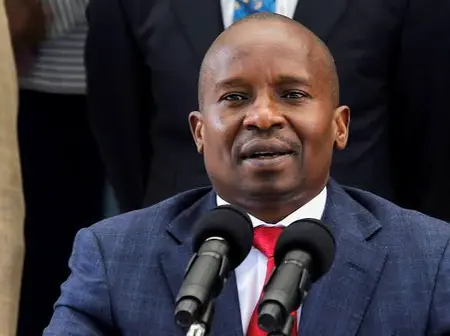
Deputy President Kithure Kindiki has approved a nationwide campaign dubbed Okoa Jamii, Jenga Taifa, as the government intensifies efforts to fight illicit alcohol and drug abuse across the country.
Kindiki announced the development on Wednesday, November 18, 2026, following a meeting with the National Steering Committee on Combating Illicit Alcohol and Drugs held in Karen, Nairobi.
The campaign is expected to strengthen the government's efforts to address the growing challenge of drug and substance abuse, which continues to affect families and communities across Kenya.
Through the initiative, the government plans to increase public awareness, strengthen enforcement operations and encourage communities to take an active role in fighting the sale and consumption of illegal substances.
The campaign's name, Okoa Jamii, Jenga Taifa, highlights the importance of protecting communities from the harmful effects of drug abuse while building a healthier and more productive society.
Illicit alcohol and narcotic drugs remain major public concerns because of their impact on young people, families and the country's social and economic development.
The government's renewed campaign also places emphasis on cooperation between security agencies, national government officials, community leaders and members of the public.
Residents are expected to play an important role by sharing information about individuals and businesses involved in the production, distribution and sale of illegal substances.
The latest announcement signals another push by the government to address the problem through coordinated national efforts.
Kenyans will be watching closely to see how the Okoa Jamii, Jenga Taifa campaign will be implemented and whether it will deliver meaningful results in the fight against illicit alcohol and drug abuse.
Nairobi Senator Edwin Sifuna has announced that he will not attend President William Ruto's State of the Nation Address, launching another fierce attack on the Head of State ahead of his highly anticipated parliamentary speech.
Sifuna maintained that he has deliberately avoided presidential functions since being elected, accusing Ruto of repeatedly misleading Kenyans and questioning the value of attending events associated with his administration.
"Ever since I was elected, I have said because President Ruto's job is to lie, I don't attend his events or anything of his, such as the so-called 'State of the Nation Address,'" Sifuna declared.
The outspoken senator also used the opportunity to defend the opposition's agenda, insisting that the Constitution remains the foundation of its political programme.
He dismissed suggestions that opposition leaders lack a clear agenda, arguing that their demands for constitutional implementation, accountability and respect for democratic institutions should not be mistaken for political emptiness.
"Tulikuwa tukiambiwa kwamba hatuna ajenda na kwamba sisi ni watu empty. Ajenda yetu ni Katiba ya Kenya," Sifuna stated.
He further challenged the President to use his State of the Nation Address to explain what his administration has achieved, particularly regarding promises made to Kenyans.
According to Sifuna, Ruto must account for the progress made in implementing his commitments rather than simply delivering political statements before Parliament.
"Leo anapokuja Bungeni kutoa State of the Nation Address, ni lazima aueleze umma hatua zilizochukuliwa na maendeleo yaliyopatikana katika kutekeleza ahadi zake," he added.
Beyond his criticism of the government, the Nairobi senator also addressed the question of opposition unity ahead of the 2027 General Election.
Sifuna maintained that opposition leaders should pursue unity through meaningful dialogue, mutual respect and cooperation rather than personal disagreements.
He insisted that his political camp had no problem with other opposition leaders, directing his strongest criticism towards President Ruto.
"Kama viongozi wa upinzani, tunataka kuwa na umoja wa upinzani, na umoja huo utapatikana kwa mazungumzo na kuheshimiana. Sisi hatuna ubaya na mtu yeyote. Mtu pekee aliyetukosea ni Kasongo," he declared.
His remarks add fresh tension to the political atmosphere as opposition leaders continue positioning themselves ahead of the next general election.
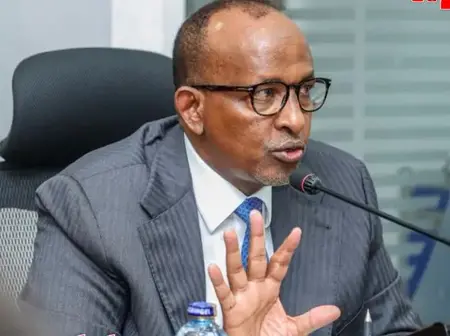
Health Cabinet Secretary Aden Duale has claimed that ministers from other countries are approaching him to learn how Kenya has implemented the Social Health Authority (SHA).
Duale made the remarks while defending the government's progress in rolling out the new healthcare system, which replaced the National Health Insurance Fund (NHIF) under President William Ruto's administration.
According to the Health CS, Kenya's experience with SHA has attracted interest from other government officials who want to understand how the system is being managed and implemented.
He suggested that the country's healthcare reforms have provided valuable lessons for other governments seeking to improve access to affordable medical services.
SHA was introduced as part of the government's plan to achieve universal health coverage by ensuring more Kenyans can access medical services without suffering financial hardship.
However, its implementation has faced criticism from sections of the public, healthcare workers and medical facilities.
Some Kenyans have raised concerns about registration, contribution requirements and difficulties accessing medical services. Healthcare providers have also questioned delays in payments and other challenges associated with the transition from NHIF to SHA.
Despite the concerns, the government has maintained that the new system will improve healthcare financing, expand coverage and make medical services more accessible to ordinary citizens.
Duale's remarks are likely to spark fresh debate over the performance of SHA, particularly as Kenyans continue to assess whether the new arrangement has improved their access to healthcare.
The Health CS's comments also come at a time when the government faces pressure to address complaints surrounding the implementation of the programme.
WinsPresident William Ruto has been awarded the Global Alliance for Public Relations and Communication Management Lifetime Achievement Award.President William Ruto has been awarded the Global Alliance for Public Relations and Communication Management Lifetime Achievement Award.In a statement on Wednesday, November 18, ICT Cabinet Secretary William Kabogo said he received the award on behalf of President Ruto during the World Public Relations Forum 2026 Award Dinner in Abuja, Nigeria.
The President made the commitment on Wednesday, November 18, following a meeting with elected leaders from Nyandarua County at State House, Nairobi.
During the meeting, Ruto said discussions centred on government development programmes, agricultural production, farmers' earnings and the progress of major infrastructure projects.
He listed road construction, modern markets, student hostels, affordable housing, a stadium and the proposed Nyandarua University in Ol Kalou among the projects reviewed by the leaders.
The Head of State added that the government would speed up the implementation of the initiatives to improve the living standards of residents.
The renewed pledge comes four months after UDA suffered a major electoral setback in Ol Kalou during the July 2026 parliamentary by-election.
The ruling party's candidate, Samuel Muchina Nyagah, lost to Democracy for the Citizens Party (DCP) candidate Sammy Kamau Waweru.
Results announced by the Independent Electoral and Boundaries Commission (IEBC) showed that Waweru garnered 35,440 votes against Muchina's 5,450, translating into a margin of 29,990 votes.
UDA had conducted an intensive campaign in the constituency, with senior government officials visiting the area to publicise development projects and announce new investments.
Among the initiatives highlighted during the campaigns was Nyandarua University, whose first phase was launched in June 2026 at Kapten.
The Sh1.3 billion project sits on 91 acres and includes university classrooms, additional facilities for Salient Secondary School and accommodation for 1,300 students.
Other major projects include Ol Kalou Stadium, road upgrades, affordable housing and the expansion of JM Kariuki Memorial Hospital.
In April 2025, Ruto assigned the Kenya Defence Forces to oversee selected infrastructure projects in the county, including the stadium.
Following the by-election defeat, former Cabinet Secretary Moses Kuria assured residents that government projects would continue regardless of their political choices.
He identified roads, electricity connections, water supply, housing, irrigation and agricultural programmes among the initiatives that would proceed.
The latest State House meeting comes as political leaders and parties intensify preparations ahead of the 2027 General Election.
Listen to articleIn an affidavit filed in the ongoing succession dispute, Musengi confirmed that he voluntarily underwent DNA testing alongside Njage to establish the truth about his alleged relationship with the former minister.A DNA test has linked James Solomon Njage, who claims to be the biological son of former Cabinet minister George Saitoti, to the late minister’s family, potentially strengthening his bid to inherit part of the Sh84.5 million estate.
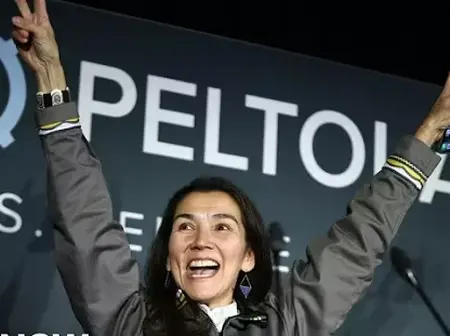
Democrat Mary Peltola has won Alaska's hard-fought Senate race, completing a sweeping victory for the party in the US upper house in the midterm elections.
The win gives the Democrats a 56th Senate seat following a tumultuous and controversial election in Alaska, which featured alleged spoiler recruitment efforts and unprecedented court battles.
It took two full weeks of counting to call a winner in the 3 November poll due to the logistical challenge of collecting ballots from across the state's remote expanse.
The Democratic win is the ninth Senate seat the party took from Republicans in this year's midterms, giving the party control of the US Congress for the last two years of Donald Trump's presidency.
A historic set of victories nationally also saw the party win back the House of Representatives.
In her victory statement, Peltola said the "status quo in DC is not working for Alaska".
She recalled speaking to "elders in tears about empty fish racks" and to parents in rural Alaska choosing between heating their homes and putting food on the table.
Peltola's campaign had come under fire after the New York Times reported Democrats attempted to recruit a candidate named Daniel J Sullivan, a complete political unknown residing in a small coastal town who shared a name with the state's current US Senator and incumbent, Dan S Sullivan, in an alleged attempt to confuse voters.
After legal challenges, state courts ruled the second Daniel J Sullivan could remain on the ballot, and election officials distinguished them on election materials.
Peltola denied having knowledge of the alleged plot but her campaign swiftly came under fire, and both the justice department and Alaska's Republican governor said they would launch investigations.
The Trump administration then filed a lawsuit attempting to stop the certification of the election results if the incumbent Republican Senator Sullivan lost.
A federal judge, though, dismissed the case, following legal challenges from Alaska election officials as well as the Peltola campaign and voting groups.
Due to Alaska's ranked-choice voting system, voters confused about which Dan Sullivan was the incumbent could simply choose each man as their first and second choice.
If they did so, after the first round of voting was complete, tabulation would re-allocate any votes from the non-incumbent Dan Sullivan – who stood little to no chance of winning – to the US Senator.
Experts told the BBC that this process made it difficult for any potential spoiler candidate to have any impact on the results.
An analysis by BBC Verify found that even if every vote for the other Dan Sullivan had gone to the incumbent, Peltola would still have won.
The seat initially was one of several toss-up races that appeared as a must-win for Democrats if they wanted to gain control of the Senate – but by the time Peltola was called the winner, they had seats to spare.
With 99% of ballots counted, Peltola had slightly more than 50%, while Sullivan trailed on less than 46%.
Sullivan, a former Alaska attorney general and an ally of Trump, campaigned on his record of delivering energy and military investment for the state.
Peltola promised Alaskans a more independent voice in Washington.
"As a lifelong Alaskan who has dedicated my life to serving our state, there is no greater honor than having Alaskans' support in our fight to take on corporate greed, lower costs, and put Alaska first," she said in her victory statement.
"I will stand up to anyone to take on the rigged system in DC and deliver results for Alaska's working families."
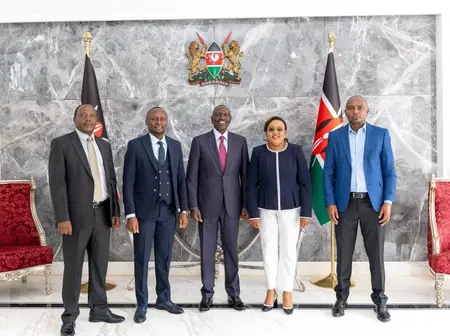
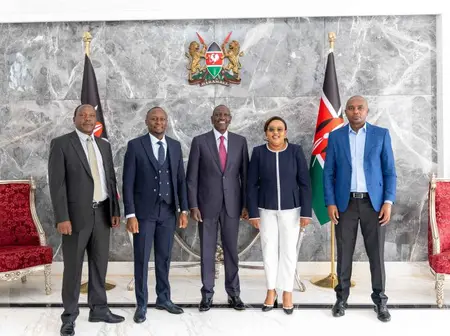
DetailsPresident William Ruto on Wednesday, November 18, hosted elected leaders from Nyandarua County at State House, Nairobi.President William Ruto on Wednesday, November 18, hosted elected leaders from Nyandarua County at State House, Nairobi.In a statement, the Head of State said they discussed the impact of government policies on agricultural production and farmers' incomes.
Gacambi questioned why Kenyans living in America should spend hundreds of dollars to attend meetings with politicians, arguing that such events offer little entertainment or value to the people paying to participate.
In a video shared on TikTok while seated inside her car, she expressed frustration with the reported admission charges, claiming that Gachagua's dinner was priced at $250 (approximately KSh32,000), while an upcoming event involving Sifuna was advertised at $150 (about KSh19,000).
She also alleged that the price of Sifuna's event had been reduced after organisers experienced difficulties attracting attendees.
Gacambi questioned the reasoning behind charging diaspora members such amounts merely to listen to political speeches and participate in chants.
"Mimi nilipe 250, niende nikaambie who must go?" she remarked, expressing disbelief at paying such a substantial amount to attend an event where political messaging appeared to be the main attraction.
She argued that people spending their hard-earned money deserve more than hours of political discussions, particularly when they are travelling to attend the functions.
To illustrate her point, Gacambi compared the dinner charges with the cost of eating at popular American restaurant chains such as Texas Roadhouse and LongHorn Steakhouse.
She said that approximately $50 (KSh6,400) could get someone a meal consisting of two steaks, mashed potatoes and drinks, making the political dinner prices difficult for her to understand.
However, her biggest concern was the apparent absence of entertainment at the events.
Gacambi argued that politicians visiting Kenyans in the diaspora should consider bringing Kenyan musicians or other entertainers to make the gatherings more enjoyable.
She maintained that leaders with significant political networks and resources could easily arrange performances by local artistes, giving attendees something memorable in exchange for their contributions.
She recalled that during Gachagua's first visit to the US, he had reportedly indicated that several entertainers, including Tony Young and Joyce, would accompany him.
According to Gacambi, the anticipated performers did not turn up, and Gachagua eventually arrived without them.
"Akakuja akiwa solo," she said, meaning that he arrived alone.
She also recalled another event that Gachagua had reportedly announced but which attracted fewer than 50 attendees. Gacambi claimed that some of those who attended had paid $250 to participate.
Her criticism extended beyond the two politicians' latest engagements, as she brought up her previous experience with a diaspora event associated with the late former Prime Minister Raila Odinga.
Gacambi mentioned an initiative known as Mashujaa Awards, which she associated with a Houston-based individual identified as Dr Mugambi.
She claimed that the initiative collapsed following Raila's death and that she never received a refund for money she had paid, forcing her to absorb the financial loss using her personal savings.
The experience, she suggested, had contributed to her frustration with political events that require diaspora members to pay substantial amounts without necessarily receiving the promised experience.
Directing her criticism at the politicians, Gacambi accused them of being selfish and questioned whether they adequately considered the financial sacrifices made by Kenyans living abroad.
"You are so selfish to the highest level," she said.
Her remarks have drawn attention to the growing debate surrounding political fundraising activities within Kenya's diaspora community, particularly the costs of attending events organised by prominent political figures.
Neither politician's response to the specific allegations was included in the report.