Category: Politics

  • IEBC Declares Polling Station Results Final Ahead of 2027 Elections

    IEBC Declares Polling Station Results Final Ahead of 2027 Elections

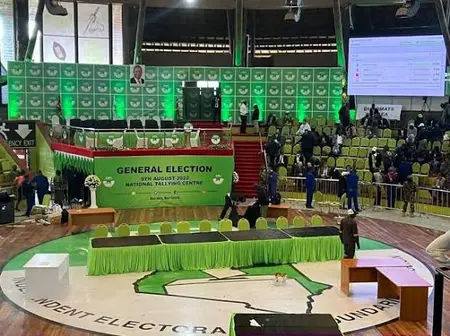
    The Independent Electoral and Boundaries Commission (IEBC) has outlined its results management framework for the August 10, 2027 General Election, confirming that presidential results declared at polling stations will remain final.

    The commission presented the framework amid growing political debate over the role of the National Tallying Centre in determining the outcome of presidential elections.

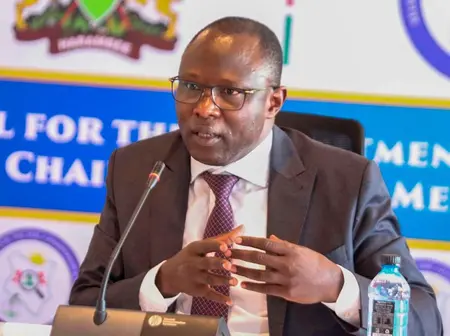
    IEBC Commissioner Anne Nderitu, who chairs the Elections Operations Technical Committee, explained that the electoral process would begin with vote counting and declaration of results at individual polling stations.

    She said presiding officers would announce the results in the presence of political party agents and other observers, who would be allowed to witness the counting process and take photographs of the declared figures.

    According to the framework, physical copies of Form 34A will also be displayed at polling stations to allow members of the public to scrutinise the results.

    The figures will subsequently be transmitted through constituency and county tallying centres before reaching the National Tallying Centre in Nairobi.

    The commission said the national centre would be responsible for aggregating and verifying presidential results to establish whether candidates have met the constitutional requirements for election.

    IEBC Chairman Erastus Ethekon has also assured journalists, political party agents and election observers of access to the tallying process, insisting that the commission has nothing to hide.

    The national tallying centre will be established at a venue in Nairobi to be officially gazetted under Regulation 84.

    The commission further indicated that results would be accessible through its online portal, while media organisations would receive dedicated access to electoral information.

    The framework also provides for live streaming from polling stations to strengthen transparency, although the broadcasts will not be used as the official basis for declaring results.

    The announcement comes as political leaders continue raising concerns about the credibility, transparency and management of the 2027 elections.
  • “Western is Fully in the Government” Barasa Dismisses Claims that the Region Could Back Opposition

    “Western is Fully in the Government” Barasa Dismisses Claims that the Region Could Back Opposition

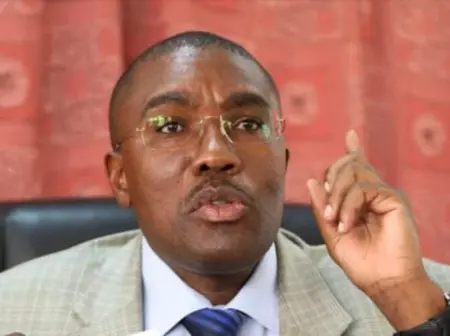
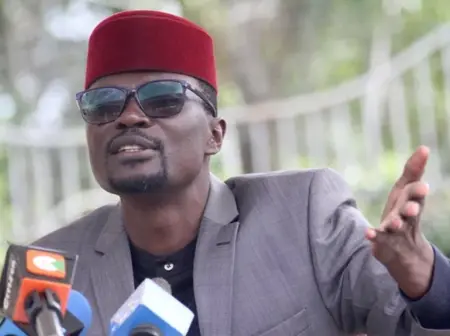
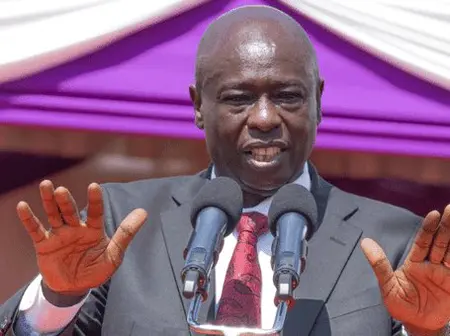
    In a statement he made on Tuesday, November 24, 2026, Barasa stated that political critics hoping to fracture the region's support ahead of the 2027 General Election will not succeed.

    His remarks come as Nairobi Senator Edwin Sifuna, who hails from the region, is actively positioning himself to contest the presidency in the 2027 general election under the Linda Mwananchi Movement.

    The competing political overtures highlight an intensifying battle for control of the traditional Mulembe voting bloc—spanning Bungoma, Kakamega, Vihiga, and Busia counties—as pro-government leaders and opposition figures seek to consolidate support ahead of next year's polls.

    Despite the heightened rhetoric and emerging realignments, Barasa maintained that voters in Western Kenya are discerning and remain firmly committed to the ruling coalition's agenda.

    https://www.facebook.com/groups/thekenyatimes/permalink/1835733951022282/?mibextid=rS40aB7S9Ucbxw6v

  • Gachagua Responds as Ethekon Explains Why Livestreaming 50,000 Polling Stations Is Unfeasible

    Gachagua Responds as Ethekon Explains Why Livestreaming 50,000 Polling Stations Is Unfeasible

    The debate comes as opposition leaders push for greater transparency in the management of the 2027 General Election, with livestreaming being one of their key demands.

    Ethekon recently explained that implementing nationwide livestreaming would present significant logistical and technological challenges. The exercise would require substantial infrastructure, reliable internet connectivity, equipment and financial resources to support thousands of polling stations.

    However, the IEBC chairperson maintained that journalists would be allowed to access polling stations and constituency tallying centres to witness the verification and announcement of results.

    Gachagua has previously taken a different position, insisting that livestreaming should be part of the electoral process to allow Kenyans to independently monitor the counting and announcement of results.

    On November 19, the Democracy for the Citizens Party (DCP) leader led opposition politicians in walking out of a consultative meeting with IEBC after accusing the commission of failing to include their concerns in the meeting's agenda.

    Among the demands presented by the opposition was mandatory livestreaming of results from all polling stations.

    The proposal was intended to strengthen public oversight and reduce suspicion surrounding the handling of election results.

    Gachagua and other opposition leaders have maintained that electoral transparency must begin at polling stations rather than relying solely on information released at national tallying centres.

    Meanwhile, Ethekon has defended the commission's preparations, assuring stakeholders that the electoral process would remain open to journalists, political party agents and election observers.

    Although Ethekon has outlined the practical challenges, opposition leaders are still pushing for clear commitments on how every stage of the electoral process will be monitored.

    https://www.facebook.com/100064434804092/posts/1605922058232272/?mibextid=rS40aB7S9Ucbxw6v

  • Kabando Says Young Kenyans Acted on Own Grievances, Not Political Manipulation

    Kabando Says Young Kenyans Acted on Own Grievances, Not Political Manipulation

    Kabando hits back at Ruto over remarks on 2024 Finance Bill

    Responding on Tuesday, November 24, 2026, Kabando dismissed suggestions that young Kenyans were merely manipulated by parents or political rivals, arguing that Gen Z demonstrators acted independently in response to economic grievances and governance concerns.

    Kabando’s pushback followed comments Ruto made on Monday, November 23, 2026, during his Western Kenya tour in Bungoma, where the President accused unnamed political competitors of using fake news and disinformation to mislead young people over the 2024 legislation and urged youth to focus on education, internships, jobs, and enterprise.

    In his sharp retort, Kabando rejected Ruto’s characterization of the bill and its aftermath, framing the exchange around the upcoming August 10, 2027 General Election and signaling that voters are counting down the days to a ballot-box reckoning.

    The clash revives one of the most consequential flashpoints of Ruto’s presidency: the 2024 Finance Bill sparked mass demonstrations across major towns and led to the storming of Parliament Buildings on June 25, 2024, before Ruto declined assent and withdrew the bill amid deadly clashes and widespread property damage—even as critics note the administration later pursued elements of its tax agenda through other legislative channels.

    As the 2027 campaign season builds, how to frame the 2024 protests and economic policy remains a central fault line between the government and its critics.

    What are your thoughts about this article? Share your reactions in the comment section and don't forget to share and follow for more updates.

    https://peopledaily.digital/inside-politics/kabando-hits-back-at-ruto-over-remarks-on-2024-finance-bill

  • “It Was Ruto’s Plan to Cool Kilifi Tensions” – Kilifi MCA Criticises Aisha Jumwa’s Return to UDA

    “It Was Ruto’s Plan to Cool Kilifi Tensions” – Kilifi MCA Criticises Aisha Jumwa’s Return to UDA

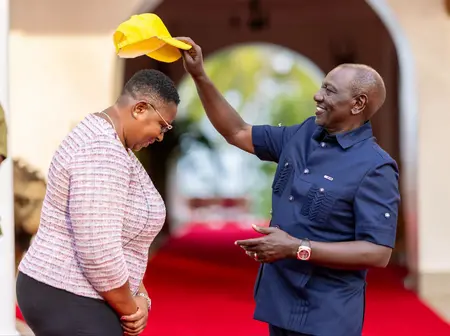
    Speaking about the development, Abdi claimed that Jumwa’s return to UDA was not an ordinary political decision but part of a wider political arrangement allegedly orchestrated by President William Ruto.

    According to Abdi, the move was a calculated plan by the Head of State aimed at easing growing political tensions in Kilifi County. He suggested that bringing Jumwa back into the ruling party was intended to calm the political atmosphere and address divisions that had been building within the county's political leadership.

    Abdi's remarks have placed the spotlight on the political implications of Jumwa's return, particularly at a time when political alignments and loyalties continue to shape conversations in the coastal region.

    Jumwa is an influential political figure in Kilifi, having previously served in different government positions and maintained a significant presence in the region's political affairs. Her association with UDA is therefore likely to attract attention from leaders and supporters who closely follow the party's influence along the Coast.

    The Majority Leader's criticism also raises questions about the interests behind the political arrangement and whether Jumwa's return could help ease existing disagreements or create further divisions among local political players.

    Although Abdi presented his interpretation of the move as a political strategy by President Ruto, his claims remain his own assessment of the events.

    The unfolding reactions demonstrate the political significance of Jumwa's return to UDA, with leaders in Kilifi continuing to express differing views about what the development means for the county's political future.

    https://www.facebook.com/share/v/1KbZYXmTzS/

  • Details Emerge as to Why President Ruto Cut Short The Kakamega Tour For a Secret Trip to Congo

    Details Emerge as to Why President Ruto Cut Short The Kakamega Tour For a Secret Trip to Congo

    President William Ruto's sudden departure from Kenya on Monday night, November 23, has attracted considerable public attention after reports emerged that he travelled to the Republic of Congo following his engagements in Western Kenya.

    The development became one of the major talking points in the national newspapers' review on Monday, November 23, particularly because of the timing of the President's departure.

    Diplomatic Relations Take Centre Stage

    One of the reasons highlighted in the reports was the need to address diplomatic concerns involving Kenya and the Democratic Republic of Congo (DRC).

    President Ruto reportedly travelled to the Republic of Congo to engage in diplomatic discussions involving Congolese leader Félix Tshisekedi.

    The discussions were reportedly aimed at addressing diplomatic relations and strengthening cooperation between the countries.

    Kenya and the DRC have important regional interests, particularly in matters involving trade, security, regional stability and economic partnerships.

    Therefore, maintaining positive diplomatic relations with neighbouring and regional countries remains an important responsibility of the presidency.

    Why the Sudden Departure?

    The unexpected timing of the trip has generated curiosity among Kenyans, especially those who were following the President's Western Kenya tour.

    Many would naturally want to understand why the Head of State had to interrupt his engagements and travel abroad late at night.

    However, the available report does not establish that the journey was secret or provide every detail surrounding the decision.

    Away from the diplomatic developments, the newspapers also highlighted growing concerns about Kenya's public debt.

    The country's financial obligations remain an important national discussion, with Kenyans increasingly interested in government borrowing, debt repayment and the cost of living.

    Ultimately, the President's sudden international trip presents an opportunity for broader discussions about diplomacy, leadership and public accountability.

    Kenyans will be interested in understanding the outcome of the reported diplomatic engagements and how they could benefit the country.

    What is your opinion about President Ruto's sudden night departure from Kakamega?

    Comment and share your views.

  • Besigye’s Release: Muhoozi Stuns Uganda With Besigye Release Claim, Reveals Who Has the Final Say

    Besigye’s Release: Muhoozi Stuns Uganda With Besigye Release Claim, Reveals Who Has the Final Say

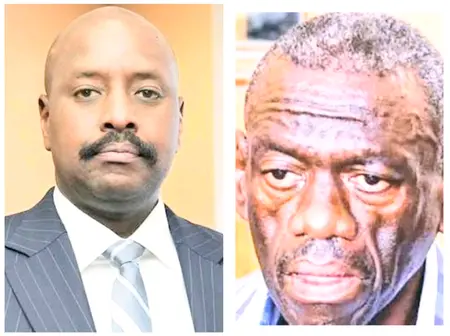
    Uganda's Chief of Defence Forces, General Muhoozi Kainerugaba, has stunned many after declaring that only he has the authority to approve the release of detained opposition leader Dr Kizza Besigye, his lawyer Erias Lukwago and other people he described as criminals.

    Muhoozi made the statement while expressing his frustration with Besigye and other people he referred to as the old Historicals, warning them against making public statements.

    "I'm sick and tired of Besigye and all the old so called 'Historicals'. They are forbidden from making any public statements from now on! Those who do will be punished," he stated.

    However, what has particularly caught attention is his claim that nobody can secure Besigye's release without his personal permission.

    "No one will release Besigye, Lukwago or the other criminals without my permission."

    He also announced that he had transferred the responsibilities of the old Historicals to his uncle, General Salim Saleh.

    "They must address all their issues to my uncle Afande Salim Saleh. He will brief me on their issues," he added.

    This means Muhoozi wants their concerns directed to Saleh, who would then report to him.

    Besigye's situation continues to attract attention, but Muhoozi's latest declaration has added another talking point, with his personal approval now featuring prominently in his statement about the possibility of releasing the opposition leader and Lukwago.

    Do you think Muhoozi should have the final say on whether Besigye and Lukwago are released?

  • Mosiria Visits Martha Karua at Nairobi Party Headquarters in Meeting That Draws Public Attention

    Mosiria Visits Martha Karua at Nairobi Party Headquarters in Meeting That Draws Public Attention

    A meeting between Mosiria and former presidential candidate Martha Karua has drawn attention after Mosiria visited her at her party headquarters in Nairobi.

    The visit brought the two leaders together at the party offices, where they had an opportunity to meet and hold discussions. However, details about what they discussed during the meeting have not been made public.

    Karua is a well-known Kenyan politician and lawyer who has remained active in the country's political affairs. She is also the leader of the People's Liberation Party (PLP), where she continues to engage with political leaders and other people interested in the country's leadership.

    Mosiria's visit comes at a time when political activities and meetings continue to take place across the country. Leaders have been holding discussions and meeting different groups as they engage on issues affecting Kenya.

    The meeting has attracted interest because of the political position Karua holds and her continued involvement in national affairs. Her party headquarters in Nairobi has also remained an important place for political engagements.

    Although no official statement has been released explaining the purpose of the visit, the meeting has created interest among people following political developments in the country.

    It remains unclear whether the visit was a personal engagement or part of wider political discussions. More information may emerge if either Mosiria or Karua decides to speak publicly about the meeting.

    For now, the visit marks another engagement involving Karua as political leaders continue to interact and hold meetings in Nairobi.

    The meeting also comes as Kenyans continue to follow developments involving different political leaders and parties. Any further details about the discussions will help explain the reason behind the visit and whether it could lead to future engagements between the two leaders.

    source:https://www.facebook.com/share/v/1FmnAonrSF/

  • Why IEBC Chair Ethekon Just Rejected Calls to Livestream All 50,000 Polling Stations

    Why IEBC Chair Ethekon Just Rejected Calls to Livestream All 50,000 Polling Stations

    Kenyans hoping to watch live video streams of voting and ballot counting from every polling station during the 2027 General Election have hit a reality check, after Independent Electoral and Boundaries Commission (IEBC) Chairperson Erastus Ethekon warned that the proposal is simply too expensive and impractical.

    ​Speaking during a consultative meeting with journalists on Tuesday, November 24, 2026, Ethekon pushed back against growing pressure from opposition leaders who have demanded mandatory livestreaming across all 50,000 polling stations nationwide.

    According to the Daily Nation and Nairobi Leo, the IEBC boss noted that Kenyans are already complaining about the high cost of running elections, and buying cameras for tens of thousands of centres would push the budget even higher.

    ​Beyond the heavy financial burden, Ethekon explained that the commission does not have the luxury of time to procure 50,000 cameras, train technical operators, and deploy them to remote corners of the country before August 2027.

    ​His remarks come just days after opposition figures—including Rigathi Gachagua, Kalonzo Musyoka, and Edwin Sifuna—walked out of an IEBC stakeholder meeting after listing full polling-station livestreaming among their key demands for a credible vote.

    ​However, Ethekon insisted that election transparency does not depend on IEBC-owned cameras.

    He pointed out that polling station results remain final, and the commission has placed zero restrictions on media houses, party agents, local observers, and international monitors bringing their own cameras to record and broadcast the exercise freely.

    ​As political temperatures rise on the road to 2027, the IEBC is urging leaders to focus on practical safeguards rather than costly demands that could strain taxpayers.

    ​For official election updates, voter registration schedules, and commission notices, citizens can visit the Independent Electoral and Boundaries Commission (IEBC) website.

    Source

    https://www.facebook.com/share/p/1AFZCETDbs/

  • THE WANTAM SHADOW: How Sifuna and Gachagua’s Slogans Quietly Hijacked Ruto’s High-Stakes Western

    THE WANTAM SHADOW: How Sifuna and Gachagua’s Slogans Quietly Hijacked Ruto’s High-Stakes Western

    Ruto declares Western Kenya a ‘Tutam’ zone as he takes on the opposition ahead of 2027

    According to reports from People Daily and Pulse Kenya, Ruto used his Bungoma engagements to declare Western Kenya a "Tutam" (two-term) stronghold, pushing back against opposition claims that he is losing ground in the county and urging residents to judge leaders by tangible projects rather than slogans.

    While critics and opposition commentators highlighted moments of muted crowd reaction and growing local interest in Nairobi Senator Edwin Sifuna’s Linda Mwananchi Movement, ruling coalition leaders painted a different picture of the tour.

    As reported by The Standard, Prime Cabinet Secretary Musalia Mudavadi urged Bungoma residents "not to slip" in their support, predicting a free and fair re-election victory in 2027, while Ruto pointed to road projects and the leasing of Nzoia Sugar to Rai Group as proof of economic turnaround.

    During the same tour, The Standard reported that Ruto also waded into local succession politics by throwing his weight behind Kimilili MP Didmus Barasa to succeed Bungoma Governor Kenneth Lusaka in 2027.

    Ultimately, the contrasting narratives around Ruto’s reception in Bungoma underscore how fiercely Western Kenya is being contested roughly eight months before Kenyans vote.

    Whether state-backed infrastructure, sugar sector reforms, and local alliances keep Bungoma firmly in the ruling coalition’s column or whether opposition mobilization shifts voter sentiment will be a decisive factor in August 2027.

    Source: https://peopledaily.digital/inside-politics/ruto-declares-western-kenya-a-tutam-zone-as-he-takes-on-the-opposition-ahead-of-2027