Category: Politics

  • Ruto Supporter Raises Alarm Over Sifuna’s Growing Popularity Ahead of 2027 Elections

    Ruto Supporter Raises Alarm Over Sifuna’s Growing Popularity Ahead of 2027 Elections

    Speaking about the political situation, Choy admitted that although he remained firmly behind Ruto, the opposition politician’s rising popularity was becoming a concern.

    According to TUKO, Choy made the remarks while interacting with Kabuchai Member of Parliament Majimbo Kalasinga at an airport on Thursday, November 19.

    He suggested that a possible political partnership between Sifuna and Wiper Party leader Kalonzo Musyoka could further complicate Ruto’s chances of securing another term.

    "If Kalonzo accepts to deputise Sifuna, it will be very difficult for my candidate, but let us see how things will unfold; he also has his supporters like myself," Choy reportedly said.

    Beyond Sifuna’s growing influence, Choy urged the president to address the conduct of some of his close political allies, arguing that their public remarks could undermine the administration's support.

    He specifically mentioned Kapseret MP Oscar Sudi, Senate Majority Leader Aaron Cheruiyot and presidential aide Farouk Kibet, accusing them of making statements that could cost the president votes.

    The development comes amid growing political discussions surrounding the 2027 General Election.

    A TIFA Research opinion poll released on November 12 placed Ruto and Sifuna at 31 per cent each among Kenyans' preferred presidential candidates.

    According to Daily Nation, Sifuna's support had increased from 10 per cent in May to 31 per cent in the latest survey, highlighting his growing presence in national politics.

    However, the poll results do not guarantee the outcome of the next election, which will depend on several political factors, including opposition unity and the candidates eventually presented to voters.

    With the 2027 elections approaching, the remarks from Choy highlight concerns among some government supporters about the president's political competition.https://www.facebook.com/share/p/1CeELN9hbT/
  • Happening Now in Kisumu as Wanga, Mbadi, Junet Lead Ruto’s ‘Tutam’ Agenda During Key  Event, Details

    Happening Now in Kisumu as Wanga, Mbadi, Junet Lead Ruto’s ‘Tutam’ Agenda During Key Event, Details

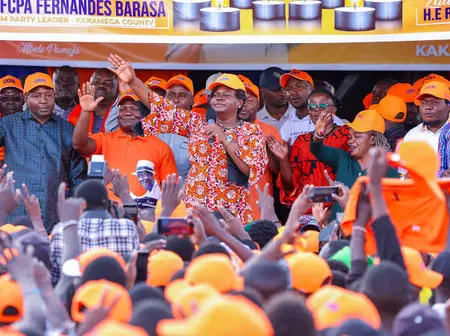
    Political leaders from the Luo Nyanza region have intensified efforts to rally residents behind President William Ruto’s development agenda, with Governor Gladys Wanga, Treasury Cabinet Secretary John Mbadi and National Assembly Minority Leader Junet Mohamed taking centre stage during a traders’ empowerment event in Kisumu West.

    The leaders have attended the Kisumu West Traders Empowerment Programme in Otonglo, where traders have gathered to receive support and engage with government representatives on economic opportunities and business growth.

    The event has attracted attention as political leaders have continued to strengthen their grassroots networks in the region to ensure that Ruto gets votes in 2027.

    Wanga, Mbadi and Junet have played increasingly visible roles in mobilizing residents around 'tutam' agenda and Ruto's government programmes, particularly those targeting small businesses and ordinary citizens.

    The traders’ empowerment initiative has provided an opportunity for leaders to connect directly with local businesspeople, whose livelihoods have remained closely tied to economic conditions, access to capital and the cost of running businesses.

    President Ruto’s administration has repeatedly positioned grassroots economic empowerment as a central pillar of its development agenda, with programmes targeting traders, small-scale entrepreneurs and other groups seeking financial opportunities.

    The presence of senior leaders from the region at the Otonglo gathering has also highlighted the growing political significance of engaging communities through development initiatives rather than relying solely on traditional campaign rallies.

    Wanga, Mbadi and Junet have remained influential figures in national politics, with their participation in such events carrying considerable weight in shaping conversations about government priorities and political alliances in the region.

    As the gathering has progressed, attention has focused on the leaders’ messages to traders and residents, particularly their explanations of government plans and efforts to improve livelihoods.

    The Otonglo event has therefore brought together economic empowerment and political mobilisation, as leaders have sought to communicate Ruto’s agenda while maintaining a visible presence among residents of Kisumu West.

    Link.

    https://www.facebook.com/share/v/1PU5MRCBVi/

  • I want to Assure Kenyans that it will be Very Difficult to Get a President Like Ruto-Francis Atwoli

    I want to Assure Kenyans that it will be Very Difficult to Get a President Like Ruto-Francis Atwoli

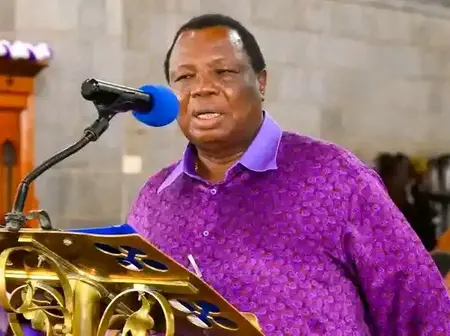
    “I want to assure Kenyans who are yet to be born and those who are still young that it will be very difficult to get a President like William Ruto,” Atwoli said.

    The remark is a notable expression of confidence in the Head of State and places the president’s leadership at the centre of public discussion. By referring not only to current voters but also to young people and generations yet to be born, Atwoli framed his assessment as one that looks beyond the present political moment.

    The statement also raises a wider question about how Kenyans define presidential leadership. For some, a president’s legacy is measured by development programmes and economic decisions. Others place greater emphasis on the cost of living, employment opportunities, public services and whether the concerns of ordinary households are addressed.

    The image does not provide further explanation from Atwoli, so the remarks should be understood as his personal assessment rather than a conclusion supported by evidence presented alongside the quote. Nevertheless, the comment is likely to remain part of the political conversation as Kenyans continue debating the country’s leadership and future.

    What do you make of Francis Atwoli’s praise of President William Ruto? Do you agree that it will be difficult for Kenya to get another president like him, or should the country judge leaders by their record? Share your views, remarks and comments in the comment section.

  • Ruto Mocks Opposition’s IEBC Walkout in Busia: Dismisses Gachagua-Sifuna Alliance as Unprepared for

    Ruto Mocks Opposition’s IEBC Walkout in Busia: Dismisses Gachagua-Sifuna Alliance as Unprepared for

    Meanwhile, representatives from the Linda Mwananchi Movement and allied opposition factions have hit back, defending their walkout as a necessary stance to safeguard electoral integrity. They maintain that demanding accountability and transparency from the IEBC is a constitutional right, rather than a sign of unpreparedness or weakness. As both political machinery lines harden, the battle lines for the 2027 election are becoming increasingly drawn around the management of the electoral body and the unfolding economic realities across the country.

  • Ruto Takes Fresh Swipe at Opposition Over IEBC Walkout, Tells Leaders to Find Their Own Candidate

    Ruto Takes Fresh Swipe at Opposition Over IEBC Walkout, Tells Leaders to Find Their Own Candidate

    Speaking in Funyula, Busia County, on Friday, November 20, during his tour of the Western region, Ruto challenged opposition leaders to concentrate on choosing a presidential candidate, developing policies and presenting their political agenda to Kenyans.

    The President questioned why the opposition was directing its frustrations towards IEBC, suggesting that its leaders had failed to agree on who should represent them in the next presidential election.

    In his remarks, Ruto said opposition politicians should give the electoral commission room to organise the August 2027 polls without unnecessary interference.

    He urged them to settle their internal political differences, identify a candidate and convince voters through their policies and development plans.

    Ruto also insisted that the final decision on who becomes president rests with Kenyans through the ballot.

    The Head of State further criticised opposition leaders for raising concerns about the procurement of election materials and technology, particularly the computers and ballot papers that will be used in the next General Election.

    He questioned whether the politicians had the professional expertise required to determine the commission's procurement decisions.

    Using a football analogy, Ruto argued that political competitors should not attempt to dictate the playing field, the equipment or the referee while preparing to contest an election.

    He maintained that IEBC should be allowed to carry out its constitutional responsibilities, while political parties concentrate on winning the confidence of voters.

    The President also used a Chinese proverb to reinforce his criticism, saying a lazy person blames the farming tool instead of acknowledging their inability to work.

    His latest remarks followed a dramatic walkout by opposition leaders during an IEBC consultative meeting with political parties in Nairobi on Thursday, November 19.

    The group included Democracy for the Citizens Party (DCP) leader Rigathi Gachagua, Wiper Patriotic Front leader Kalonzo Musyoka and Nairobi Senator Edwin Sifuna, who is associated with the Linda Mwananchi faction.

    The opposition leaders accused IEBC of failing to include several critical issues raised by Kenyans in the meeting's agenda.

    They argued that discussions about election preparedness should go beyond administrative arrangements and address broader concerns about the credibility, transparency and integrity of the 2027 General Election.

    Gachagua said the opposition had previously attempted to establish structured engagement with the commission, including through a technical team led by former Chief Justice David Maraga.

    However, he accused IEBC of failing to respond adequately to proposals presented by the team.

    The opposition maintained that discussing procurement and election logistics without first addressing fundamental questions about electoral credibility would not resolve the concerns surrounding the next polls.

    IEBC Chairperson Erastus Ethekon expressed regret over the leaders' decision to leave the meeting.

    He defended the commission's engagement, explaining that the consultation had been organised to brief political parties on preparations for the 2027 General Election and provide an opportunity for discussions with the electoral body.

    With political parties already positioning themselves ahead of the contest, questions surrounding election technology, procurement, transparency and the credibility of the electoral process are likely to remain central to the country's political debate.

    Source

  • President Ruto’s Re-election Bid Takes New Turn As Sifuna’s Diehard Reveals Kenyans Want Sifuna

    President Ruto’s Re-election Bid Takes New Turn As Sifuna’s Diehard Reveals Kenyans Want Sifuna

    As Kenya gradually moves towards the 2027 General Election, political leaders and supporters are increasingly assessing the strength of potential candidates and the influence of emerging political figures. The latest discussion has placed Nairobi Senator Edwin Sifuna at the centre of attention.

    According to the supporter, Sifuna's influence is becoming an issue that should not be ignored as the country approaches another important election period. His remarks suggest that even individuals firmly supporting the current administration are paying attention to the senator's political momentum.

    Sifuna has increasingly established himself as one of the outspoken voices in Kenya's opposition politics. His communication skills, confidence and ability to challenge government policies have helped him attract attention among different sections of the electorate.

    His political activities have also generated considerable debate, particularly among young Kenyans who want leaders to address unemployment, the high cost of living, taxation and accountability in public institutions.

    For President Ruto, the warning presents an interesting political question. Although the President enjoys the advantages of incumbency, his administration must also contend with growing criticism from political opponents seeking to offer an alternative leadership agenda.

    The 2027 presidential contest could therefore become more competitive, especially if opposition figures manage to organise themselves around common political objectives.

    However, popularity on social media, public rallies and political discussions does not automatically translate into votes. Any politician hoping to influence the outcome of the next election must demonstrate nationwide support, build strong political structures and convince voters with practical solutions.

    The supporter's admission also highlights an important reality in Kenyan politics: political competition is not determined by government positions alone, but also by public confidence and the ability to connect with ordinary citizens.

    As the political atmosphere continues to change, Kenyans will be watching to see how President Ruto's camp responds to the growing influence of emerging opposition voices.

    Do you think Edwin Sifuna has the political strength to become a serious challenge to President William Ruto in 2027? Share your views in the comments.

    https://www.facebook.com/share/1MjJu4t9L8/

  • Ruto’s CS Mbadi and AG Oduor Face Possible Jail Term Over Contempt of Court

    Ruto’s CS Mbadi and AG Oduor Face Possible Jail Term Over Contempt of Court

    Treasury Cabinet Secretary John Mbadi and Attorney-General Dorcas Oduor have been found guilty of contempt of court over the failure by the government to disclose details of Kenya’s sovereign bond agreements and account for how the borrowed funds were spent.

    High Court Judge Justice Patricia Nyaundi delivered the ruling on Thursday, November 19, 2026, after finding that the two senior government officials had failed to comply with earlier court orders requiring the disclosure of the information.

    According to reports by Standard Digital and other Kenyan media outlets, the judge directed Mbadi and Oduor to appear physically before the court on November 27, 2026, at noon for mitigation and sentencing. The court also ordered the two officials to personally bear the costs of the contempt application.

    The case stems from a petition filed by governance activist Wanjiru Gikonyo and the Kenya Human Rights Commission (KHRC), who sought greater transparency and accountability in the country's public borrowing arrangements.

    The petitioners had initially written to the National Treasury in February 2022, requesting copies of sovereign bond agreements and contracts entered into by the Kenyan government. They also sought information on the terms and conditions governing the bonds, including provisions that would apply in the event of default.

    Additionally, they wanted the government to provide a detailed account of how the money raised through the bonds had been utilised, as well as information concerning financing agreements with foreign governments, international financial institutions and corporations.

    The dispute previously came before Justice Lawrence Mugambi, who delivered a judgment in December 2024. The judge found that the government's failure to provide the requested information violated the constitutional right of access to information and the principles of openness and accountability in public finance.

    The government was subsequently ordered to release the requested records within 45 days. However, the petitioners later returned to court, arguing that the required information had not been fully disclosed.

    In the latest ruling, Justice Nyaundi found Mbadi and Oduor in contempt for failing to comply with the disclosure orders. The judge emphasised the importance of obeying court directives, noting that orders issued by a court must be respected unless they are lawfully set aside.

    The government had previously argued that information relating to sovereign bonds was available through published bond prospectuses, budget documents and parliamentary records. However, the petitioners maintained that these materials did not provide the specific agreements and contracts they had requested.

    The contempt finding has placed the two officials at risk of sanctions, with the court expected to determine the appropriate penalty during the November 27 hearing. Reports have indicated that possible sanctions could include fines or committal to civil jail, although the final decision remains with the court.

    The case has renewed public attention on the management of Kenya's public debt, particularly the need for citizens to access information about government borrowing, the conditions attached to financial agreements and the use of borrowed funds.

    For now, attention is focused on the upcoming sentencing proceedings, where Mbadi and Oduor are expected to appear before Justice Nyaundi as directed.

    SOURCE

  • Ruto’s Supporter Cosmo Choy Warns President About Edwin Sifuna’s Growing Popularity

    Ruto’s Supporter Cosmo Choy Warns President About Edwin Sifuna’s Growing Popularity

    A strong supporter of President William Ruto has warned him about the political challenge he could face from ODM Secretary General Edwin Sifuna ahead of the 2027 General Election.

    Cosmo Choy, who describes himself as a diehard Ruto supporter, said many Kenyans were showing interest in Sifuna and could support him if he decided to run for president.

    Choy addressed the president directly, saying the opposition's choice of presidential candidate would play an important role in the next election.

    Choy explained that his concerns were based on what he had observed during his recent travels across the country.

    He mentioned visiting Kikuyu and Meru, where he attended a graduation ceremony, saying many people he encountered appeared to support Sifuna.

    He also claimed that the same situation was evident in Gusii land, where he comes from.

    "All they want is Sifuna, leave alone a few who are still supporting Kithure Kindiki. Majority of them want Sifuna, everywhere I have been," Choy said.

    He admitted that he personally did not like Sifuna but believed the ODM politician was attracting support from different parts of the country.

    Choy also compared Sifuna with Wiper Party leader Kalonzo Musyoka, arguing that Ruto would face a different level of competition depending on who the opposition chooses.

    "If they give Kalonzo, you will beat him, but if they give Sifuna, it will be difficult for you," he told the president.

    Apart from warning Ruto about Sifuna, Choy asked the president to address the behaviour of some of his close allies.

    He specifically mentioned Kapseret MP Oscar Sudi, Senate Majority Leader Aaron Cheruiyot and presidential aide Farouk Kibet.

    Choy accused the three of making statements and insulting people in ways he believes could cost Ruto political support.

    "They are spoiling your votes. They should stop insulting people. Let them leave it to us," he said.

    The American-based Kenyan repeated his concerns when he met Kabuchai MP Majimbo Kalasinga, an ally of Sifuna, at an airport on Thursday, November 19.

    Despite his concerns, Choy maintained that he remained firmly behind President Ruto.

    He also suggested that an opposition partnership involving Sifuna and Kalonzo could make the presidential contest more challenging for his preferred candidate.

    "People want this young man. If Kalonzo accepts to deputise Sifuna, it will be very difficult for my candidate, President William Ruto, but let us see how things will unfold. He also has his supporters like myself," Choy said.

    Meanwhile, a recent TIFA Research opinion poll reportedly placed Ruto and Sifuna at 31% each. Sifuna dismissed the findings, questioning the credibility of any poll that gave Ruto a popularity rating above 10%.

    Sifuna is also expected to travel to the United States for a 17-day tour to meet Kenyans living abroad. According to the report, he plans to hold his first rally after returning to Kenya in Eldoret, Ruto's home region.

    SOURCE: Tuko.co.ke

    https://www.tuko.co.ke/politics/647395-william-rutos-diehard-supporter-admits-kenyans-sifuna-kila-mahali/

  • Fresh Political Blow to Ruto as Gilgil MP Martha Wangari Dumps UDA for Gachagua’s DCP.

    Fresh Political Blow to Ruto as Gilgil MP Martha Wangari Dumps UDA for Gachagua’s DCP.

    President William Ruto’s United Democratic Alliance (UDA) has suffered another political setback after Gilgil Member of Parliament Martha Wangari officially defected to former Deputy President Rigathi Gachagua’s Democracy for the Citizens Party (DCP).

    Her move adds to the growing list of elected leaders abandoning the ruling party for Gachagua’s political outfit as competition for influence in the Mt Kenya region intensifies ahead of the 2027 General Election.

    Speaking after receiving the lawmaker, Gachagua said Wangari had listened to the wishes of her constituents and made a decision to join the new political movement.

    He also assured her that DCP would conduct free and fair nominations, encouraging her to strengthen her grassroots support ahead of the party primaries scheduled for March 2027.

    Wangari has represented Gilgil Constituency since 2017 and becomes the latest serving legislator to join Gachagua’s growing political camp.

    She joins other leaders, including Naivasha MP Jayne Kihara, Kipipiri MP Wanjiku Muhia, Gatundu South MP Gabriel Kagombe and Laikipia West MP Wachira Karani, who have also aligned themselves with DCP.

    The growing defections are raising questions about UDA's political influence in Mt Kenya, a region that played a significant role in securing Ruto's victory in the 2022 presidential election.

    With the 2027 elections approaching, the latest political realignments could significantly reshape party alliances and electoral calculations across the region.

    https://www.facebook.com/share/p/1CimJhniLY/

  • Ruto Holds Ten Rallies a Day, Will the Opposition Be Able to Keep Up? Mudavadi Poses Challenge

    Ruto Holds Ten Rallies a Day, Will the Opposition Be Able to Keep Up? Mudavadi Poses Challenge

    The political environment in Kenya is becoming increasingly competitive as the country moves closer to the 2027 General Election. Political leaders are already working to strengthen their support bases, mobilise voters and position themselves ahead of the next electoral contest.

    According to Mudavadi, Ruto holds approximately ten political rallies in a single day. His remarks highlight the President's energetic approach to political mobilisation and his determination to maintain a strong connection with ordinary Kenyans.

    Ruto has increasingly used public gatherings to communicate his government's development agenda, explain ongoing projects and defend his administration against criticism.

    Through these engagements, the President gets an opportunity to interact with residents, listen to their concerns and remind voters about the promises he made during the 2022 election campaigns.

    However, Mudavadi's statement also raises questions about the opposition's preparedness for the next election.

    For opposition leaders, matching the President's political schedule will require more than holding frequent rallies. They must develop a coordinated strategy, build strong grassroots structures and communicate a convincing alternative to the current administration.

    The opposition has several experienced politicians who command influence in different parts of the country. However, bringing them together under one political arrangement remains an important challenge.

    Political unity, consistency and a clear campaign message could determine whether the opposition successfully challenges Ruto in 2027.

    Issues such as the cost of living, unemployment, taxation, healthcare, education and economic opportunities are likely to influence how Kenyans assess the competing political sides.

    Ruto may have an advantage in terms of state visibility and an active campaign network, but the opposition could still gain ground by presenting credible solutions to citizens' concerns.

    Ultimately, the 2027 contest will test political organisation, leadership, public trust and the ability to connect with voters.

    Do you think the opposition can match President William Ruto's political mobilisation ahead of the 2027 General Election? Share your views in the comments section.

    https://www.facebook.com/share/1EhqeuW4yD/