Category: Politics

  • Former National Assembly Deputy Speaker Samuel Kipyebei Arap Ng’eny Dies

    Former National Assembly Deputy Speaker Samuel Kipyebei Arap Ng’eny Dies

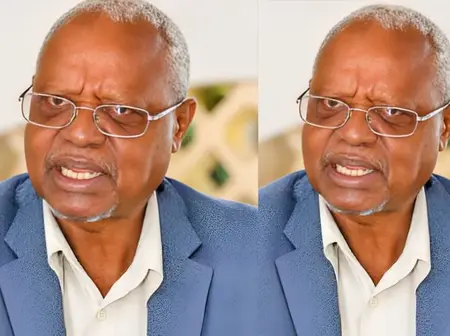
    Former Deputy Speaker of the National Assembly Samuel Kipyebei Arap Ng'eny. PHOTO/ X

    Former National Assembly Deputy Speaker and Aldai Constituency Member of Parliament, Samuel Kipyebei Arap Ng’eny, has passed away, bringing to a close the life of a distinguished leader who dedicated decades of service to Kenya through politics, education, and public leadership.

    National Assembly Speaker Moses Wetang’ula announced Ng’eny’s death on Friday, November 20, 2026, while extending his condolences to the family, friends, and residents of Aldai Constituency in Nandi County.

    In his message of condolence, Wetang’ula described Ng’eny as a respected parliamentarian who served the National Assembly with dignity, wisdom, and an unwavering commitment to parliamentary democracy.

    Ng’eny served as Deputy Speaker of the National Assembly from 1983 to 1988 while representing Aldai Constituency as a Member of Parliament. During his tenure, he earned admiration for his calm leadership, fairness, and dedication to upholding parliamentary procedures and democratic principles.

    The speaker noted that Ng’eny presided over House proceedings with humility, impartiality, and respect, qualities that earned him the trust and respect of colleagues across the political divide.

    Beyond politics, Ng’eny made a significant impact in the education sector. He is remembered as the first Black principal of Kapsabet Boys High School, where he played a pivotal role in shaping the institution and mentoring generations of students who went on to make meaningful contributions to society.

    His service to the nation extended further through his role as a commissioner at the Electoral Commission of Kenya (ECK) and later as a director at the Kenya Tea Development Agency (KTDA), where he contributed to public administration and the growth of key national institutions.

    Ng’eny was also deeply involved in church leadership within the Anglican Church of Kenya (ACK) and remained a respected elder and mentor within the Nandi community throughout his life.

    As Kenyans mourn his passing, Wetang’ula conveyed his sympathies to Ng’eny’s wife, Mama Betty Ng’eny, his children, relatives, friends, and the people of Nandi County.

    He prayed that the family would find strength, comfort, and courage during this difficult period, noting that the former legislator leaves behind a legacy of integrity, leadership, and dedicated public service.

    Samuel Kipyebei Arap Ng’eny will be remembered for his immense contribution to parliamentary leadership, education, electoral management, and community development. His lifelong commitment to serving the nation leaves a lasting mark on Kenya's history and on the many lives he touched throughout his distinguished career.


  • Abi Zuena Finally Clears The Air On The Viral Photo Claiming That Gen Z Baddie Is Pregnant

    Abi Zuena Finally Clears The Air On The Viral Photo Claiming That Gen Z Baddie Is Pregnant

    A viral photograph allegedly showing Gen Z Baddie heavily pregnant has sparked widespread discussion across social media, attracting reactions from Kenyans and political supporters.

    However, the image quickly became a subject of speculation after claims emerged online suggesting that the activist was heavily pregnant. The allegation generated different reactions, with some social media users questioning the circumstances surrounding the photograph while others criticised the attention directed towards her personal life.

    Political activist Abi Zuena has also weighed in on the controversy, expressing concern over what she considers an unfair attempt to attack individuals associated with their political camp.

    Her response has added another dimension to the debate, particularly because political disagreements in Kenya increasingly extend beyond leaders and parties to their supporters and grassroots activists.

    Gen Z Baddie has attracted public attention through her association with the Linda Mwananchi movement and her participation in political conversations. Her appearance in the photograph therefore attracted considerable interest among people following the movement.

    Nevertheless, it is important to distinguish between social media speculation and verified information. A photograph alone cannot establish someone's pregnancy status, and claims about an individual's private life should not be treated as facts without reliable confirmation.

    Political discussions should ideally focus on leadership, accountability, policies and the issues affecting ordinary citizens rather than unverified personal allegations.

    Ultimately, the incident demonstrates how quickly an ordinary photograph can become a major talking point in Kenya's politically charged social media environment.

    **What is your opinion about the controversy surrounding Gen Z Baddie? Should political supporters be allowed to express their opinions without facing personal attacks? Share your thoughts in the comments section.

    https://www.facebook.com/share/1CWNoz9Vc1/

  • RIP: Kenyans Plunged Into Mourning as Prominent Politician Dies Suddenly — Details

    RIP: Kenyans Plunged Into Mourning as Prominent Politician Dies Suddenly — Details

    Kenyans are mourning the death of former Deputy Speaker of the National Assembly Samuel Kipyebei Arap Ng’eny, following confirmation by National Assembly Speaker Moses Wetang’ula on Friday, November 20, 2026.

    Ng’eny, who also served as the Member of Parliament for Aldai Constituency, died aged 85, bringing to an end a long career in education, politics and public service.

    In his condolence message, Wetang’ula paid tribute to the former legislator, recognising his contribution to Parliament and his role in strengthening parliamentary democracy.

    The Speaker described Ng’eny as a leader who served the National Assembly with dignity, wisdom and commitment. He also extended his condolences to the family, friends and people who worked with the late politician.

    Born in March 1941 in Kaboi, Nandi County, Ng’eny built a strong career in education before joining politics.

    He was among the students who joined Alliance High School in 1963. In 1969, he made history after becoming the first Black principal of Kapsabet Boys High School.

    His leadership journey later took him to Parliament, where he served as Deputy Speaker between 1983 and 1988. During the same period, he represented Aldai Constituency.

    Ng’eny also served as a commissioner at the Electoral Commission of Kenya in 2007, a year that became significant in the country's electoral history following the disputed General Election and subsequent post-election violence.

    Beyond politics, he served as a director at the Kenya Tea Development Agency and remained active in the Anglican Church as a respected elder.

    His death comes weeks after his family and community members organised a fundraising appeal in October to support his medical care following a decline in his health.

  • Edwin Sifuna Spotted at JKIA as He Jets Out to US for Major Diaspora Tour, Full Itinerary Revealed

    Edwin Sifuna Spotted at JKIA as He Jets Out to US for Major Diaspora Tour, Full Itinerary Revealed

    Sifuna was spotted at Jomo Kenyatta International Airport (JKIA) on Thursday night, November 19, as he prepared to board a flight to the US. His departure comes days after announcing an extensive itinerary covering several American cities.

    According to information shared by the Linda Mwananchi Movement, the senator's tour will officially begin on November 21 with the opening of the movement's office in Hackettstown, New Jersey.

    On November 22, Sifuna and his team will travel to Allentown, Pennsylvania, where they are expected to attend a church service before holding a town hall meeting at The Palace Center.

    The delegation will subsequently visit Maryland and Washington DC for engagements with business leaders, elected officials and members of the Kenyan community.

    The programme also includes meetings with women's groups and youth movements.

    On November 27, the team will head to Dallas, Texas, for a Thanksgiving dinner at Mar Thoma Event Center. Houston will host additional engagements on November 29, including a women's caucus and a town hall meeting at Sheraton Hotel.

    The tour will later take the delegation to Seattle before concluding with engagements in California, including a town hall meeting in San Francisco and a dinner in Silicon Valley on December 7.

    Sifuna's team includes several political leaders associated with the Linda Mwananchi Movement.

    The tour comes as political activities intensify ahead of the 2027 General Election, with opposition leaders increasingly seeking support among Kenyans living abroad.

    The senator has urged Kenyans in the US to attend the scheduled meetings, promising that the movement will continue visiting other cities in future.

  • THE BOMAS SHOWDOWN: Why Gachagua Says Centralising Presidential Tallying Threatens the 2027 Vote

    THE BOMAS SHOWDOWN: Why Gachagua Says Centralising Presidential Tallying Threatens the 2027 Vote

    Gachagua rejects Bomas tallying, demands presidential results declared in 290 constituencies

    Speaking following the opposition’s tense engagement with the Independent Electoral and Boundaries Commission, Gachagua contended that the commission chairperson should simply aggregate figures already declared at constituency level rather than conduct a separate national tally.

    He illustrated his argument as basic arithmetic adding constituency totals together without altering or re-tallying what returning officers have already announced.

    His stance aligns with broader opposition arguments that finality at polling stations and constituency tallying centers minimizes opportunities for disputes or late changes before a winner is announced.

    However, the proposal runs directly into existing legal and judicial interpretations, as the High Court ruled in September 2026 that the commission retains constitutional and statutory authority to aggregate and verify presidential results at the national tallying center while barring changes to valid constituency outcomes.

    That tension places statutory rules, court rulings, and opposition distrust of centralized counting on a collision course.

    Alongside vote tallying, Gachagua raised sharp questions over voter registration practices and disparities in issuing national identity cards across different parts of the country.

    For critics and voters alike, confidence in the outcome depends not only on how votes are added up at the end, but also on whether eligible citizens are registered evenly from the start.

    Ultimately, Gachagua’s push to end central tallying reflects deep anxieties over transparency and institutional trust heading into the 2027 polls.

    While legal frameworks and court decisions continue to define the commission’s national aggregation role, opposition leaders insist that stronger safeguards at the constituency level are necessary to protect the will of the electorate.

    How the electoral body addresses both tallying procedures and registration fairness will remain a defining issue in the months ahead.

    Source: https://peopledaily.digital/inside-politics/gachagua-rejects-bomas-tallying-demands-presidential-results-declared-in-290-constituencies

  • “You Cannot Lecture Us On Politics” Mbadi Tells Gachagua That He Has More Experience than the Ex-DP

    “You Cannot Lecture Us On Politics” Mbadi Tells Gachagua That He Has More Experience than the Ex-DP

    Speaking on Friday, November 20, 2026, while responding to Gachagua's remarks targeting ODM leaders for supporting the broad-based government, Mbadi contrasted his two-decade public service record against Gachagua's single parliamentary term.

    The Cabinet Secretary noted that he actively sponsored bills and motions during his legislative career while Gachagua served as Mathira Member of Parliament for only five years.

    Mbadi also highlighted his past leadership roles as a former Minority Leader in the National Assembly and an Assistant Minister to underscore his political credentials.

    His remarks followed repeated statements by Gachagua faulting ODM leaders for partnering with President William Ruto's administration and advising the party on its political strategy ahead of 2027.

    Mbadi previously served as the elected representative for the larger Gwassi constituency and later Suba South for 15 years before serving two additional years as a nominated legislator.

    He resigned from his nominated parliamentary seat in 2024 to join President Ruto's Cabinet as the National Treasury Cabinet Secretary.

    Gachagua served as the Deputy President of Kenya from September 2022 until his impeachment by Parliament in October 2024, after which he formed an opposition front ahead of the 2027 elections.

    https://www.facebook.com/100040319114203/posts/2063268975027053/?mibextid=rS40aB7S9Ucbxw6v

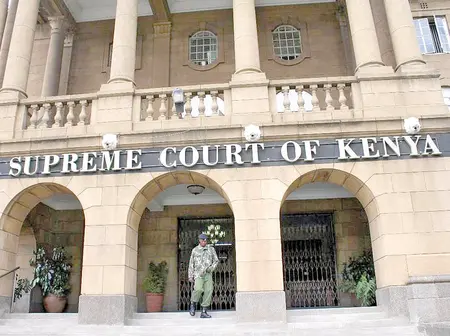
  • How Private Traders Ended Up Occupying Land Reserved for Kenya’s Supreme Court

    How Private Traders Ended Up Occupying Land Reserved for Kenya’s Supreme Court

    Chief Justice Martha Koome made the revelations on Friday, November 20, 2026, during the presentation of the 2025/2026 State of the Judiciary and Administration of Justice Report.

    Lands Cabinet Secretary Alice Wahome formally handed over three title deeds to the Judiciary, covering the Supreme Court building and two other parcels of land.

    Speaking during the ceremony, Koome recalled how individuals who had occupied part of the Judiciary's property challenged the institution to take legal action if it wanted the land back.

    She expressed disbelief at the audacity of the occupants, saying they had even questioned where the Judiciary would seek justice over the disputed property.

    Koome credited President William Ruto's intervention with helping resolve the ownership dispute after the Judiciary raised concerns about the land.

    How the dispute started

    The controversy surrounding the neighbouring parcel dates back several years.

    In May 2015, former Chief Registrar of the Judiciary Anne Amadi informed Parliament that land reserved for the expansion of the Supreme Court had been registered under a private individual's name.

    The property was reportedly being used by traders, complicating efforts by the Judiciary to reclaim it.

    The issue remained unresolved for years, prompting further concerns from the institution's leadership.

    During the 2025 State of the Judiciary presentation, Koome again highlighted the ownership problem.

    Deputy President Kithure Kindiki subsequently instructed Wahome to address the matter and ensure the Judiciary obtained the necessary ownership documents before Christmas 2025.

    Why the Supreme Court lacked ownership documents

    Wahome disclosed that officials at the Lands Ministry discovered that even the parcel hosting the Supreme Court building lacked a title deed when they began processing the neighbouring property's documentation.

    She raised concerns about the security implications of having commercial activities, including parking operations, on land adjoining the country's highest court.

    Although she did not conclusively establish whether the neighbouring property had been illegally acquired, she acknowledged that the Judiciary had been unable to access it.

    The new documents have been registered under the Judicial Service Commission.

    https://peopledaily.digital/news/how-land-grabbers-took-over-property-belonging-to-kenyas-highest-court

  • Boni Khalwale Weighs In on Proposed Opposition Lineup as 2027 Presidential Race Takes Shape

    Boni Khalwale Weighs In on Proposed Opposition Lineup as 2027 Presidential Race Takes Shape

    Boni Khalwale has joined the growing political conversation surrounding the possible opposition leadership lineup ahead of the 2027 General Election, following a crucial question challenging Kenyans to choose their preferred combination among five proposed political arrangements.

    The proposals feature prominent political figures, including Wiper Party leader Kalonzo Musyoka, Nairobi Senator Edwin Sifuna, former Interior Cabinet Secretary Fred Matiang’i, former Deputy President Rigathi Gachagua and Kiharu MP Ndindi Nyoro.

    The second arrangement has particularly attracted attention because it positions Sifuna as the presidential candidate, Kalonzo as his running mate and Matiang’i as Prime Cabinet Secretary.

    The combination has triggered fresh discussions about the leadership structure that could potentially challenge President William Ruto in the forthcoming presidential contest.

    However, reactions to the proposal have exposed sharp divisions over who deserves which position. Some Kenyans have argued that Sifuna should instead work alongside Nyandarua Senator John Methu, while others believe Matiang’i would make a more formidable Deputy President than Prime Cabinet Secretary.

    There have also been calls to abolish the Prime Cabinet Secretary position altogether, with critics arguing that maintaining additional executive offices unnecessarily drains public resources.

    They have insisted that a new administration should prioritise constitutionalism, responsible budgeting and eliminating government wastage.

    Meanwhile, Rigathi Gachagua has been floated as a potential kingmaker who could provide strategic political direction, mobilise support and maintain pressure on the government without necessarily occupying an executive position.

    Beyond the distribution of political positions, the emerging conversation has placed the fight against corruption at the centre of the proposed opposition agenda, particularly through budgetary oversight and controlling excessive government expenditure.

    As political realignments gather momentum, the big question remains whether opposition leaders can put aside personal ambitions and establish a united political formation capable of mounting a serious challenge against Ruto in 2027.

  • Forget Ruto: Gachagua Reveals Who Really Built UDA and Makes an Unexpected Promise

    Forget Ruto: Gachagua Reveals Who Really Built UDA and Makes an Unexpected Promise

    Former Deputy President Rigathi Gachagua has claimed that he helped build the United Democratic Alliance (UDA), saying he now has the ability to bring the ruling party down.

    In a video circulating on social media, Gachagua is heard making the statement in Kiswahili: “Mimi ndio nilijenga UDA na nitaiBOMOA.” The remark translates to, “I am the one who built UDA, and I will bring it down.”

    The statement comes as Gachagua intensifies efforts to expand the Democracy for the Citizens Party (DCP), which he leads, and attract politicians previously aligned with UDA.

    Gachagua has recently welcomed lawmakers who left the ruling party for DCP. They include Gatundu South MP Gabriel Kagombe, Laikipia West MP Wachira Karani and Nyeri Woman Representative Rahab Mukami.

    He has also said that more than 40 Members of Parliament have approached him about leaving UDA and joining his party. The number of possible defectors has not been independently confirmed.

    The former Deputy President has set December 31, 2026, as the deadline for politicians interested in joining DCP during the current party transfer period. He has predicted that the party will attract more lawmakers before the end of the year.

    Gachagua has stated that he wants to weaken UDA's support, particularly in the Mount Kenya region, and challenge its influence in national politics while positioning DCP as an alternative political home ahead of the 2027 General Election.

    His remarks point to an increasingly direct contest between him and the party that sponsored his election alongside President William Ruto in 2022.

    UDA has not been quoted responding to the specific statement in the circulating video. Whether Gachagua can persuade more elected leaders to leave the ruling party remains to be seen as political activity builds towards the next general election.

  • NCIC Gives Ole Lenku Seven Days to Address Controversial Maasai Political Remarks

    NCIC Gives Ole Lenku Seven Days to Address Controversial Maasai Political Remarks

    In a determination issued on Thursday, November 19, 2026, the commission found that comments made by Lenku during a political gathering in Kajiado West on August 22 could promote exclusion and threaten peaceful relations among communities.

    The investigation focused on his statements concerning political parties that nominate candidates from outside the Maasai community to contest positions in areas he considers Maasai territory, including Kajiado and Narok counties.

    Lenku reportedly warned that parties making such nominations would have no relationship with the Maasai community. He also described those supporting alternative political positions as enemies and cautioned that they could find themselves in trouble.

    The governor appeared before the commission on September 17, accompanied by his lawyers and county officials. He acknowledged the accuracy of the recorded remarks.

    His legal representatives maintained that he was addressing political representation, historical injustices, land dispossession and the marginalisation of the Maa community. They argued that his comments were about political competition rather than ethnic hostility or threats of violence.

    However, NCIC concluded that describing political opponents as enemies and warning people against choosing alternative political paths could intimidate residents and discourage democratic participation.

    The commission also expressed concern that the remarks could alienate non-Maasai communities living in Kajiado, a county with residents from different ethnic backgrounds.

    NCIC has proposed four remedial measures. It wants Lenku to publicly affirm his commitment to inclusive politics, reassure residents that everyone can exercise their political rights without intimidation, and provide a written undertaking against using exclusionary language.

    He has also been asked to organise and participate in a county peace and cohesion meeting involving elders, politicians and other stakeholders.

    The governor must respond in writing within seven days, indicating whether he accepts the proposals, rejects them or wishes to suggest amendments.

    NCIC clarified that the determination is an administrative and conciliatory process, not a criminal conviction. Lenku also retains the right to challenge it through judicial review at the High Court.

    https://peopledaily.digital/news/ncic-gives-ole-lenku-7-days-to-respond-to-findings-over-maasai-remarks