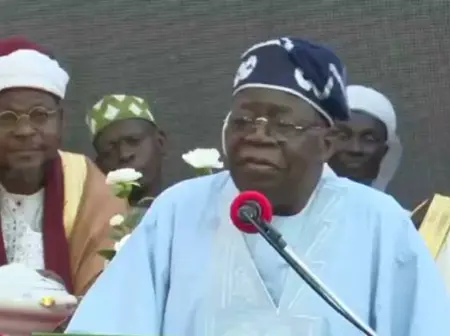
A recent public event in Nigeria sparked laughter after President Bola Tinubu shared an amusing personal experience. According to the story, the president was at a barber shop when the water supply suddenly stopped, leaving no water to wash his head after a haircut. The unexpected incident drew laughter from the audience and quickly became a talking point on social media.
While the story was humorous, it also drew attention to a deeper issue affecting many communities. Water shortages remain a common challenge in several parts of Nigeria, where households, businesses, and public facilities often experience unreliable access to clean water. By sharing a simple and relatable experience, the president highlighted a problem that many ordinary citizens face daily.
The incident also demonstrated how humour can make serious topics easier to discuss. Instead of focusing solely on policies or statistics, the story provided a human perspective on the importance of essential services. Citizens were able to connect with the message because it reflected a real-life situation that many have encountered.
The barber shop experience served as more than a joke. It reminded people that access to basic utilities, such as water, is vital to everyday life and that addressing these challenges remains an important goal for national development and public well-being.
Speaking in Kisumu on Sunday, November 22, 2026, Odinga warned that certain political parties were receiving external sponsorship aimed at eroding ODM’s long-standing influence in its traditional stronghold and competing for seats currently held by the party.
Her remarks followed statements made over the weekend by Gachagua at his Wamunyoro residence, where the former Deputy President alleged—without presenting documentary evidence—that President William Ruto was backing the Movement for Democracy and Growth (MDG), led by Ugenya MP David Ochieng, to recruit politicians in Nyanza and diminish ODM’s dominance.
She observed that some figures within ODM had focused more on pushing members out of the party rather than welcoming new supporters, arguing that internal exclusion had left the movement exposed to rival mobilisation.
MDG party leader David Ochieng has dismissed the allegations surrounding his party as misleading and unfounded.
The exchange highlights the heightened competition and shifting alliances reshaping Nyanza’s political landscape as parties position themselves for the 2027 polls.
What are your thoughts about this article? Share your reactions in the comment section and don't forget to share and follow for more updates
The National Land Commission (NLC) has issued a revised notice on land targeted for compulsory acquisition, for the construction of the Naivasha-Kisumu-Malaba Standard Gauge Railway (SGR), covering Phase 2B and 2C of the project.
In a Gazette notice dated November 20, 2026, the commission announced its intention to acquire the affected properties on behalf of the Kenya Railways Corporation (KRC), in accordance with Section 110 of the Land Act.
The acquisition process affects landowners in Nakuru, Narok, Bomet and Kisumu counties, with the notice paving the way for inquiries and compensation discussions.
NLC said the latest notice corrects information contained in earlier lists by removing parcels that had been wrongly included and adding others that were previously left out.
Members of the public in the affected areas have been asked to inspect the revised plans at the commission's offices at Ardhi House, third floor, Room 305, along 1st Ngong Avenue in Nairobi.
The documents can also be accessed at the county coordinators' offices in Narok, Kericho and Bomet during normal working hours.
The commission has directed anyone with an interest or claim over the affected land to appear in person during the official inquiry. Claimants are required to submit written compensation claims alongside copies of their national identity cards and KRA PIN certificates.
They must also present documents proving ownership of the land and provide their bank account details to facilitate the compensation process.
The latest changes follow an earlier Gazette notice published on October 9, which listed 59 parcels of land in North Mugirango Constituency as falling within the proposed railway corridor.
However, NLC has now excluded those parcels from the revised list, meaning they will no longer be considered for acquisition under the notice.
Kenya Railways had previously announced that it had set aside KSh 25 billion to compensate landowners affected by the railway project.
The Naivasha-Kisumu-Malaba railway is part of the government's wider plan to extend the SGR network, towards the western region and connect it to neighbouring Uganda.
With fewer than 260 days remaining before Kenyans head to the ballot on Tuesday, August 10, 2027, shifting regional loyalties and emerging opposition formations have placed the Head of State on the defensive in areas that were pivotal to his 2022 victory.
According to reports by The Standard and People Daily, the most pronounced political headwinds are blowing across the vote-rich Mt Kenya region, where Ruto captured roughly 77 percent of the presidential vote four years ago.
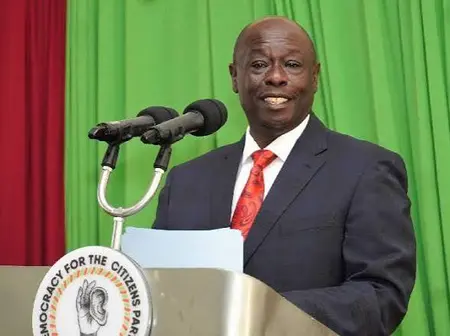
Following the fallout with former Deputy President Rigathi Gachagua and the rapid expansion of Gachagua’s Democracy for the Citizens Party (DCP), several elected leaders—including Githunguri Member of Parliament Gathoni Wamuchomba—have distanced themselves from the ruling United Democratic Alliance (UDA), citing unfulfilled promises and regional discontent.
Recent by-election outcomes, including DCP’s strong showing in Ol Kalou and its ability to attract more than 10,000 votes in Emurua Dikirr within the Rift Valley, have signaled that alternative political vehicles are gaining traction even in zones traditionally considered friendly to the ruling party.
In response to the shifting terrain, President Ruto and Deputy President Kithure Kindiki have ramped up direct county-by-county engagements, highlighted by recent multi-day development and political tours across Western Kenya and Central Kenya aimed at reassuring voters and consolidating local leadership.
At the same time, State House is leaning heavily on its broad-based working arrangement with the Orange Democratic Movement (ODM) to offset potential losses in Mt Kenya by building fresh support across Nyanza, the Coast, and Western Kenya.
However, that alliance faces its own delicate negotiations, as senior ODM figures demand binding power-sharing guarantees while rival opposition movements—such as Nairobi Senator Edwin Sifuna’s Linda Mwananchi Movement and Wiper leader Kalonzo Musyoka’s consolidated Ukambani base—compete aggressively for undecided voters.
As political temperatures rise across the country, Ruto’s ability to convert state development projects, grassroots outreach, and cross-party alliances into durable voter loyalty will determine whether he can successfully defend the presidency in August 2027.
According to a report by The East leigh Voice, Hassan questioned why it took rescue teams approximately 15 days to access and clear the collapsed 18-storey building, despite the critical 72-hour period generally associated with higher survival chances for trapped victims.
“The problem is not the rescuers .. but they did not have the leadership. There was no leadership, there was no plan whatsoever, and there were no resources,” Hassan said.
The MP identified the National Youth Service, Kenya Red Cross, Kenya Defense Forces and Nairobi County emergency personnel among the teams involved in the operation.
He claimed that rescuers experienced shortages of fuel for bulldozers, forcing operations to stop at night. He also alleged that emergency personnel lacked adequate food supplies and depended on nearby residents for meals.
Hassan further revealed that a Chinese rescue team had informed him that its equipment detected two people alive beneath the rubble. However, he said rescuers experienced difficulties accessing them because they lacked sufficient equipment to break through the concrete.
The legislator also criticized the county government over its alleged failure to support affected families with DNA testing and burial expenses.
He questioned the administration's accountability, arguing that Nairobi residents deserved explanations about how county resources were being managed.
The East leigh building collapsed on October 23, 2026, during construction. Associated Press reported that eight people had died, four had been rescued alive and 16 remained missing following the disaster.
Hassan has also previously called for the dismantling of Nairobi County's planning department, accusing it of corruption and weak oversight.https://www.facebook.com/share/p/1CoGzjCiS7/
Kisii gubernatorial aspirant Kevin Nyamari has faced backlash after distributing branded underwear to women to support his 2027 bid. He defended his actions and decried a rise in demand.
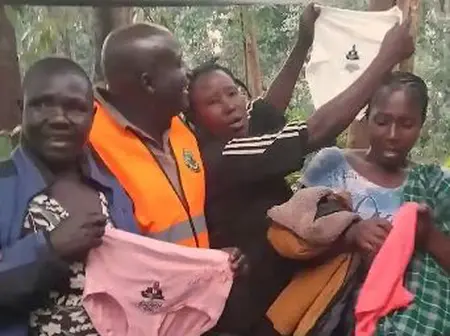
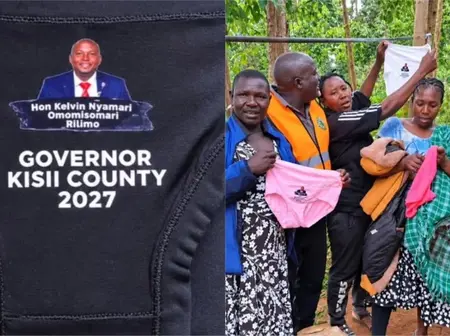
The story started after photos and videos went viral on social media on Saturday, November 22, 2026. The images showed women in a rural compound in Kisii holding up women’s underwear in pink, white, red, brown and black colours.
The underwear had Nyamari’s photo printed on the front, along with his name and the words Governor Kisii County 2027. In some photos, an associate wearing an orange reflective vest was seen handing out the items from brown paper bags to a line of women.
In other photos, Nyamari himself was seen standing with the women as they held up the items.
The giveaway quickly divided opinion. Many Kenyans called it shameful, demeaning and disrespectful to women. They asked why a man who wants to be governor would give underwear instead of presenting a plan for healthcare, agriculture, youth employment, water and roads.
Others joked about husbands finding their wives wearing underwear with another man’s face on it. Some called it witchcraft and said the items should be burned.
A small number defended the move, saying underwear is something women need, and that any useful gift should not be rejected.
On Monday, November 23, 2026, Nyamari responded on Facebook. He shared a photo of the black underwear and framed the gesture as a contribution to women’s dignity.
He said giving underwear may seem small, but dignity has no small contribution, and the confidence it carries is enormous.
He said he had noted the online conversations about the distribution. He said his work to support vulnerable members of the community, especially girls and women, has always been driven by dignity, compassion and social responsibility.
He pointed to previous welfare efforts, including donations of sanitary towels to girls, as evidence of a consistent commitment to menstrual hygiene and women’s access to necessities. He argued that such issues deserved serious attention rather than ridicule.
He also said his ambition to serve the people of Kisii County is bigger than online controversies. He said leadership is about service, not popularity, and that he will not be distracted from serving the people.
After the backlash, Nyamari later revealed that demand for the underwear had surged into the thousands. He said requests were now coming in large numbers, and everyone wanted a pair. He said the demand was too high for him to meet, and that even a governor-in-waiting has a budget.
He also said recipients had expressed a preference against the black colour chosen for the initial batch, and that they wanted other colours.
Speaking during a public address, the Head of State criticised politicians who have been questioning his development record, saying some of his rivals were attempting to portray his government as having achieved nothing since he assumed office.
Ruto observed that certain politicians competing against him had been telling Kenyans that he made several promises during the campaign period but had failed to implement them after winning the presidency.
"Kuna wanasiasa wengine ambao wanajaribu kushindana na sisi wanasema eti kuna mambo niliahidi na hakuna kitu nimetimiza," Ruto said.
The President's remarks come amid increasing political debate over his administration's performance, with opposition leaders raising questions about the implementation of key campaign pledges.
Among the issues that have continued to attract public attention are the cost of living, employment opportunities, healthcare reforms, education funding and the Affordable Housing Programme.
Ruto has consistently defended his government's development agenda, maintaining that his administration is implementing various programmes intended to improve the country's economy and create opportunities for Kenyans.
His latest response adds to the ongoing political exchanges between the government and its critics as leaders begin positioning themselves ahead of the 2027 General Election.
The question of whether the government has delivered on its campaign commitments is expected to remain a major issue in the coming months, with political opponents likely to continue demanding accountability.
Kenyans will ultimately assess the administration's record against the promises made during the 2022 election campaigns.
In remarks reported on Monday, November 23, 2026, Njoroge dismissed assertions by critics that limited campaign funds represent a fatal weakness, arguing instead that the initiative is sustained by ordinary citizens and grassroots networks rather than wealthy patrons or a centralized war chest.
Njoroge stated that supporters at home and abroad have taken personal ownership of the movement, forming organic mobilising groups at the community level rather than waiting for directives or financial handouts from the candidate.
Framing the push around shared civic responsibility, she declared that the effort had evolved beyond an individual ambition into a collective undertaking under the banner that supporters themselves are all Sifuna.
According to Njoroge, visible local organising demonstrates that political momentum can be built through citizen participation and everyday commitment.
Her outreach comes as Sifuna and his allies seek to consolidate national visibility, structure campaign operations, and engage diaspora communities ahead of formal 2027 electioneering.
As political alignments continue to shift across Kenya, the Linda Mwananchi camp is banking on decentralized grassroots enthusiasm and overseas engagement to offset traditional resource advantages and sustain momentum toward next year’s polls.
What are your thoughts about this article? Share your reactions in the comment section and don't forget to share and follow for more updates.
A Kisii gubernatorial aspirant has sparked widespread debate across Kenya after distributing women’s underwear branded with his portrait and 2027 campaign slogans during grassroots outreach. Despite facing swift online criticism and public scrutiny, the aspirant, Kevin Nyamari, remains unbothered, defending the unconventional gesture as a genuine effort to restore dignity and support vulnerable women.
Images circulating on social media show women receiving undergarments printed with Nyamari’s photograph alongside messages drumming up support for his 2027 Kisii gubernatorial bid. While critics dismissed the move as a bizarre campaign gimmick and an affront to voter dignity, Nyamari stood his ground in a formal statement addressing the uproar.
According to Nyamari, the initiative stems from his broader commitment to social responsibility and women’s welfare, rather than mere political theatrics. He noted that access to basic personal necessities remains a pressing yet overlooked challenge for many low-income women and girls in the region. Linking the distribution to his previous donations of sanitary towels, the aspirant argued that menstrual and personal hygiene should be treated with seriousness rather than ridicule.
Furthermore, Nyamari claimed that demand for the items has surged on the ground, insisting that online backlash does not reflect the realities facing ordinary residents. Maintaining a defiant tone, he emphasized that leadership is rooted in practical service rather than chasing online popularity, adding that he will not be distracted from his mission to serve the people of Kisii County.
The incident adds to a growing trend of unusual campaign giveaways ahead of the 2027 General Election, prompting renewed national conversation on political ethics, voter empowerment, and campaign standards under Kenyan electoral guidelines.
For related context on similar controversies involving branded undergarments in Kenyan politics, watch Kirinyaga politicians trade blame over branded underwear.
A Kisii gubernatorial aspirant has stirred wide debate online after giving out colourful women's underwear printed with his photograph. Kelvin Mabeta Nyamari is seeking support ahead of the 2027 General Election.
Videos circulating on social media show women receiving the garments. They come in pink, white, red and brown. His photograph is printed on the front alongside the words "Governor Kisii County 2027".
In one clip a man handing out the items urges women to come and collect theirs. He tells them to take videos of the giveaway as it continues. The women are seen receiving the items with smiles.
The unusual choice of campaign merchandise has become the main talking point online. It has also raised questions about the kind of strategies politicians are using to win votes. Many Kenyans want to know where the line should be drawn.
Nyamari wants to take the seat currently held by Governor Simba Arati. Arati won in 2022 and is eligible to seek a second term. Other names linked to the race include former Education Cabinet Secretary Ezekiel Machogu and Senator Richard Onyonka. The contest is shaping up to be a tough one.
This is not the first time such a gift has caught attention in the county. In August 2026 Kisii Woman Representative Donya Toto gave out women's underwear at a political gathering at Nyangoge Primary School in Bonchari. The donation split opinion among politicians. Some questioned the use of personal items as campaign gifts while some beneficiaries defended the gesture.
Handouts and branded items have become a common part of political mobilisation in many parts of the country. The latest incident adds to the unusual campaign activities seen ahead of 2027 as aspirants look for ways to make their names known to voters.