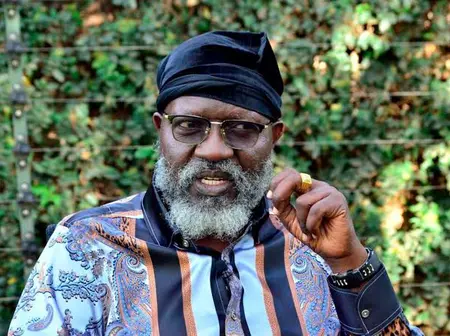
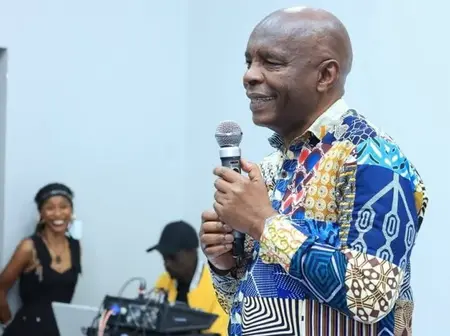
Speaking during an engagement with members of the Kenyan diaspora on Sunday, November 23, 2026, Sifuna questioned whether the country genuinely lacked qualified individuals capable of managing important government ministries.
The senator argued that Kenya had a large pool of skilled professionals working in different parts of the world whose knowledge and experience could be utilised to strengthen public institutions.
He directly challenged his audience to consider whether they could identify someone with the qualifications and expertise to serve as Health CS.
"Can you tell me, in this room, that we cannot find a Health Minister better than Duale?" Sifuna posed.
He maintained that appointments to senior government positions should be informed by professional qualifications, experience and demonstrated ability rather than political connections.
To reinforce his argument, the Nairobi senator highlighted the achievements of a Kenyan professional identified as James Wafula, whom he said had designed and constructed a boardwalk in East London, South Africa.
Sifuna questioned why Kenyans with specialised skills could secure opportunities to undertake significant projects abroad while similar expertise remained underutilised in their home country.
He also outlined the Linda Mwananchi movement's intention to embrace merit-based appointments and create avenues through which professionals living overseas could participate in national leadership and development.
The senator further argued that diaspora communities should have a meaningful role in shaping government policies instead of being approached mainly when financial or other assistance is required.
His remarks come as political discussions surrounding the 2027 General Election intensify, with Sifuna continuing to challenge President William Ruto's administration over governance and accountability.
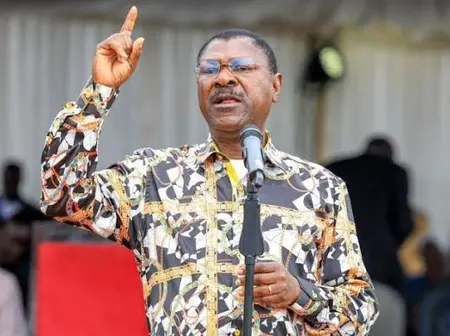
Speaking in Western Kenya during President William Ruto’s multi-day regional development tour—which spans Busia, Bungoma, Kakamega, and Vihiga counties—the Ford Kenya leader urged the Mulembe nation to remain firmly anchored in the government to secure tangible development.
The Speaker's remarks come as top government officials, including Prime Cabinet Secretary Musalia Mudavadi, accompany the President in launching and inspecting key infrastructure, agricultural, and housing projects across the region, while countering growing political mobilization from opposition leaders such as Nairobi Senator Edwin Sifuna.
Wetang'ula reiterated that Western Kenya is witnessing unprecedented state investment—citing road upgrades, modern markets, healthcare facilities, and the revival of local sugar factories.
While rallying the region behind Ruto for 2027, Wetang'ula also maintained his focus on the future, affirming that he is positioning himself to take over the presidency in 2032 once President Ruto completes his second term.
The supremacy battle in Western Kenya continues to gain momentum, as Sifuna is also positioning himself for the presidential race in the 2027 polls.
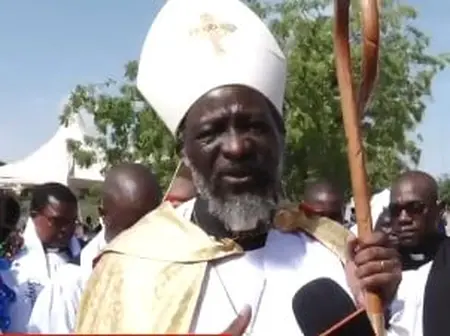
Garissa Diocese Bishop Francis Omondi called on the Independent Electoral and Boundaries Commission (IEBC) and political players to prioritise consultations instead of allowing disagreements over electoral reforms to escalate.
Speaking in Garissa County on Sunday, November 22, Omondi said Kenya needed deliberate efforts to safeguard peace as the country approaches another election cycle.
He cautioned that ignoring concerns raised by political stakeholders could deepen divisions and create an environment of mistrust.
The bishop challenged political leaders to examine lessons from previous elections, particularly the disputed 2007 presidential poll and the violence that followed.
He specifically recommended studying the Kriegler Report, which investigated the 2007 election, alongside reports documenting the 2007-2008 post-election violence.
According to Omondi, the findings of those investigations should guide current leaders in preventing a repeat of the conflicts that previously affected the country.
His remarks came during a special Anglican Church service in Garissa where priests and deacons were consecrated and commissioned.
The intervention comes amid growing disagreements between opposition politicians and IEBC over electoral preparations and proposed reforms.
On Thursday, November 19, Wiper Patriotic Front leader Kalonzo Musyoka led opposition leaders in walking out of a meeting with the electoral commission.
The dispute has also attracted reactions from government officials, with Interior Cabinet Secretary Kipchumba Murkomen defending IEBC against criticism from opposition leaders.
Speaking in Tiaty, Baringo County, on Saturday, Murkomen accused the opposition of undermining confidence in the electoral body and warned against actions that could destabilise the country.
However, Bishop Omondi maintained that dialogue remains essential in addressing electoral disagreements and protecting national unity.
He urged all political actors to place Kenya's stability above their competing interests as preparations for the August 2027 elections continue.
The family of former Kenyan Vice-President and Internal Security Minister Professor George Saitoti has questioned the growing publicity surrounding a dispute over his multimillion-shilling estate, insisting that the late politician’s private family affairs should be treated with dignity.
The dispute has resurfaced 14 years after Saitoti died in a helicopter crash on June 10, 2012, with a man identified as James Solomon Njage claiming to be his biological son and demanding recognition as a beneficiary of the estate.
The late politician’s widow, Margaret Wanjiku Saitoti, has strongly opposed the application, questioning why the claim has emerged more than a decade after her husband's death.
She maintains that Saitoti never publicly acknowledged, supported, or recognised Njage as his son during his lifetime. She also argues that the estate was legally distributed in accordance with her husband's will.
The dispute has attracted further attention following DNA results presented in court by Saitoti’s biological brother, Ronald Leposo Musengi. The tests reportedly indicate a 99.9999 per cent probability that Njage and Musengi are biologically related as uncle and nephew.
Musengi has expressed confidence that Njage could be his late brother's son, adding a new dimension to the ongoing family disagreement.
However, Margaret has also opposed proposals to exhume Saitoti's remains for further DNA testing, arguing that the process would cause unnecessary emotional distress to the family.
The estate, valued at approximately Sh84.5 million for probate purposes, includes properties, land, vehicles and shares.
The matter is expected to be heard at the Milimani High Court, where the court will determine whether the succession proceedings should be reopened and whether Njage has established a legal claim to the inheritance.
Ruto maintained that his government had made significant progress in fulfilling commitments made during the 2022 election campaigns.
“Every commitment that we made to the people of Kenya, we have done our best. And today we have a record that Kenyans can see,” he said.
According to a report by The Star, the President argued that his administration had established a track record that voters could use to assess its performance when deciding the country's leadership in the next election.
He further accused his competitors of criticizing the government without presenting concrete development proposals, insisting that Kenyans should evaluate leaders based on their plans and achievements.
Ruto cited improvements in agriculture, particularly the sugar, coffee and tea sectors, as evidence of his administration's performance. He said farmers were beginning to receive better returns from their produce following government interventions.
The President also highlighted investments in education, healthcare and infrastructure, including teacher recruitment, classroom construction, road development and the affordable housing programme.
On healthcare, he cited the expansion of the Social Health Authority (SHA), claiming that the national health safety net had grown from approximately eight million people under the previous National Hospital Insurance Fund (NHIF) system to 33.7 million registered Kenyans.
He also pointed to the construction of 7,000 kilometers of roads, the extension of the Standard Gauge Railway and plans to establish 600 modern markets across the country.
The President's remarks follow his fourth State of the Nation Address delivered before Parliament on November 18, 2026, in which he defended his administration's economic and development record.
His latest declaration signals an increasingly direct appeal for political support as Kenya approaches the 2027 presidential election.https://www.facebook.com/share/p/1ATnvAxDTQ/
Chachu was reported missing on Saturday, November 21, before North Horr MP Adhe Wario announced the following day that he had been found and taken to hospital. He was allegedly drugged along Ngong Road in Nairobi, although the circumstances surrounding the incident remain unclear.
The incident has drawn attention to wider concerns over disappearances, intimidation and violence targeting political gatherings.
With the next general election approaching, questions are emerging about whether Kenyans will be able to express their political opinions, attend rallies and support their preferred candidates without fear of attacks.
The concerns extend beyond abductions to the use of organised groups to disrupt political meetings. An analysis by the Armed Conflict Location and Event Data project (ACLED) warned in 2026 about rising political goonism and retaliatory mob violence ahead of the elections.
Human Rights Watch also raised concerns in September 2026 over attacks by unidentified armed groups targeting civil society organisations and opposition gatherings, warning that such incidents threaten fundamental political freedoms.
Security agencies are being urged to investigate reported disappearances promptly and ensure that anyone found responsible for unlawful acts faces justice.
Political leaders across the divide have also been challenged to discourage violence and avoid using young people to intimidate opponents. Instead, political competition should be conducted through peaceful campaigns, public debate and voting.
The Independent Electoral and Boundaries Commission, political parties, religious institutions and civil society organisations have a role in promoting peaceful participation as election preparations gather momentum.
Although Chachu's recovery was welcome, questions about what happened to him remain. His case has reinforced calls for stronger protection of citizens and accountability for those involved in political violence.
As the 2027 elections approach, the ability of Kenyans to participate freely and safely will remain an important test of the country's democratic environment.
Media personality Willis Raburu has announced his association with Embakasi East MP Babu Owino’s The Mwananchi Party as he continues positioning himself for the Kisumu Senate seat in the 2027 General Election.Raburu made the announcement in a social media post on Monday, November 23, 2026, in which he expressed support for Owino’s political movement and declared his intention to help popularise the party after they held a successful rally in Nairobi over the weekend.
Speaking during a church service at Grace Community Church on Sunday, November 22, 2026, Sifuna revisited the political events that led to Gachagua's impeachment, questioning the former deputy president's current criticism of a political arrangement he previously supported.
The senator argued that Gachagua had been among the leaders who promoted demands for government positions based on political support before falling out with President William Ruto.
Sifuna claimed that similar negotiations had taken place during previous coalition arrangements involving leaders such as Musalia Mudavadi and Moses Wetang'ula, where political partners reportedly secured a share of government appointments.
He also recalled negotiations between ODM and the United Democratic Alliance (UDA) following the formation of the broad-based government, alleging that some leaders demanded the deputy presidency and other influential positions in exchange for supporting the administration.
According to Sifuna, Gachagua was previously a strong defender of the political hierarchy he now criticises.
He compared the former deputy president's political transformation to the biblical story of Saul, who persecuted Christians before becoming an apostle.
The Nairobi senator further disclosed that Gachagua once told him he would also have supported his impeachment had their political positions been reversed.
"Gachagua also told me that if he were in my position, he would impeach me," Sifuna recalled.
He maintained that removing a sitting deputy president was not an easy political decision and required leaders to put accountability ahead of personal relationships.
Gachagua was removed from office on October 17, 2024, after the Senate upheld an impeachment motion initiated by the National Assembly. A total of 54 senators supported his removal over the charge of gross violation of the Constitution, while 13 opposed it.
Sifuna's latest remarks come amid changing political alliances as the former ODM Secretary-General continues to chart a separate political path following his fallout with the party leadership.
The former presidential candidate argued that politicians with meaningful agendas should focus on explaining their policies rather than insulting opponents, remarks that have attracted attention amid growing political competition ahead of the 2027 General Election.
In a statement that quickly caught public attention, Wajackoyah said, “You cannot hear candidates in America abusing each other. It is only leaders without an agenda who attack their rivals verbally.”
His remarks appeared to question the growing culture of political insults, where some leaders spend more time attacking opponents than explaining what they would do if elected.
The comments come at a time when Kenya's political atmosphere is becoming increasingly heated, with leaders from different political camps exchanging sharp words as they position themselves for the next election.
For many ordinary Kenyans, the biggest concern is whether political competition will produce better ideas or simply become another battle of personal attacks.
Wajackoyah's comparison with American politics also opened another discussion about whether Kenyan politicians should borrow lessons from other democracies, especially when it comes to issue-based campaigns and public accountability.
However, his remarks may not sit well with everyone. Some political supporters believe tough language is part of political competition, while others argue that insults only distract voters from important national issues such as unemployment, the cost of living and poor service delivery.
The incident sparked reactions online, with many people left talking about the difference between leaders who sell ideas and those who attack personalities. Supporters appeared divided over whether Wajackoyah had raised an important point or was being too critical of Kenya's political culture.
What happened next surprised many as the discussion shifted towards the kind of leadership Kenyans want in 2027.
Do you agree with Wajackoyah that leaders who insult their opponents lack a clear agenda?
Former Makueni Governor Kivutha Kibwana has clarified his remarks about New York City Mayor Zohran Kwame Mamdani after Nairobi Senator Edwin Sifuna responded to suggestions that he should meet the American politician during his ongoing United States tour.
Kibwana explained that his original message was directed at Embakasi East MP Babu Owino and had nothing to do with the people Sifuna should prioritise meeting during his American trip.
In a statement shared on Monday, November 23, 2026, the former governor said he had suggested that Babu, also a prominent figure in Nairobi politics, seek an opportunity to meet Mamdani because the two are close in age and could benefit from exchanging leadership ideas.
“My tweet was about @HEBabuOwino, a Nairobi city chief meeting an agemate Mayor @ZohranKMamdani of New York. It wasn’t a comment about whom you should meet,” Kibwana stated.
He also used the opportunity to reassure Sifuna of his confidence in his political journey, cautioning him against allowing disagreements among supporters to distract him from his broader objectives.
“Omwami @edwinsifuna, we have faith in you. Don’t allow some supporters to detract you. We must keep our eyes on the ball,” he added.
The clarification followed public discussion of Kibwana’s earlier recommendation and Sifuna’s later remarks while addressing Kenyans in the United States.
The controversy started on Sunday, November 22, when Kibwana suggested that Babu should prioritise meeting Mamdani if he travelled to the United States.
The former governor argued that the New York mayor, who is 35, could offer valuable mentorship to the 37-year-old Embakasi East MP.
“If 37-year-old Babu Owino was to tour USA, I would strongly urge him to prioritize seeking 35-year-old Mayor Zohran Kwame Mamdani of New York City for one-on-one mentoring. Then the icing on the cake should be a visit with former celebrated President Barack Obama,” Kibwana wrote.
His remarks generated debate, with some Kenyans interpreting the suggestion as an indirect comment on Sifuna’s ongoing American tour.
Sifuna subsequently addressed the discussion while speaking to Kenyans during a Linda Mwananchi Movement town hall meeting in Pennsylvania on Sunday.
The Nairobi Senator dismissed suggestions that meeting Mamdani was among his priorities, explaining that his main objective was to interact with Kenyans living in the diaspora.
He argued that Kenyans abroad were an important constituency because they participate in elections and have a stake in determining the country’s political leadership.
“Some people are saying I should have gone to meet so-and-so. I did not come here to meet Mamdani. I came to meet my fellow Kenyans because they have votes,” Sifuna said.
He nevertheless indicated that he expected to meet the New York mayor during his next visit to the United States for the United Nations General Assembly in 2027.
The latest exchange comes against the backdrop of Kibwana’s repeated interventions in discussions surrounding the political relationship between Sifuna and Babu.
On November 15, the former governor urged the two politicians not to allow their individual political ambitions to undermine their relationship ahead of the 2027 General Election.
He suggested that one could become President while the other serves as Nairobi Governor, arguing that their cooperation could be important to the country’s political future.
Kibwana has also publicly encouraged Sifuna ahead of his American tour, advising him that anyone seeking to lead Kenya requires wisdom, humility, tact, magnanimity and God’s grace.
Interestingly, Babu appointed Kibwana patron of The Mwananchi Party on November 6, adding another dimension to the former governor’s involvement in the emerging political arrangements around the two leaders.
Sifuna is undertaking a United States tour running from November 21 to December 7, 2026, as part of efforts to popularise the Linda Mwananchi Movement and engage Kenyans living abroad.
The programme includes diaspora town hall meetings, community engagements and interactions with different groups across several American states.
The tour comes as Sifuna increasingly positions himself for national leadership ahead of the 2027 General Election.
Kibwana’s latest clarification appears aimed at putting the Mamdani debate behind the senator while encouraging him to remain focused on his political engagements.
For the former governor, his original suggestion was about creating a mentorship opportunity for Babu, not questioning Sifuna’s choice of meetings during his American tour.