Category: Politics

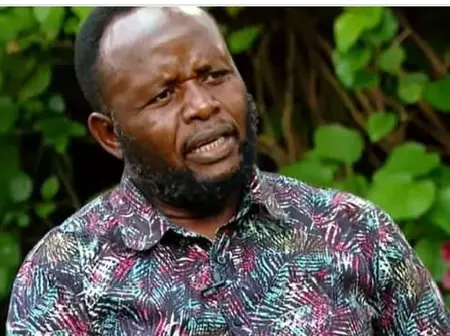
  • Babu Owino’s Alleged Secret Doubts About Sifuna Finally Come To Light

    Babu Owino’s Alleged Secret Doubts About Sifuna Finally Come To Light

    Trans Nzoia Governor George Natembeya has raised fresh questions about Embakasi East MP Babu Owino’s commitment to the Linda Mwananchi Movement claiming that the legislator is not fully convinced by Nairobi Senator Edwin Sifuna’s presidential ambitions ahead of the 2027 General Election.

    Natembeya suggested that Babu’s reservations stem from his doubts about Sifuna’s ability to defeat President William Ruto and secure the country's top political seat in the 2027 elections.

    The governor's remarks have brought renewed attention to possible differences within the Linda Mwananchi camp which has been positioning itself as a major force in the opposition's efforts to challenge Ruto's re-election bid.

    Sifuna has increasingly emerged as one of the prominent figures associated with the movement, attracting attention through his political activities and criticism of the Kenya Kwanza administration.

    However, Natembeya's claims suggest that not everyone within the broader opposition movement shares the same level of confidence in Sifuna's presidential ambitions.

    The remarks also come amid growing discussions about the movement's leadership, political direction and the individuals expected to play central roles in its 2027 strategy.

    Babu Owino remains an influential political figure particularly among younger voters in Nairobi making his position potentially significant to the movement's mobilisation efforts.

    Natembeya's comments could therefore intensify speculation about the relationship between key figures within Linda Mwananchi and whether they are united behind Sifuna's political ambitions.

    With the 2027 elections approaching, the movement faces the challenge of maintaining internal unity while building a credible opposition platform capable of mounting a serious challenge against the ruling coalition.

    Source;https://www.facebook.com/100064776546036/posts/1632163788952824/?app=fbl
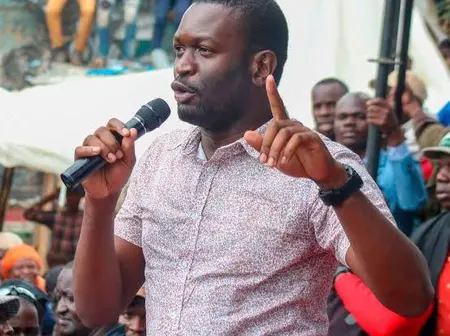
  • Why Edwin Sifuna Is Holding Back His Equitable Party Manifesto From Kenyans

    Why Edwin Sifuna Is Holding Back His Equitable Party Manifesto From Kenyans

    "Kasongo is really pushing us to release our manifesto. These days, they copy everything we say," Sifuna reportedly remarked. His statement suggests that he is concerned about revealing his party's plans before the next General Election.

    The latest comments come as Sifuna positions The Equitable Party as a political vehicle ahead of the 2027 elections. The Nairobi Senator has been associated with the Linda Mwananchi Movement, which has attracted attention through its criticism of the current administration.

    Sifuna previously explained his reluctance to publish the party's policy proposals during the unveiling of The Equitable Party in Nairobi on October 4, 2026. A report by People Daily published that day indicated that he feared President Ruto could adopt his proposals and present them as government initiatives.

    During the October launch, Sifuna used examples of political activities he believed the President had copied. He reportedly mentioned receiving a goat in Meru and carrying a child during public engagements, claiming similar gestures would later feature in the President's activities.

    The disagreement over the manifesto comes at a time when political leaders are beginning to position themselves ahead of the 2027 presidential contest. Political parties are expected to present their programmes to voters, explaining how they intend to address the country's economic and governance challenges.

    For ordinary Kenyans, the contents of these political documents matter because they outline what aspiring leaders intend to do if elected. Issues such as unemployment, taxation, the cost of living and access to public services are likely to influence how voters assess competing political programmes.

    Sifuna has previously discussed proposals involving government spending and possible relief from certain taxes. However, Kenyans will need to examine the complete manifesto before determining how the party intends to implement its promises and finance its proposed programmes.

    President Ruto's administration has faced sustained criticism from opposition politicians over taxation, public spending and the cost of living. Sifuna's latest remarks add another political disagreement to the growing exchanges between government leaders and those preparing to challenge them in 2027.

    The Nairobi Leo post did not provide a detailed response from State House to Sifuna's latest allegation. The attention will now turn to when The Equitable Party eventually publishes its full policy document and what proposals it presents to the electorate.

    With the 2027 elections approaching, should Sifuna release his manifesto now so Kenyans can examine his plans, or keep it under wraps until the campaign gains momentum?

  • Ruto Makes Low-Profile Trip to Congo After Western Kenya Tour

    Ruto Makes Low-Profile Trip to Congo After Western Kenya Tour

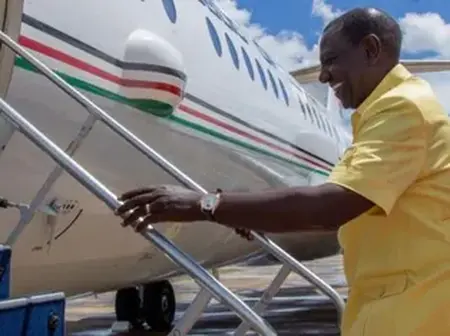
    President William Ruto arrived in Oyo, Republic of Congo, on Saturday, November 21, for a high-level diplomatic meeting expected to focus on regional relations, and tensions between Kenya and the Democratic Republic of Congo (DRC).

    The meeting was initiated by Congolese President Denis Sassou Nguesso, who is bringing together leaders, for discussions aimed at addressing diplomatic concerns in the region.

    According to Congolese media reports, the talks are also expected to involve DRC President Félix Tshisekedi and Togolese Prime Minister Faure Gnassingbé. However, an official confirmation of the full list of participants had not been issued by the time of publication.

    Ruto reportedly left Kenya through Kisumu International Airport on Saturday after completing a series of engagements during his tour of Western Kenya. His departure was not widely publicised, making the trip a low-profile diplomatic engagement.

    The visit comes at a time when relations between Nairobi and Kinshasa have faced challenges, with disagreements over security and political developments in the eastern DRC.

    Tensions escalated in December 2023 after the Alliance Fleuve Congo (AFC), a political-military coalition linked to the M23 rebel movement, held a launch event in Nairobi.

    The development drew criticism from the Congolese government, which raised concerns over the group's activities on Kenyan soil. The AFC is associated with the M23 movement, which has been involved in conflict with government forces in eastern DRC.

    Kenya has previously played a role in regional efforts to address insecurity in the eastern part of the neighbouring country. Nairobi has also been involved in diplomatic and peace initiatives involving the DRC and other regional states.

    The strained relationship has placed attention on Kenya's diplomatic position and its engagement with the Congolese government.

    Ruto's participation in the Oyo meeting provides an opportunity for the two countries to address outstanding concerns through direct discussions. The involvement of other regional leaders is also expected to support broader efforts to ease tensions.

    Details of the discussions and any agreements reached were not immediately available.

    LINK: https://www.tuko.co.ke/kenya/647532-william-ruto-secretly-travels-congo-strained-kenya-drc-relations/?fbclid=IwZXh0bgNhZW0CMTEAcGRvZgRzcnRjBmFwcF9pZA80MDk5NjI2MjMwODU2MDkAAR_3cEoiPbkPIoU6vPU3_Kb8-klXT7CRweA49ZJtf9f5tH8zYGtJ_UFyUCLPOw_aem_KU8Ifg1I3dMpQfx7lfut5Q

  • Meet George Njue, US-Based Kenyan Who Pledged KSh100 Million To Sifuna After Meeting Him

    Meet George Njue, US-Based Kenyan Who Pledged KSh100 Million To Sifuna After Meeting Him

    During the meeting, Njue expressed his strong belief in Sifuna's leadership and encouraged him to create opportunities for Kenyans living abroad to support the movement.

    He noted that the diaspora community has the financial means to contribute but needs a structured way to facilitate their donations.

    Njue urged Sifuna's team to set up a system for collecting funds, mentioning that supporters in the US could potentially raise KSh100 million.

    However, this commitment comes with certain expectations regarding how the funds would be utilized for the country’s benefit.

    This offer coincides with Sifuna's ongoing visit to the US, where he is engaging with Kenyans abroad to garner support for his political aspirations leading up to the 2027 General Election.

    The senator has previously highlighted the importance of small contributions from regular supporters as a key part of his campaign strategy.

    https://www.facebook.com/reel/1181387917558409/?app=fbl

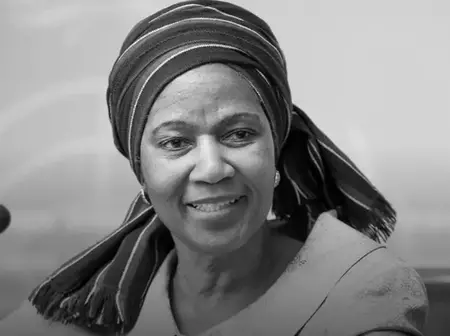
  • South Africa Announces State Funeral for Former Deputy President Phumzile Mlambo-Ngcuka

    South Africa Announces State Funeral for Former Deputy President Phumzile Mlambo-Ngcuka

    President Cyril Ramaphosa has announced that she will receive a State Funeral Category 2 in recognition of her contribution to the country through public service and international leadership.

    According to the Presidency, the funeral will take place on Saturday, November 28, in Middledrift (eXesi), Eastern Cape. The ceremony will include military honours conducted by the South African National Defence Force (SANDF).

    A state memorial service will also be held on Tuesday, November 24, at Our Lady of Lourdes Catholic Church in Rivonia, Johannesburg, starting at 2pm.

    Ramaphosa has directed that the national flag be flown at half-mast at all flag stations across the country from Sunday, November 22, until the evening of November 28, as South Africa pays tribute to the former deputy president.

    The president also extended his condolences to her immediate family and the wider Mlambo and Ngcuka families.

    Who Was Phumzile Mlambo-Ngcuka?

    Mlambo-Ngcuka was a prominent South African politician and former anti-apartheid activist who played a significant role in the country's leadership after the end of apartheid.

    She entered Parliament in 1994, following South Africa's first democratic elections, which brought Nelson Mandela to power. She later served as deputy minister of trade and industry before becoming minister of minerals and energy.

    In 2005, she was appointed deputy president under former president Thabo Mbeki, becoming the first woman to hold the position in South Africa. She served until 2008.

    Her leadership extended beyond South Africa when she joined the United Nations in 2013 as Under-Secretary-General and Executive Director of UN Women. She held the positions until 2021, advocating for gender equality, women's empowerment and the rights of girls worldwide.

    Tanzanian President Samia Suluhu Hassan also honoured her contribution to leadership, peace and the advancement of women and girls, sending condolences to the South African government, her family and the nation.

    Source

  • Natembeya Reveals Why LLM Would Have Opposed Sifuna’s Proposal of Babu Owino Becoming Party leader

    Natembeya Reveals Why LLM Would Have Opposed Sifuna’s Proposal of Babu Owino Becoming Party leader

    Trans Nzoia Governor George Natembeya has explained why the Linda Mwananchi Movement (LMM) would not have accepted a proposal to have Embakasi East MP Babu Owino become the party leader while Nairobi Senator Edwin Sifuna served as its presidential candidate.

    Natembeya's remarks come amid growing disagreements between Sifuna and Babu over their political understanding, particularly following the latter's decision to establish The Mwananchi Party (TMP).

    Speaking during a Sunday interview on November 22, 2026, the governor questioned the reasoning behind an arrangement that would allow one politician to seek the presidency while another controlled the political party sponsoring his candidature.

    According to Natembeya, the individual aspiring to become president should also have control over the political outfit through which he intends to pursue the country's highest office.

    To illustrate his position, Natembeya referred to President William Ruto's relationship with the United Democratic Alliance (UDA), questioning whether Ruto would comfortably seek the presidency under the party if another individual controlled its leadership.

    The governor suggested that such an arrangement could create unnecessary disagreements and competing centres of power, especially if the presidential candidate eventually secured victory.

    His comments follow claims by Babu that his initial understanding with Sifuna was for the senator to become the presidential candidate while he assumed the position of party leader.

    However, Sifuna reportedly disputed that version of events during a Radio Citizen interview on November 19, maintaining that the understanding among the movement's founding members was for him to become both party leader and presidential candidate.

    The disagreement has exposed growing differences between the two politicians, who had previously been viewed as important figures in the emerging opposition political movement.

    Natembeya's latest intervention appears to reinforce Sifuna's position on the question of party leadership, while also raising questions about Babu's political ambitions and his decision to establish TMP.

    The developments have placed the relationship between the two leaders under fresh scrutiny as political players begin positioning themselves ahead of the 2027 General Election.

    With the opposition seeking to consolidate its support, the ability of its key figures to resolve internal disagreements could prove crucial in determining whether their political ambitions translate into a formidable challenge against President Ruto.

    Link

    https://x.com/Kenyans/status/2124414947220160947/photo/1?a=9TGX20C9EtSMUl_3u6w&s=19

  • Natembeya Uses UDA Example to Challenge Babu Owino’s Proposal on Sifuna’s Party Leadership

    Natembeya Uses UDA Example to Challenge Babu Owino’s Proposal on Sifuna’s Party Leadership

    Trans Nzoia Governor George Natembeya has publicly challenged a proposal reportedly involving Embakasi East MP Babu Owino and Nairobi Senator Edwin Sifuna.

    The governor expressed his position on Sunday, November 22, 2026, arguing that the proposed arrangement would create an unusual political structure.

    According to Natembeya, such an agreement would be difficult to justify within a political party seeking national leadership.

    He used President William Ruto and the United Democratic Alliance (UDA) as an example to explain his disagreement.

    Natembeya argued that it would be unreasonable for someone to seek the presidency through UDA without becoming the party leader.

    He maintained that Sifuna should not be separated from the leadership of the political vehicle through which he intends to pursue presidential ambitions.

    His remarks came days after Babu Owino publicly discussed an earlier understanding involving himself and Sifuna.

    In remarks dated November 14, 2026, Babu disclosed that the initial agreement was for Sifuna to become the presidential candidate.

    Under the same arrangement, Babu said he would take charge as the party leader once the political outfit was established.

    However, the Embakasi East MP acknowledged that circumstances had changed, suggesting that the original understanding was no longer proceeding as initially planned.

    Babu's revelation offered fresh insight into the political discussions surrounding the emerging Linda Mwananchi movement.

    The movement has increasingly attracted attention amid growing political realignments ahead of the 2027 General Election.

    Sifuna has emerged as one of the prominent figures associated with the initiative, which has attracted support from several political leaders.

    However, questions surrounding its leadership, presidential ambitions and organisational structure continue to generate debate among supporters and political observers.

    Natembeya's latest comments suggest that disagreements over the movement's leadership arrangements could become an important issue.

    His position also raises questions about whether political leaders supporting the initiative share similar expectations concerning its future direction.

    He maintained that political leadership arrangements should be consistent rather than allowing different individuals to control competing positions.

    Meanwhile, Babu's earlier remarks indicated that the discussions had initially considered a division of responsibilities between himself and Sifuna.

    Whether the two leaders will reach a fresh understanding remains unclear.

    Neither the original arrangement nor the reported changes have been fully explained publicly.

    The debate comes as opposition politicians continue exploring possible alliances and political formations ahead of the next general election.

    The emerging disagreements could shape the movement's leadership structure and influence its ability to establish a united political direction.

    SOURCE

  • Billow Kerrow Alleges Why Gachagua is Worried About IEBC Conducting Presidential Poll at Bomas

    Billow Kerrow Alleges Why Gachagua is Worried About IEBC Conducting Presidential Poll at Bomas

    Kerrow's remarks come amid increasing pressure from opposition leaders seeking changes to the electoral process ahead of the August 10, 2027, General Election.

    The former senator questioned the reasoning behind Gachagua's opposition to the use of Bomas, arguing that the Independent Electoral and Boundaries Commission (IEBC) must have a central mechanism for consolidating presidential results from across the country.

    In his reaction, Kerrow challenged those questioning the national tallying process to explain who would be responsible for consolidating results announced at constituency level if the IEBC was prevented from performing that responsibility.

    He appeared to suggest that Gachagua's concerns about Bomas were misplaced, maintaining that the commission has a constitutional responsibility to oversee the presidential election and declare the final results.

    The remarks have added to the heated conversation about the credibility, transparency and management of the next general election.

    Gachagua has previously argued that presidential results declared at constituency tallying centres should be final, warning against a situation where results are subjected to further tallying at the national level.

    His position has attracted mixed reactions, with supporters maintaining that such an arrangement would strengthen transparency while critics argue that national consolidation remains necessary for establishing the overall presidential outcome.

    The disagreement comes days after Gachagua, Wiper leader Kalonzo Musyoka and Nairobi Senator Edwin Sifuna led opposition figures in a walkout during an engagement with IEBC commissioners.

    The opposition leaders raised concerns over several electoral issues, including voter registration, election technology, transmission of results and transparency in the electoral process.

    They have also called for greater openness in the management of elections, including livestreaming proceedings to allow Kenyans to monitor the process.

    However, the commission has maintained that it is committed to conducting a credible election within the existing constitutional and legal framework.

    With political alignments taking shape ahead of 2027, the debate over Bomas is emerging as one of the major areas of confrontation between the opposition and electoral authorities.

    Kerrow's latest remarks have therefore reignited questions about whether the proposed changes to presidential tallying would address electoral concerns or create fresh disagreements over the declaration of results.

    https://x.com/BillowKerrow/status/2124401515037180120?a=P3l9YF8y8_0e-8Sm8xE&s=19

  • Murkomen Warns Opposition Against IEBC Protests as January 2027 Demonstrations Loom

    Murkomen Warns Opposition Against IEBC Protests as January 2027 Demonstrations Loom

    Speaking on Sunday, November 22, during a youth empowerment forum at Amaya Plesian Grounds in Tiaty, Baringo County, Murkomen accused opposition leaders of using their concerns about the electoral commission to create political tension ahead of the 2027 General Election.

    The CS said the government was prepared to take action against anyone attempting to use demonstrations to cause violence, maintaining that protecting the country's security remained a key responsibility of the Interior Ministry.

    "We are not going to allow you to cause violence in Kenya. And for as long as the President has given us the responsibility to protect Kenyans, I want to tell them we will not allow those schemes to succeed," Murkomen said.

    He questioned the opposition's criticism of IEBC, particularly its demands regarding the management, transmission and announcement of presidential election results.

    Murkomen argued that Kenya's Constitution and electoral laws already provide procedures for handling presidential results, warning political leaders against advocating for processes that are not recognised by law.

    "You want election results to be declared in a way that is not provided for in the law. You want everybody to declare their results. That will not happen in Kenya," he stated.

    The Interior CS also criticised opposition leaders for walking out of a consultative meeting with IEBC, saying disagreements over electoral preparations should be addressed through established constitutional and institutional channels rather than confrontation.

    He maintained that political parties must respect the legal framework governing the verification, tallying and declaration of presidential results instead of proposing parallel processes.

    Murkomen's remarks come amid growing disagreements between IEBC and opposition leaders over the commission's independence, credibility and preparedness for the August 2027 General Election.

    The opposition has argued that questions surrounding the electoral body's ability to conduct a transparent and credible election should be addressed well in advance, rather than waiting until the campaign period is underway.

    Following the opposition's withdrawal from talks with IEBC, Democracy for the Citizens Party (DCP) leader and former Deputy President Rigathi Gachagua challenged the commission to respond to the concerns raised and ensure political parties are adequately involved in consultations.

    Gachagua warned that opposition supporters could hold demonstrations at IEBC offices across the country if the commission failed to address their demands.

    The dispute has added to the political debate surrounding preparations for the 2027 elections, with opposition leaders demanding assurances on electoral credibility while the government maintains that security and adherence to the law must remain paramount.

    Source

  • Two Reasons Why Silvanus Osoro Could Survive the Matiang’i Wave and Retain His Seat in 2027

    Two Reasons Why Silvanus Osoro Could Survive the Matiang’i Wave and Retain His Seat in 2027

    For allies of President William Ruto in the region, the looming question is whether they can withstand a homegrown political wave and retain their seats. One of the constituencies political observers are watching closely is South Mugirango, where two-term MP Silvanus Osoro faces mounting pressure from opponents banking on the Matiang’i factor to sweep him out of office.

    However, South Mugirango’s electoral history and political dynamics suggest that unseating Osoro will require far more than a strong presidential tide. Here are two reasons why the incumbent MP could survive the 2027 polls.

    1. South Mugirango’s History of Split-Ticket Voting

    In 2017, Osoro first clinched the seat on a Kenya National Congress (KNC) ticket with 11,168 votes, overcoming candidates backed by both the dominant Orange Democratic Movement (ODM) and the ruling Jubilee coalition.

    Five years later, in 2022, even as Azimio la Umoja’s Raila Odinga carried the constituency’s presidential vote by a wide margin, garnering 30,499 votes against William Ruto’s 21,287, Osoro successfully defended his seat on a United Democratic Alliance (UDA) ticket with 25,152 votes against ODM’s Dennis Makori, who secured 21,710 votes. That track record suggests that local voters may have prioritised individual performance and local networks over party-wave politics when choosing their MP.

    Rather than attacking Dr Matiang’i directly, a move that could alienate constituents who admire the former Cabinet Secretary, Osoro has adopted a calibrated political posture. He has at times defended Matiang’i’s past administrative record against external critics, framing his support for President Ruto around economic pragmatism rather than hostility towards a fellow Gusii leader.

    By telling voters that they can respect Matiang’i while keeping an influential voice in government through their MP, Osoro could neutralise the emotional pressure of a regional political wave.

    Source: www.the-star.co.ke https://share.google/H3864dRA1WzxA4JPz

    https://peopledaily.digital/inside-politics/silvanus-osoro-gachagua-should-be-the-last-person-to-lecture-matiangi-on-performance