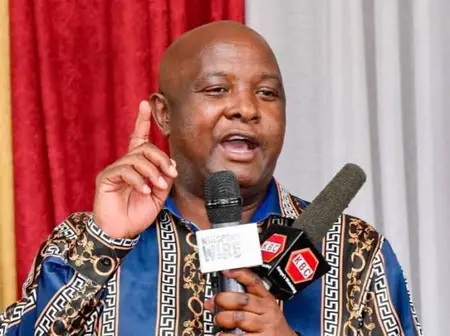
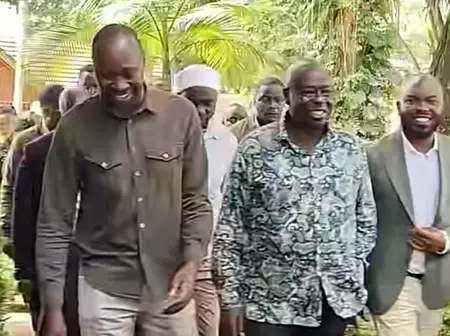
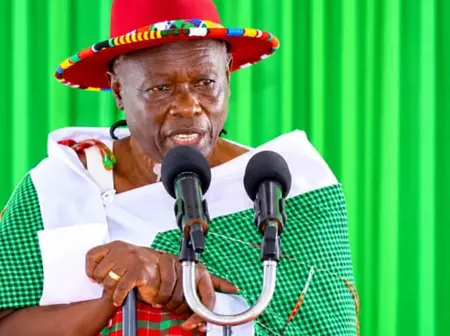
Sifuna made the remarks during his political tour in the United States of America, where he is popularizing his Linda Mwananchi Movement (LMM) party.
Speaking to Kenyans in the diaspora, Sifuna said the opposition is being pushed to release its manifesto too early, yet the government is waiting to copy everything they say.
Sifuna explained that every time the opposition raises a good idea, the Ruto government rushes to implement it or to claim it as its own.
He gave examples of issues like corruption, transparency in government contracts, and equity, saying the government only started talking about them after the opposition raised them.
According to Sifuna, releasing the manifesto now would give President Ruto a chance to copy their plans and pretend that he is already working on them.
He said the Linda Mwananchi Movement will release its manifesto at the right time, when Kenyans will be able to compare it with what the government has failed to do.
Sifuna also said the movement's manifesto will focus on making all government contracts public, fighting corruption, and ensuring that every Kenyan benefits from development.
He told Kenyans in the US that they should not worry about the delay, because the manifesto is ready and it will be released when the time is right.
Supporters of Sifuna say his explanation makes sense, and that the opposition should not give Ruto free ideas.
Supporters of President Ruto, however, say Sifuna has no manifesto at all, and that he is just using the copying excuse to hide the fact that the opposition has no clear plan for Kenyans.
All eyes are now on Sifuna and the opposition to see when they will finally release their manifesto ahead of the 2027 General Election.
The preacher's remarks, captured during a church gathering, quickly attracted attention because of the direct question he raised about how politicians respond whenever the Head of State attacks them verbally.
“Kwani Ruto akiwatukana lazima mjibu?” the preacher asked, leaving many people curious about the message behind his words.
The question appeared to challenge the three politicians to reconsider whether responding to every political provocation from Ruto was necessary.
Ndindi Nyoro, Martha Karua and Fred Matiang’i have remained among the prominent political figures attracting attention in Kenya's political landscape, especially as discussions about the country's leadership and the 2027 General Election continue.
The preacher's message brought a different dimension to the ongoing political debate, shifting attention from political rallies and public exchanges to the question of restraint and leadership.
For some Kenyans, his remarks could be interpreted as advice to opposition leaders to avoid giving Ruto unnecessary political attention whenever disagreements arise.
Others may see responding to the President as an important way of challenging statements they consider unfair or misleading.
The incident sparked reactions online, with supporters appearing divided over whether opposition politicians should remain silent or directly confront the President whenever he criticises them.
Many people were left talking, particularly because the preacher chose a church gathering to raise an issue that has dominated political conversations.
What happened next surprised many, as the short clip continued attracting attention and renewed debate about the relationship between political criticism and public responses.
As Kenya approaches another politically charged period, the preacher's question has opened an interesting conversation about how opposition leaders should handle Ruto's attacks.
Do you think Ndindi Nyoro, Martha Karua and Matiang’i should ignore Ruto's attacks or respond whenever he criticises them?
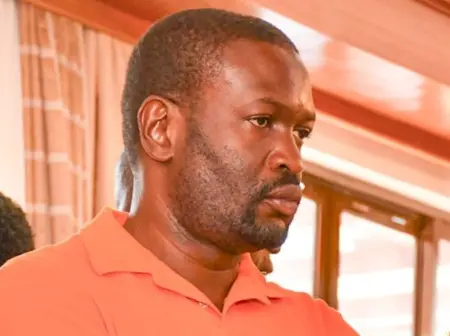
The post starkly contrasts the economic conditions under former President Uhuru Kenyatta with the current realities faced by ordinary citizens across the nation.
According to the legal practitioner, the cost of basic commodities has surged exponentially over the past two years.
He said that the price of a Toyota Vitz has jumped from 750,000 shillings to 1.55 million shillings.
Furthermore, essential construction materials have seen drastic increases, with the cost of cement rising from 550 shillings to 950 shillings per bag.
The statement further detailed the severe impact on daily household expenses. Njiru noted that the price of a loaf of bread has tripled, moving from 10 shillings to 30 shillings, while a boiled egg now costs double at 40 shillings.
He also highlighted the energy sector, pointing out that the purchasing power of electricity tokens has diminished significantly, with 100 shillings now yielding fewer units than before.
Njiru concluded by saying that the general cost of living was previously affordable but has now risen above the ceiling.
The post ended with a pointed political question directed at President William Ruto, asking whether he should stay in office given the economic hardship.
This critique adds to the mounting pressure on the current administration to address the high cost of living, which remains a primary concern for many Kenyan households.
The comparative breakdown serves as a stark reminder of the economic challenges facing the nation and fuels ongoing political discourse.
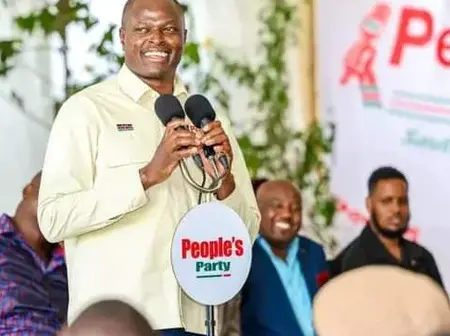
Speaking during an interview on Sunday, November 22, Natembeya suggested that Babu's decision to target the 2032 presidential election raised questions about his confidence in Sifuna's chances of winning the presidency in 2027.
According to Natembeya, if Babu believes he can only contest for president in 2032, it could mean that he does not expect Sifuna to defeat President William Ruto in the next General Election.
"If Babu is going to vie in 2032, he's basically saying that Sifuna will not win in 2027," was the argument behind Natembeya's remarks.
The governor, however, maintained that he believes Sifuna has what it takes to defeat Ruto and form the next government.
Natembeya argued that Linda Mwananchi leaders should first concentrate on winning the 2027 elections instead of making political calculations about future elections.
He further suggested that Sifuna's victory in 2027 would change the political environment ahead of the 2032 contest, since Babu could then face an incumbent president.
The remarks come amid growing disagreements between Sifuna and Babu over the leadership and direction of the Linda Mwananchi political movement.
Babu has previously claimed that there was an understanding that he would lead the political party while Sifuna would become its presidential candidate. Sifuna has disputed aspects of that account, explaining that the leaders had agreed to unite under one political outfit.
The disagreement has raised questions about the relationship between the two politicians, who have been instrumental in building the movement.
With the 2027 elections approaching, Natembeya's latest remarks have added another layer to the debate over political ambition, leadership and unity within the opposition.
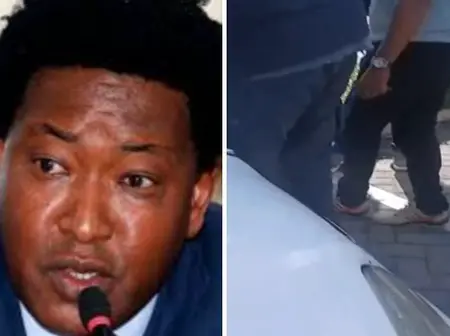
Narok county senator Hon Senator Ledama Ole Kina has finally broken his silence after a video of him threatening to shoot a man went viral and left him trending on various social media platforms for the better part of Saturday, 21 November 2026.
In the video, Ole Kina was heard angrily telling the man that he would shoot him if he continued bringing chaos in his home.
Many people who watched the video believed the man was an auctioneer who had gone to recover a debt of a vehicle Ole Kina had purchased, and had called on the police to take action against the senator for threatening to shoot him.
But Ole Kina has now come out to deny that version completely, alleging that the man he threatened to shoot was not an auctioneer at all, but an intruder who had sneaked into his home.
According to the senator, the man had no business being inside his compound, and he had trespassed onto private property without permission, which is why he confronted him in anger.
Ole Kina went on to claim that the story that the people who have stormed his residence were auctioneers who had come to take his personal car was a lie being pushed by his desperate political opponents and fake social media outlets who wanted to damage his reputation.
He went further and alleged the identity of the people behind the trending story, singling out Paran TV, which he claimed is widely linked to former Kajiado Governor Joseph Ole Lenku.
Ole Kina maintained that no personal vehicle of his was ever under auction, and insisted that he will not sit back and allow anyone to sneak into his home, invade his private property, defame his name and intimidate his family.
Godfrey Osotsi has sparked fresh political debate after launching a strong criticism of the United Democratic Alliance (UDA), claiming that the ruling party has little positive achievement to showcase on the international stage.
His remarks come at a time when the country's political environment remains highly competitive, with leaders from different political formations continuing to question the performance of the Kenya Kwanza administration.
Questions About Government Performance
Osotsi's statement raises important questions about how political parties should measure their success, particularly when they are entrusted with the responsibility of managing national affairs.
For a governing party, achievements should go beyond political speeches, campaign promises and public declarations. Kenyans expect visible improvements in their daily lives, including better economic opportunities, affordable living costs, improved healthcare, quality education and employment opportunities for young people.
International recognition is also an important consideration. A country's reputation is influenced by its economic performance, political stability, diplomatic relationships, democratic institutions and ability to attract investment.
However, political criticism alone cannot determine the overall performance of a government. Such assessments should also consider measurable achievements, ongoing development projects and the challenges affecting the country.
UDA Faces Political Pressure
The criticism also highlights the growing pressure facing UDA as political discussions surrounding the next general election continue to gain momentum.
For UDA, responding to such criticism requires more than political exchanges. The party must demonstrate how its policies are translating into meaningful improvements in the lives of ordinary citizens.
Ultimately, political parties earn public confidence through their actions, transparency and ability to deliver on their promises.
Osotsi's remarks are therefore likely to generate further discussion about UDA's record and the direction of Kenya's political leadership.
Do you agree with Godfrey Osotsi that UDA has nothing positive to showcase internationally? Share your views in the comments section.
Cherargei's remarks come at a time when Sifuna is facing increasing criticism over his political decisions and the leadership of the Linda Mwananchi Movement.
The latest controversy follows a public disagreement between Sifuna and Embakasi East MP Babu Owino over an alleged power-sharing agreement that was reportedly reached when they were building their political movement.
Babu recently claimed that he and other leaders had agreed that Sifuna would become the presidential candidate while he would take charge of the party leadership.
However, Sifuna disputed that account, explaining that their original agreement was to abandon their individual political parties and unite under one political outfit.
The disagreement has attracted attention because both politicians have played important roles in building the Linda Mwananchi Movement, which has emerged as a significant player in discussions surrounding the 2027 elections.
Babu has also expressed dissatisfaction with how some decisions have been handled, raising questions about trust and political cooperation among the leaders.
Cherargei's latest remarks add another dimension to the growing debate surrounding Sifuna's political leadership. The Nandi senator has previously criticised the Nairobi senator over his position on ODM's relationship with President William Ruto's administration.
Meanwhile, the opposition is facing the challenge of maintaining unity as different leaders position themselves for various political seats ahead of the next general election.
With the disagreement between Sifuna and Babu attracting public attention, questions are emerging about whether the movement can maintain its unity and present a strong political front.
Cherargei's statement is likely to attract further reactions from leaders allied to Sifuna as the political contest ahead of 2027 continues to take shape.
Kiharu MP Ndindi Nyoro has come under fresh scrutiny after missing a high-profile meeting between opposition leaders and the Independent Electoral and Boundaries Commission (IEBC) on Thursday.
The day-long engagement was meant to prepare for the 2027 General Election and drew Wiper Patriotic Front leader Kalonzo Musyoka, DCP leader Rigathi Gachagua, PLP's Martha Karua, Jubilee's Fred Matiang'i and Democratic Party leader Justin Muturi.
The talks ended early after the leaders walked out, accusing the commission of lecturing them instead of addressing their concerns and calling for more structured consultations.
Nyoro later clarified that PPK was represented by its Deputy Party Leader, Dunstan Riziki. He said Riziki has vast experience in electoral matters and has been representing the party in meetings with the IEBC, the Office of the Registrar of Political Parties and coalition partners.
The MP also backed the position taken by the alternative opposition parties, calling for a stronger consultation framework, a structured agenda and live streaming of electoral reporting.
The explanation has not silenced his critics. Social media user Benson Mwaura Mburu asked what could have been so pressing that an aspiring president missed the meeting.
Another user, Ndiri Dante, suggested the absence could confirm existing suspicions about Nyoro's political leanings. Others defended him, with Nguru Materu arguing that PPK is a structured party that can send a delegate in place of its leader.
The incident adds to a list of occasions when Nyoro has been criticised for missing key events. In June 2026, he was absent for the final National Assembly vote on the Finance Bill 2026/27, which passed by 122 votes to 40.
He said he had travelled abroad on official duties and apologised to Kenyans. He also missed the October 2024 proceedings on Gachagua's impeachment and key sessions during the 2024 Finance Bill debate, saying later that he opposed both.
In his message, the legislator expressed excitement over Gachagua's arrival and invited residents to meet the former Deputy President during his visit.
"Karibu Embu H.E Riggy G. Tupatane mashinani," Mukunji captioned his post.
The reception highlighted the political relationship between the two leaders, who have continued to appear together during various public engagements and political activities.
Gachagua's visit to Embu is particularly significant given the political attention surrounding the Mt Kenya region as leaders position themselves ahead of the 2027 General Election.
The former Deputy President has been making appearances in different parts of the country, using church services and grassroots meetings to interact with residents and mobilise support for his Democracy for the Citizens Party (DCP).
Their political association has also attracted attention amid discussions about the future leadership of Embu County and the wider Mt Kenya political landscape.
The Sunday visit is expected to provide another opportunity for Gachagua to interact with residents and local leaders as political activities gradually intensify ahead of the next general election.
Gachagua made the claims while hosting political leaders at his Wamunyoro residence. He said Ruto was using MDG to attract politicians who were allied to the late Raila Odinga.
MDG is led by Ugenya MP David Ochieng. The party has been expanding in Nyanza and positioning itself as an alternative to ODM and UDA.
Gachagua claimed all leaders in Nyanza allied to Raila had found refuge in a small wheelbarrow called MDG. He said Ruto was pumping money into the party because UDA would not be accepted there.
He further alleged Interior Principal Secretary Raymond Omollo had been assigned to recruit influential candidates into MDG. He said recruits were getting KSh 3 million every week for public engagement.
He did not provide evidence for the claims in the remarks reported. He said the alleged funding was changing politics in Luo Nyanza, where voters once relied on Raila's endorsement.
He argued Ruto was seeking to weaken ODM, the party Raila helped build. He said ODM has been a major political force in Nyanza for more than two decades.
So far, MDG has not issued a direct response to Gachagua's funding claim. Reports note that MDG, Ruto, PS Omollo, Gladys Wanga and Junet Mohamed were not quoted in response.
Does that silence make the claim true? No, silence alone does not prove a claim. In politics and in law, a claim needs evidence, not just a lack of denial.
There are many reasons a party may not respond. It may choose to ignore an opponent, focus on its own message, or wait for a formal statement.
MDG has in fact continued its public activities without addressing Gachagua directly. Its leaders have talked about nominations, grassroots structures and support for Ruto's re-election.
On November 20, MDG Secretary General Julius Juan pledged free, fair and transparent nominations. He said MDG would field candidates for all seats except the presidency.
Juan said MDG would support President Ruto's re-election bid. That position is public and open, not hidden, and MDG entered a post-2022 coalition agreement with Kenya Kwanza.
MDG's support for Ruto is therefore not a secret. The question Gachagua raises is different, whether Ruto is secretly funding MDG with weekly cash to kill ODM.
That is a specific claim about money, KSh 3 million per week, and a specific person, PS Omollo. Such a claim needs bank records, witnesses, or documents to be proved.
Supporters of Gachagua say silence is suspicious. They argue that if the claim were false, MDG would quickly deny it and sue for defamation.
They point to MDG's growing activities, new offices, rallies and defections from ODM. They say such growth needs money, and ask where the money comes from.
They also point to the close pact between Ochieng and PS Omollo. They say aspirants aligned to Omollo have joined MDG and mobilise for Ruto.
Critics of Gachagua say he makes many claims without evidence. They say he is trying to warn ODM and create fear about Ruto's influence in Nyanza.
They say Gachagua has no votes in Nyanza himself, as Ochieng recently claimed. They argue his goal is to divide the broad-based government, not to expose the truth.
ODM has also declared war on small parties threatening its strongholds. Director of Elections Junet Mohamed said ODM would not cede an inch in 2027.
MDG has attracted Teso North MP Oku Kaunya and Butula MP Joseph Oyula, both elected on ODM. They say they left because of ODM's nomination fears.
Should MDG respond directly to Gachagua? Or is it right to ignore claims without evidence?
What proof would you need to believe Ruto is funding MDG? Bank records, witnesses, or a public admission?