Category: Politics

  • Gachagua Reveals Three Things He Will Do If He Becomes the 6th President Come 2027

    Gachagua Reveals Three Things He Will Do If He Becomes the 6th President Come 2027

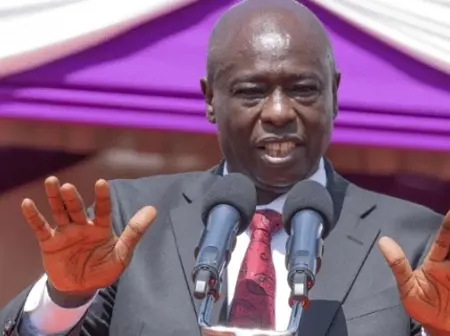
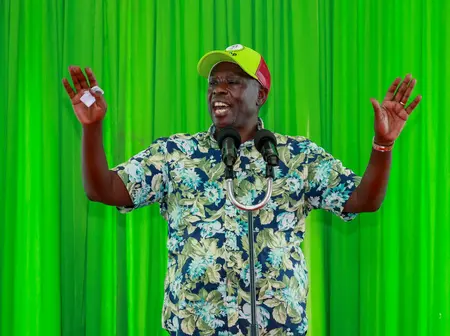
    Speaking during his political engagement in Embu County on Sunday, November 22, the Democracy for the Citizens Party (DCP) leader declared that he would abolish the Social Health Authority (SHA), restore the free education model introduced under former President Mwai Kibaki and revive the Linda Mama initiative.

    Gachagua argued that Kenyans deserve better access to essential public services, particularly healthcare and education, without being subjected to financial difficulties.

    On healthcare, the former Deputy President promised to do away with SHA, which replaced the National Health Insurance Fund (NHIF), and introduce a different system that would address the challenges facing patients and their families.

    His announcement comes against the backdrop of ongoing public discussions about the implementation of SHA, with concerns being raised by some Kenyans regarding access to medical services, contributions and the overall effectiveness of the new healthcare framework.

    Gachagua also expressed his intention to bring back the Linda Mama programme, which was established to provide free maternity services to expectant mothers, particularly those from financially disadvantaged backgrounds.

    The initiative played an important role in helping women access maternal healthcare services in public hospitals while reducing the financial burden associated with childbirth.

    In the education sector, Gachagua promised to revive the free primary education programme introduced by the late President Mwai Kibaki in 2003.

    The initiative transformed Kenya's education sector by allowing millions of children from poor households to access primary education without paying tuition fees.

    His proposal comes at a time when parents continue to raise concerns about the increasing cost of education, school requirements and the financial challenges associated with keeping children in school.

    The DCP leader's latest declarations form part of his broader political messaging as he continues to strengthen his support base across different parts of the country ahead of the 2027 polls.

    By placing healthcare affordability and access to education at the centre of his political agenda, Gachagua appears keen to appeal to ordinary Kenyans who want meaningful changes in the delivery of public services.

    However, the implementation of the proposed reforms would require clear policy frameworks, sustainable financing and parliamentary support.

    His remarks in Embu are expected to generate further political debate, particularly as Kenyans assess the different promises being made by leaders seeking to shape the country's future after the 2027 General Election.

    https://x.com/rigathi/status/2124509875942183310?a=20a2oCKq9970M5hxT08&s=19
  • Gachagua Declares Mt Kenya Voting Bloc, Sends Direct Message to Ruto

    Gachagua Declares Mt Kenya Voting Bloc, Sends Direct Message to Ruto

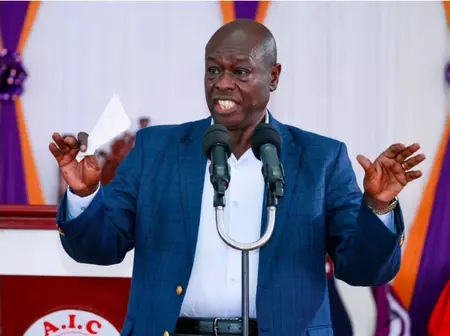
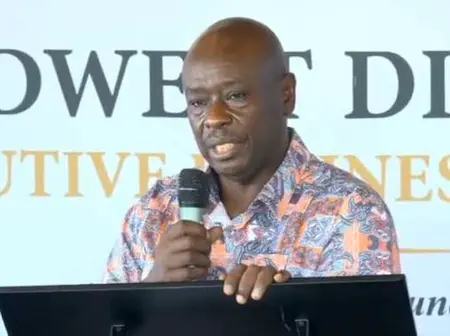
    Former Deputy President Rigathi Gachagua has announced that Mt Kenya will approach the 2027 General Election as a united voting bloc, telling President William Ruto that the region has already made its political decision.

    Gachagua delivered the message on Sunday, November 22, while addressing a church service at Wonders of God Church in Karurumo, Runyenjes, Embu County. He said the next phase of his political mobilisation would focus on getting residents to turn out in large numbers when Kenyans vote on August 10, 2027.

    “I want to confirm to you that the mountain has made a decision. We are voting as a bloc, and that bloc is meant to send you home. That we have decided,” he declared, in remarks directed at Ruto.

    The Democracy for the Citizens Party (DCP) leader said his mobilisation plans were based on two voting blocs. The first, which he estimated at eight million votes, would combine supporters of different political camps and new voters.

    He included Kenyans who voted for Ruto in 2022, those who backed the late former Prime Minister Raila Odinga, and voters who supported neither candidate.

    However, Gachagua argued that bringing these groups together would not be enough without a strong turnout on election day. He identified voter participation as the second bloc and announced a target of at least 96 per cent turnout in Mt Kenya.

    “The block that should worry you, Kasongo, is the second block called voter turnout,” he said, adding that he would work with other leaders to persuade residents to participate.

    He also outlined unconventional proposals intended to prevent circumstances that could keep potential voters away from polling stations. Gachagua said he would approach owners of bars and entertainment establishments to have their businesses closed for three days before the election, arguing that alcohol consumption could prevent some residents from voting.

    He further asked women to help safeguard the original national identity cards of young people struggling with alcohol use. He suggested that photocopies could be used temporarily, with the original documents kept safely until voting day.

    The former Deputy President also called on residents with vehicles and motorcycles to assist in transporting voters. He proposed that people in hospitals and police custody should also be facilitated to participate in the election.

    Beyond Mt Kenya, Gachagua named Nairobi, Western, Kisii, Coast and Lower Eastern as other areas where he claimed opposition support was taking shape. He predicted that Ruto would receive between 12 and 14 per cent of the vote but did not cite polling data or other evidence to support the estimate.

    His remarks signal an effort to make voter mobilisation a central part of his political strategy as parties and leaders prepare for the 2027 contest. The proposals he outlined remain his suggestions and do not constitute official changes to election procedures.

    Source

  • MDG Breaks Silence After Gachagua Accuses Ruto of Funding Party to Fight ODM

    MDG Breaks Silence After Gachagua Accuses Ruto of Funding Party to Fight ODM

    The Movement for Democracy and Growth (MDG) Party has dismissed allegations that President William Ruto, is financing it to weaken the Orange Democratic Movement (ODM) in the Nyanza region ahead of the 2027 General Election.

    Party leader and Ugunja MP David Ochieng rejected the claims on Monday, November 23, saying MDG had never received financial or material support from State House.

    Ochieng was responding to remarks made by former Deputy President Rigathi Gachagua, who accused Ruto of using the party as a political vehicle to reduce ODM's influence in its traditional strongholds.

    The MP said MDG was established about 10 years ago, long before Gachagua joined Parliament in 2017. He argued that the party had built its political presence independently and should not be dragged into disputes involving other leaders.

    "As a party we are disgusted and appalled by the very reckless, illusionary and make-believe statements made by the Mount Kenya wannabe Kingpin Mr Rigathi Gachagua," Ochieng said.

    He maintained that MDG had not received financial or material assistance from State House, State Lodge or any other individual.

    Gachagua had claimed that Ruto was giving MDG KSh3 million every week to recruit politicians, identify candidates to challenge ODM aspirants and organise public engagements.

    The former deputy president further alleged that the Head of State preferred using MDG because residents in Nyanza would not readily support the ruling United Democratic Alliance (UDA).

    He claimed that leaders who had previously been associated with the late former Prime Minister Raila Odinga were finding a political home in MDG.

    Gachagua also alleged that Ruto had previously spoken to him about plans to weaken ODM, warning that the party risked losing several seats in the 2027 polls.

    The accusations come amid reports linking several elected ODM leaders to possible defections to MDG. They include Teso North MP Oku Kaunya, Butula MP Joseph Oyula and Alego Central MCA David Ragen.

    Ochieng also linked Gachagua's comments to Deputy President Kithure Kindiki's visit to Ugunja constituency on Thursday, November 19, during a government tour.

    He accused Gachagua of attempting to turn MDG into part of a political dispute, as parties position themselves for the next General Election.

    LINK: https://www.kenyans.co.ke/news/129589-mdg-leader-dismisses-gachaguas-funding-claims?utm_source=Facebook&utm_medium=MN&fbclid=IwZXh0bgNhZW0CMTEAcGRvZgRzcnRjBmFwcF9pZA80MDk5NjI2MjMwODU2MDkAAR9UXvZl5kPcxodYJZxpRjxnRpGZssSvjdDv9VnsEWzHg1qKWAwUqtCJSV3w7w_aem_OSqUIwNoyfdPkm1IqAsAng

  • Gachagua Predicts Ruto Will Get Only 12 to 14 Per Cent of Votes in 2027 Election

    Gachagua Predicts Ruto Will Get Only 12 to 14 Per Cent of Votes in 2027 Election

    Former Deputy President Rigathi Gachagua has made a bold prediction about President William Ruto's chances of securing another term in the August 2027 General Election.

    Speaking during a church service at Wonders of God Church in Runyenjes, Embu County, on Sunday, November 22, the Democracy for the Citizens Party (DCP) leader claimed that Ruto would struggle to attract support from voters across the country.

    Gachagua said that even if the Head of State worked extremely hard to win votes, he would still receive between 12 and 14 per cent of the total votes cast.

    "If I were to make an assessment, Kasongo would get between 12 and 14% of the votes if he tried really hard," Gachagua stated.

    His remarks come at a time when political leaders are intensifying campaigns and building alliances ahead of the 2027 elections.

    The former Deputy President has been leading efforts to unite opposition supporters, particularly in the Mt Kenya region, where he has repeatedly criticised Ruto's administration.

    During the same Sunday address, Gachagua claimed that Mt Kenya had already made a decision to vote as a united bloc in the coming election.

    He also announced a target of at least 96 per cent voter turnout, saying he would work with other opposition leaders to mobilise residents to participate in the polls.

    The DCP leader further claimed that opposition support was growing in several regions, including Western, Nairobi, Coast, Kisii and Lower Eastern.

    Meanwhile, the opposition continues to face the challenge of agreeing on one presidential candidate, with leaders such as Kalonzo Musyoka, Fred Matiang'i, Martha Karua and Gachagua positioning themselves ahead of the contest.

    However, Gachagua's 12 to 14 per cent prediction remains a political assessment rather than a verified opinion poll.

    With the 2027 elections approaching, Kenyans will be watching closely to see whether his prediction matches the actual political mood on the ground.

  • Gachagua Gives IEBC Chair Ethekon January Ultimatum, Warns of Nationwide Public Pressure

    Gachagua Gives IEBC Chair Ethekon January Ultimatum, Warns of Nationwide Public Pressure

    Former Deputy President Rigathi Gachagua has given Independent Electoral and Boundaries Commission (IEBC) Chairperson Erastus Ethekon until January 2027 to respond to opposition concerns over 2027 election preparations.

    Speaking during a church service in Runyenjes, Embu County, on Sunday, November 22, the Democracy for the Citizens Party (DCP) leader warned that Kenyans could be mobilised to engage the commission if it failed to respond.

    “You have a choice to make by January, either talk to us or Kenyans directly,” Gachagua told Ethekon.

    The former Deputy President said the opposition wanted answers on the voters’ register audit, election technology and management of presidential results. He called for the removal of deceased voters’ names and questioned claims that foreign nationals had been irregularly registered. He did not provide evidence for those allegations during the address.

    Gachagua also raised concerns about the Smartmatic election management system, saying its contract was due to expire on November 24, 2026. He questioned whether IEBC would have a replacement before mass voter registration, expected in February.

    On presidential results, he rejected the national tallying centre arrangement and argued that results should be announced at constituency level. His position has renewed debate over the legal framework for declaring presidential results.

    The remarks came three days after Gachagua, Wiper leader Kalonzo Musyoka and other opposition figures walked out of an IEBC consultative meeting in Nairobi on November 19. They said the agenda did not prioritise their proposed electoral reforms.

    IEBC Chairperson Ethekon later said the leaders left after presenting preliminary demands, before the commission could make its presentation or begin substantive discussions. The commission said it remained open to receiving formal proposals.

    With the August 2027 election approaching, the dispute has placed renewed focus on voter registration, election technology and public confidence in the electoral process in the coming months.

  • Martha Karua Declares Herself the Woman to Fight Corruption, Sends Strong Message to Kenyans

    Martha Karua Declares Herself the Woman to Fight Corruption, Sends Strong Message to Kenyans

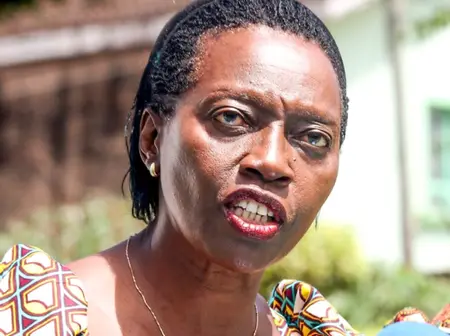
    People's Liberation Party (PLP) leader Martha Karua has once again placed the fight against corruption at the centre of her political message as she continues positioning herself ahead of the 2027 General Election.

    In a strong declaration, Karua described herself as the woman capable of confronting corrupt individuals in the country, using the name 'Simba Jike' to underline her determination.

    "Kiboko cha wafisadi wote nchini Kenya si mwingine bali ni simba jike," Karua declared.

    Her remarks come at a time when corruption, accountability and the management of public resources remain major issues in Kenya's political discussions.

    Karua has consistently criticised the government over the handling of public resources, arguing that corruption and misuse of public funds have contributed to the challenges facing ordinary Kenyans.

    In April 2026, she explained why she had abandoned her popular 'Iron Lady' identity in favour of 'Simba Jike'. She said the new name reflected her determination to fight corruption and ensure that everyone respects the law.

    The former Justice Minister has also outlined several proposals she would implement if elected President, including reducing unnecessary government expenditure, controlling borrowing and strengthening accountability.

    On November 5, Karua discussed her plans for managing Kenya's growing public debt, proposing that legitimate loans be restructured while debts she considers illegal should be challenged through legal channels.

    Her latest declaration also comes as opposition leaders intensify political activities ahead of the 2027 elections.

    On November 18, Karua and former Chief Justice David Maraga called for opposition leaders to agree on one presidential candidate to challenge President William Ruto.

    However, the question of who will eventually carry the opposition presidential ticket remains a major issue.

    Karua has maintained that she is interested in the presidency and has not withdrawn from the race.

    Her latest remarks have therefore added another strong voice to the growing political debate about corruption and leadership ahead of the next general election.

  • Police Officers Can Enter and Drive Your Vehicle Under the Law – Wahome Thuku

    Police Officers Can Enter and Drive Your Vehicle Under the Law – Wahome Thuku

    In a Facebook post, Thuku explained that police officers in uniform have legal authority to enter a motor vehicle and even drive it under certain circumstances. He acknowledged that the provision might sound uncomfortable to vehicle owners but maintained that it is provided for under Kenyan law.

    To support his explanation, Thuku referred to Section 105 of the Traffic Act, Cap 403, which outlines the powers of police officers, licensing officers and inspectors in enforcing traffic regulations.

    According to the provision he cited, a police officer in uniform is legally permitted to stop any vehicle. Furthermore, a police officer, licensing officer or inspector may enter a vehicle, drive it or direct that it be driven.

    The law also provides for circumstances where an authorised officer, upon reasonable suspicion of an offence, can require a vehicle owner to present the vehicle for examination and testing. Such inspections are intended to establish whether the vehicle complies with applicable traffic requirements.

    Despite explaining the legal position, Thuku expressed personal reservations about the practice. He stated that if he were a police officer, he would never enter another person's vehicle, emphasising that he would avoid doing so entirely.

    His remarks have drawn attention to the balance between law enforcement powers and the concerns of motorists, particularly regarding vehicle safety, accountability and the proper exercise of authority.

    The discussion also serves as a reminder that motorists should understand their legal obligations while expecting public officers to exercise their powers responsibly.

    What is your opinion on the powers granted to police officers under Section 105 of the Traffic Act? Share your views, remarks and comments in the comment section below.

  • Matiang’i Sets Conditions for Working With Opposition Leaders Ahead of 2027

    Matiang’i Sets Conditions for Working With Opposition Leaders Ahead of 2027

    Matiang’i has indicated that he is not ready to enter political partnerships with leaders whose views and approaches differ significantly from his own, suggesting that any cooperation must be based on shared goals and the ability to work together.

    Speaking on Sunday, November 22, 2026, during a church service at ACK St Mary's Church in Kimunye, Gichugu Constituency, Kirinyaga County, the former Interior Cabinet Secretary explained that he would only engage with politicians with whom he could find common ground.

    “I cannot sit with someone we do not see eye to eye. I can only sit with people we can work with,” Matiang’i stated.

    Although he did not mention Gachagua directly, his remarks come at a time when the former Deputy President has been involved in efforts to bring opposition leaders together to form a united political front against President William Ruto's administration.

    The opposition has been struggling to establish a common direction, with questions surrounding leadership, presidential ambitions and the distribution of political influence emerging as major issues in the unity discussions.

    Matiang’i's position suggests that he wants any political arrangement to go beyond simply bringing leaders together for electoral purposes. He has emphasised the need for shared political thinking and practical solutions to the challenges facing Kenyans.

    During the same address, Matiang’i singled out Kiharu MP Ndindi Nyoro, describing him as a leader who understands the challenges facing the country and has ideas on how to address them.

    The Jubilee Party leader spoke positively about the legislator, indicating that he appreciates politicians who focus on finding solutions rather than engaging in unnecessary political exchanges.

    “I know Ndindi. He is a straightforward man and knows the solutions that are needed,” Matiang’i said.

    However, he did not announce any formal political partnership with Nyoro or disclose whether they had held discussions about working together ahead of the next General Election.

    Matiang’i also maintained that his political camp was focused on presenting solutions to Kenyans rather than spending time on political arguments.

    “We will provide solutions. We are not here for stories; we are here for solutions,” he added.

    Matiang’i's remarks introduce another challenge for opposition leaders seeking to establish a united political movement ahead of the 2027 elections.

    While several leaders have expressed interest in working together, their different political ambitions and approaches could complicate efforts to agree on a common presidential candidate and campaign strategy.

    For Matiang’i, the immediate question is whether he will pursue his presidential ambitions through an independent political platform or eventually negotiate an arrangement with other opposition figures.

    His latest statement makes clear that he wants political partnerships to be based on shared interests rather than convenience.

    Whether his position will influence ongoing opposition unity discussions remains to be seen as political activities gather momentum ahead of the 2027 General Election.

    https://www.facebook.com/share/1A2QZFmx4T/

  • Fred Matiang’i Speaks Out on Kenyans’ Needs, Reveals What Opposition Leaders Are Focused On

    Fred Matiang’i Speaks Out on Kenyans’ Needs, Reveals What Opposition Leaders Are Focused On

    In a message shared on social media, Matiang’i said the opposition was committed to the country’s future. He added that its leaders knew what Kenyans needed and understood the issues that mattered most to them.

    The remarks place public concerns at the centre of the opposition’s message as leaders engage Kenyans. Matiang’i’s statement also presents unity as an important part of the group’s approach as it seeks wider support.

    He said the opposition was brought together by a common purpose and a shared commitment to Kenya’s future. However, the message did not set out specific policy proposals or explain how the leaders plan to address the concerns they referred to.

    The statement comes as political parties and leaders position themselves ahead of the next general election. Opposition figures have continued to speak about working together, although details of any joint political arrangement and the roles of individual leaders remain issues.

    Matiang’i’s message aims to assure supporters that the opposition recognises public challenges. Issues such as the cost of living, employment and access to public services remain in national political discussions, though he did not mention particular issues in the message.

    The former Interior Cabinet Secretary has been mentioned among leaders seeking to challenge President William Ruto’s administration. His remarks reinforce the message of unity, but do not provide details of a joint plan or identify specific actions the opposition intends to take.

    The coming months are likely to test whether the opposition can maintain a common position while addressing policy differences and questions about its leadership. Kenyans will be watching for clearer proposals on how the group intends to respond to the needs it says it understands.

  • Mole Suspicions: Defections to DCP Spark Debate Over Whether Ruto Allies Are Crossing Over

    Mole Suspicions: Defections to DCP Spark Debate Over Whether Ruto Allies Are Crossing Over

    On Tuesday, November 17, 2026, Gachagua hosted Nyeri Woman Representative Rahab Mukami, Gatundu South MP Gabriel Kagombe, and Laikipia West MP Stephen Wachira Karani at his Wamunyoro residence in Nyeri County, welcoming them unconditionally into DCP.

    The warm reception stood in sharp contrast to remarks made barely two weeks earlier, when Gachagua publicly criticized Mukami and named Kagombe during a November 7 rally in Kiambu, before quickly recasting the returning legislators as itungati a term denoting loyal defenders of community interests.

    Gachagua’s reconciliatory posture has also extended to other influential regional figures, including Kiharu MP and People’s Party of Kenya leader Ndindi Nyoro.

    While addressing a delegation from Kiharu the same week, Gachagua avoided past rhetoric that portrayed Nyoro as a political mole, instead referring to him warmly as his little brother and wishing him well as he pursues higher political office.

    Together with recent arrivals such as Gilgil MP Martha Wangari and Runyenjes MP Eric Muchangi Karemba, the defections have expanded DCP’s parliamentary caucus from 19 to 25 lawmakers ahead of Gachagua’s December 31 transfer window deadline, advancing his stated goal of reaching 60 MPs before the August 10, 2027 General Election.

    The abrupt shift in tone has divided opinion across the political spectrum over whether the defections signal genuine momentum or potential infiltration of the united opposition.

    Political observers note that Gachagua’s strained relationship with Mt. Kenya legislators left him isolated during his October 2024 impeachment, making parliamentary numbers and local political networks essential as he builds a competitive national vehicle.

    Why Budalangi MP wants bypass constructed in Busia – People Daily

    Ultimately, Gachagua’s transformation of former rivals from tugege into itungati illustrates how quickly political vocabulary adapts when electoral arithmetic demands broader alliances roughly eight months before Kenyans vote.

    Embracing sitting MPs boosts DCP’s visibility and grassroots reach across Central Kenya, yet integrating former adversaries without triggering primary disputes or trust deficits remains a delicate balancing act.

    How well these newly welcomed lawmakers perform in DCP’s March 2027 nominations and align with wider opposition unity efforts will test whether the realignment strengthens or complicates the anti-Ruto coalition.

    Source: https://www.standardmedia.co.ke/politics/article/2001562731/of-tugege-and-itungati-inside-gachaguas-change-of-tune-on-uda-mps-decamping-to-dcp