Category: Politics

  • Martha Karua Explains Why Defeating Ruto in 2027 Will Require a Massive Opposition Harambee

    Martha Karua Explains Why Defeating Ruto in 2027 Will Require a Massive Opposition Harambee

    Karua's remarks highlight the importance of political cooperation as opposition leaders continue working towards building a strong campaign against Ruto, who is seeking another term in office.

    The former Justice Minister stressed that removing Ruto from power would not be an easy task. She used the idea of a harambee to explain the need for people to contribute towards a common political goal.

    Her message comes at a time when several opposition leaders are positioning themselves for the 2027 presidential contest. Among the prominent figures associated with the opposition are Wiper leader Kalonzo Musyoka, former Deputy President Rigathi Gachagua, former Interior Cabinet Secretary Fred Matiang'i and former Chief Justice David Maraga.

    The former Justice Minister has called on opposition figures to work together and agree on one presidential candidate. She has maintained that leaders must respect one another and support the person selected to carry the coalition’s ticket.

    On Sunday, November 22, Karua spoke during a church service at Kimunye ACK Church in Kirinyaga County. She dismissed suggestions that separate political engagements by opposition leaders meant the coalition had broken into rival groups.

    Karua said the opposition had one goal and expressed confidence that it would eventually settle on a single candidate. She urged leaders to avoid allowing their differences to weaken the wider campaign.

    Her remarks come amid debate over who should lead the opposition into the 2027 contest. Potential contenders include Wiper leader Kalonzo Musyoka, former Deputy President Rigathi Gachagua, former Interior Cabinet Secretary Fred Matiang’i, former Chief Justice David Maraga and Karua herself.

    The question of how the coalition will choose its flag bearer remains unresolved. Opposition leaders have spoken about consultations and an agreed process that can earn supporters’ confidence.

    Karua’s call for a harambee points to the importance of pooling political support, resources and organisation if the opposition hopes to mount a serious challenge.

    The coming months will test whether leaders can turn calls for unity into an agreement on a candidate and a campaign ahead of the 2027 polls.

  • What Gen Zs Sifuna Supporters Have Started Doing in Villages Amid His Absence In The Country

    What Gen Zs Sifuna Supporters Have Started Doing in Villages Amid His Absence In The Country

    Young volunteers have taken the Sifuna Mashinani campaign to several counties today, signing up new members for the Linda Mwananchi Movement (LMM) Party while Senator Edwin Sifuna himself leads a separate team in the United States.

    The picture comes from posts shared on the campaign's official X account and from a supporter, Abbie Zuena, who wrote about the activities in Gilgil.

    In Nyandarua, the team has had a busy day. Early posts announced that the local group was active and had begun work outside ACK St Peter's Church in Engineer, where volunteers spoke with church leaders and congregants.

    Later, the campaign declared the Nyandarua leg a success, thanking residents for what it called a warm welcome and promising that the work would carry on through the week.

    Elsewhere, the effort has taken different shapes. Volunteers have been in Sango Ward, Likuyani Constituency, Kakamega County, where they combined voter registration with civic education, speaking to residents gathered in a local hall.

    In Kirinyaga County, a team has been going door to door, stopping at roadside stalls and small businesses to talk with traders about the party and the campaign.

    In Gilgil, Ms Zuena said the volunteers had engaged residents and enrolled them into what she described as the biggest party in the country.

    She thanked the team for coming to the community, and her post has drawn considerable attention online, with more than 2,000 views and hundreds of likes.

    The campaign's approach has been deliberately simple. Rather than relying on big rallies, volunteers have gone to markets, churches, community halls and roadsides, where they have met people on their own ground.

    Many of them have worn matching white T-shirts and reflective vests bearing the campaign branding, making them easy to spot among shoppers and traders.

    The activity has also reflected how the party hopes to grow. By pairing membership drives with civic education, the volunteers have tried to explain why registration matters, rather than only collecting names.

    Their messaging has leaned on local language and humour, with slogans such as "Tuko kila pembe ya Kenya" capturing the idea that the movement is present in every corner of the country.

    Still, the steady flow of updates from different regions suggests a coordinated, county-by-county effort.

    It remains to be seen how many new members the exercise will yield. For now, the volunteers say they will keep knocking on doors, and the campaign has signalled that more counties will be visited in the days ahead.

    Link

    https://x.com/SifunaMashnani/status/2124420433285972290?a=-krTbGFGy7djZFSgCmU&s=19

  • Gachagua Promises to Ban All Illicit Brews Within 100 Days If Elected President

    Gachagua Promises to Ban All Illicit Brews Within 100 Days If Elected President

    Former Deputy President Rigathi Gachagua has sparked fresh political debate after promising to ban all illicit brews within 100 days if Kenyans give him the opportunity to become the President of Kenya next year.

    According to the former Deputy President, the fight against illicit brews would be among his immediate priorities if he assumes the country's highest office. He believes that decisive action is necessary to protect communities from dangerous alcoholic drinks that have exposed many people to serious health risks.

    His promise comes at a time when illicit alcohol remains a major concern, particularly in several communities where illegal brewing and distribution have continued despite government efforts to control the trade.

    For many families, the problem goes beyond alcohol consumption. It involves broken relationships, unemployment, poverty, insecurity and the loss of productive members of society.

    Gachagua's proposed 100-day deadline is therefore likely to attract considerable attention, especially among residents who have repeatedly called for stronger government intervention against illegal alcohol businesses.

    However, completely eliminating illicit brews would require more than presidential declarations. It would demand effective law enforcement, proper investigations, accountability among government officials and cooperation between national and county governments.

    Authorities would also need to address the networks involved in manufacturing and distributing dangerous alcoholic products. At the same time, communities need public awareness programmes and economic opportunities that can help vulnerable individuals avoid alcohol dependency.

    Politically, the statement gives Gachagua an opportunity to present himself as a leader willing to confront issues affecting ordinary households. It also places public safety and the protection of families at the centre of his political message.

    Ultimately, Kenyans will judge such promises by their practicality and the results they can deliver. Ending the deaths associated with illicit brews is an important national responsibility that requires sustained action rather than political statements alone.

    **What do you think about Rigathi Gachagua's promise to ban all illicit brews within 100 days if elected President? Share your views in the comment section.**

    https://www.facebook.com/share/1EFCNCyRTS/

  • CS Opiyo Wandayi Holds a Key Meeting With Oburu Oginga

    CS Opiyo Wandayi Holds a Key Meeting With Oburu Oginga

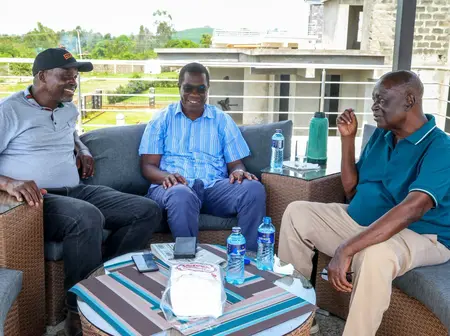
    Energy Cabinet Secretary Opiyo Wandayi has held a consultative engagement with Siaya Senator Oburu Oginga, drawing attention to ongoing discussions among leaders within the Orange Democratic Movement (ODM) and the wider Kenyan political establishment.

    Consultative meetings between senior leaders provide an opportunity to exchange views, discuss emerging developments and consider issues affecting their political parties and the country.

    The relationship between Wandayi and Oburu is particularly significant because both have been associated with ODM's political journey. Wandayi previously served as Ugunja MP and held senior responsibilities within the party before joining President William Ruto's Cabinet as Energy and Petroleum Cabinet Secretary.

    Oburu, who serves as Siaya Senator and ODM party leader, has become a central figure in the party's leadership following the death of his younger brother, former Prime Minister Raila Odinga, in October 2025.

    Their engagement therefore comes against the background of important political questions about ODM's direction and its cooperation with the Kenya Kwanza administration.

    One issue likely to attract public interest is how the party will manage competing political views among its leaders while maintaining internal unity. Some leaders support continued cooperation with President Ruto, while others have expressed reservations about the arrangement.

    Wandayi has publicly supported Oburu's leadership and defended the broad-based government arrangement.

    For residents of Siaya and other parts of the country, engagements involving senior political leaders remain important because they can influence discussions about representation, development and national cooperation.

    Ultimately, the meeting highlights the importance of consultation in political leadership. Whether the discussions will produce a common position on the country's political future remains something Kenyans will be watching.

    What do you think about Wandayi's engagement with Oburu Oginga? Share your views in the comments.

    https://www.facebook.com/share/1H4tGu716e/

  • Bad News for Ruto as Ndindi Nyoro Declares United Opposition’s Position on 2027

    Bad News for Ruto as Ndindi Nyoro Declares United Opposition’s Position on 2027

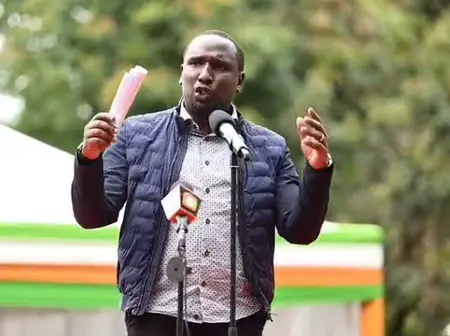
    Nyoro made the remarks on Sunday, November 22, during a church service in Kirinyaga County. He dismissed claims that the opposition was breaking into separate political groups, insisting there was only one opposition force.

    He said leaders attending events in different parts of the country should not be viewed as members of rival camps. According to Nyoro, their activities were part of efforts to organise supporters and strengthen the coalition ahead of the election.

    The MP said the opposition intended to agree on one presidential candidate to face Ruto. He maintained that the decision would be reached through consultations among leaders, rather than competing political arrangements.

    His remarks come as questions continue over the direction of the opposition and reports of disagreements among some senior figures. Several leaders have been holding meetings and public engagements in different counties as they seek support before the polls.

    Nyoro also addressed claims about a possible third political force. He rejected the suggestion, saying the opposition remained united despite leaders pursuing separate activities. He argued that the coalition had a common political objective and should not be judged by the location of individual meetings.

    The opposition has not yet announced the person who will carry its presidential ticket in 2027. The selection is expected to be an important test of the coalition’s ability to maintain unity, especially as more than one leader is seen as a possible contender.

    Nyoro’s comments underline the message he has continued to advance: opposition leaders should work together, listen to Kenyans and settle on one candidate capable of challenging the sitting president.

  • President Ruto Holds Talks With DR Congo’s Félix Tshisekedi at High-Level Quadripartite Summit

    President Ruto Holds Talks With DR Congo’s Félix Tshisekedi at High-Level Quadripartite Summit

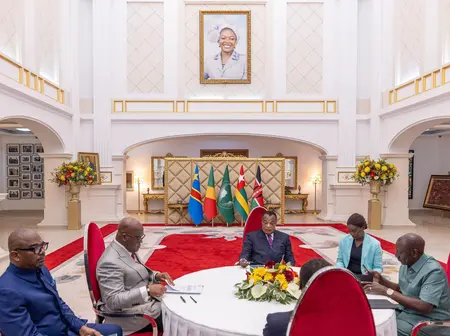
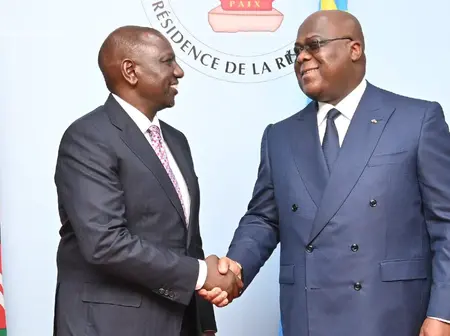
    President William Ruto has held diplomatic talks with his Democratic Republic of the Congo (DRC) counterpart, Félix Tshisekedi, during the high-level Quadripartite Political Summit in Oyo, Republic of the Congo.

    Ruto's engagement with Tshisekedi highlights Kenya's continued participation in diplomatic discussions aimed at strengthening relations with neighbouring and regional countries.

    Kenya and the Democratic Republic of the Congo have important interests in regional stability, trade, infrastructure development and economic cooperation. Their relationship also provides opportunities for discussions on improving cross-border business and creating stronger partnerships between the two countries.

    ### Focus on Regional Peace and Security

    The summit is being hosted by President Denis Sassou-Nguesso of the Republic of the Congo and also brings together Togo's President of the Council, Faure Gnassingbé, who was appointed by the African Union as a mediator in the conflict involving eastern DRC. Actualite.cd +1

    One of the major issues expected to feature in the discussions is the persistent insecurity in eastern Democratic Republic of the Congo, where armed conflict has continued to affect communities and regional stability.

    The participation of the four leaders provides an opportunity to strengthen diplomatic engagement and explore peaceful approaches to the crisis. The discussions are also expected to promote confidence among neighbouring countries and encourage cooperation in addressing security challenges.

    ### Kenya and DRC Diplomatic Relations

    Ruto's meeting with Tshisekedi is particularly significant because relations between Nairobi and Kinshasa have experienced diplomatic disagreements in recent years.

    The two countries have important economic and strategic interests, including trade, regional connectivity and security cooperation. Kenya's Port of Mombasa also serves as an important gateway for businesses accessing markets in eastern DRC.

    Ultimately, the success of the Oyo summit will depend on whether the discussions translate into practical commitments that address regional security concerns and improve cooperation among the participating countries.

    Kenyans will also be watching the diplomatic engagement closely, particularly regarding its potential impact on Kenya's relationship with the Democratic Republic of the Congo.

    What do you think about President Ruto's diplomatic engagement with Félix Tshisekedi? Share your views in the comment section.

    https://www.facebook.com/share/1NacRPR49g/

  • Bad News for Wetang’ula as Kibagendi Revives His Past Domestic Dispute in Fresh Attack

    Bad News for Wetang’ula as Kibagendi Revives His Past Domestic Dispute in Fresh Attack

    The controversy comes against the background of a disagreement between the two leaders after Kibagendi questioned the independence of Parliament and accused its leadership of failing to protect the institution from interference by the Executive.

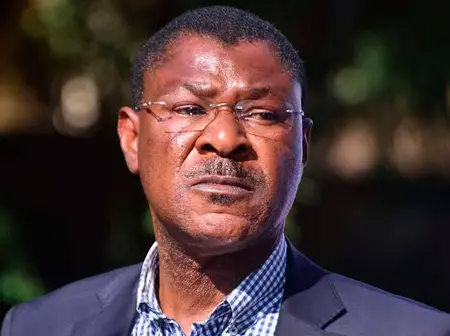
    Kitutu Chache South Member of Parliament Anthony Kibagendi has drawn attention to National Assembly Speaker Moses Wetang’ula’s past family dispute after making a personal remark about him.

    In a statement circulating on social media, Kibagendi is heard saying in Swahili that Wetang’ula was beaten by his wife before coming to trouble members of Parliament. The comment appears to refer to a domestic dispute involving the Speaker and his then wife in 2016.

    At the time, both Wetang’ula and his wife reported being assaulted during an incident at their home in Karen, Nairobi. Wetang’ula accused his wife of attacking him, while she separately alleged that he had assaulted her. The competing claims were reported to police. Available reports do not establish that either allegation was proven in court.

    Kibagendi’s remark comes amid a disagreement with Wetang’ula over the conduct and independence of Parliament. On February 17, 2026, the Speaker ordered the Kitutu Chache South MP excluded from the House, its precincts and committee meetings until he submitted an apology.

    The action followed a television interview in which Kibagendi accused Parliament’s leadership of allowing the institution to become an appendage of the Executive and claimed the House had been auctioned. Wetang’ula rejected the claims and said the remarks brought Parliament into disrepute.

    Kibagendi challenged the suspension in court. On March 19, 2026, the High Court temporarily lifted the ban and allowed him to resume his parliamentary duties as the case continued.

    The latest personal remark adds another layer to the disagreement between the two leaders. However, the circumstances surrounding the social media clip, including when and where Kibagendi made the statement, have not been independently established.

    The dispute has kept attention on relations between the Speaker and the MP, alongside the debate over Parliament’s independence and the limits of political criticism.

  • Aaron Cheruiyot Claims 99% of Opposition Leaders Would Choose Ruto Over Gachagua as President

    Aaron Cheruiyot Claims 99% of Opposition Leaders Would Choose Ruto Over Gachagua as President

    Senate Majority Leader Aaron Cheruiyot has sparked fresh political debate after making a bold claim about the political preferences of opposition leaders, suggesting that most of them would support President William Ruto if forced to choose between him and former Deputy President Rigathi Gachagua.

    According to the senator, 99 per cent of opposition leaders would vote for Ruto if the two political figures were presented as the only presidential candidates. His remarks have raised questions about the unity, interests and long-term ambitions of politicians currently positioning themselves against the government.

    ### A Question of Political Alliances

    Cheruiyot's statement comes at a time when Kenya's political landscape is experiencing significant realignments ahead of the 2027 General Election.

    Several opposition leaders have intensified their criticism of the Kenya Kwanza administration, accusing it of failing to address the economic challenges facing ordinary citizens.

    However, opposition politics is not necessarily built around a single political interest. Different leaders have their own ambitions, ideological positions, regional support bases and preferred political arrangements.

    Cheruiyot's argument appears to suggest that some opposition figures may have stronger political disagreements with Gachagua than with Ruto, even as they publicly challenge the current administration.

    ### Gachagua's Position in Opposition Politics

    Gachagua has continued to position himself as one of the leading critics of President Ruto, particularly on issues affecting the Mount Kenya region.

    His political ambitions and growing influence have also contributed to discussions about who should lead the opposition into the next general election.

    ### The Bigger Question Ahead of 2027

    As the 2027 elections approach, political loyalty, presidential ambitions and coalition negotiations are likely to influence the country's political direction.

    Whether Cheruiyot's 99 per cent assertion reflects the actual preferences of opposition leaders remains a matter of political debate. No voting evidence has been presented to establish that figure.

    Ultimately, the opposition's ability to agree on a common presidential candidate could become one of its biggest challenges.

    Do you agree with Aaron Cheruiyot that 99 per cent of opposition leaders would choose William Ruto over Rigathi Gachagua? Share your thoughts in the comments.

    https://www.facebook.com/share/1A2C4WhUbJ/

  • Kenya and DRC Move to Restore Diplomatic Ties After Talks

    Kenya and DRC Move to Restore Diplomatic Ties After Talks

    President William Ruto held direct talks with Democratic Republic of the Congo President Félix Tshisekedi in Oyo on Sunday, in a meeting aimed at repairing strained ties between Nairobi and Kinshasa. The outcome could shape Kenya’s regional standing and Ruto’s foreign policy record ahead of the 2027 General Election.

    According to a report by The Standard, Ruto arrived in Oyo on Saturday, 21 November 2026, ahead of the Quadripartite Political Summit on Sunday, 22 November. The summit was convened by Republic of the Congo President Denis Sassou Nguesso and also brought together Togo’s Faure Gnassingbé. Ruto was accompanied by Prime Cabinet Secretary Musalia Mudavadi.

    The two leaders agreed to work towards restoring full diplomatic relations between Kenya and the DRC. They committed to restoring representation at ambassadorial level and resuming the Joint Grand Commission for Cooperation. They also agreed to strengthen regular diplomatic consultations between the two countries.

    The thaw follows nearly three years of tension after Kinshasa recalled its ambassador from Nairobi in December 2023. The recall followed the launch in Kenya of the Congo River Alliance, a political-military coalition linked to the M23 movement. The Oyo meeting offered the first direct chance for Ruto and Tshisekedi to reset that relationship.

    For Ruto, the summit came at a sensitive domestic moment after he interrupted his Western Kenya development tour. The tour, which began on 19 November, was expected to cover Busia, Bungoma, Kakamega and Vihiga counties. His ability to balance regional diplomacy with local development promises will be closely watched as the 2027 campaign period approaches.

    Sassou Nguesso facilitated the talks, while Gnassingbé mediated as the African Union-appointed mediator for the eastern DRC conflict. The leaders also discussed regional integration, peace and security, and expanding cooperation for shared prosperity. Analysts say a stable relationship with Kinshasa could strengthen Kenya’s role in Great Lakes peace efforts.

    Do you think restoring full diplomatic ties with the DRC will improve regional peace and help Kenya ahead of 2027?

  • Gachagua Faces Fresh Political Challenge as Cheruiyot Makes Big Claim About 2027 Elections

    Gachagua Faces Fresh Political Challenge as Cheruiyot Makes Big Claim About 2027 Elections

    In a video shared on social media, Gachagua addressed the President as “Kasongo” and sarcastically questioned the slogan “usawa ni sawa”, which means equality is equality.

    He suggested that if Kenyans were truly being treated equally, then everyone should have access to the same products, including alcohol considered dangerous. His remarks appeared to question the government's approach to dealing with unsafe alcoholic drinks.

    The comments come amid continued public concern over illicit and counterfeit alcohol in Kenya. Such drinks can expose consumers to serious health risks, particularly when their ingredients and production processes are unknown.

    However, Gachagua did not clearly identify the specific alcoholic product or government decision he was referring to in the video.

    The former Deputy President has remained among the most vocal critics of Ruto's administration since his removal from office. He has repeatedly used public gatherings and social media platforms to question government policies and decisions.

    His latest remarks have also brought attention to the wider debate about equality, public safety and the government's responsibility to protect consumers from dangerous products.

    Meanwhile, Senate Majority Leader Aaron Cheruiyot has made a separate political claim that could attract attention as the country moves closer to the 2027 General Election.

    Cheruiyot argued that if opposition supporters were given a choice between President Ruto and Gachagua as presidential candidates, 99 per cent would vote for Ruto.

    His statement raises questions about the political strength of the two leaders and how voters could respond if they faced each other in a presidential contest.

    The remarks add another dimension to the growing political debate surrounding Ruto, Gachagua and the opposition ahead of the next election.