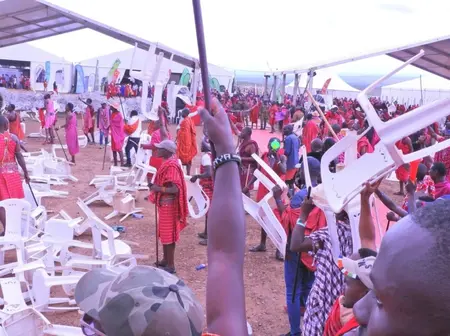
The Maa Cultural Festival was thrown into disarray after a fierce clash erupted between two rival groups at Sekenani Gate in Narok West.In a video circulating online, people could be seen scampering for safety as the confrontation disrupted activities at the festival venue, with several chairs turned upside down in the ensuing chaos and attendes seen flinging items at each other.
Category: Lifestyle
-

Speke Resort Munyonyo to usher in the festive season with a Tree Lighting Ceremony
Speke Resort Munyonyo will kick off this year’s Christmas celebrations on Saturday, 21 November 2026, with a Christmas Tree Lighting Ceremony featuring music, children’s activities and festive entertainment.The annual event will bring together families and guests for an evening of Christmas carols, games and other activities as the resort welcomes the festive season.
-

Edwin Sifuna Linda Mwananchi US tour
Edwin Sifuna, leader of Linda Mwananchi, is scheduled to embark on a two-week tour of the United States running from November 20 to December 4.
The tour schedule details a primary itinerary beginning with its first stop in Allentown, Pennsylvania. A key highlight of the visit will be a fundraising dinner scheduled for November 24.
Sifuna will be accompanied during the tour by Godfrey Osotsi and Richard Onyonka.
-
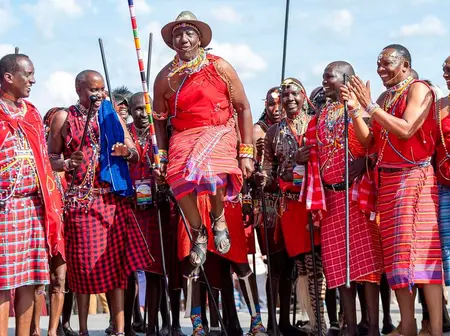
What Maa festival promises to deliver
Kenya’s rapidly urbanising communities face growing pressure to preserve their cultural identities. As modern lifestyles take root, traditional practices and indigenous knowledge risk being lost.Against this backdrop, the County Governments of Narok, Kajiado and Samburu resolved in 2023 to establish the annual Maa Cultural and Tourism Festival, with hosting responsibilities rotating among the three counties.
-
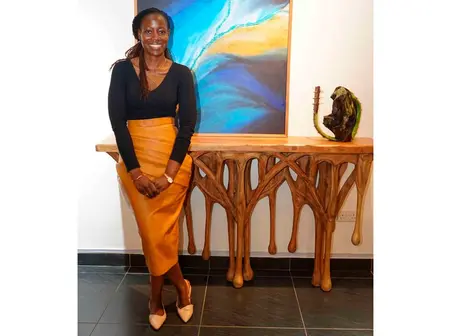
The Kenyan creative turning tree roots into Sh3.3m collectible furniture
A dining table can be more than a place to eat. It is nowadays becoming a collectible art.
For Sheila Cleo, founder of Grain and Stone Design Studio, furniture offers an opportunity to bring African artistic expression back into everyday life. Her studio’s first expression gallery, A Philosophy of Presence, challenges the restrained aesthetic that has come to define much of contemporary luxury, where muted colours, clean lines and carefully controlled finishes dominate living spaces.
-
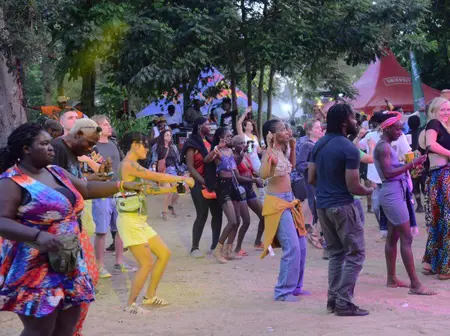
Tales of a Nyege Nyege first timer Vs a season veteran
If there is one thing everyone ought to do in their life, is to attend the famous Nyege Nyege festival at least once before fuel hits 10k.Just like a typical Matooke Republic citizen, Nyege Nyege has seen it all. From sudden bans and alarming international travel advisories to protests from self-appointed moralists, the festival has absorbed every blow and proved that nothing can stop the reggae.
-
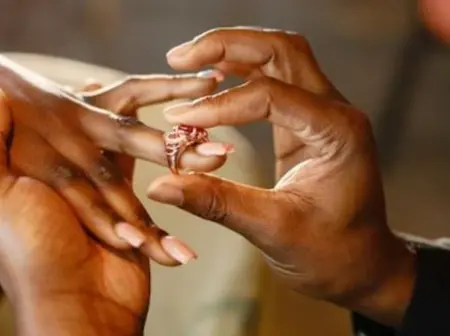
Fewer Kenyan Women Are Getting Married as Separations Nearly Double

The landmark report paints a clear picture of evolving family structures, changing social norms, legal registration gaps, and a steadily declining national fertility rate.
The survey highlights a significant shift in marital status among Kenyan women aged 15 to 49 over the past 20 years:
Never Married: 32.9% of women have never married, up from 30% in 2003.
Married or Cohabiting: The proportion of women who are married or living with a partner fell from 60% in 2003 to 55% (47.7% married; 7.3% living with a partner).
Divorced or Separated: The combined rate rose sharply, climbing from 6% in 2003 to 10% (8.2% separated; 1.4% divorced).
Widowed: Widows account for 2.5% of the total demographic.
Despite legal frameworks recognizing marriage, only 17.6% of women who are married or living with a partner reported having registered their union, and just 14% overall possess a formal marriage certificate.
Urban women are significantly more likely to register their marriages (22.6%) compared to their rural counterparts (13.6%).
The KMDHS tracked behavioral patterns among young women aged 15 to 24:
Multiple Partners: Overall, 2.2% of women aged 15 to 24 reported having two or more sexual partners in the year preceding the survey.
By Age: 0.9% among ages 15–19 (0.4% for 15–17; 1.8% for 18–19) vs. 3.5% among ages 20–24 (3.3% for 20–22; 3.9% for 23–24).
By Marital History: Ever-married young women were more likely to report multiple partners (3.5%) than those who had never married (1.7%).
By Education: Rates were highest among women with higher education (3.1%), followed by primary (2.5%) and secondary (2.0%), while women with no formal education recorded the lowest rate (0.1%).
Higher-Risk Intercourse: Defined by the survey as sex with someone other than a spouse or cohabiting partner, 21.6% of women aged 15 to 24 engaged in higher-risk intercourse in the past year. Older youth aged 20–24 recorded a rate of 30.4%, compared to 13.5% among adolescents aged 15–19.
Mirroring global demographic trends, Kenya’s total fertility rate has dropped to 3.1 children per woman in 2025, down from 3.4 in 2022 and 4.9 in 2003.
Geography and urbanization play a decisive role in birth rates:
Urban vs. Rural: Urban women average 2.6 children, compared to 3.6 children per woman in rural areas.
Lowest Birth Rates: Embu leads the country with the lowest fertility rate at 2.2 children per woman, closely followed by Kiambu and Mombasa at 2.3.
Highest Birth Rates: Mandera recorded the highest fertility rate at 6.8 children per woman, followed by Wajir (5.8) and Tana River (5.7).
-
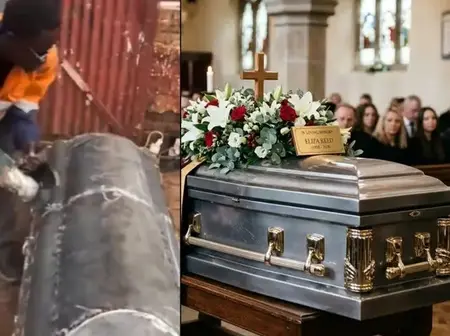
Not Wood, but Metal: The Coffin Design Sparking Curiosity Among Kenyans
A video of a welder making a metallic coffin has attracted attention online, introducing Kenyans to an unusual alternative to traditional wooden coffins.
The video shows the process of making the burial container using metal, leaving viewers curious about the design.
While wooden coffins remain common in many communities, metallic coffins are also used in different parts of the world.
Their use varies depending on cultural practices, personal preferences and the choices families make during funeral arrangements.
Metallic coffins, also known as metal caskets, are made using materials such as steel, stainless steel, copper and bronze.
Each material has different qualities, with some offering better resistance to corrosion and general wear.
The use of metallic coffins gained momentum in the 19th century, particularly in the United States.
Inventors began exploring ways of making burial containers that could protect human remains during transportation and burial.
Before then, wooden coffins were widely used, although some wealthy Europeans were buried in lead containers.
Lead coffins were also used in medieval Europe, particularly among wealthy families and members of the nobility.
One reason some families choose metallic coffins is their durability, as certain metals can withstand underground conditions longer than wood.
Some designs also have rubber seals fitted around their lids to limit the entry of water, soil and other external elements.
Their appearance is another consideration, with manufacturers offering different colours, polished finishes and designs.
Steel is among the commonly used materials, with its thickness measured using gauges.
A lower gauge number indicates thicker and heavier metal, which affects the construction of the casket.
Other options include stainless steel, copper and bronze, which are often considered premium materials because of their resistance to corrosion.
However, metallic coffins are not suitable for every funeral arrangement because they cannot be used for cremation.
Families choosing cremation would therefore need to make alternative arrangements for the burial container.
The viral video has brought renewed attention to this less familiar burial option, showing that families have alternatives beyond traditional wooden coffins.
https://www.facebook.com/share/1C9LzPfxkh/
-
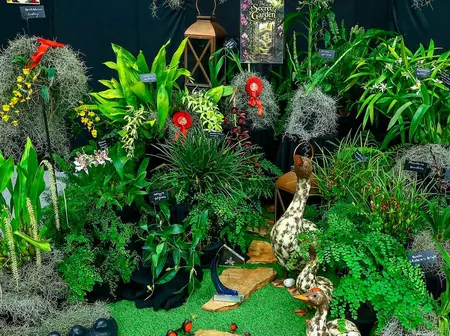
A blooming hobby: The patience and joy of growing orchids
For many people, orchids are beautiful but intimidating plants, admired from a distance and often dismissed as expensive. Yet, for members of the Kenya Orchid Society, they are an accessible hobby that rewards patience, brings people together and offers years of enjoyment.
At the Kenya Orchid Society Annual Show, held at Sarit Expo Centre in Nairobi on October 30, 2026, hundreds of orchids were displayed in an array of colours, shapes and sizes.
-

“Don’t wash dishes” Airbnb draws the line on guest chores
Wash the dishes after meals, strip the bed before leaving, and take out the rubbish: where does being a considerate Airbnb guest end and becoming an unpaid cleaner begin?
For Kenyans booking accommodation through Airbnb, the boundary is becoming clearer, thanks to a policy issued on October 20 that will apply to reservations booked on or after November 20.